
Where to Store Chicken Breast for Freshness and Safety
If you are wondering where to store chicken breast, keep it cold, sealed, and separate from ready-to-eat foods. Raw chicken breast spoils quickly, so how you place it in the fridge or freezer affects both safety and quality.
Store chicken breast in the refrigerator for short-term use. Freeze it if you need more time.
Proper storage helps you avoid leaks, reduce odor transfer, and lower the risk of foodborne illness.
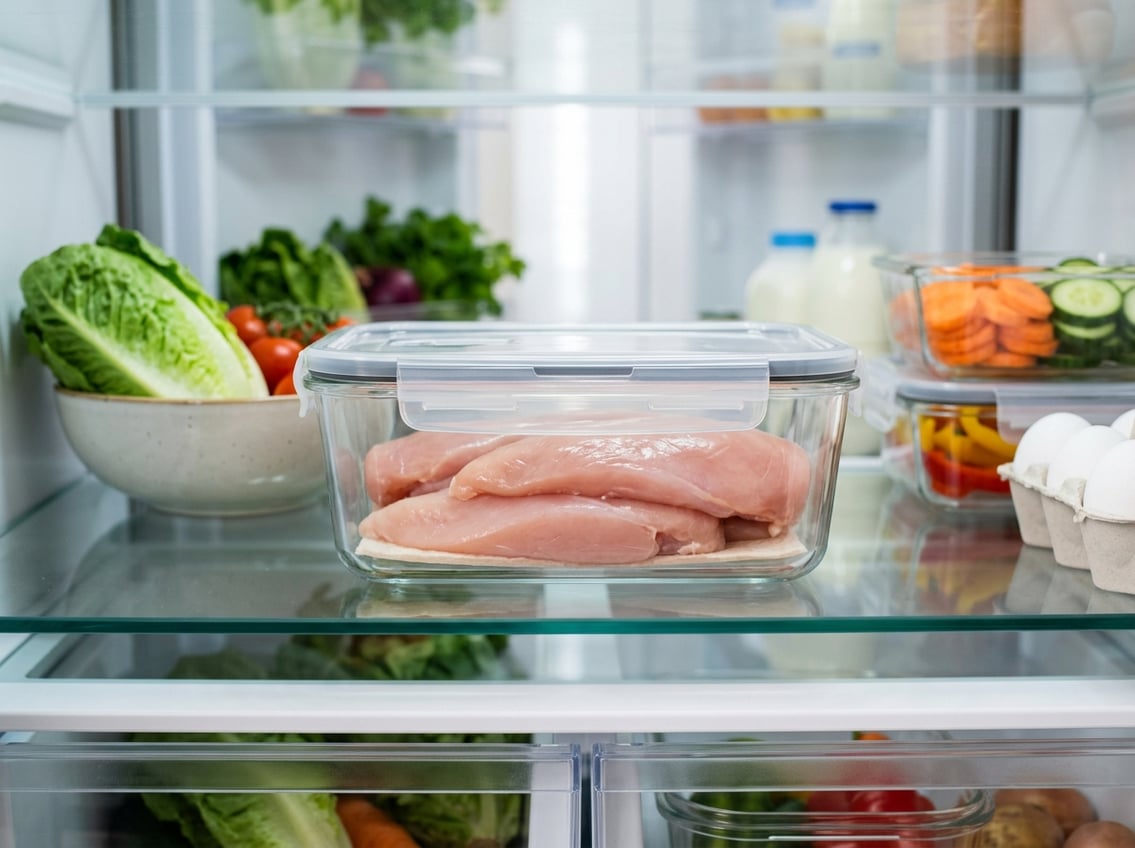
Best Fridge Placement for Raw Chicken Breast
Put raw chicken breast in the coldest safe area of your refrigerator, usually the bottom shelf. This keeps it away from foods you eat without cooking.
Use a sealed container or bag to stop juices from spreading.
Store It on the Bottom Shelf
Place raw chicken on the bottom shelf so it does not drip onto other food. This reduces cross-contamination.
The bottom shelf is usually the coldest part of the fridge, which helps keep the chicken at a safe temperature.
Use a Tray or Container to Catch Leaks
Set the chicken breast in a shallow tray, bowl, or airtight container. If the package leaks, the tray catches the liquid before it reaches other items.
A covered container keeps odors in and protects the rest of the fridge.
Keep It Away From Ready-to-Eat Foods
Do not place raw chicken above salads, fruit, cooked leftovers, or anything you will eat without further cooking. Any drip from raw chicken can spread bacteria to other foods.
Keep raw poultry sealed and separated every time you store chicken breast in the refrigerator.
How Long Chicken Breast Stays Good in the Refrigerator
Refrigerate chicken breast only for a short period. If you will not cook it soon, freeze chicken instead.
Start your storage plan with the date you bring it home and the condition of the package. Raw chicken should stay at 40°F or below.
Raw Chicken Breast Timing
Raw chicken breast is usually safe in the refrigerator for 1 to 2 days. That window applies whether you keep it in its original package or in a sealed container.
If you bought chicken close to the sell-by date, use it even sooner.
Signs It Should Be Discarded
Throw out chicken if it has a sour smell, sticky feel, dull color, or slimy surface. Treat any package that is swollen or leaking badly with caution.
Do not taste chicken to check if it is safe. Once spoilage starts, refrigeration will not make it safe again.
When to Freeze Instead of Refrigerate
If you know you will not cook it within 1 to 2 days, freeze chicken breast right away. Freezing preserves quality for much longer than the refrigerator.
Choose freezing for meal prep or bulk purchases. This gives you more flexibility for future use.
Freezer Storage for Longer Keeping
Freeze chicken when you need longer storage. Block air, limit moisture loss, and prevent freezer burn.
Good packaging helps keep better texture and flavor.
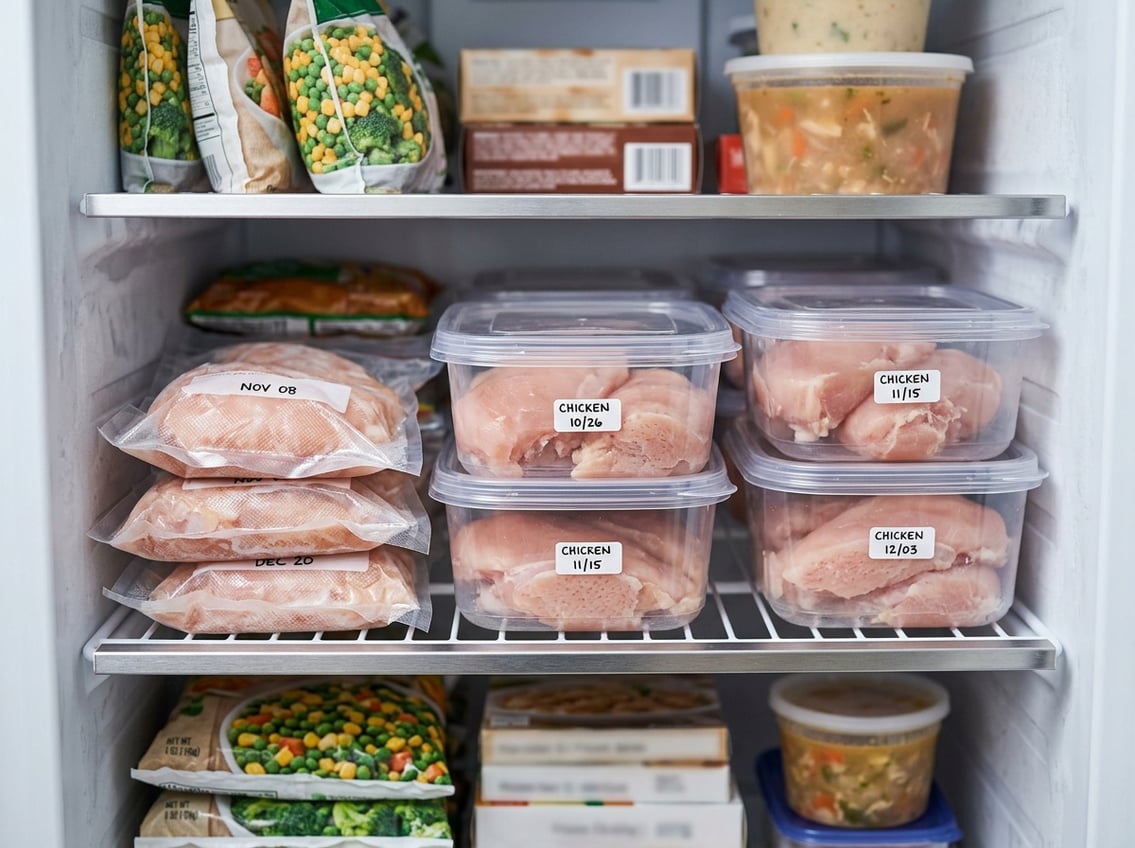
Best Packaging to Prevent Freezer Burn
Use freezer bags, freezer paper, plastic wrap, or aluminum foil to wrap chicken tightly. Place it in a freezer bag or airtight container for extra protection.
Remove as much air as possible to prevent freezer burn. This helps keep chicken from drying out or tasting dull.
Original Packaging vs Rewrapping
Original store packaging is fine for short freezer storage, but it often leaves too much air around the meat. For better results, rewrap the chicken before freezing.
A tight wrap followed by a freezer bag gives better protection than the original tray.
Labeling and Portioning for Better Quality
Label each package with the date and the number of pieces inside. Portioning chicken breast before freezing makes later meals easier.
Smaller packages thaw faster and reduce waste.
Safe Thawing Before Cooking
Thaw frozen chicken safely to keep the meat cold and cook it before bacteria can grow. The safest methods are the refrigerator, cold water, and the microwave.
Do not thaw chicken breast at room temperature.
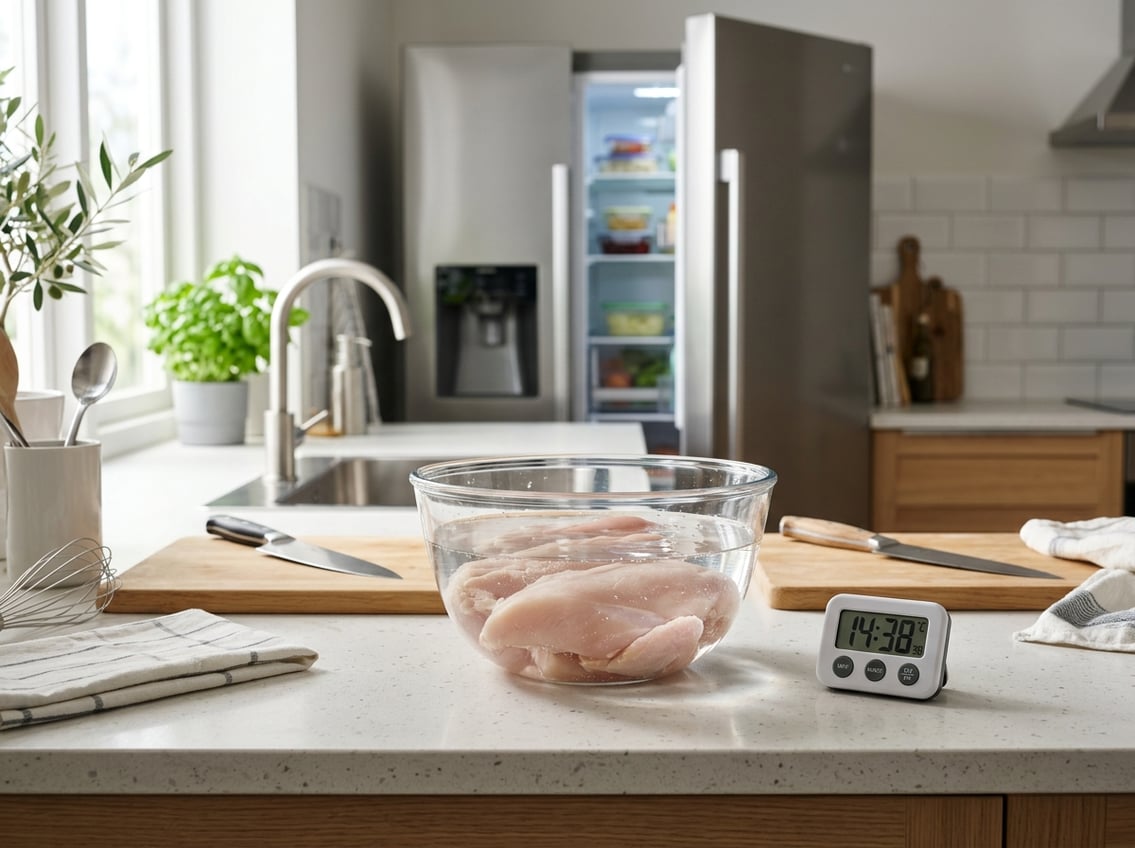
Thaw Overnight in the Refrigerator
Place frozen chicken breast on a plate or in a container on the bottom shelf of the refrigerator. This keeps thawing chicken contained and away from other foods.
Thawing in the fridge takes planning, but it keeps the chicken at a safe temperature. Thawed chicken can stay in the fridge for 1 to 2 more days before cooking.
Cold Water and Microwave Options
If you need faster thawing, seal the chicken in a leakproof bag and submerge it in cold water. Change the water every 30 minutes until it thaws.
You can also use a microwave to thaw chicken breast, especially if you plan to cook it right away. Move directly to the pan, oven, or grill after microwaving, as some edges may start to cook.
What to Do After Thawing
Cook chicken breast soon after it finishes thawing.
If you thaw chicken in the refrigerator, use it within 1 to 2 days for best safety.
Do not refreeze raw chicken that you thawed in cold water or the microwave unless you cook it first.
Once thawed, keep it cold and move it quickly into cooking.


