
When Should You Pound Chicken Breast? Best Times and Methods
Pound chicken breast when you want the meat to cook evenly, stay juicy, and match a recipe that calls for thin cutlets or quick-cooking pieces. This simple step solves a common problem, since chicken breasts naturally have a thick end and a thin end.
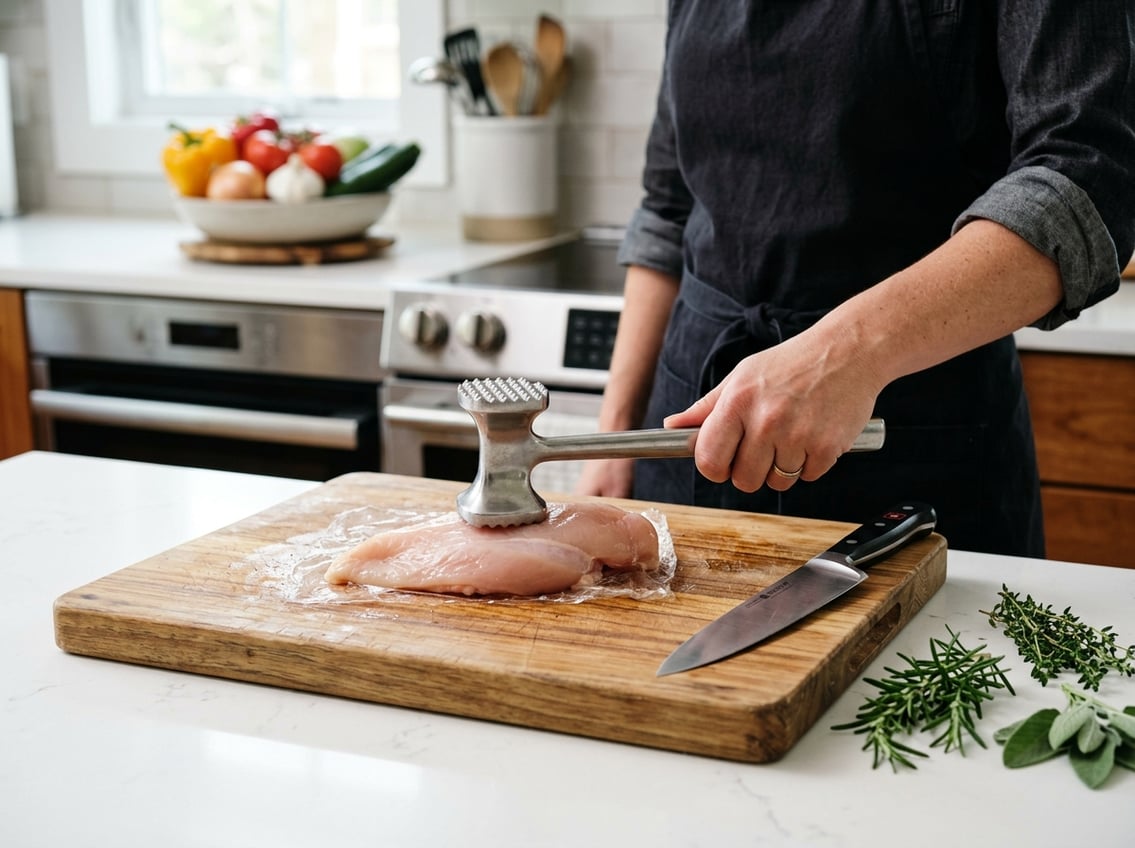
Pounding chicken breast gives you evenly cooked chicken and better flavor coverage from seasonings or marinades. You also get a more reliable texture in fast-cooking dishes.
You do not need to pound chicken every time. The key is knowing when to do it for the best results.
Flattening the meat helps when you need a predictable thickness for cutlets, sandwiches, or pan-seared meals. According to a guide on why you should pound chicken breasts, flattening supports even cooking and better marinade absorption.
Best Times to Flatten Chicken Before Cooking
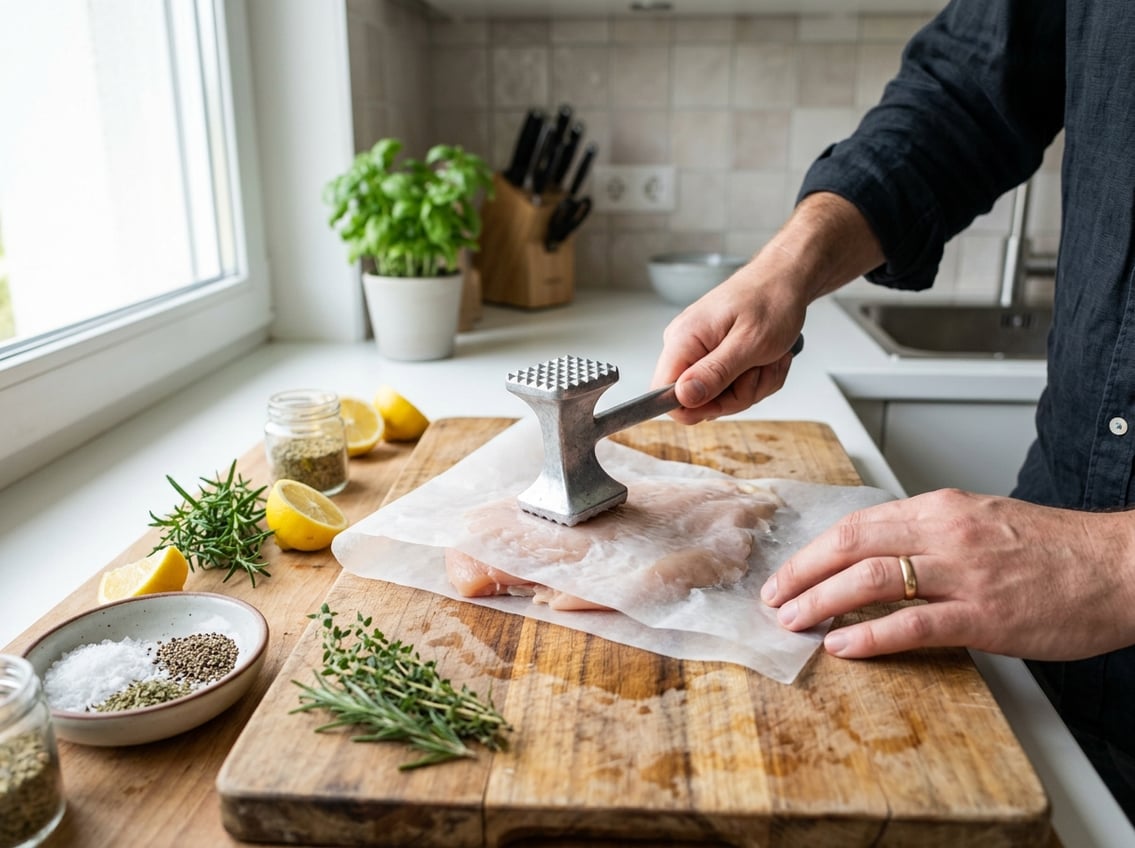
Flatten chicken when the recipe depends on quick, even cooking or a thin, tender result. You get better results when you plan to marinate chicken, bread it, or serve it in dishes where size and shape matter.
Use It for Fast, Direct-Heat Cooking
Pound chicken breast before pan-frying, grilling, or sautéing. Thin, even pieces cook faster and are less likely to dry out at the edges before the center is done.
This works well for chicken cutlets, chicken piccata, chicken marsala, and chicken parmesan. A uniform shape helps the coating brown evenly.
Do It Before Marinating for Better Flavor Coverage
Flatten chicken before marinating. A thinner breast has more surface area, so seasoning and marinade reach more of the meat.
This matters when you want flavor in a short amount of time. Pounded chicken breast absorbs dry rubs and wet marinades more evenly than a thick, uneven piece.
Choose It for Thin-Cut Recipes and Sandwiches
Pound chicken when the recipe calls for cutlets or thin slices. This is common in chicken Caesar salad, chicken piccata, and sandwiches that need a wide, even piece of meat.
Slicing cooked chicken is easier when it is thin and even. Thin, uniform pieces are easier to portion and layer.
Skip It for Some Whole-Breast and Slow-Cooked Dishes
You do not need to pound every chicken breast. Skip this step when you want a thicker roast-style breast or when a slow-cooked dish can handle the difference in shape.
For stuffed chicken breasts, flatten them a little for easier rolling or filling. Over-pounding can make them tear. For thick baked pieces or braised dishes, keeping the breast intact often works better.
How to Get Even Thickness Without Tearing the Meat
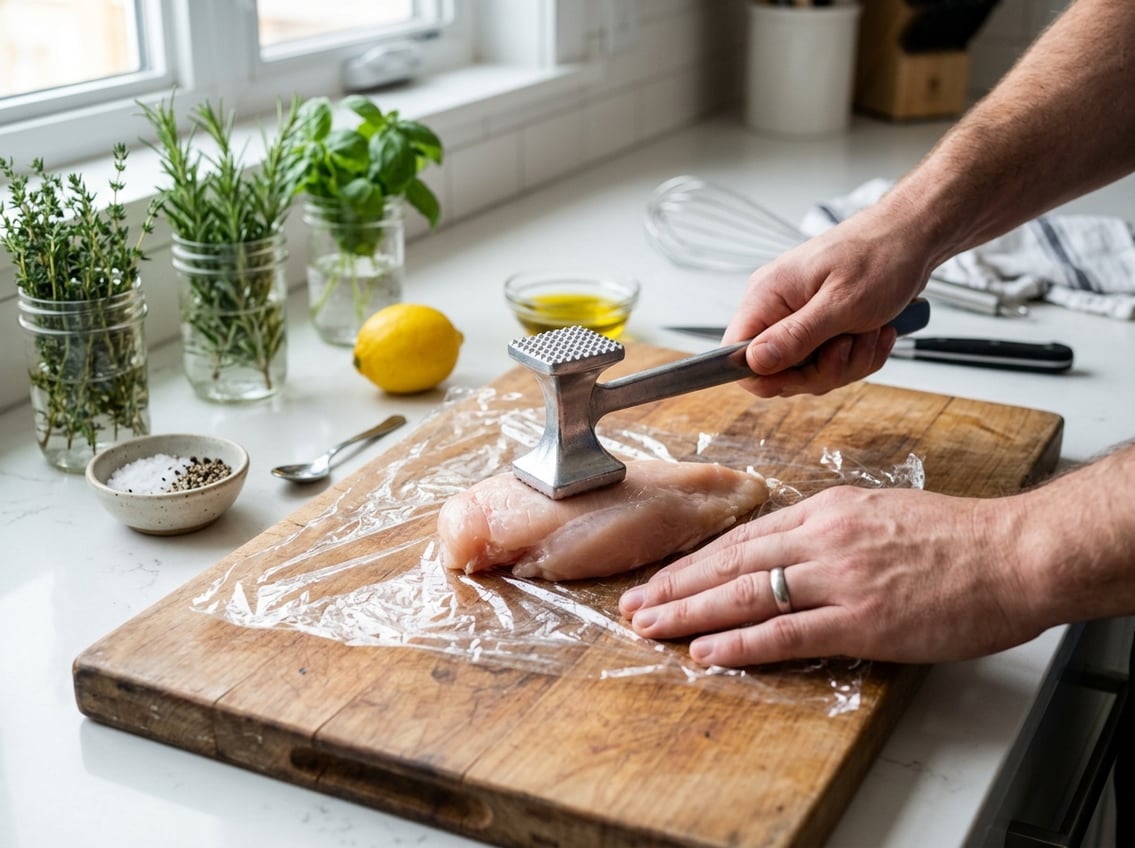
Use a careful pounding technique to get even thickness without shredding the meat. The goal is to spread the thick parts outward until the breast cooks at a steady rate.
Set Up a Clean, Stable Work Surface
Start with a cutting board that does not slide. Place the chicken breasts on the board, then cover them with plastic wrap, parchment, or a bag.
This barrier keeps the surface clean and helps prevent tearing. It also makes the work easier with a meat mallet, rolling pin, or meat tenderizer.
Start at the Thick End and Work Outward
Begin where the breast is thickest and use gentle, even strikes. Move outward toward the thinner edges instead of focusing only on the center.
This technique helps keep the meat in one piece. The step-by-step guide to pounding out chicken breasts evenly recommends using the flat side of the mallet.
Aim for a Practical Thickness for Your Recipe
Do not flatten the chicken more than the recipe needs. For cutlets, about 1/2 inch is often enough, while some dishes may need slightly thicker pieces.
The right thickness depends on how you plan to cook the chicken breasts. Thin cutlets brown quickly, while a slightly thicker piece gives you a little more room if you are grilling or pan-searing.
Avoid Over-Pounding and Uneven Edges
Stop as soon as the breast is even. If you keep striking the same spot, the meat can tear or become too thin at the edges.
Uneven edges cook faster and can dry out. Use light, controlled hits so the whole piece stays close to the same thickness.
Tools, Safety, and Cooking Results to Watch
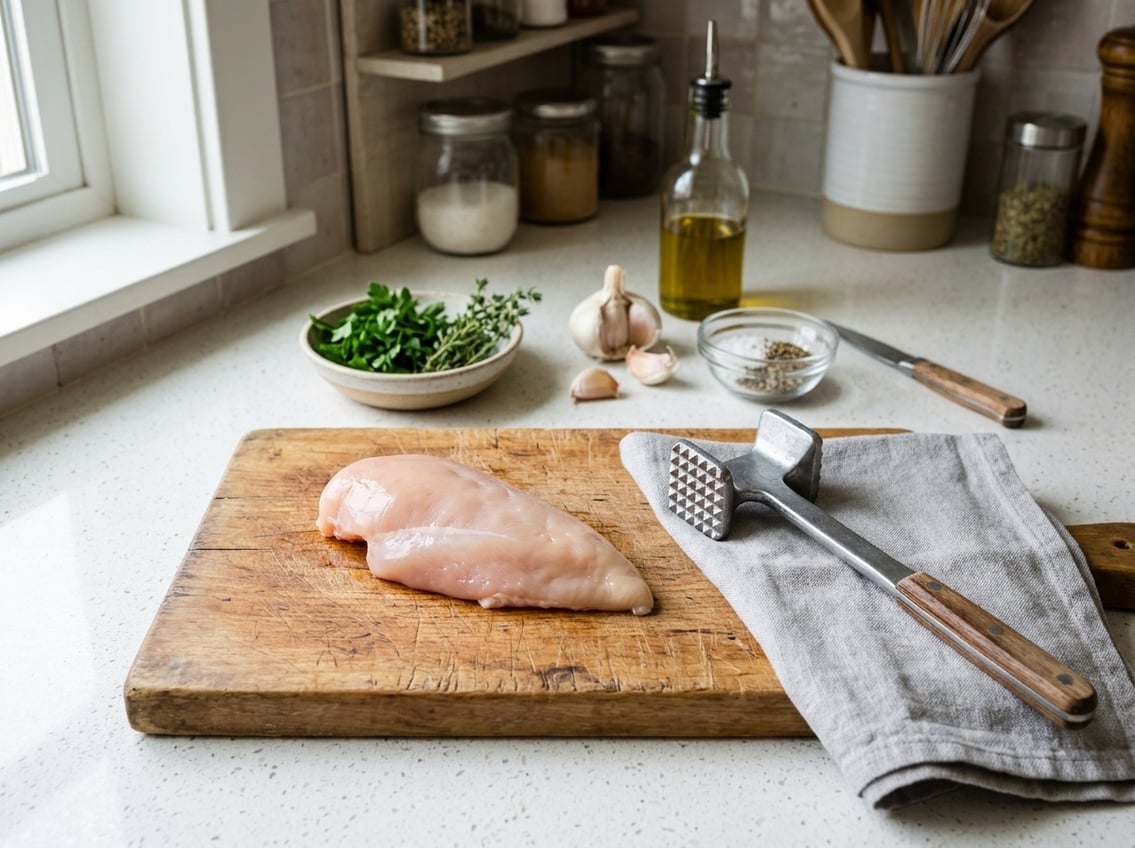
The tool you use affects both the texture and the mess level. Watch doneness carefully, since flattened chicken breasts cook faster than thicker ones.
Best Kitchen Tools for the Job
A meat mallet is the most direct tool. A rolling pin works well if you do not have one.
A meat tenderizer can help, though it is better for softening meat than creating a smooth, even shape. Among the common tools for pounding chicken breasts, the flat side of a mallet usually gives the cleanest result.
Avoid using the textured side unless you specifically want more tenderizing.
Bag, Wrap, or Parchment: What to Use as a Barrier
Use a zip-top bag, plastic wrap, or parchment paper between the chicken and the tool. This barrier keeps juices from splattering and keeps the meat from sticking.
Parchment is a strong choice if you want a cleaner setup. A bag is useful when you want to flatten multiple pieces with less cleanup.
Check Doneness and Prevent Dry Chicken
Flattened chicken cooks faster, so use a meat thermometer to check the center. This is the safest way to avoid undercooking or overcooking.
Once the chicken reaches a safe internal temperature, remove it from the heat right away. Thin pieces can dry out quickly if they stay on the burner too long.
Adjust Cook Time After Pounding
Shorten the cooking time after you pound chicken breast.
Since the meat is thinner, it needs less time on the stove, grill, or in the oven.
That change matters most in fast recipes like chicken cutlets and chicken parmesan.
If you keep the original cook time, the outside may overbrown before the inside finishes evenly.


