
Is It Safe to Eat Chicken Breast With Blood? Key Facts
If you are asking is it safe to eat chicken breast with blood, remember that color alone does not tell you enough.
A chicken breast can look red, pink, or bloody near the center and still need more cooking, or it can be fully cooked and still show some color near the bone.
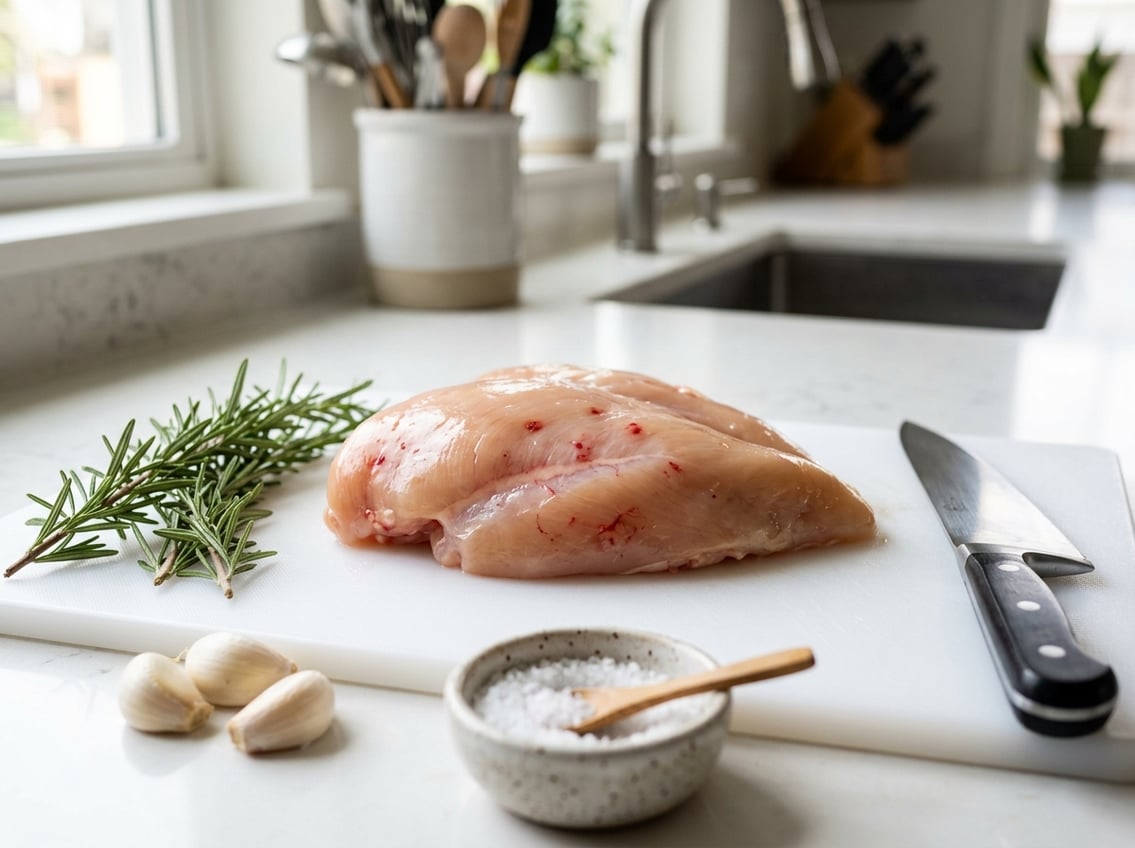
The safest answer: eat chicken breast only when it reaches 165°F in the thickest part, because temperature matters more than color.
If the center still looks raw or you find truly bloody juices, cook it longer and check again.
A little pink does not always mean danger, and a red tint is not always actual blood.
Undercooked chicken can carry harmful bacteria, so treat any questionable center as a food safety issue until you verify the temperature.
When Chicken Breast With Blood Is and Is Not Safe
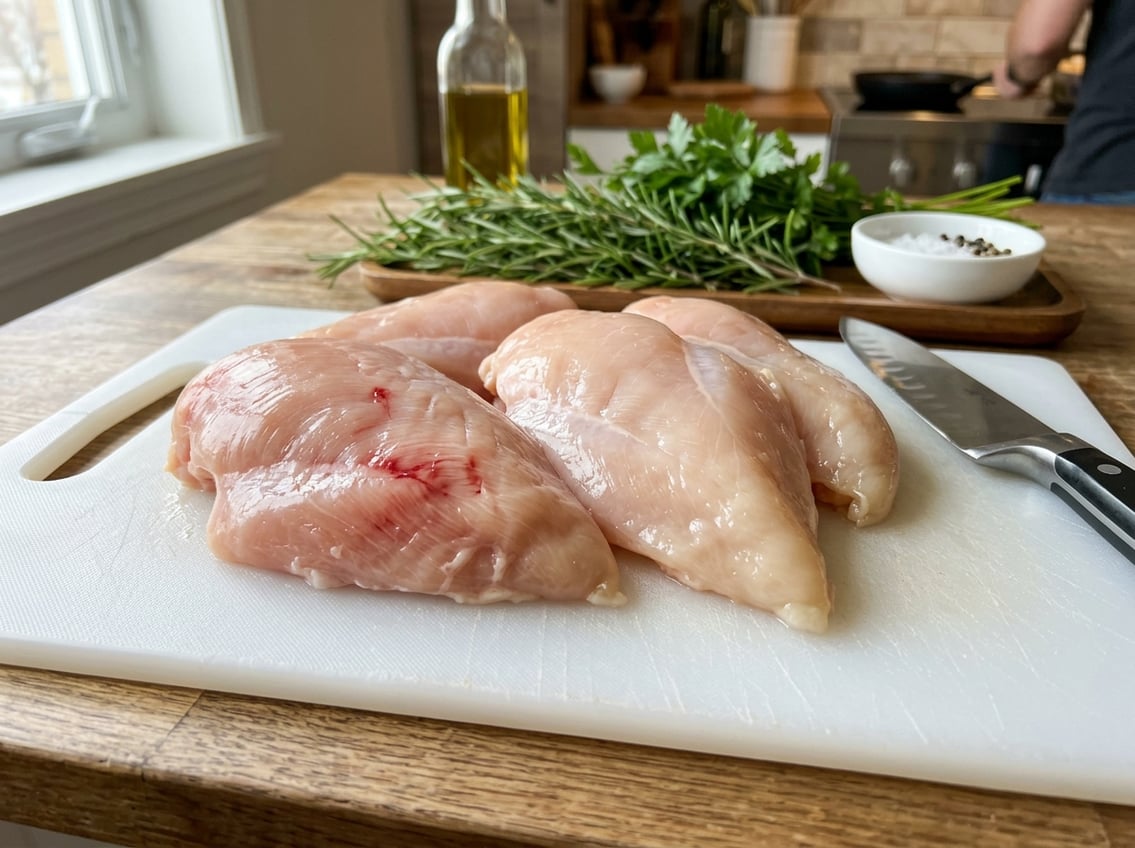
Properly cooked chicken is safe, undercooked chicken is not.
If you see cooked chicken with blood or a pink center, check whether the meat reached a safe internal temperature.
The Short Answer for Cooked Chicken
If your chicken breast reaches 165°F at the thickest point, you can safely eat it even if it still looks slightly pink in spots.
A light color change can happen for reasons that are not dangerous.
Visible bloody juices are a different case.
If the center looks raw and the temperature is below 165°F, keep cooking.
Why Undercooked Poultry Is Risky
Raw and undercooked poultry can carry germs such as campylobacter and clostridium perfringens.
These bacteria can cause food poisoning, especially if the chicken stayed in the danger zone for too long or was not cooked fully.
The risk increases when you rely on appearance alone.
Some chicken breasts look done on the outside while the center is still undercooked.
Safe Internal Temperature for Proper Doneness
The U.S. food safety standard for chicken is 165°F (74°C).
Measure that temperature in the thickest part of the breast, away from bone and pan contact.
A thermometer gives you a clear answer.
Color does not.
What the Red or Pink Color Actually Means
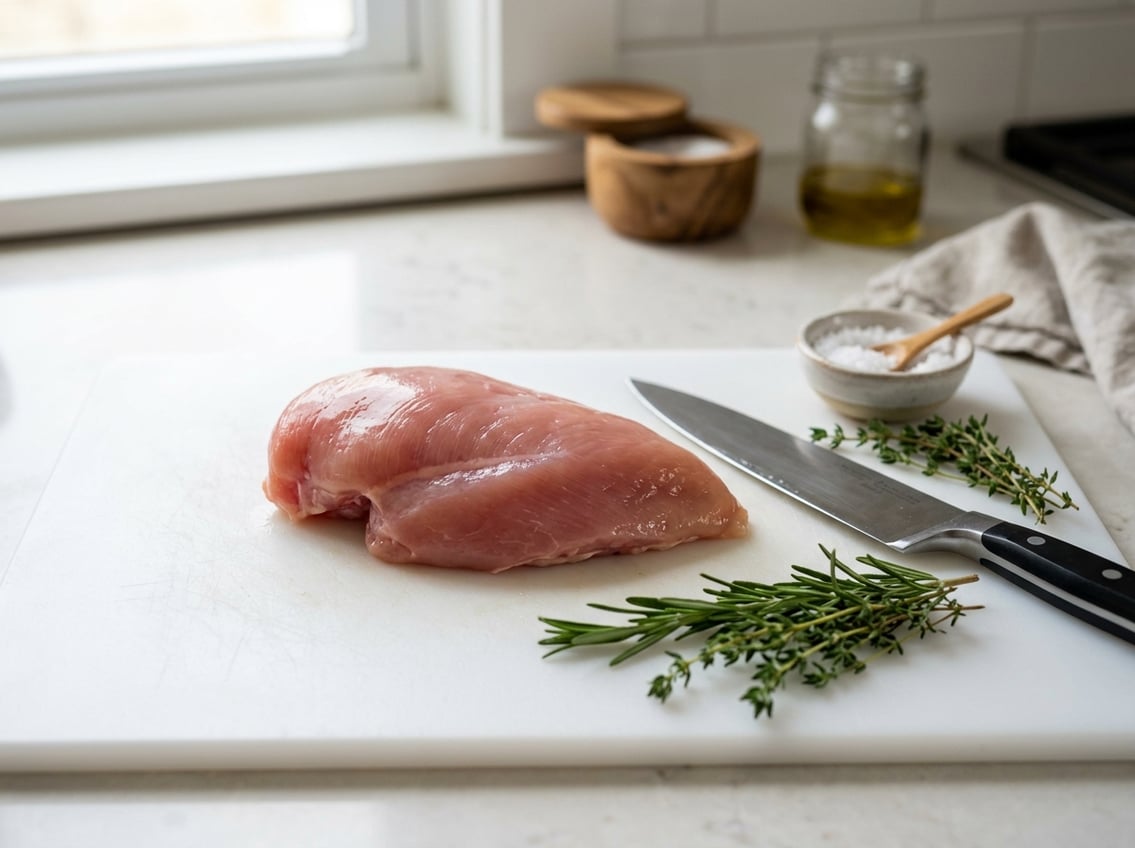
Pink or red coloring in chicken can be confusing, because not every red area is blood.
The color may come from muscle pigments, bone marrow, or cooking conditions, which is why blood in chicken is not always what it seems.
Blood vs. Myoglobin in Poultry
What many people call blood in cooked chicken is often myoglobin, a protein in muscle tissue that holds oxygen.
It can leave a pink or red look in the meat or juices even after cooking.
Blood in cooked chicken is not the same as seeing raw blood.
A pink color can be harmless, while a raw texture or low temperature is not.
Why Pink Chicken Can Be Misleading
Pink chicken can happen in chicken that is fully cooked, especially near bones or in younger birds.
Freezing, thawing, and cooking near the bone can also make juices look red.
A good reference on this point is the explanation from Blood in Chicken: Is It Safe? What You Need to Know, which notes that red or pink color can come from myoglobin and bone marrow, not just undercooking.
Why Chicken Breast Usually Differs From Dark Meat
Chicken breast is white meat, so it usually looks more opaque and pale when cooked.
Dark meat has more myoglobin, so it can stay darker and sometimes appear redder near the bone.
A chicken breast with a pink center deserves attention, while a slight tint in darker cuts is less unusual.
You should still check temperature for every cut.
How to Check Chicken Breast Correctly
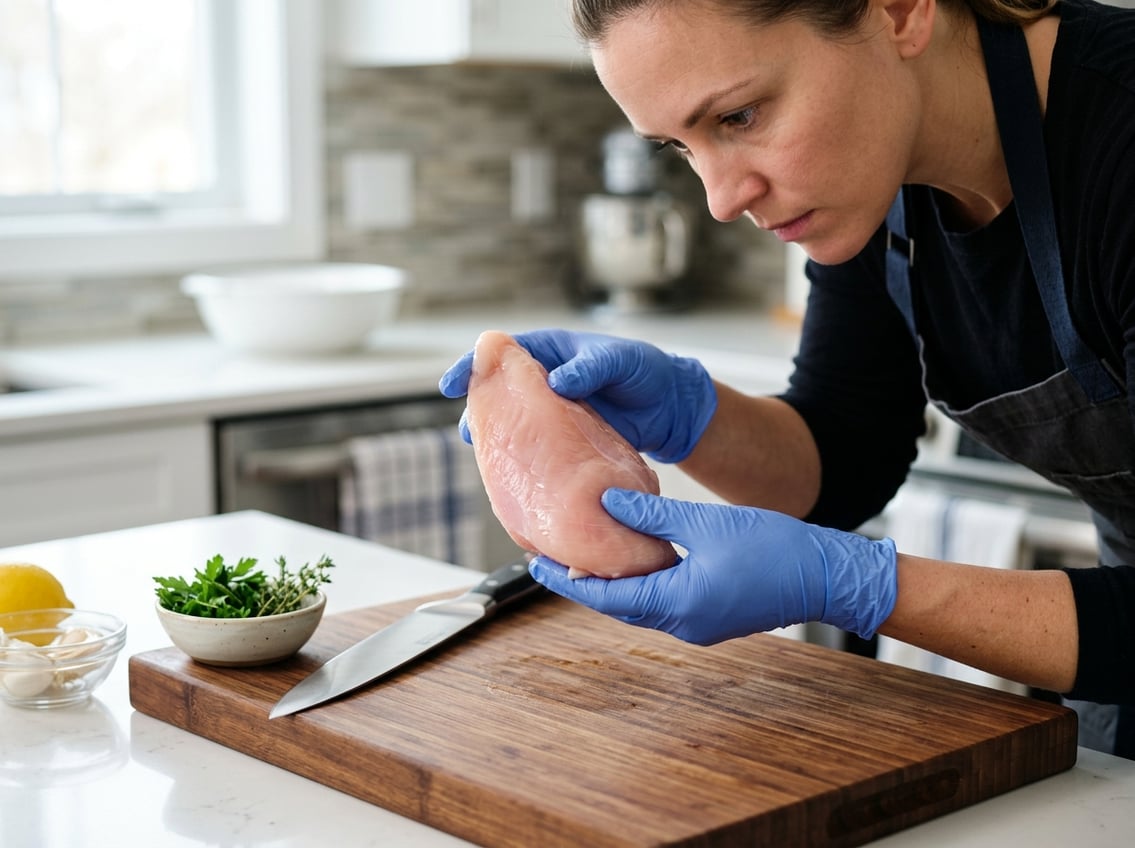
Do not guess based on color, time alone, or whether the juices run clear.
A quick thermometer check gives you the most reliable answer.
A few visual signs can support that check.
Where to Use a Thermometer
Insert the thermometer into the thickest part of the breast.
Stay away from the pan, the bone, and any very thin edge, because those spots can give you a false reading.
If the chicken is uneven, check more than one spot.
The coolest point is the one that matters most.
Visual Signs That Support Temperature Checks
Properly cooked chicken breast should look opaque and firm, not glossy and raw.
The juices should not appear strongly bloody, and the meat should separate cleanly when cut.
A helpful guide from Is Your Chicken Breast Done? The Ultimate Guide to Nailing It Every Time! explains that the safest method is a thermometer at 165°F, with clear juices and an opaque center as support signs.
What to Do if You Cut Into a Bloody Center
If you cut into the breast and the center looks bloody or very pink, put it back on the heat.
Cook it a little longer, then check the temperature again before serving.
Do not try to fix it by only resting the chicken.
Resting helps juices settle, but it does not finish cooking meat that is still underdone.
Storage and Handling Mistakes That Increase Risk
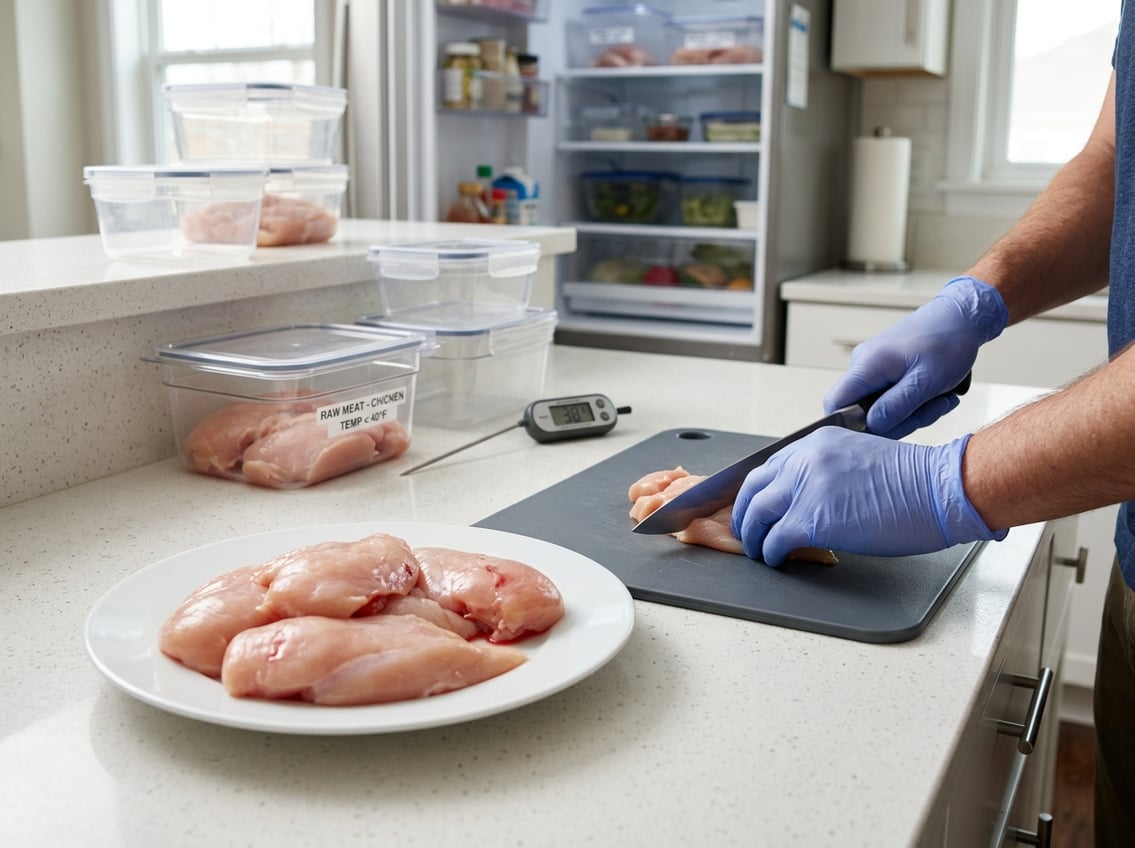
Safe cooking starts before the pan or oven.
If you store raw chicken badly or spread raw juices around the kitchen, you increase the chance of illness even if the final dish looks fine.
How to Store Raw Chicken Safely
Store raw chicken in the refrigerator at 40°F or below, and keep it sealed so juices do not leak.
Put it on the lowest shelf so it cannot drip onto ready-to-eat food.
If you will not use it soon, freeze it.
A careful storage habit lowers the chance that undercooked chicken or contaminated surfaces become a problem later.
Cross-Contamination to Avoid in the Kitchen
Wash your hands after touching raw chicken, and clean cutting boards, knives, and counters right away.
Do not place cooked chicken back on the same plate that held raw meat.
Germs such as campylobacter and clostridium perfringens can spread from raw juices to other foods and surfaces.
A clean kitchen is part of food safety, not just a neat habit.
When to Discard Chicken Instead of Cooking More
Throw chicken away if it smells bad or feels slimy. If it sat out too long, it may not be safe to eat.
If you are unsure whether the chicken stayed cold enough, do not take chances. Start with fresh chicken and cook it properly.


