
Chicken Breast vs Thigh Calories: What Changes Most
Chicken breast vs thigh calories matter when you want to match food choices to your goals. The difference is not huge by the ounce, yet it adds up fast across a week of meals.
If you want the leanest option, chicken breast usually gives you fewer calories and more protein per bite. Chicken thigh gives you more fat, richer flavor, and more calories.
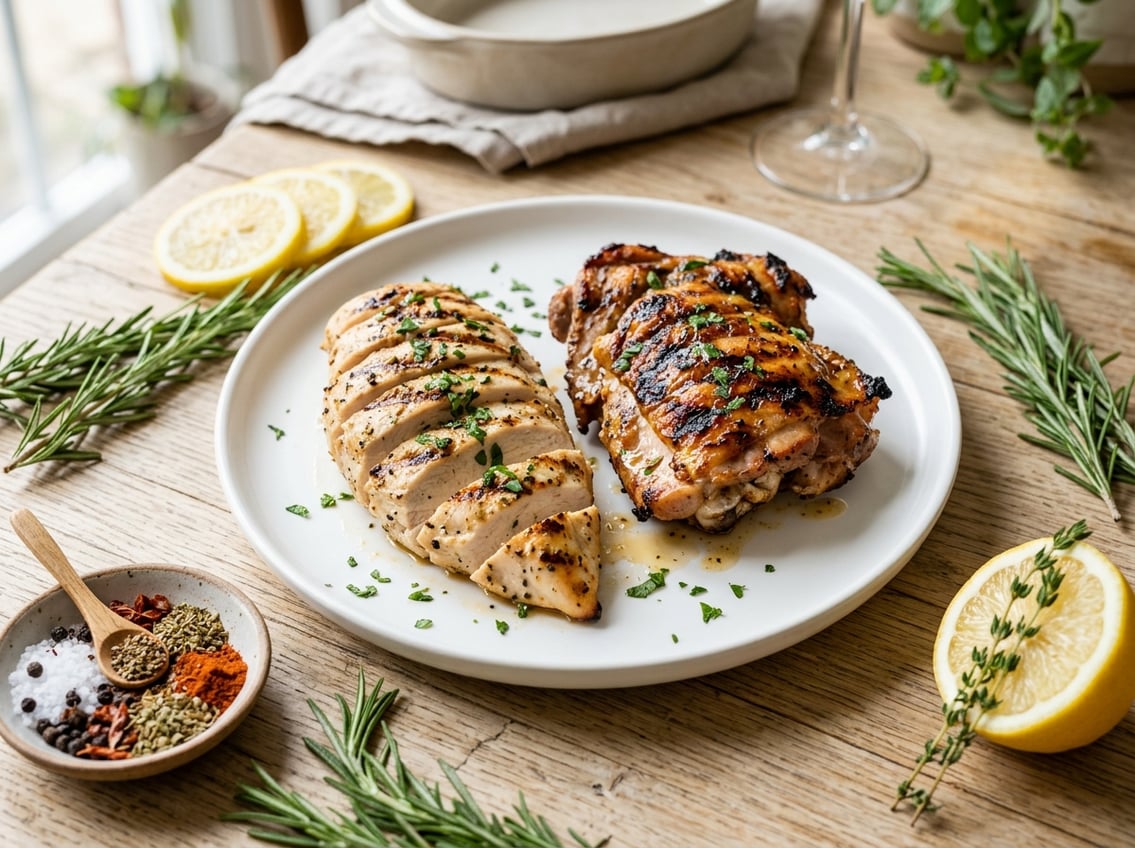
The cut you choose changes more than calories alone. Skin, cooking method, and portion size can shift the numbers enough to matter for meal planning, weight loss, bodybuilding, or simple everyday eating.
Calorie Differences at a Glance
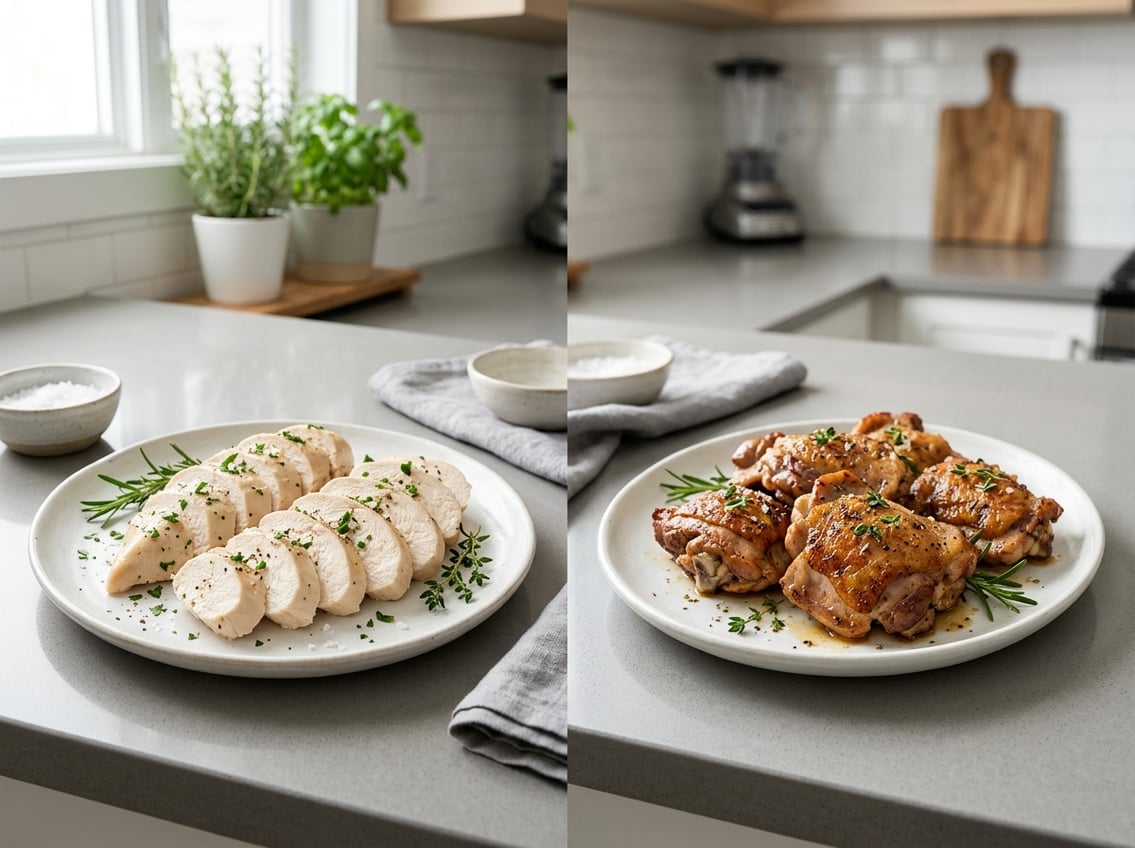
Chicken breast usually comes out lower in calories because it has less fat. That makes chicken breast one of the most popular lean protein sources for people tracking intake closely.
The gap is not massive in every serving, yet it becomes clear once you compare equal cooked portions.
Typical Calories Per 100 Grams and Per Serving
For roasted, skinless meat, Verywell Health’s chicken breast vs thigh comparison lists these values per 100 grams:
| Cut | Calories | Protein | Fat |
|---|---|---|---|
| Chicken breast | 165 | 31 g | 3.57 g |
| Chicken thigh | 179 | 24.8 g | 8.15 g |
In a standard 3-ounce serving, breast usually has around 140 to 165 calories. Thigh has around 170 to 180 calories, depending on how you cook and trim it.
Why Thigh Meat Usually Has More Calories
Chicken thigh contains more intramuscular fat than chicken breast. Fat has more than twice as many calories per gram as protein, so the extra fat in thigh meat raises the calorie count quickly.
That extra fat also makes chicken thigh taste richer and feel juicier.
Protein Per Calorie Comparison
Chicken breast gives you more protein for each calorie. Using the roasted values above, breast provides about 31 grams of protein for 165 calories, while thigh provides 24.8 grams for 179 calories.
If your goal is to maximize protein while keeping calories low, breast has the edge. If you want a little more richness and do not mind the extra calories, thigh still gives you a solid amount of protein.
How Fat, Skin, and Preparation Affect the Numbers

The cut is only part of the story. Skin, added oil, breading, and high-heat frying can change calories more than the difference between breast and thigh alone.
If you compare skinless chicken breast vs skinless chicken thigh, you get the cleanest look at the natural calorie gap.
Skinless Chicken Breast vs Skinless Chicken Thigh
Skinless chicken breast is usually the lowest-calorie choice. Skinless chicken thigh still has more fat, so it still tends to run higher in calories even when the skin is removed.
How Skin Changes Calories and Fat
Skin adds a noticeable amount of fat to both chicken breast and chicken thigh. Verywell Health notes that keeping the skin on can increase fat and calories by about 25% to 30%.
Removing the skin is one of the easiest ways to keep calories lower without changing the meat itself.
Baked, Grilled, Roasted, and Fried Comparisons
Baking, grilling, and roasting usually keep calories lower than frying. Added oil and breading raise the energy content quickly.
A plain baked or grilled chicken breast stays close to the numbers above. Fried chicken breast or fried chicken thigh can climb much higher, especially when the coating absorbs oil.
For lower-calorie meals, dry-heat cooking methods are the better fit.
Which Cut Fits Different Nutrition Goals

Your best choice depends on your goal, not just the calorie total. Chicken breast and chicken thigh both fit into a balanced diet, yet they shine in different situations.
If you track calories, protein, or meal prep portions, the difference between chicken breast and chicken thigh matters in practical ways.
Best Choice for Lower-Calorie Meals
Chicken breast is usually the better pick when you want the fewest calories possible. It gives you high protein with less fat, which helps when you are building meals around lean protein sources.
This makes breast a strong choice for salads, bowls, wraps, and simple plate meals where you want the chicken to stay light.
Best Choice for High-Protein Meal Prep
Chicken breast also works well for meal prep because it stays predictable. You can portion it by weight and get a high-protein result with a fairly low calorie count.
If you are cutting weight or trying to keep macros tight, breast is usually easier to plan with.
When Flavor and Fullness Matter More Than Calories
Chicken thigh can be the better choice when you want more flavor, tenderness, and satiety. The extra fat helps the meat stay juicy, which can make meals feel more satisfying.
If you prefer a richer taste or you are pairing the chicken with vegetables and lighter sides, the small calorie increase may be worth it.
Nutrition Tradeoffs Beyond Calories
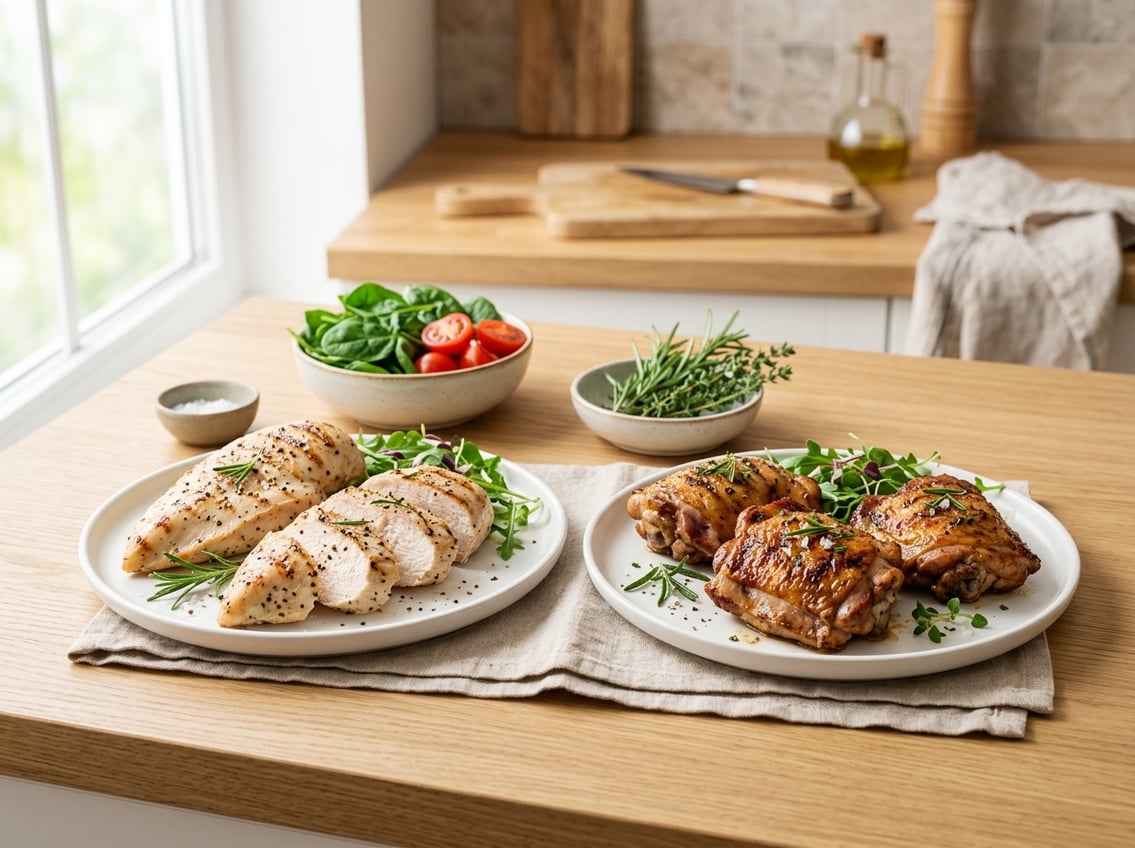
Calories do not tell the whole story. Chicken breast and chicken thigh differ in protein, fat, micronutrients, cost, and how they behave in the pan or oven.
Protein, Fat, and Saturated Fat
Chicken breast gives you more protein and less fat per serving. Chicken thigh gives you more total fat, including a bit more saturated fat, so it delivers more calories for the same amount of meat.
If you want the most protein with the least extra fat, breast is the more efficient choice. If you want a slightly richer cut, thigh still fits well in a balanced diet.
Micronutrients Like Iron, Zinc, and B Vitamins
Chicken thigh tends to contain more iron, zinc, and vitamin B-12. Chicken breast can be higher in some B vitamins, including B-6. Verywell Health’s nutrient table shows those differences clearly for roasted, skinless meat.
The better cut is not the same for every nutrient goal. Breast is leaner, and thigh can offer a bit more in certain minerals.
Cost, Texture, and Cooking Performance
Chicken thighs usually cost less by the pound. They are more forgiving during cooking.
The extra fat in thighs helps prevent dryness. Thighs stay tender more easily than breast.
Chicken breast is milder and leaner. It can dry out if you overcook it.
If you want easier cooking and more flavor, choose thigh. For lower calories and simpler macro counting, breast usually wins.


