
Chicken Breast vs Thigh Protein: Key Differences
Chicken breast gives you more protein per calorie and less fat. Chicken thigh gives you a little less protein and more calories, with a richer taste.
If your goal is the leanest high-protein choice, chicken breast usually wins. If you want a cut that feels more filling and is easier to keep juicy, chicken thigh is a strong lean protein option, especially when you manage portions and remove the skin.

The choice between chicken breast and thigh depends on your meal needs. Many people use both at different times, depending on calories, protein needs, flavor, and how full they want to feel.
Protein Comparison
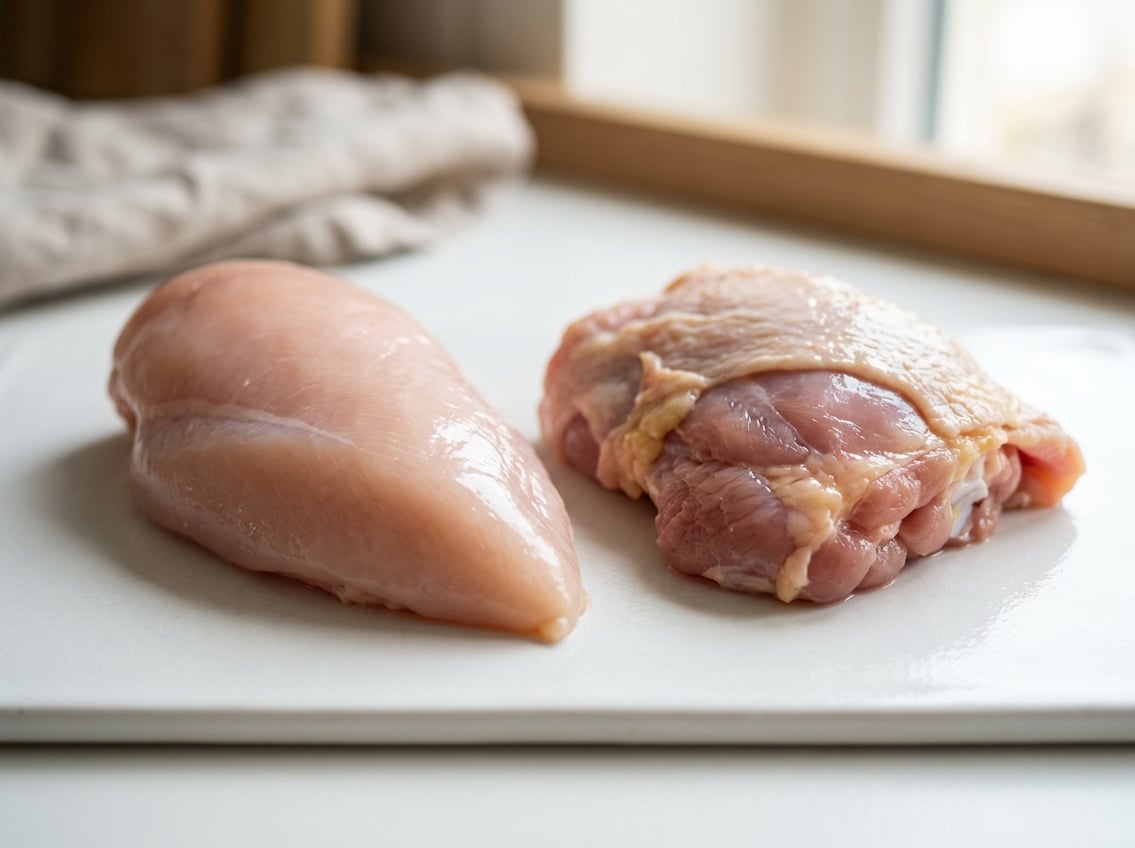
Chicken breasts and chicken thighs both provide a lot of protein, but the numbers are not the same. Chicken breast is the more protein-dense cut, while chicken thigh brings more fat and a little less protein per same weight.
Protein Per 100 Grams
According to USDA data cited by Prevention, 100 grams of boneless, skinless chicken breast has about 22.5 grams of protein. The same amount of boneless, skinless chicken thigh has about 18.6 grams of protein.
Chicken breast gives you more protein in the same amount of food. If you track protein closely, that difference matters.
Protein Per Calorie
Chicken breast provides more protein for each calorie. In the USDA numbers from the same analysis, chicken breast has 106 calories per 100 grams, while chicken thigh has 144 calories per 100 grams.
Chicken breast is a better choice when you want a high-protein, lower-calorie meal. Chicken thigh still provides strong protein, just with more energy from fat.
How Serving Size Changes the Numbers
Serving size changes the comparison quickly. A larger portion of chicken thigh can close the protein gap, while a smaller portion of chicken breast can still meet a meal target.
If you eat by the plate instead of by the scale, the real difference is often meal design. A chicken breast lunch can fit more easily into a calorie budget, while chicken thighs may help you feel satisfied with less risk of dryness.
Calories, Fat, and Nutrient Trade-Offs
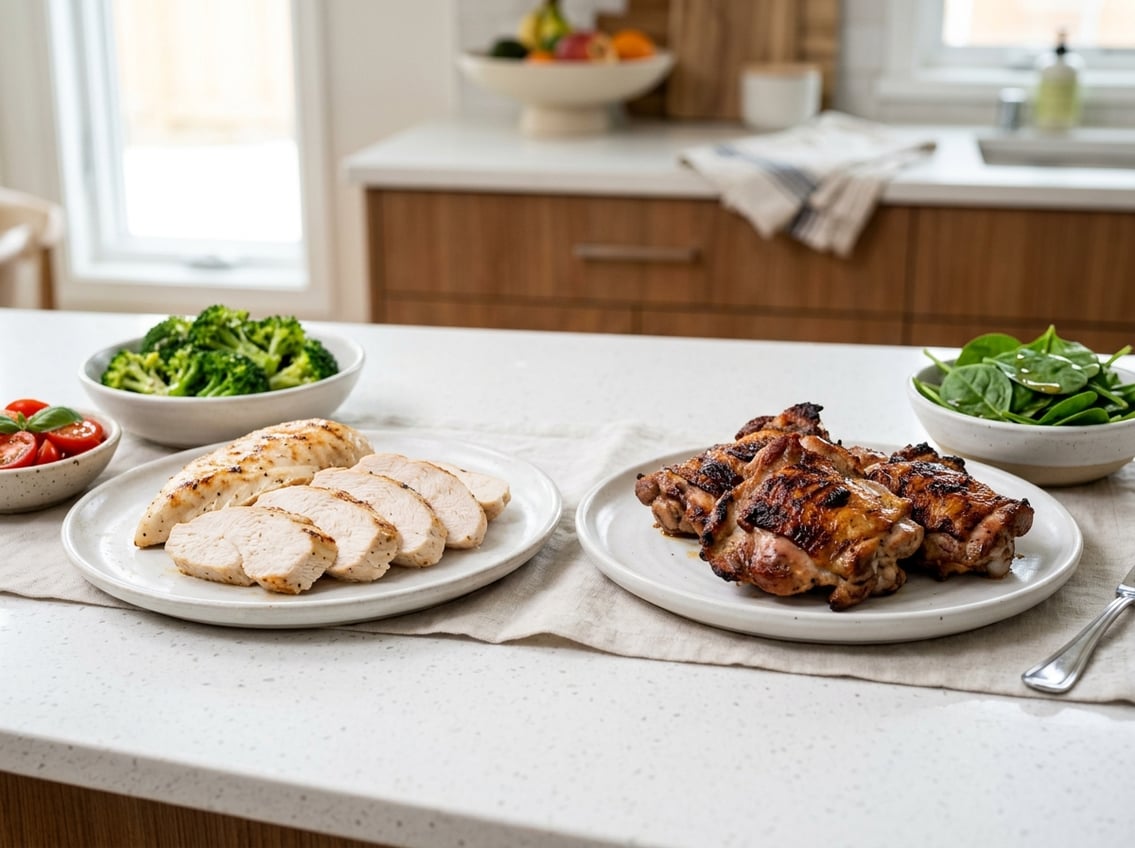
The biggest trade-off in chicken breast vs thigh protein is not just protein. It is also fat, calories, and the nutrients that come with darker meat.
Skinless cuts keep the comparison cleaner, since skin changes both fat and calorie counts.
Why Chicken Breast Is Leaner
Skinless chicken breast is low in fat, which is why it is known as a lean protein. In the USDA numbers shared by Prevention, chicken breast has about 2 grams of fat per 100 grams, compared with 8 grams in chicken thigh.
That lower fat level is why breast usually has fewer calories. It also cooks quickly and works well for lighter meals.
What Chicken Thigh Adds Beyond Protein
Chicken thigh gives you more than extra fat. It brings a juicier texture and a stronger flavor, which can make meals feel more satisfying.
Thighs contain more iron and zinc than breasts. This makes them a useful option when you want a cut with a little more nutrient variety.
Skin-On vs Skinless Nutrition Differences
Skinless chicken breast and skinless chicken thigh give you the cleanest protein comparison. Skinless chicken thighs still have more fat than skinless chicken breast, while skin-on cuts raise fat, saturated fat, and calories further.
If you watch calories or saturated fat, skinless chicken is the better everyday choice. Skin on can fit into your diet, just with more attention to portion size.
Which Cut Fits Your Goal

Your choice depends on what you want the meal to do. Chicken breast and thigh each serve a different purpose in your diet.
Best for Muscle Building
Chicken breast is the easier pick when your goal is to build muscle with a lean meal. You get more protein for fewer calories, which helps you hit protein targets without using up much of your daily calorie budget.
Chicken breasts are especially useful around workouts or when you already get enough fat from other foods.
Best for Weight Loss and Lower-Calorie Meals
Chicken breast is usually the better choice for weight loss and lower-calorie meal plans. It gives you a lot of protein without adding much fat, which can help you stay within your target intake.
If chicken thighs keep your meals more satisfying, they can still fit into a weight loss plan when portions stay in check.
Best for Fullness, Flavor, and Budget
Chicken thighs often win on taste and fullness. The extra fat makes them more juicy and can help meals feel more complete, which may reduce snacking later.
They can also be budget-friendly in many U.S. stores, especially when bought in family packs or on sale. If you want a meal that is easy to cook well and easy to enjoy, thighs are a practical choice.
Cooking Method and Everyday Use

Cooking method changes the final protein meal more than many people expect. Grilling, baking, and roasting all work well, yet the cut you choose affects moisture, texture, and how much added fat you need.
Grilled Chicken for Higher-Protein Meals
Grilled chicken breast is a classic high-protein choice because it cooks fast and stays lean. If you want a simple meal with minimal added calories, this is one of the easiest options.
Grilled chicken thighs also work well, especially if you want more flavor and a less dry result. A little extra fat can make grilling more forgiving.
Baked Chicken and Roasted Chicken
Baked chicken and roasted chicken both fit into a healthy eating plan. Chicken breast can dry out if you overcook it, while chicken thigh tends to stay moist longer in the oven.
If you use skinless chicken, you keep the nutrition closer to the lean-protein goal. Seasoning, cook time, and resting time matter a lot for both cuts.
When Breast or Thigh Works Better in Recipes
Chicken breast works well in salads, bowls, stir-fries, wraps, and meal prep boxes. These dishes benefit from a clean protein base.
Chicken thigh often works better in tacos, curries, soups, and casseroles. These recipes benefit from richer flavor.
For everyday use, you can use both. Choose chicken breast for lighter meals and chicken thighs for richer dishes.


