
Do I Cover Chicken Breast When Baking? What to Do
If you ask, do I cover chicken breast when baking, the answer depends on the result you want. Covering holds in steam and moisture, while leaving it uncovered helps the surface brown and turn more golden.
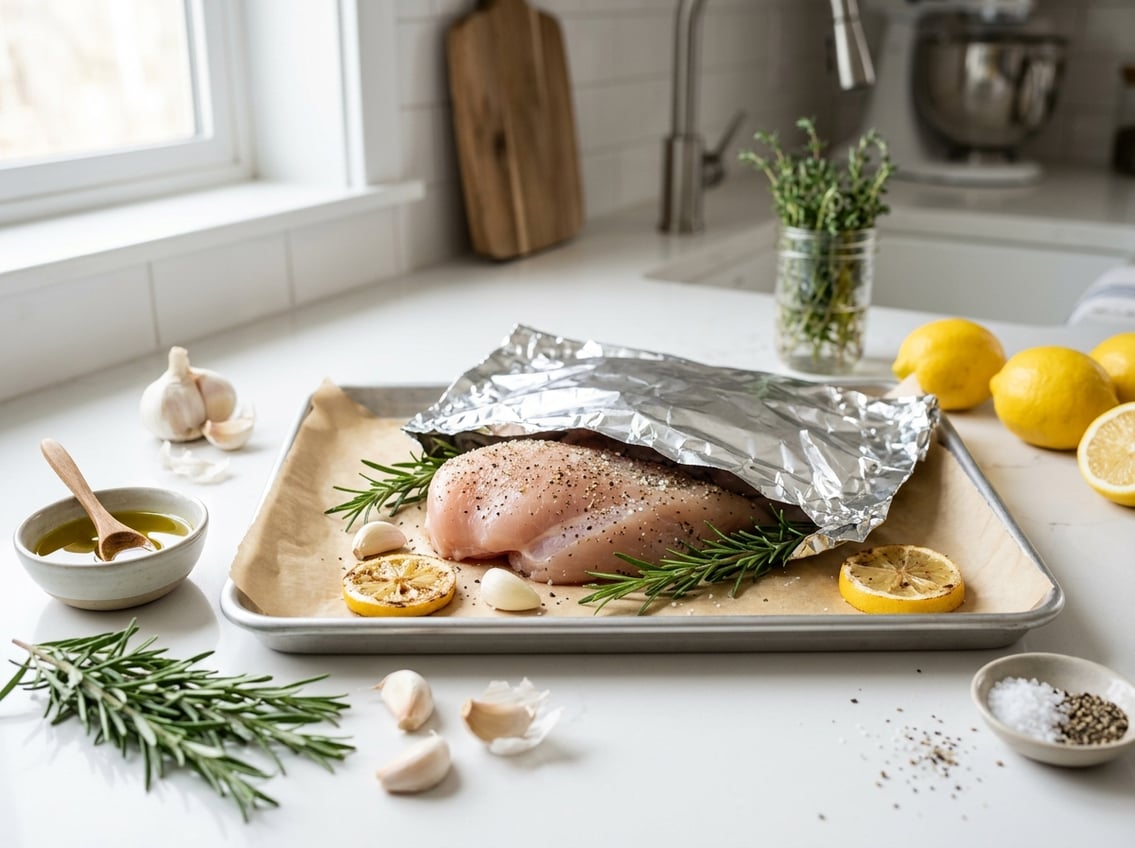
You usually get the best results for juicy baked chicken breast by using heat control, a thermometer, and the right timing. That matters whether you want a simple weeknight meal or more tenderness.
The choice is simple once you know what each method does. You can cover, leave it uncovered, or use both methods in the same bake.
The Short Answer: When to Cover and When to Leave It Uncovered
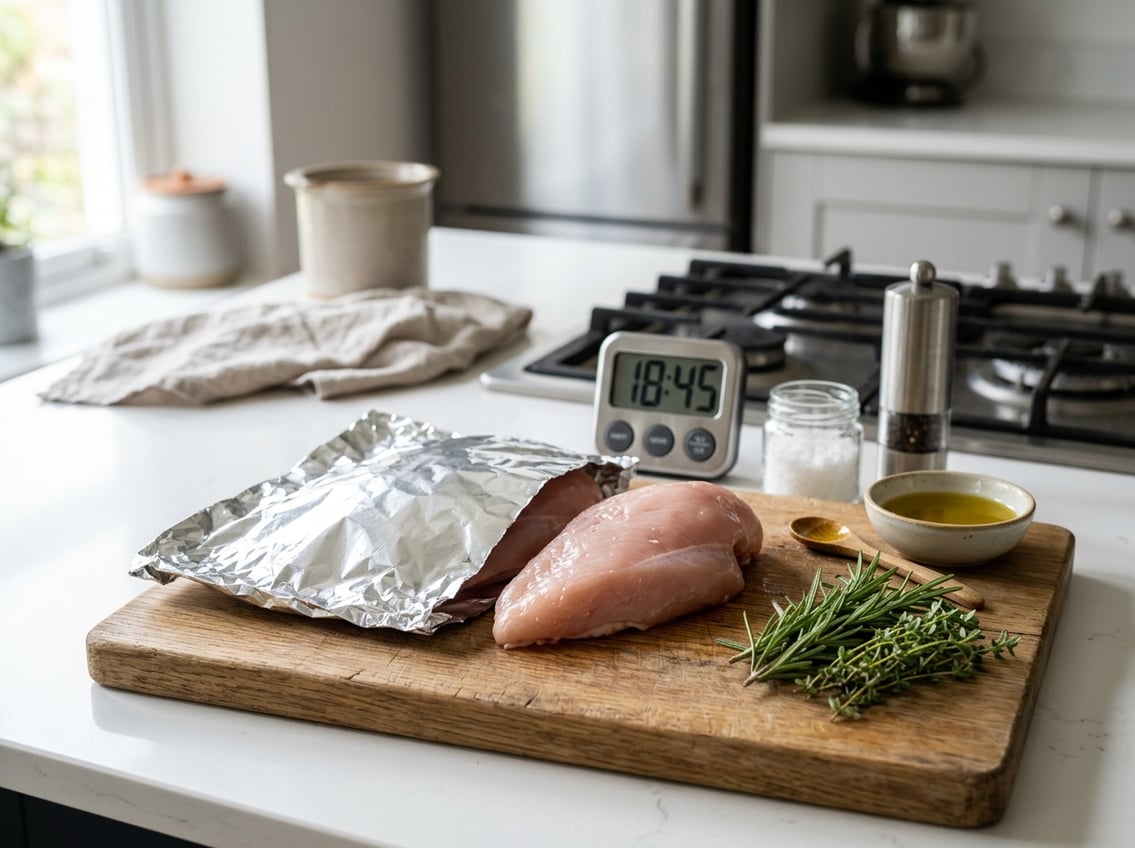
Cover chicken breast when baking if you want more moisture and a softer texture. Leave it uncovered if you want better browning and a drier surface that firms up in the oven.
Many home cooks use a hybrid method to balance both goals. Cover for part of the time and uncover near the end to get a mix of juiciness and color.
Best Times to Cover for Juicier Meat
Cover chicken breast if the breasts are lean, thin, or very uneven in thickness. Covering also helps when you bake a large batch and want to slow moisture loss.
This works well for plain weeknight meals, meal prep, or chicken you plan to slice and mix into another dish. If the breast has no skin, covering protects it from drying out.
Best Times to Bake Uncovered for Browning
Bake chicken uncovered when you want more color on the outside. This works well for skin-on chicken or when you want a firmer, more roasted finish.
If you season the surface with oil or butter and want the top to take on a light crust, bake uncovered. Direct dry heat helps the exterior darken more quickly.
Why a Hybrid Method Often Works Best
A hybrid method gives you both moisture and color. Start covered, then finish uncovered for the last part of cooking.
This approach traps steam early, then lets the surface dry and brown. You get more control than baking chicken covered or uncovered for the full time.
What Changes in Texture, Moisture, and Color
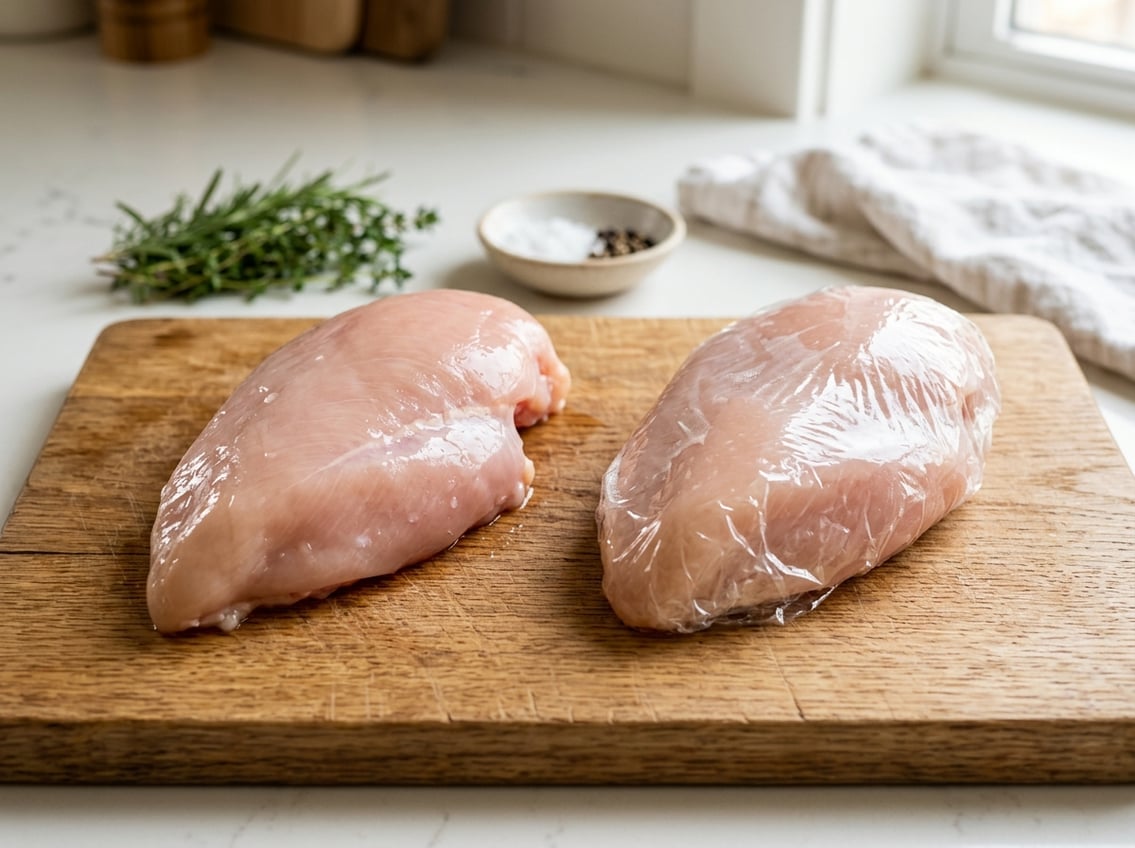
How you cook chicken breast changes how tender it feels, how much juice it keeps, and what color the outside develops. Covering or leaving chicken uncovered creates different cooking environments.
Steam and dry heat make the biggest difference. That affects both the inside and outside of the meat.
How Steam Affects Tenderness
Covering chicken breast traps steam around the meat and slows surface drying. The breast feels softer and more tender.
Covered baking often works well for chicken breast, which can dry out fast in a hot oven. The moisture in the covered pan protects the meat while it cooks.
Why Direct Heat Creates a Golden Exterior
Uncovered chicken dries on the surface faster. Dry surfaces brown more easily, so the outside gets a more golden look.
Heat hitting the meat directly helps the surface develop more flavor and a firmer bite. If you want a more roasted finish, choose uncovered chicken.
How Thickness and Skin Change the Result
Thicker breasts need more time, so start with some covering early on. Thin breasts can overcook faster, so watch them closely.
Skin changes the outcome. Skin-on chicken does better uncovered for crisping, while boneless, skinless chicken breast needs more help staying moist.
How to Bake Chicken Breast for the Result You Want
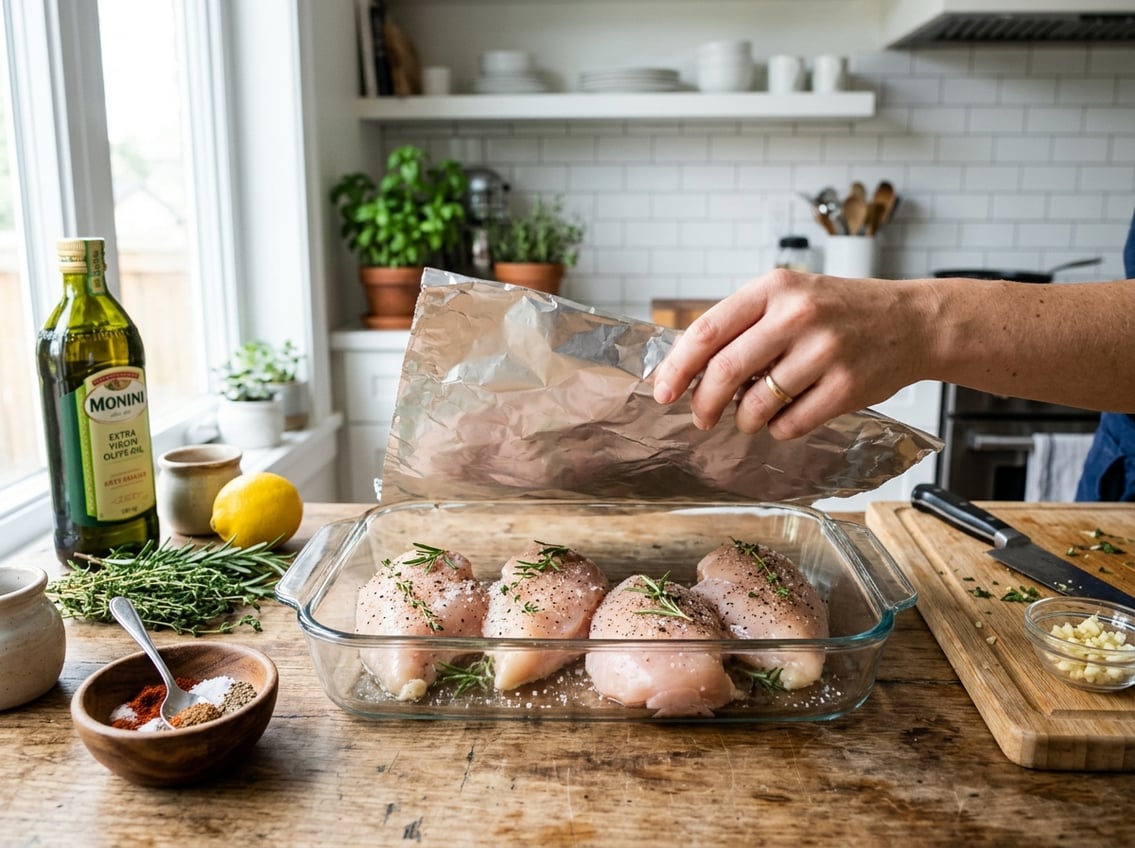
Choose your method based on whether your goal is juiciness, browning, or a balance of both. Match the method to the cut, seasoning, and thickness for good results.
If you are learning how to bake chicken for the first time, keep the process simple and monitor the internal temperature.
A Simple Covered Method for Lean Breasts
Set the chicken breast in a baking dish and cover it with foil or a lid for most of the bake. This holds in moisture and reduces the chance of dry edges.
This method works well for lean, boneless breasts, especially when you bake them plain or with light seasoning. Remove the cover near the end if you want more color.
An Uncovered Method for Better Browning
Place the chicken in a lightly oiled baking dish and bake it uncovered. The top dries and browns while the inside cooks.
Use this method for skin-on chicken or when you want a more roasted look. It also works well if you want the seasoning to form a light crust.
Temperature, Timing, and Safe Doneness
For most chicken breast, set the oven to 375°F and adjust cooking time based on thickness. Use a meat thermometer to know when it is done.
Chicken should reach 165°F in the thickest part. That gives you a safe target.
Why Marinating and Resting Matter
Marinating chicken breast before baking can add flavor and help with moisture. Even a short marinade improves the final texture.
Let the chicken rest for a few minutes before slicing. Resting helps the juices settle back into the meat.
Common Mistakes That Dry Out Chicken Breast
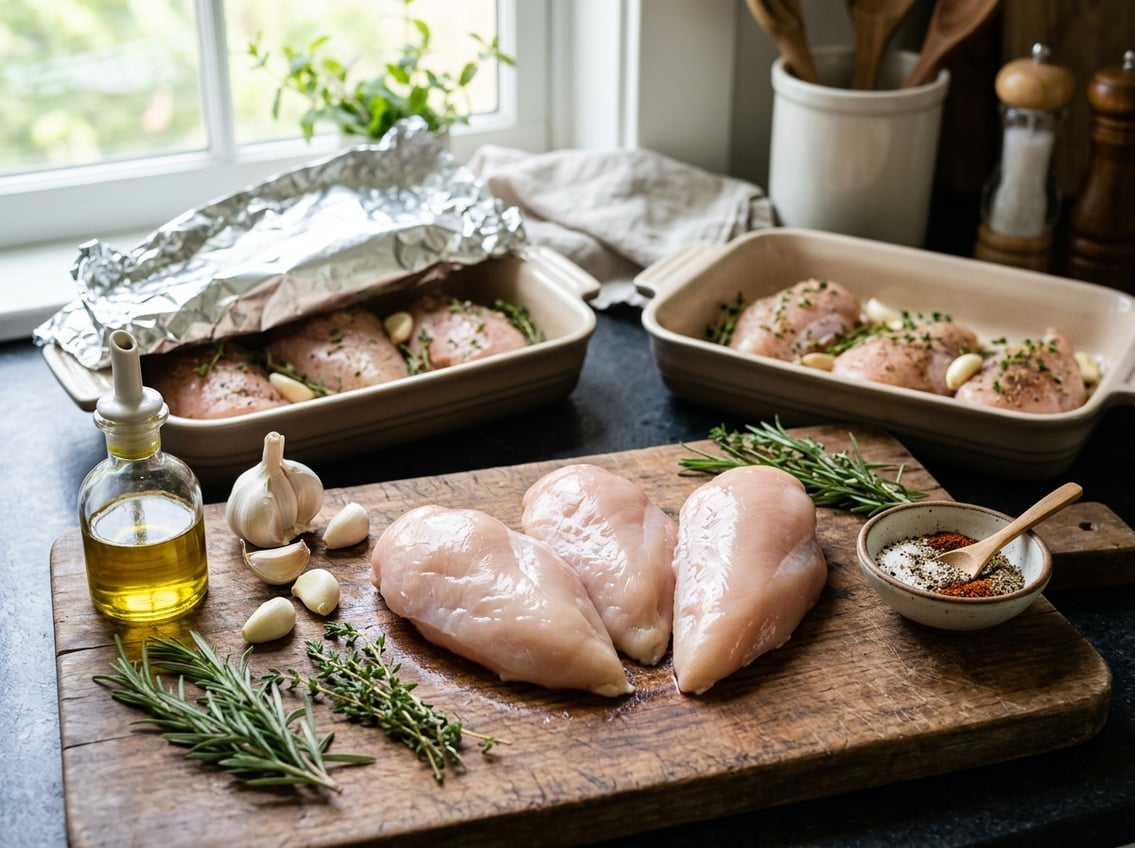
Dry chicken breast usually comes from a few avoidable mistakes. The most common ones are poor airflow, too much covered time, and cooking past safe doneness.
The wrong pan or timing can undo a good method.
Using the Wrong Pan or Overcrowding
A pan that is too small traps too much liquid or blocks heat from moving around the chicken. Overcrowding makes the meat steam unevenly.
Give each piece space so the heat reaches the surface. That helps whether you cover chicken when baking or go uncovered.
Keeping It Covered Too Long
Covering protects moisture, but too much covered time leaves the surface pale and soft. It can also make the texture feel less roasted.
If you want some color, uncover the chicken near the end of baking. That finishing step often gives better results.
Skipping a Thermometer and Overcooking
Overcooking is the most common reason chicken breast dries out. When the meat goes past 165°F and stays in the oven too long, it quickly loses moisture.
Using a thermometer helps you avoid dry meat when baking chicken uncovered or covered.


