
Will Boiling Chicken Breast Make It Tender? How to Do It Right
Boiling chicken breast can make it tender when you use gentle heat and stop cooking at the right time. If you keep the liquid at a hard boil, you are much more likely to get dry, stringy meat instead of juicy meat.
If you keep the water at a simmer and do not overcook it, you can make chicken breast tender. This approach works well for boiled chicken, boiled chicken breast, and shredded chicken you plan to use in soups, salads, casseroles, or meal prep.
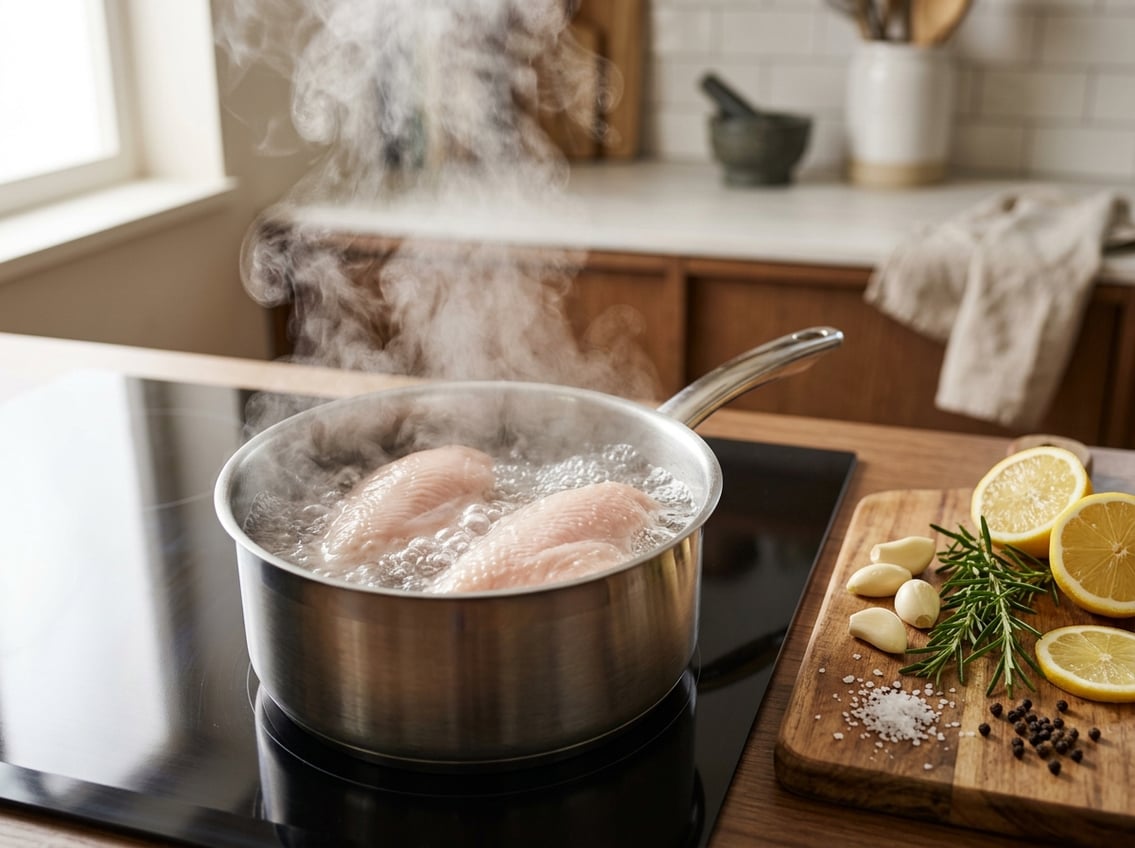
You do not need a complicated method. Use steady heat, enough liquid, and a thermometer so you know exactly when the chicken is done.
What Actually Makes Chicken Breast Tender
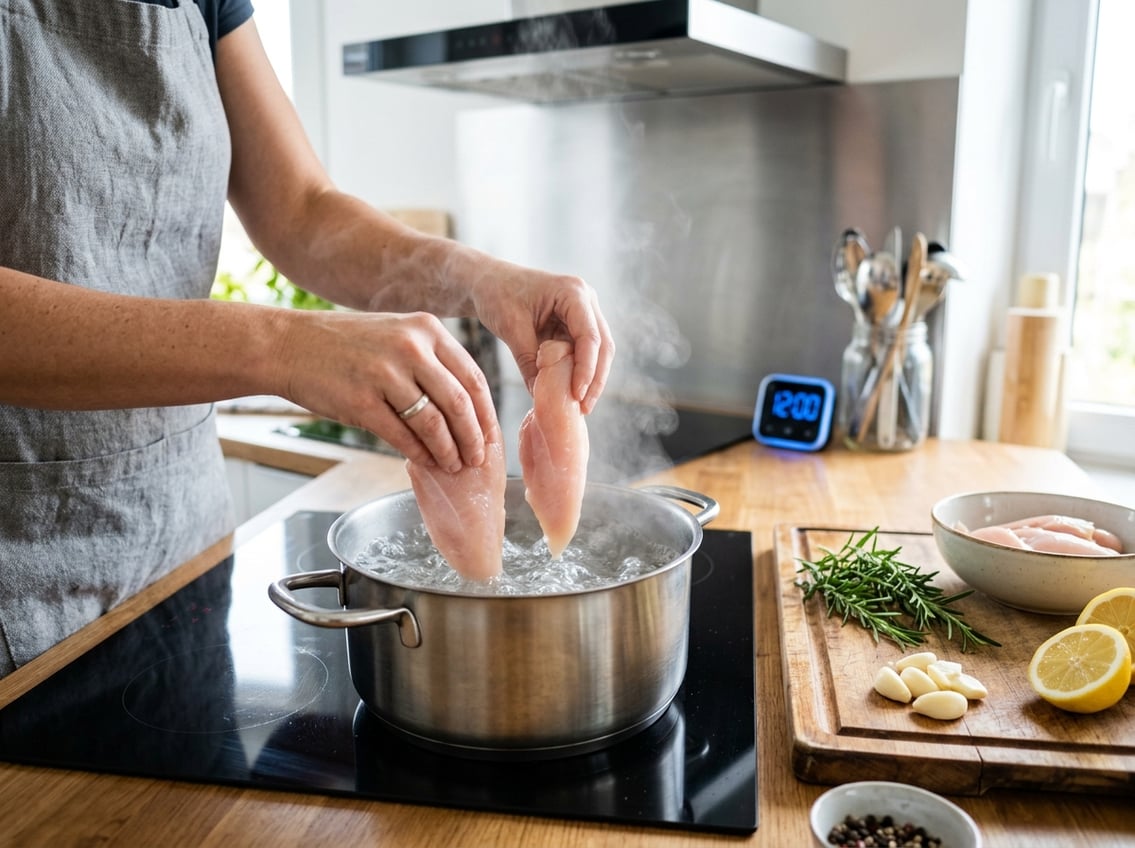
Heat control and timing make boiling chicken breast tender. Chicken breast is very lean, so it turns dry quickly when the temperature climbs too high or stays there too long.
A gentle simmer gives the meat time to cook through without squeezing out too much moisture. Treating boiled chicken breast like a controlled poach helps keep it tender.
Why Gentle Simmering Works Better Than a Rolling Boil
A rolling boil agitates the meat and tightens protein fibers fast. That extra movement and heat can make the outside tough before the inside is fully cooked.
A gentle simmer cooks the chicken in a calmer and more even way. The liquid stays hot enough to cook the chicken without ruining the texture.
Boiling Vs. Poaching
Many kitchen guides use “boiled chicken” and “poached chicken” almost interchangeably, including Better Homes & Gardens. The main difference is the heat level.
True boiling means active bubbling. Poaching keeps the liquid just below a boil, which is usually better for tender chicken breast.
Why Overcooking Turns Lean Meat Dry and Stringy
Chicken breast has very little fat, so it does not forgive long cooking times. Once the internal temperature climbs past done, the muscle fibers tighten and push out moisture.
A boiled chicken breast can go from juicy to dry in a short window. Using a thermometer matters more than guessing by color or time alone.
Best Method for Juicy Results
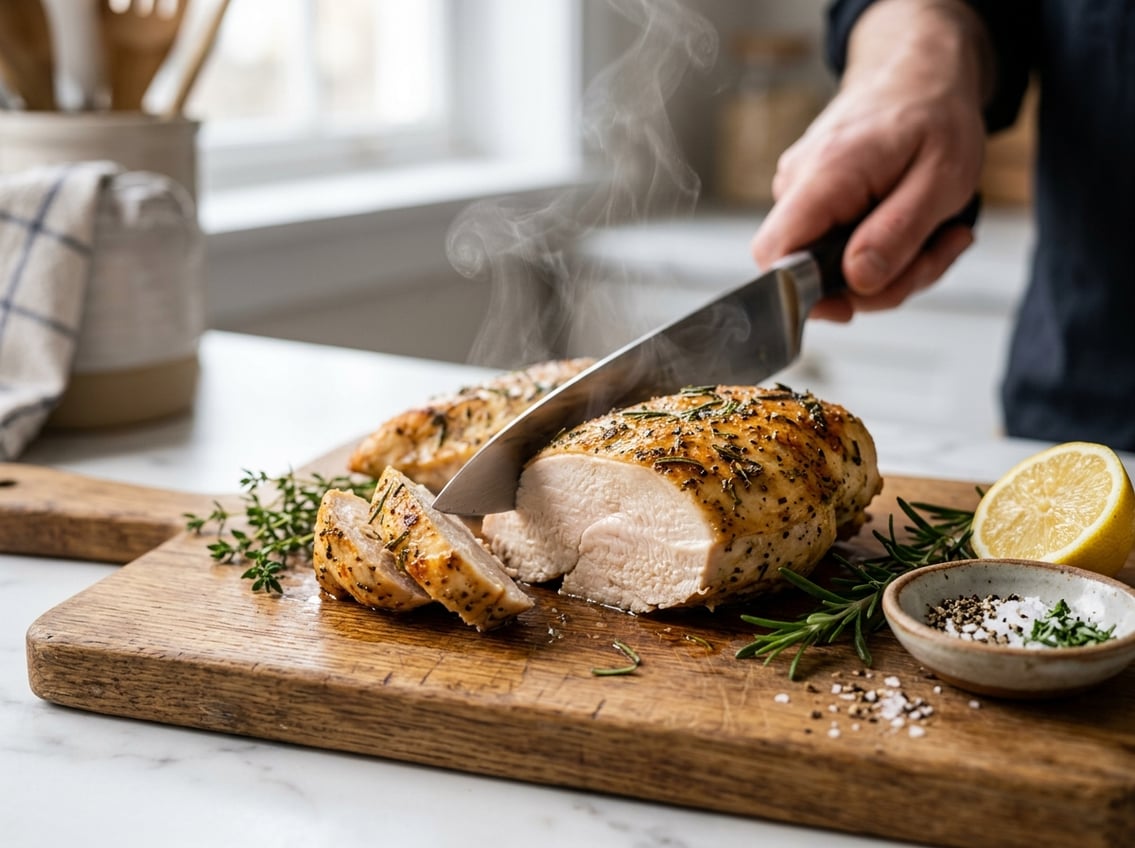
Start with enough liquid to cover the chicken and finish with a temperature check. You can use water or broth, and aromatics add flavor without making the process harder.
Keep the chicken breast fully submerged in a hot, gently simmering liquid. This gives you even cooking and a better texture.
How to Set Up the Pot With Water, Broth, and Aromatics
Use a large pot or deep skillet with sides. Add chicken breasts in a single layer, then pour in water or broth until the pieces are covered.
Broth gives more flavor, and simple aromatics help too. Onion, garlic, celery, carrot, peppercorns, herbs, or a little salt can make boiled chicken taste better.
How Long to Boil Chicken Breast Based on Size and Type
Timing depends on the cut. According to Better Homes & Gardens, skinless, boneless chicken breast halves usually take about 12 to 15 minutes, while bone-in, skin-on breasts take about 30 minutes.
Smaller pieces cook more quickly. Frozen chicken takes longer, and thawing first gives better results.
When to Use an Instant-Read Thermometer
Use an instant-read thermometer near the end of cooking. Chicken is safe at 165°F in the thickest part.
A thermometer helps you avoid dry meat. Time gives you a range, while temperature gives you the answer.
Common Variations and Mistakes
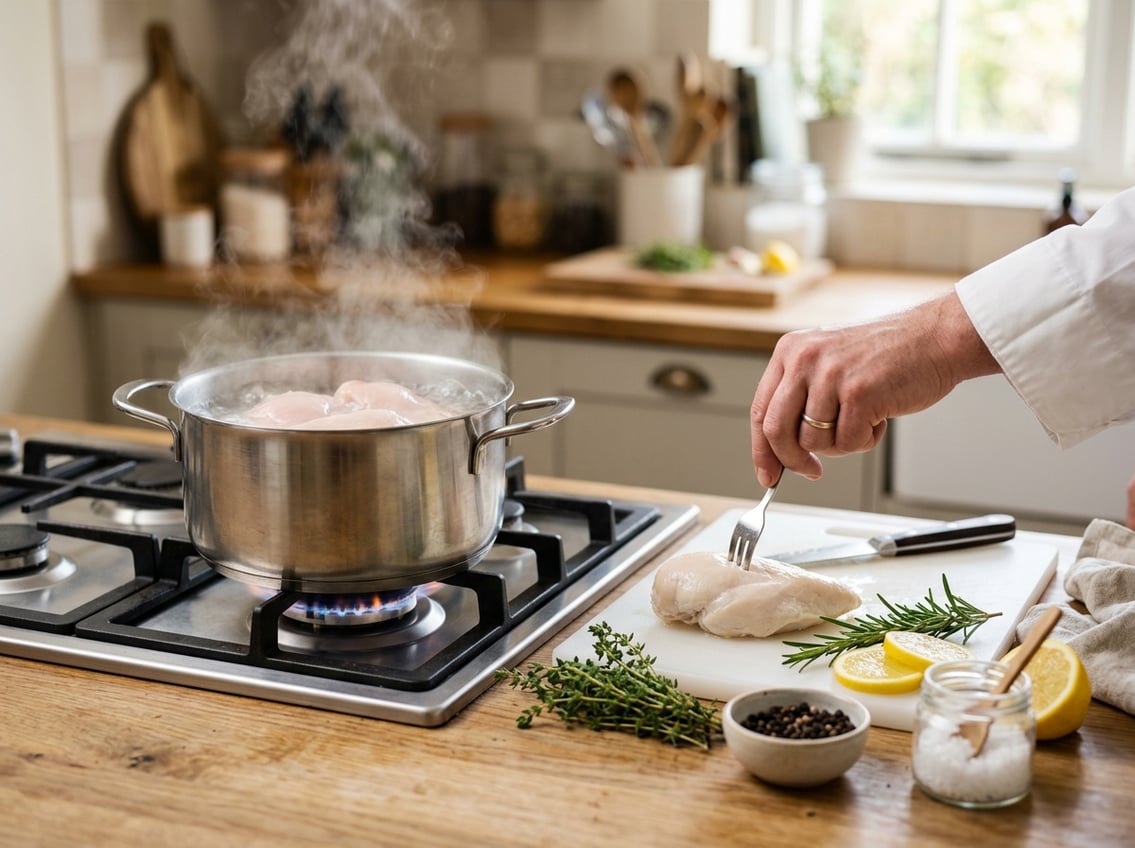
Small changes in method can make a big difference in texture. The most common problems are starting from frozen, shredding too soon, and letting the chicken sit in hot liquid after it is already done.
Careful steps keep boiled chicken moist and useful for later recipes. Cook it gently and handle it with care after you take it out of the pot.
Can You Safely Handle Boiling Frozen Chicken
You can cook frozen chicken, but it usually needs more time. Better Homes & Gardens notes that frozen boneless breasts take longer and should still reach 165°F.
Thawing first gives you more even results. If you boil from frozen, check the center carefully so the outside does not overcook before the middle is safe.
How to Shred, Slice, or Chop Without Drying It Out
Let the chicken rest for a few minutes before cutting. That helps the juices settle instead of running out on the cutting board.
For shredded chicken, use two forks or your fingers once the meat is cool enough to handle. If you slice or chop, use a sharp knife and work quickly so the meat stays moist.
Mistakes That Ruin Texture and Flavor
A hard boil that keeps pounding the chicken usually leads to tougher meat and cloudy, less flavorful liquid. Skipping salt, using too little liquid, and cooking by time alone are other common mistakes.
A thermometer and a gentle simmer solve most of these problems.
How to Use and Store Cooked Chicken
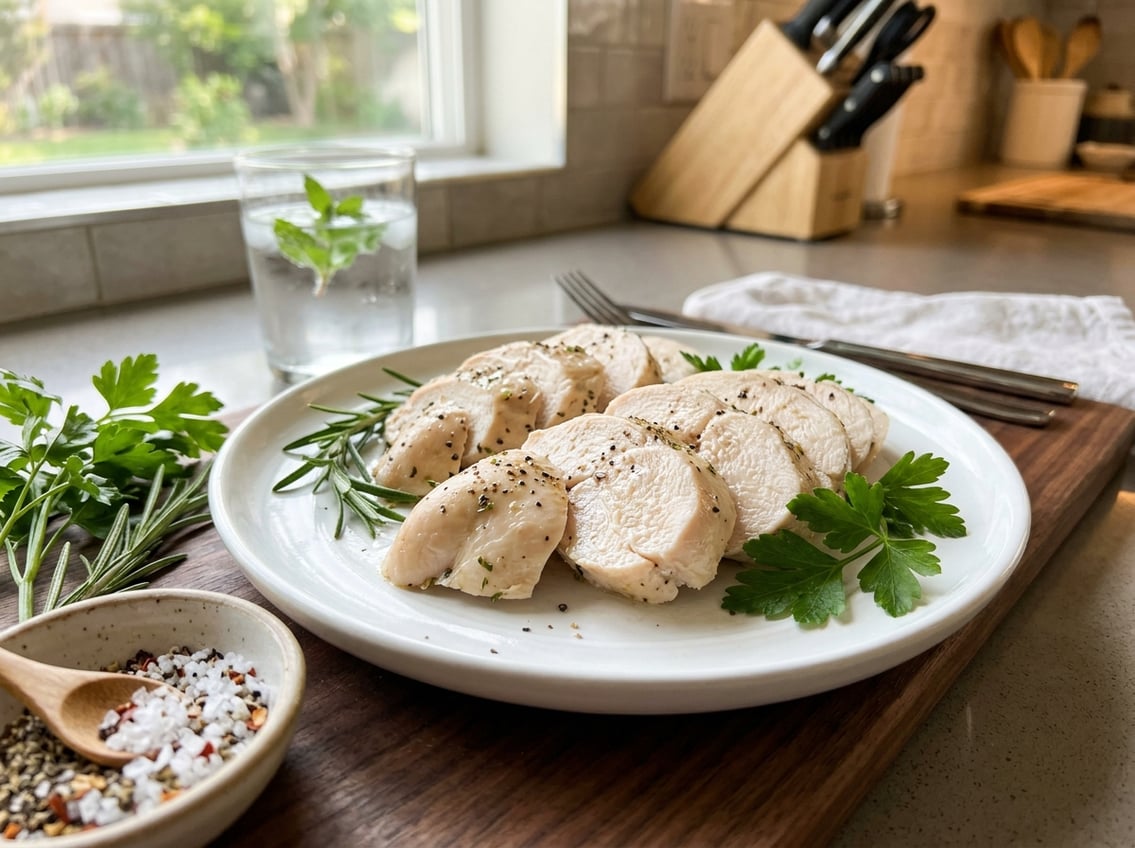
Boiled chicken is easy to store and turns into other meals quickly. You can keep it plain for later or season it right away for a specific dish.
Boiled chicken breast fits into hot meals and cold meals with very little extra work.
Best Ways to Store Boiled Chicken for Meal Prep
Let the chicken cool completely, then move it to a storage container and refrigerate it. According to Better Homes & Gardens, boiled chicken keeps in the fridge for up to three days and can be frozen for up to two months.
Store it in portions so you can use only what you need. That helps keep the rest from drying out each time you reheat it.
Recipe Ideas Like Chicken Pot Pie, Soups, and Salads
Boiled chicken works well in chicken pot pie, noodle soup, chicken salad, casseroles, and grain bowls. It also saves time when a recipe needs pre-cooked meat.
Broth from the pot can add flavor to soups or rice dishes. If you used aromatics, the liquid may already have enough depth for a simple homemade soup.
When a Simple Chicken Breast Recipe Benefits From This Method
You get the most benefit from a basic chicken breast recipe when you want soft, neutral meat for later use.
Boiling gives you chicken that you can easily season after cooking.
This method helps when your oven is full.
You can also use boiling when you want a hands-off option.
If you want tender, versatile chicken with little cleanup, boiling is a practical choice.


