
Why Does Chicken Breast Look Shredded? Causes and Fixes
You may notice that chicken breast sometimes looks shredded, and this is not always a cooking mistake. In many cases, the meat already has stringy fibers before it ever hits the pan, which can change how it feels, cooks, and tastes.
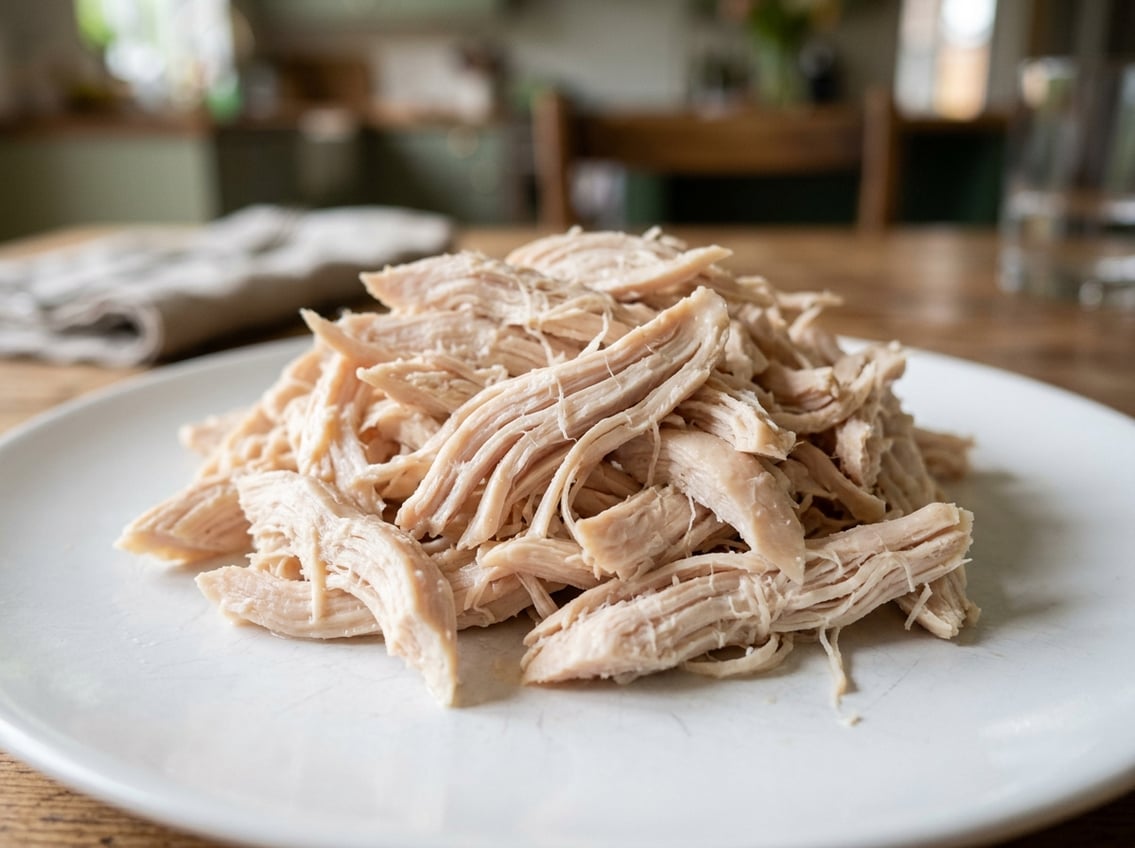
Shredded-looking chicken breast usually points to a muscle texture problem, not a safety problem. This can happen because of how the bird grew, how the breast was processed, or how you cooked it.
People often call this strange look spaghetti meat or stringy chicken breast. Sometimes, the meat can also feel mushy, woody, or just plain tough after cooking.
What Shredded-Looking Chicken Usually Means
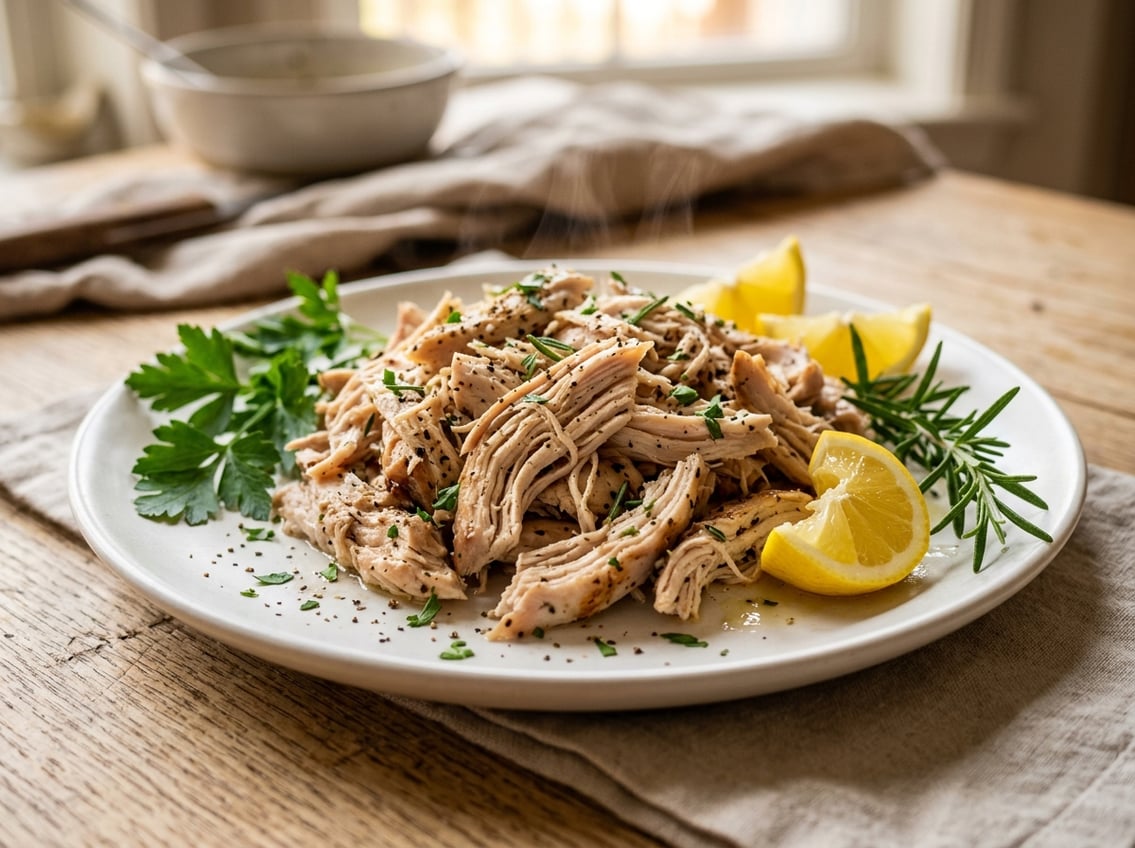
When your chicken looks shredded, you are usually seeing a texture defect called spaghetti meat chicken. The muscle fibers have separated, so the breast looks stringy, frayed, or torn even when it is raw.
The problem can show up as loose strands, a pulpy surface, or sections that fall apart easily.
It may look stringy in the package and then turn into dry, fibrous meat after cooking.
How To Recognize Stringy Fibers in Raw and Cooked Meat
Raw chicken with this issue often looks pulled apart instead of smooth and firm. You may see visible white lines running through the breast, uneven layers, or a surface that seems soft and ragged.
After cooking, the texture can become more obvious. The meat may separate into threads, feel dry in some spots, or seem oddly soft and mushy in others.
The Difference Between Spaghetti Meat, Mushy Breast, and Woody Chicken
Spaghetti meat is mostly a visual and structural problem, where the fibers separate. Mushy breast feels soft and weak, often with poor bite and little firmness.
Woody breast is different. It usually feels hard, dense, and chewy, and people often describe it as woody or tough.
A piece can have more than one of these traits at once.
Is It Safe To Eat or Just a Texture Problem
In most cases, it is a texture problem, not a food safety issue. A recent analysis on raw chicken described this shredded look and noted that it is still safe to eat when handled and cooked properly, though the texture is less appealing, according to Tasting Table.
If the chicken smells bad, feels slimy in a way that seems off, or is past its use-by date, treat it like any other spoiled meat and do not cook it.
Why It Happens Before You Even Cook It
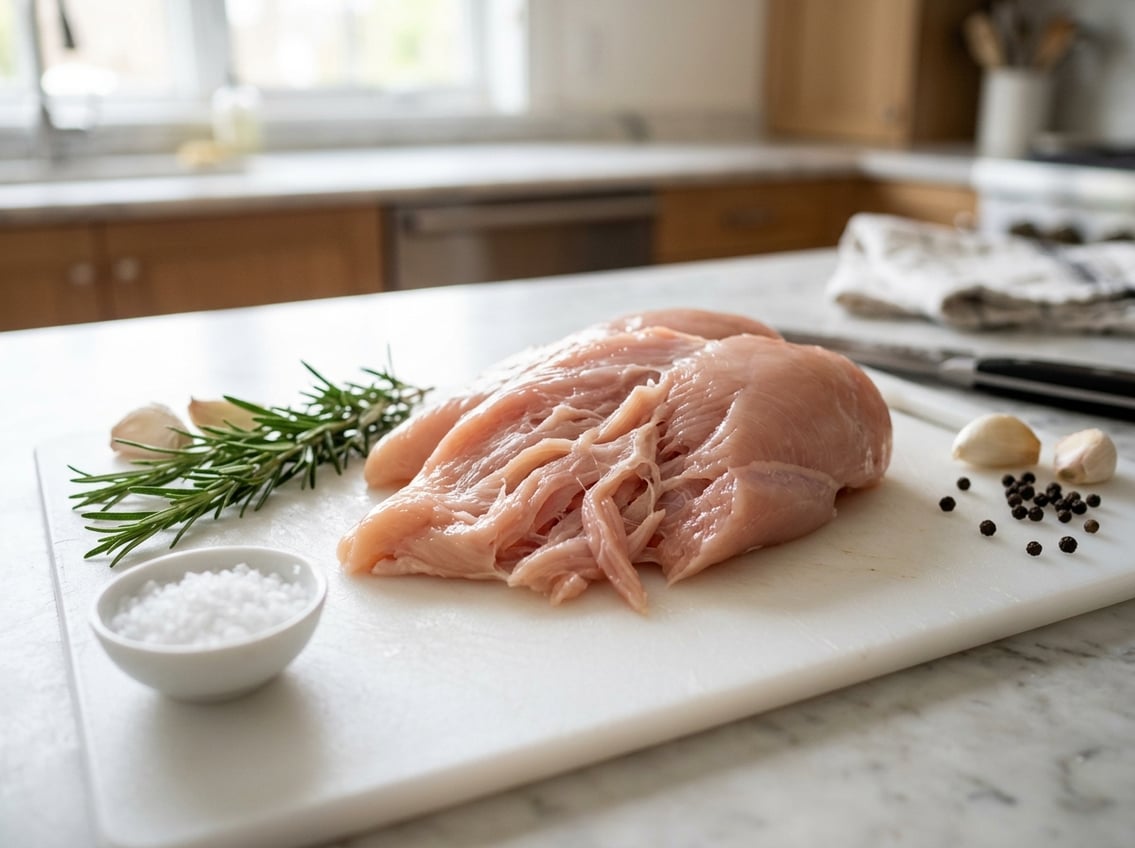
The cause often starts on the farm, not in your kitchen. Birds bred for fast growth and large breasts can develop muscle in a way that leaves the fibers weaker, looser, and more likely to separate.
Bigger breasts can also show the problem more often, since they put more stress on muscle tissue during growth. Choosing smaller cuts can lower the odds of ending up with a damaged texture.
How Fast-Growing Broiler Chickens Affect Muscle Development
Modern fast-growing broiler chickens are bred to gain weight quickly and produce more breast meat. That speed can outpace normal muscle development, which leaves the fibers underdeveloped or broken apart.
As Tasting Table notes, this rapid growth can lead to poor muscle development and the shredded look known as spaghetti meat. In simple terms, the bird grows faster than the breast tissue can build a strong structure.
Why Larger Breasts Are More Likely To Have Texture Defects
Very large chicken breast pieces are more likely to show defects because they have more mass and more strain on the muscle. The outer look may seem fine at first, while the inside already has weak, separated fibers.
That is one reason a package with oversized breasts can be more likely to contain spaghetti meat.
Why Smaller or Organic Options May Lower the Risk
If you want to avoid spaghetti meat, smaller breasts are often a better choice. Some reports also suggest that organic or free-range options may be less likely to have this texture, though they are not a guarantee.
Smaller, firmer pieces usually cook more evenly and are easier to keep tender. If you shop often for chicken, that simple size check can save you from a lot of disappointment.
How Cooking Can Make Texture Worse or Better
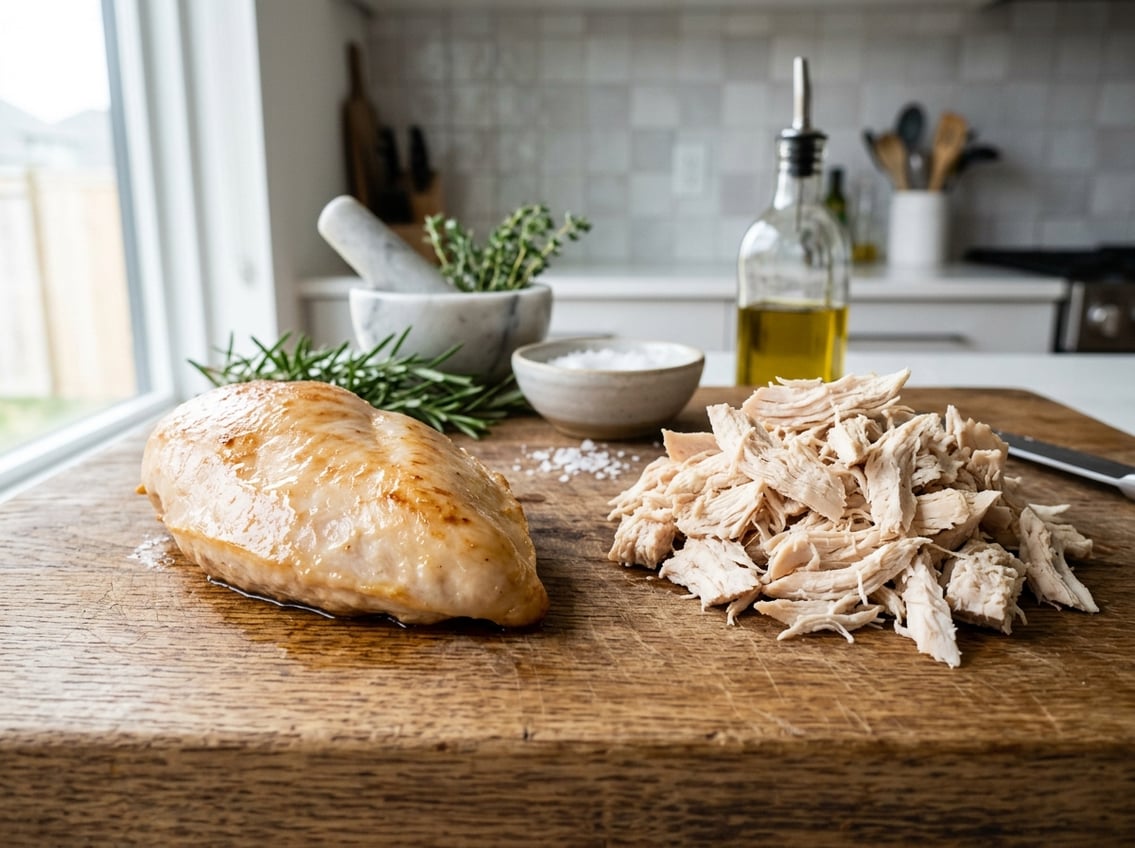
Cooking can make a bad texture more obvious, especially if the breast is already weak or stringy. Heat, time, and moisture control all matter if you want juicy chicken instead of dry, broken fibers.
Careful cooking can still give you a tender chicken breast. The wrong method, especially high heat for too long, can turn a usable piece into a tough one.
Why Overcooking Can Create Dry, Stringy Results
Chicken breast is lean, so it dries out fast when it sits in heat too long. Once moisture leaves the meat, the fibers tighten and pull apart, which makes the chicken seem stringy and dry.
Even decent chicken can become unpleasant if it is overcooked. A breast that was almost fine at the start may end up with a dry, shredded bite after too much heat.
How a Meat Thermometer Helps Protect Texture
A reliable meat thermometer is one of the easiest ways to protect texture. It helps you stop cooking as soon as the breast reaches a safe internal temperature, instead of guessing and drying it out.
This matters most with thinner cuts and larger breasts, which can go from done to overdone quickly. Checking the temperature at the thickest point gives you a much better shot at keeping the meat moist.
When Marinating and Gentle Heat Can Improve the Outcome
Marinating chicken can help add moisture and improve surface flavor, especially when the meat is a little dry or stringy. Acidic or salty marinades can also help the breast cook more evenly.
Gentle methods work well too. If you cook low and slow, or use moderate heat and let the chicken rest, you are more likely to get juicy chicken instead of a tight, shredded texture.
How To Shop and Cook Around the Problem
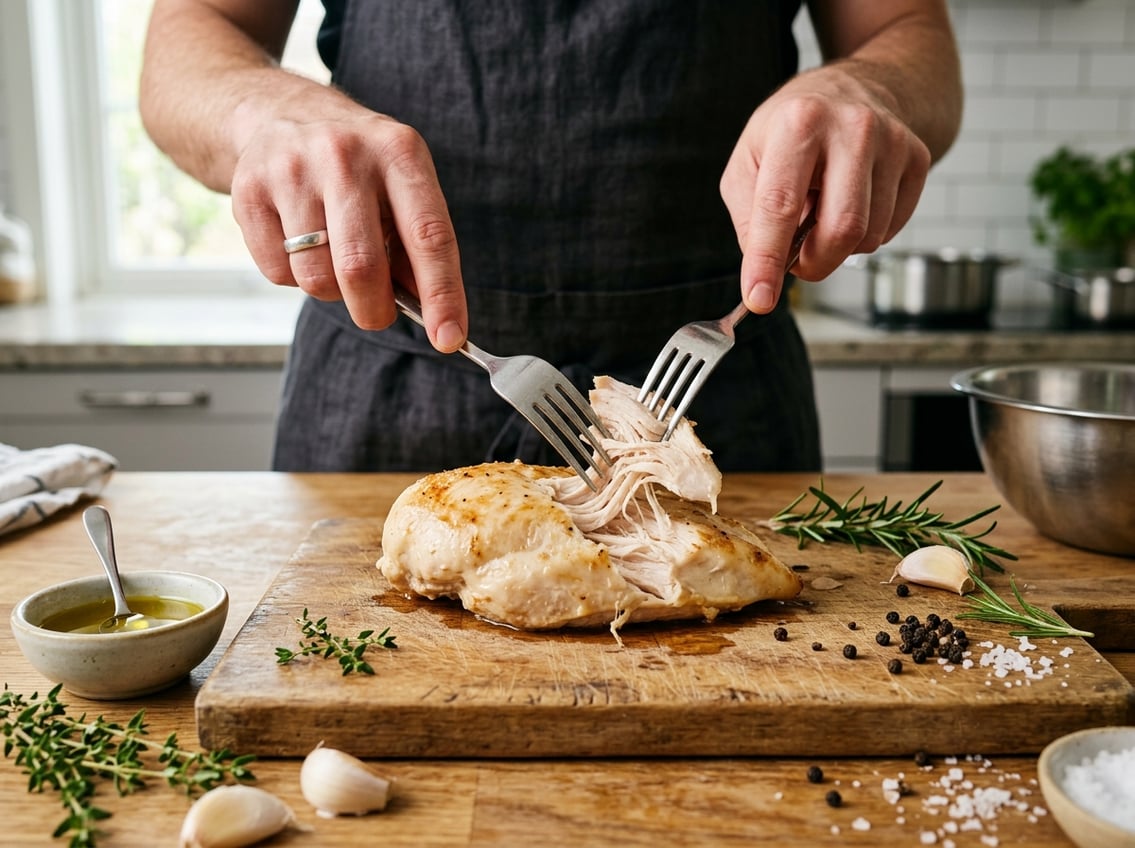
You can reduce the risk by checking the package before you buy and by matching the cooking method to the meat you have. If a breast already looks soft or stringy, you can still use it, just not always for the same dishes.
Choosing the right cut and the right cooking style matters more than trying to force every breast into the same recipe.
What To Look For in the Package Before You Buy
Look for breasts that feel firm, smooth, and evenly shaped. If you see visible stringiness, split fibers, or a ragged look in the package, skip that pack if you can.
Smaller breasts often give you better control and may be less likely to have texture problems. Some shoppers also prefer organic chicken breasts or other smaller, less aggressively grown options.
Best Uses for Chicken With a Soft or Stringy Texture
If you already bought spaghetti meat chicken or another soft, stringy piece, use it in recipes where texture matters less. Chicken salad, tacos, soups, casseroles, and saucy pasta dishes can hide the flaw well.
A stringy chicken breast can also work better when you plan to shred it anyway. In those recipes, the texture is less of a problem because the end result is supposed to be broken apart.
When To Return It, Repurpose It, or Cook It Differently
If the chicken looks very damaged before you cook it, return it to the store if the package is still within policy.
If that is not practical, use it in a moist dish instead of grilling or pan-searing it.
For a smoother result, cook it low and slow with broth or sauce.
This method can help even a less-than-perfect breast stay more juicy than dry and stringy.


