
Where Are Kirkland Chicken Breasts From? Sourcing Explained
In the U.S. market, Kirkland Signature chicken breasts are labeled as hatched, raised, and harvested in the USA on Costco’s product page. This label gives you the clearest public indication of origin.
Kirkland Signature is Costco’s private label and the exact supplier details can vary by item and format.
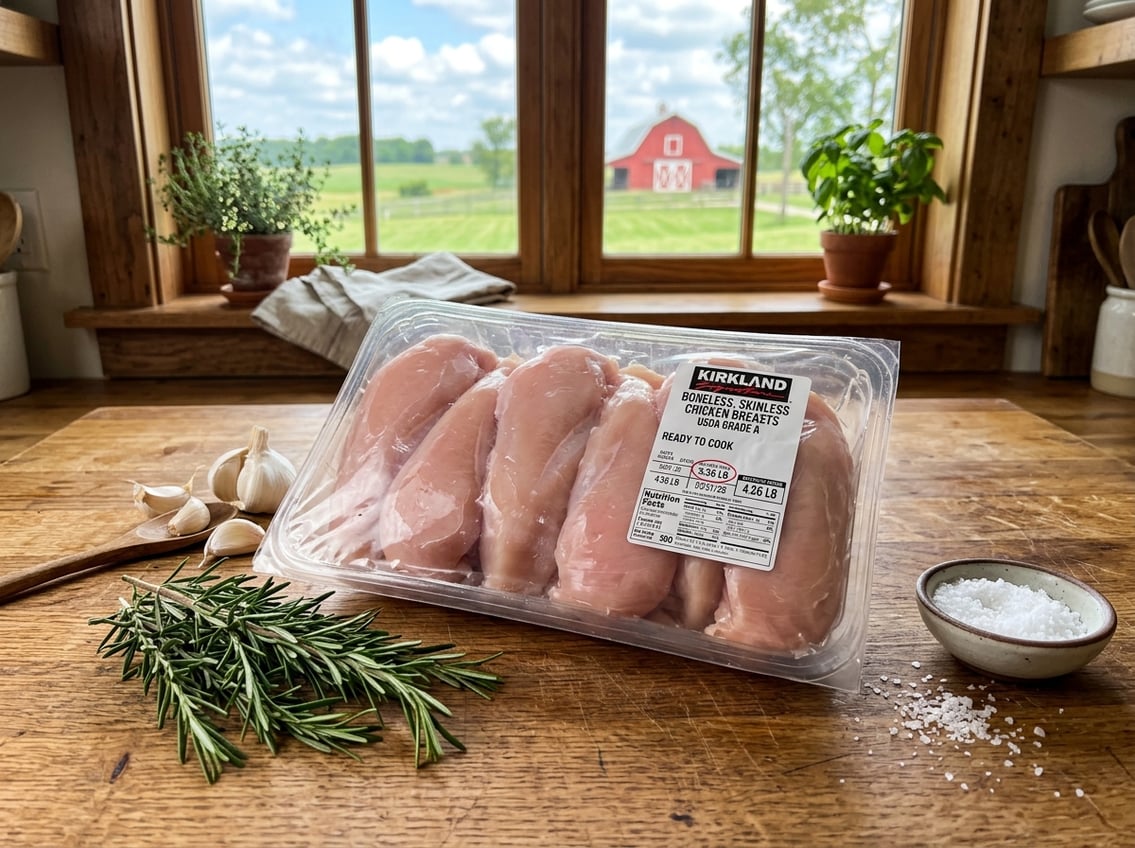
Costco’s listing points to U.S. origin. The package label gives you the most dependable answer for the exact chicken breasts you are buying.
Pricing can also be a clue that you are looking at a Costco-controlled private-label item rather than a nationally branded chicken breast. Kirkland products are built around value and volume.
Even so, price does not tell you where the birds were raised. The label does.
What Costco Product Listings Reveal About Sourcing
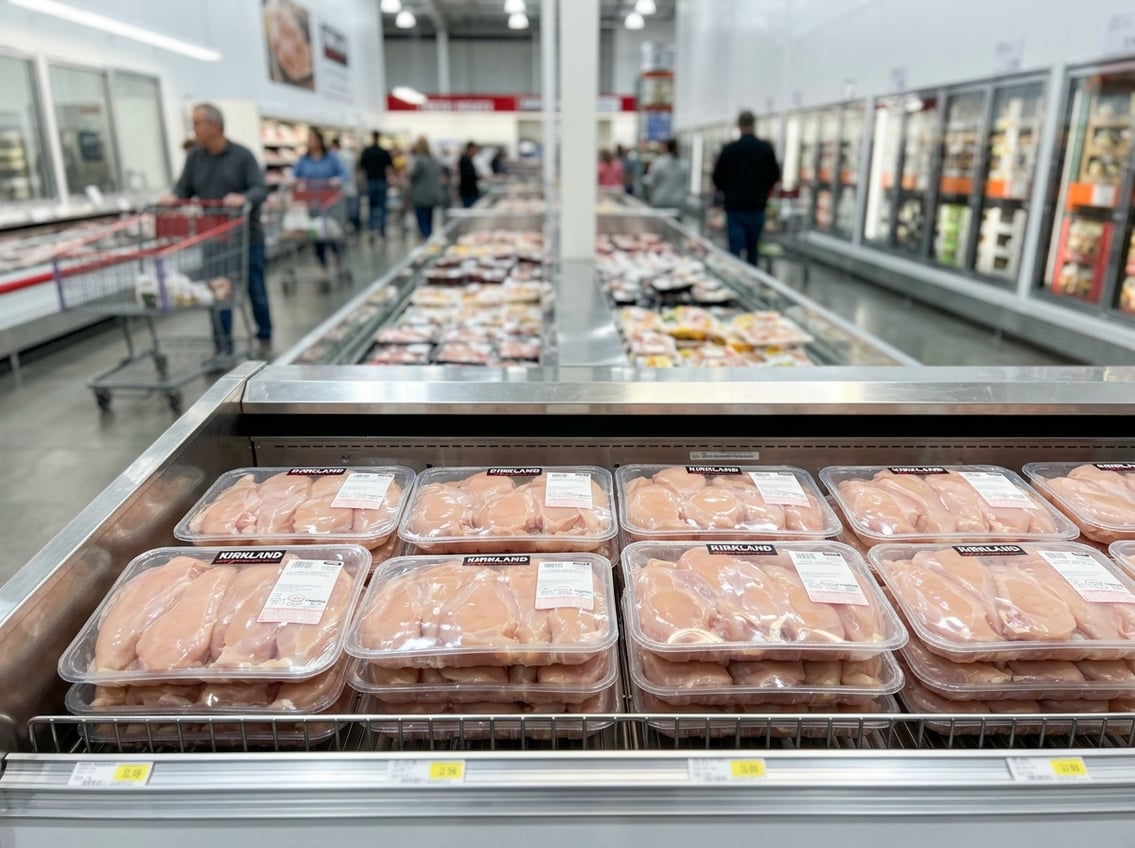
Costco product pages give you useful sourcing clues, especially for Kirkland Signature items. They often show the origin language, package format, and handling notes.
These details help you narrow down what you are buying before you add it to your cart.
How Kirkland Signature Chicken Breasts Are Identified Online
The Costco product page for Kirkland Signature Fresh Boneless Skinless Chicken Breasts states the chicken is hatched, raised and harvested in the USA.
The page also notes that the breasts come in tear-off pouches, are vacuum packed, and are leak resistant. These details help identify the item, even when warehouse packaging or local inventory changes.
What the Listings Confirm
The listing confirms U.S. origin, but it does not tell you every step of the supply chain. It does not name the farm, hatchery, or processor for your specific package.
Costco has tied its broader poultry operation to its Nebraska facility since 2018. A Costco chicken sourcing overview states that Costco opened its own chicken farm and processing plant in Fremont, Nebraska.
Your package label still matters most for the exact item in your cart.
Why Package Labeling Matters Most
Product pages can help, but labels are the legal and practical record for the food you receive. If a warehouse stock rotation changes, or if product availability shifts, the carton in front of you is the final word.
This is especially true for private-label meat, where product availability can vary by region and by Costco warehouse.
The label can show whether the chicken is fresh, frozen, organic, or air-chilled. Each of those details can affect the origin wording you see.
How Product Type Can Affect Origin Details
Different Kirkland chicken breast formats do not always carry the same packaging language. Fresh, frozen, organic, and air-chilled items can move through different lines, with different labels and handling notes.
Fresh Chicken Breasts Versus Frozen Chicken Breasts
Fresh chicken breasts often carry the most detailed retail labeling because they are sold for immediate use or short-term refrigeration. Kirkland’s fresh boneless skinless chicken breasts are the clearest example, since Costco states they are hatched, raised, and harvested in the USA.
Frozen chicken breasts may show different package wording depending on how they were processed and packaged for storage. The format may use different label space and handling language.
Organic and Air-Chilled Options
Organic Kirkland chicken is commonly tied to the same Nebraska-based poultry system described in poultry sourcing coverage, including Costco’s organic chicken from Nebraska. Organic labeling adds USDA organic requirements, so the package should also reflect those standards.
Air-chilled options can appear in some Costco warehouses, and product availability can vary by market. If you see “air-chilled,” that describes processing, not the farm location.
Why Processing and Packaging May Differ by Item
A chicken breast can be raised in one place, processed in another, and packaged for a specific warehouse region. That is normal for large-scale poultry distribution.
Two Kirkland chicken breast items can look similar online and still carry different details on the carton. You should compare the exact package, not just the brand name.
What Buyers Should Check Before Ordering
Before you order, compare the listed price, the delivery terms, and the wording on the product page. Those details help you avoid confusion between warehouse pricing and delivered pricing.
Delivered Prices and Warehouse Pricing Differences
Costco often shows different figures for in-warehouse shopping and delivery. That difference can reflect service fees, handling, and local market conditions, not a different chicken origin.
If you are comparing prices, keep the focus on the item description and package size. Pricing tells you value, while labeling tells you origin.
Price Changes and Order Confirmation
Price changes can happen between the time you browse and the time you check out. Your order confirmation records the product you actually bought, including the exact Kirkland item name.
If the item changes after checkout, the confirmation and receipt are the first places you should compare. A substitution or updated listing may affect the package format.
When To Contact Customer Service
If the listing is unclear, contact Costco customer service before ordering or pickup. For U.S. shoppers, the main Costco phone number is 1-800-788-9968.
Costco Business Center can also help with product questions. If the origin wording is missing or vague, customer service can tell you what is currently listed for that item.
How To Verify the Most Accurate Origin Information
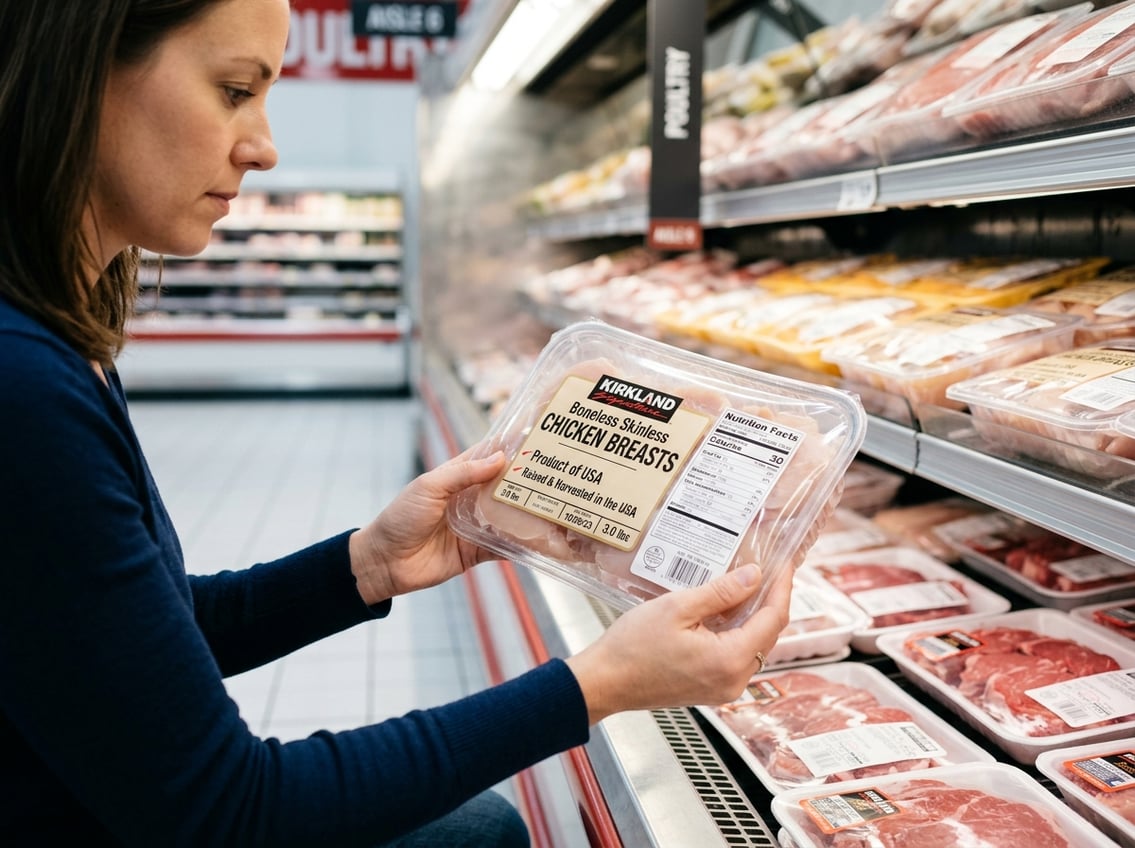
The most accurate answer comes from the physical package label, not from memory or assumptions. If you want the exact origin of your Kirkland chicken breasts, check the carton itself and compare it with Costco’s current listings.
Checking the Physical Label in Store
In the warehouse, read the fine print on the front and back of the package. Look for phrases such as “hatched, raised and harvested in the USA,” USDA inspection marks, and any processor or packer information.
If you are shopping at Costco warehouses, the label on the item in front of you is more reliable than a general product description. That matters when stock rotates or when different lots enter the store.
Using Costco Business Center and Standard Costco Listings
Costco Business Center can show different product availability than a regular warehouse. That is useful if you are buying in bulk or comparing formats that do not appear in every store.
Standard Costco listings and business center products may not match exactly, so check both if you need a specific packaging style or quantity. Product availability changes by region, which can affect what origin details are shown online.
What To Ask If Origin Information Is Missing
If you cannot find the origin on the package, ask customer service three direct questions. Ask where the chicken was hatched, where it was raised, and where it was processed.
These details give you the full picture. You can also ask whether the item comes from the Nebraska poultry operation or another approved supplier.
If the label is unclear, call Costco customer service at 1-800-788-9968 or visit their website. They can help you confirm the current packaging details before you buy.


