
When Is Chicken Breast Done Temperature and Temp Tips
Chicken breast is done when its thickest part reaches 165°F. This is the standard chicken internal temp for safe, ready-to-eat chicken in the U.S.
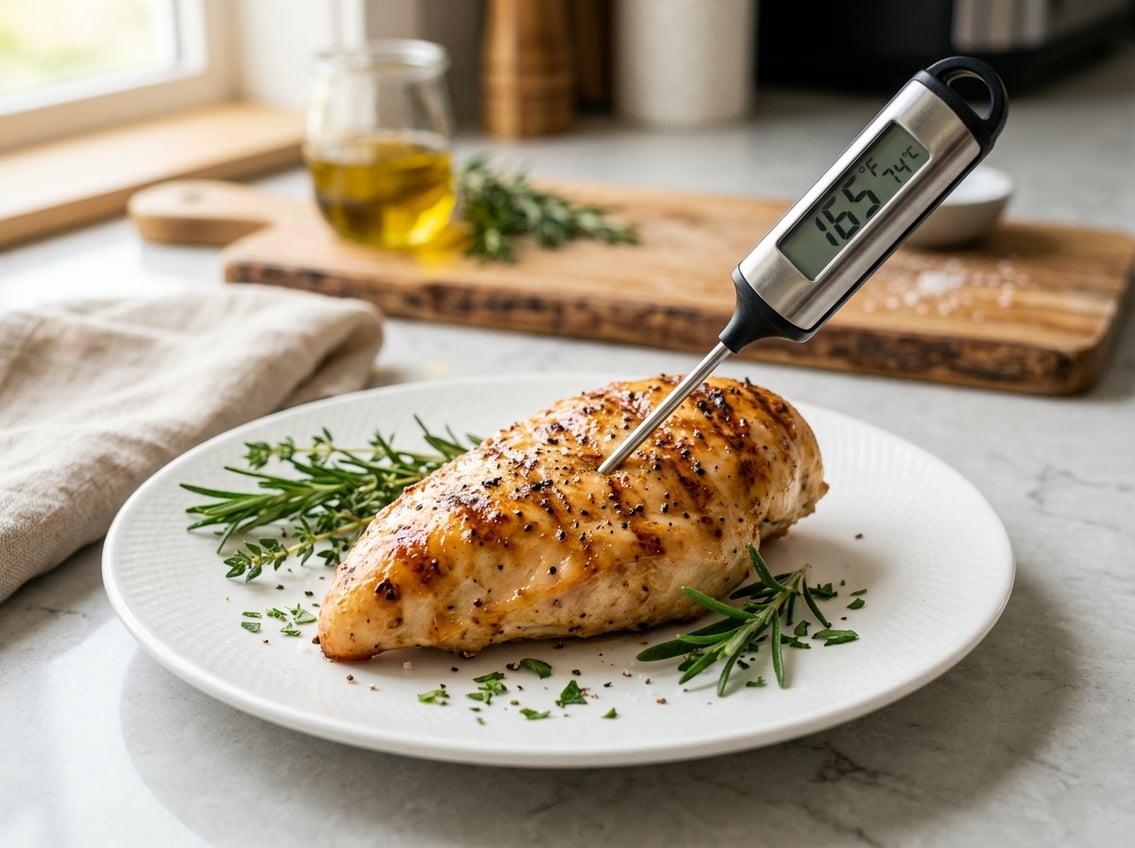
You can avoid dry, tough chicken by checking the chicken internal temperature with a thermometer instead of guessing by color or texture.
If you want to know what temperature is chicken done, use 165°F in the thickest part of the breast and let it rest briefly before cutting.
That target matches food safety guidance, including USDA-backed charts and temperature advice from Food Network. A good thermometer removes the guesswork from cooking.
Exact Doneness Temperature for Chicken Breast
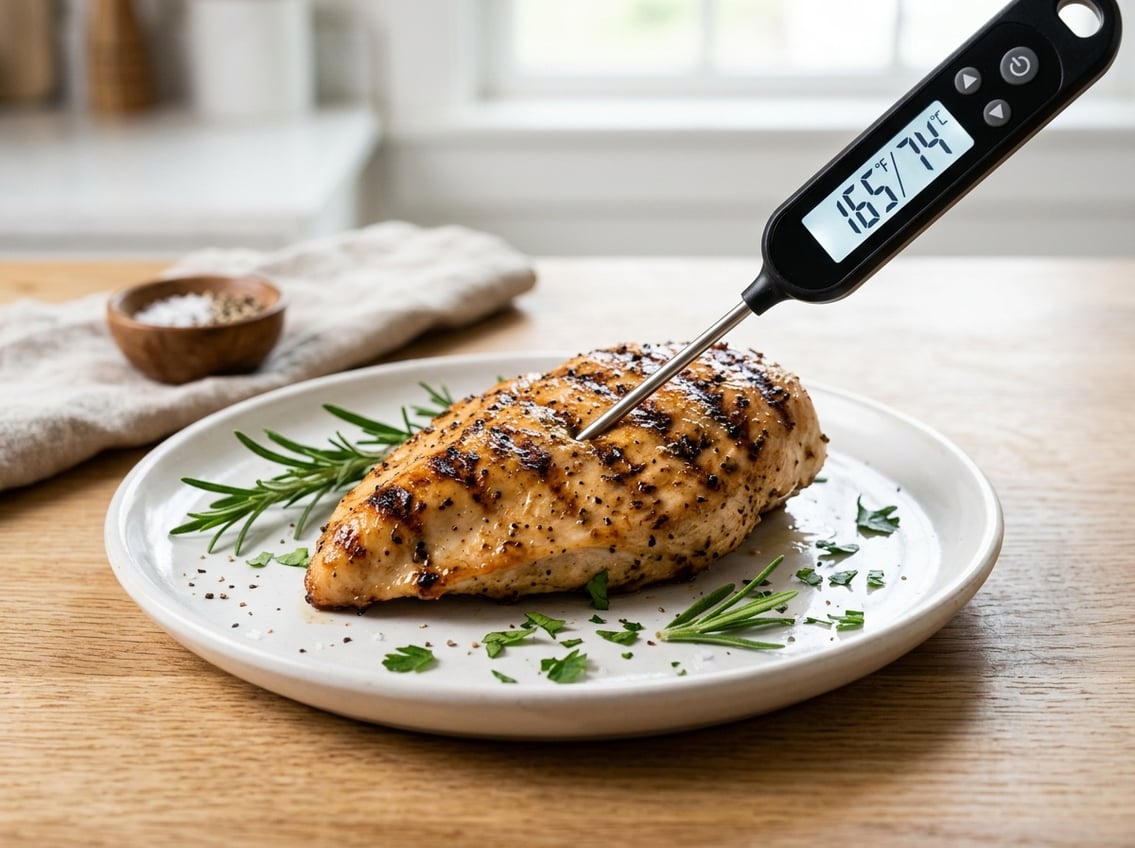
For chicken breast, cook to 165°F in the thickest part. This is the minimum internal temperature for chicken breast to be safe.
If the thermometer reads below that point, keep cooking. If it reads 165°F or above, the breast has reached the safe chicken internal temp.
Why 165°F Is the Safe Final Temperature
At 165°F, chicken is safe for eating. This temperature matches U.S. food safety guidance and advice from sources like Southern Living and Allrecipes.
Chicken breast is lean and can dry out quickly if cooked past this point.
When to Pull Breast Meat Off the Heat
You do not always need to wait until the center is 165°F before removing chicken from heat. Many cooks pull it early and let it rest, since the temperature can rise a few degrees after cooking.
A common stopping point is around 155°F to 160°F, then a short rest brings it up to the safe range.
How Resting Affects Final Temperature
Resting helps juices settle back into the meat and allows carryover cooking, which can raise the chicken internal temperature after you remove it from heat.
Cover the breast loosely with foil for a few minutes. This short rest helps keep the texture better while still reaching 165°F.
How to Check Temperature Accurately
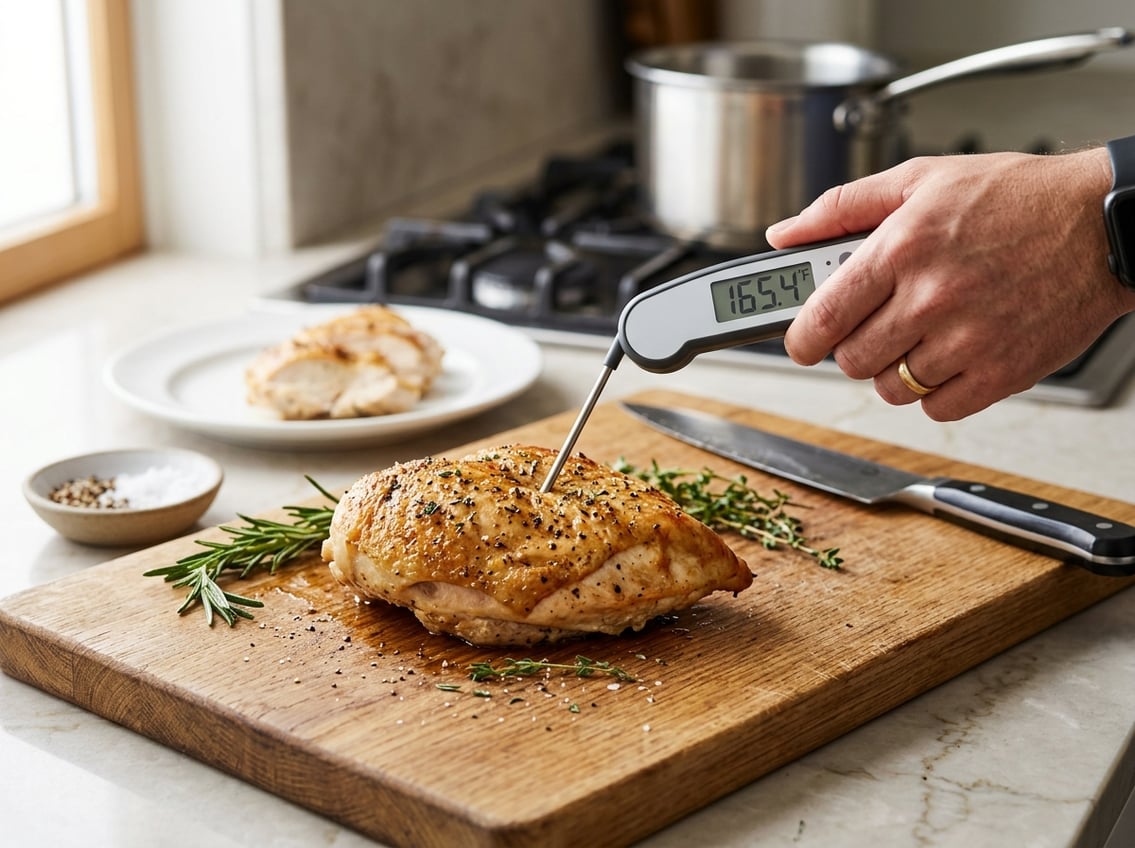
A thermometer gives the most accurate answer to what temperature is chicken done. Check the thickest part, not the surface or near bone.
A good instant-read thermometer is the easiest tool. It gives a fast reading so you can avoid overcooking while checking for safety.
Where to Place an Instant-Read Thermometer
Insert the thermometer into the thickest part of the chicken breast. Aim for the center and keep the tip away from the pan, bone, or visible fat.
If the breast is uneven, check a few spots.
Common Temperature Reading Mistakes
Checking too close to the edge can give a false high reading. Pressing the thermometer into the cooking surface or bone also skews the result.
Wait for the reading to stabilize before deciding.
Why Color and Juices Are Not Reliable
Chicken can look white and still be undercooked. It can also look slightly pink near the bone and still be safe if the internal temperature is correct.
Clear juices do not prove doneness. The thermometer is the only dependable method.
Breast Cooking Results by Method
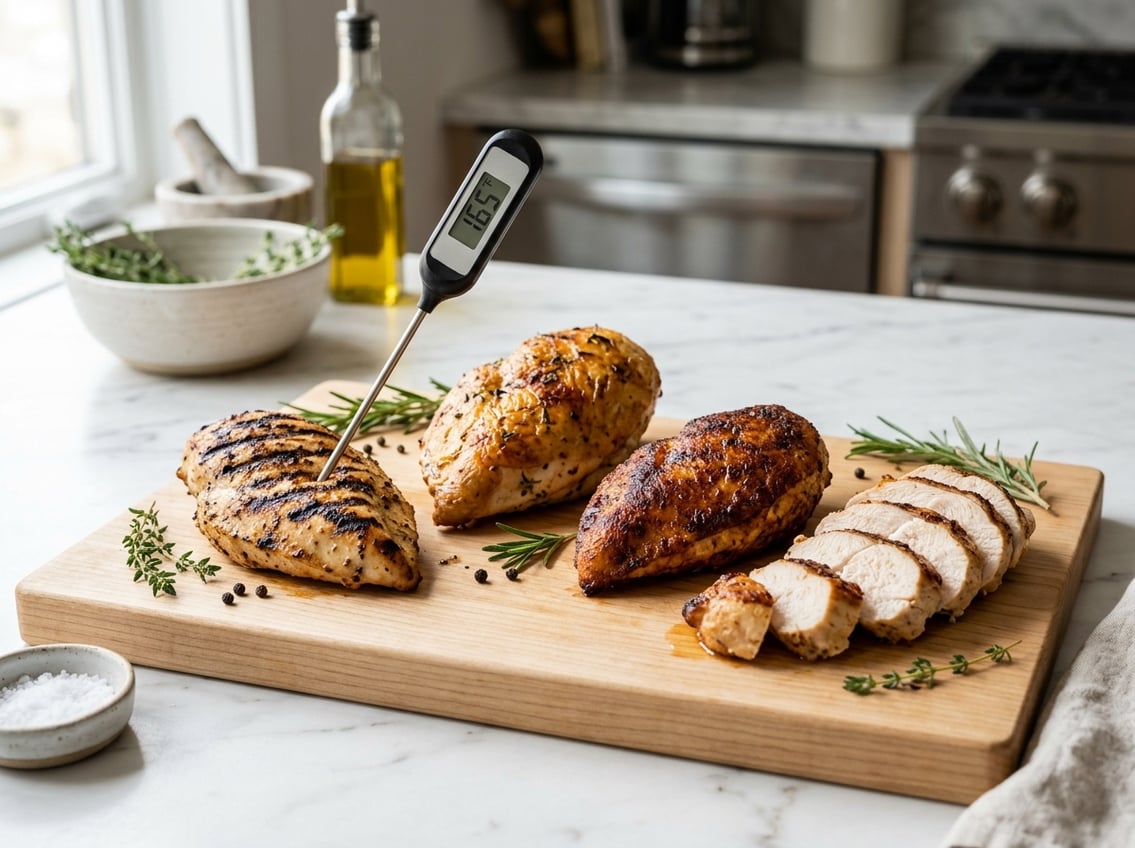
Different cooking methods change how fast chicken breast reaches the right temperature. Your goal stays the same: a safe chicken internal temp of 165°F.
The best method depends on the thickness of the breast and how much browning you want.
Oven-Baked Breast Temperature Tips
Oven baking gives steady heat and easy control. Chicken breasts often cook well at higher oven heat, around 450°F, for a shorter time.
Use a thermometer near the end so you do not overshoot the target. Pull the chicken as soon as the thickest part reaches the safe range.
Pan-Seared Breast Temperature Tips
Pan-searing works well for quick dinners and good browning. Start with medium-high heat, then check the internal temperature early.
A hot skillet can cook the outside faster than the inside, so thicker breasts need extra attention. Flip once and check the center with an instant-read thermometer.
Grilled and Air-Fried Breast Temperature Tips
Grilling and air frying both create fast surface browning, so the inside can lag behind the outside. Check the temperature near the end of cooking instead of waiting for the meat to look finished.
For grilling, move the chicken to a cooler area if it is browning too fast. For air frying, avoid overcrowding so the heat reaches the meat evenly.
Quick Temperature Reference for Other Cuts
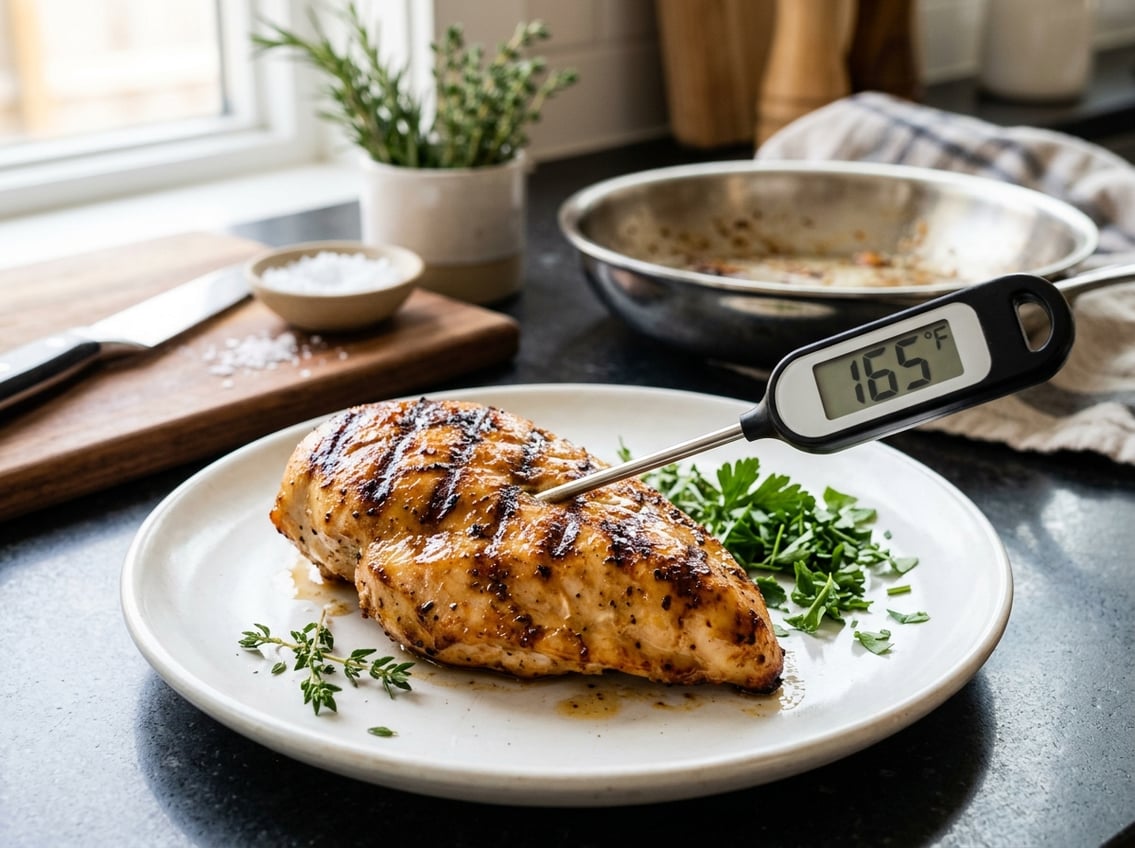
Chicken breast is the easiest cut to judge by temperature because it is lean and simple to check.
A simple chicken temperature chart helps you compare cuts fast. The breast usually reaches a safe result sooner than darker meat.
How Breast Meat Differs From Thighs and Drumsticks
Breast meat is lean and dries out faster, so precision matters. Thighs and drumsticks have more fat and connective tissue, which makes them more forgiving during cooking.
You can sometimes cook dark meat a little longer without ruining the texture. Breast meat gives you less margin for error.
Whole Chicken Checks at Breast and Thigh
For a whole bird, check both the breast and the thigh. The breast should reach the safe target, and the thigh should also read hot in its thickest part.
Do not rely on the skin or the drumstick moving loosely. Temperature is still the safest way to confirm doneness.
Simple Chicken Temperature Chart for Readers
Use this quick guide as a practical reference.
| Cut | Safe Internal Temperature |
|---|---|
| Chicken breast | 165°F |
| Chicken thighs | 165°F |
| Drumsticks | 165°F |
| Whole chicken, breast and thigh checked separately | 165°F |
Check the minimum internal temperature for chicken with a thermometer.
Let the meat rest before serving.


