
Where Do Chicken Breasts Come From? From Bird to Butcher
You may wonder where chicken breasts come from when you buy a package at the store or trim a whole bird at home. A chicken breast is the large chest muscle on the front of the bird, and it is the main source of white meat on a chicken.
You get chicken breasts by removing the paired chest muscles from the bird. Butchers then cut, debone, skin, or split them depending on how they are sold.
That simple answer hides a lot of detail, from how the bird is raised to how the meat is processed and packaged for U.S. shoppers.
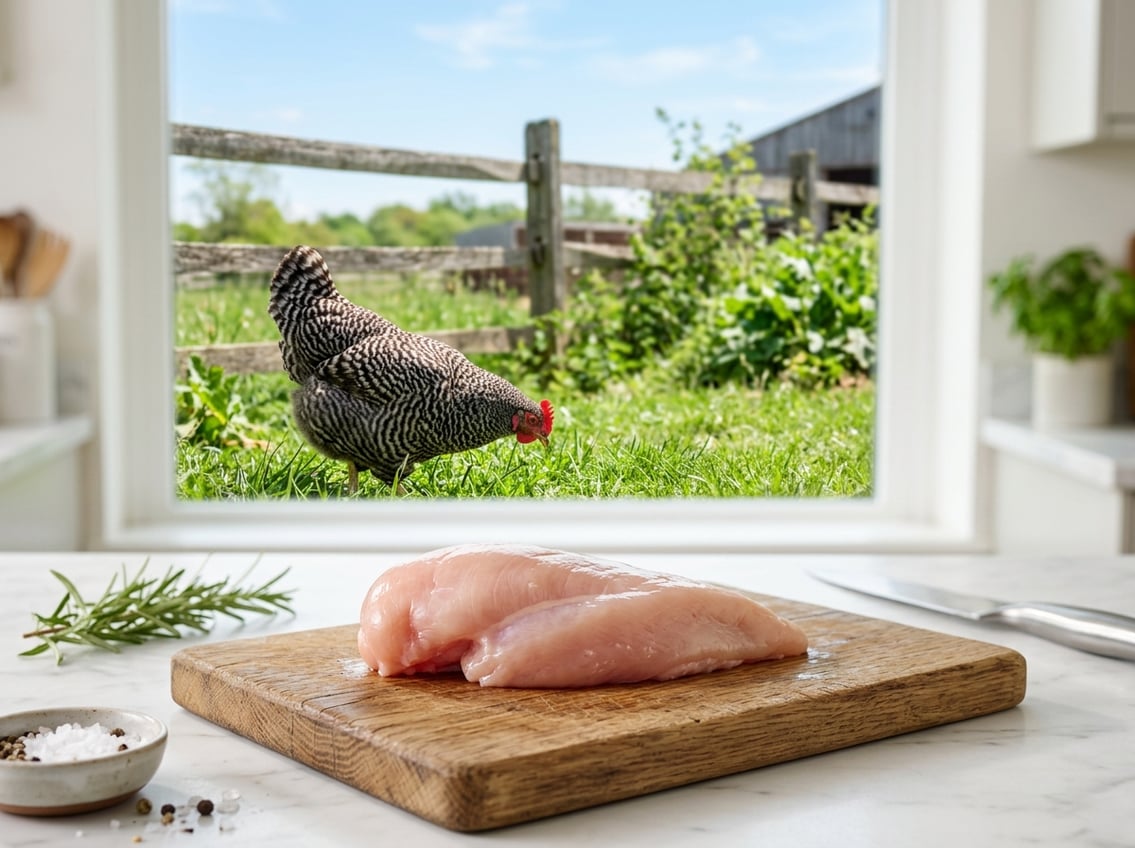
What Part of the Bird It Comes From
A chicken breast comes from the front of the bird, centered over the chest. On a whole chicken, you find it above the rib cage and breastbone, forming the large meaty area between the neck and the legs, as described in chicken anatomy guides.
The breast meat is the pectoral muscle, which works with the wings and chest. Because chickens do not fly long distances, this muscle is built for short bursts of movement rather than heavy endurance.
The Breast Muscle on the Chicken
The breast muscle is large, lean, and mild in flavor. On a whole bird, it usually appears as two halves joined by the breastbone.
A skinless chicken breast is just that muscle after the skin is removed. If the bone is still attached, you have a bone-in breast rather than a boneless one.
Why It Is Classified as White Meat
Chicken breast is classified as white meat because it has less myoglobin than darker leg muscles. Myoglobin is the protein that gives meat a deeper color and stronger flavor.
That lower myoglobin level makes the meat look pale when raw and keeps it lighter after cooking. This trait also makes chicken breasts a leaner choice than thighs or drumsticks.
How a Whole Breast Becomes Two Portions
Processors can leave a whole breast intact or split it into two equal halves. Many grocery packs contain two breast portions because processors separate the left and right side of the breastbone.
If the breast is butterflied or pounded thin, it still starts from the same cut. The difference is in how the butcher trims and portions it for cooking.
How Chicken Breasts Are Processed and Sold

Stores in the U.S. sell chicken breasts in many forms, from whole bone-in cuts to fully trimmed fillets. Packaging labels tell you how much work has already been done before the meat reaches your kitchen.
Some products are plain and minimally handled, while others are further cut or seasoned. The label, shape, and presence of skin or bone all affect price, convenience, and cooking time.
Boneless, Bone-In, and Split Cuts
Boneless chicken breast has the rib bones removed, which makes it easier to slice and cook evenly. Bone-in breast keeps the bone attached, which can add flavor and help protect the meat from drying out.
A split breast is a common retail cut where the bird’s breast is separated into two pieces. A whole chicken carcass can also be broken into quarters or eight pieces, depending on how the processor divides it.
Skinless Versus Skin-On Packaging
Skinless chicken breast is the most common supermarket form in the U.S. It is popular because it cooks fast and has less visible fat.
Skin-on packaging is less common for everyday meals, yet it can help keep the surface moist during roasting. If you see a package marked skin-on, the meat is usually less trimmed and closer to a traditional butcher cut.
Tenderloins, Cutlets, and Common Store Labels
The tenderloin is a small strip of meat attached to the underside of the breast. Butchers often sell it separately as chicken tenders, even though it comes from the breast area.
Cutlets are thin slices of breast meat, usually made by butterflying or pounding. You may also see terms like skinless chicken, skinless chicken breast, or plain chicken breasts on labels, which usually describe the same basic cut with different levels of trimming.
Retail terms can also vary by brand and farm. Some products, like those marketed under labels such as Beau Sanspeau Farm, may emphasize sourcing or handling rather than changing the cut itself.
What Affects Quality, Texture, and Flavor
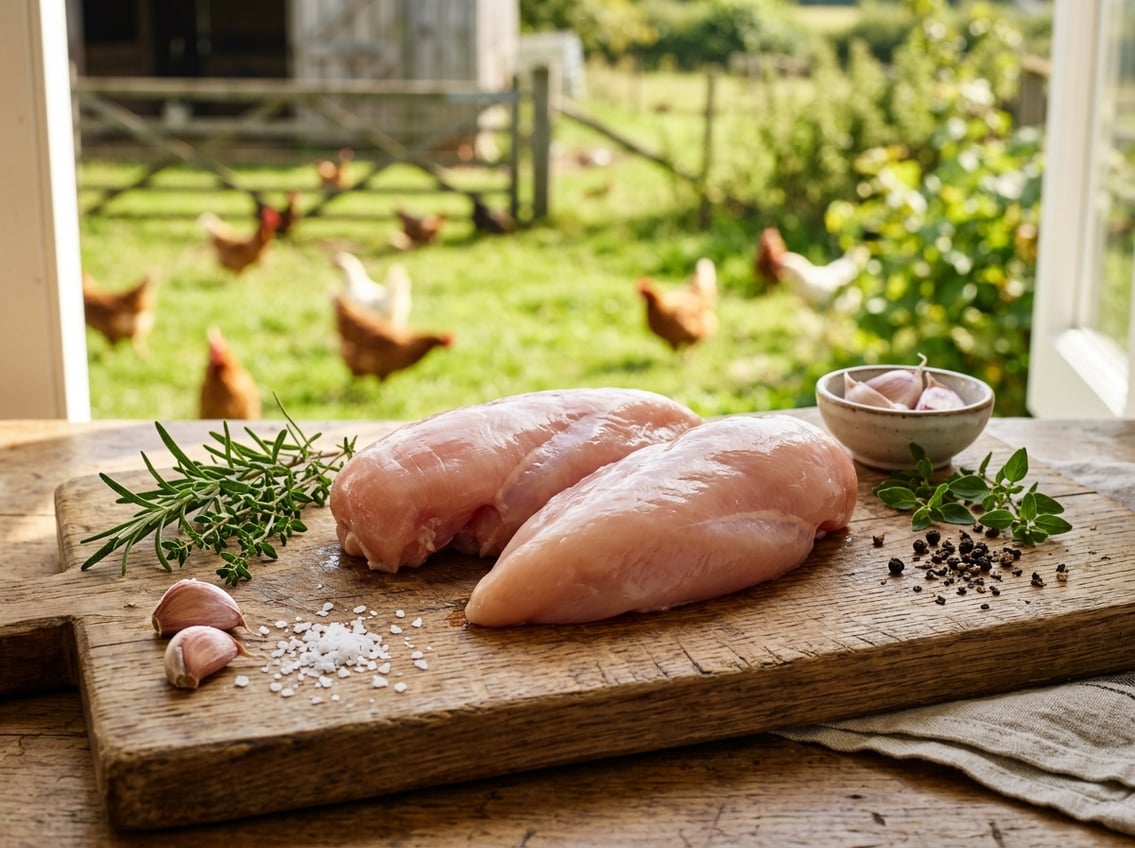
The quality of a chicken breast is shaped long before it reaches your pan. Breed, bird size, feed, processing, and storage all affect taste and texture.
Even small differences matter because chicken breast is lean. You notice moisture loss and grain changes faster than you do with fattier cuts.
Farming, Breed, and Bird Size
Farmers breed commercial broiler chickens for fast growth and large breast meat. As the bird gets bigger, the breast muscle grows faster than many other parts of the body.
That size can give you a large, usable portion, though it may also affect texture. A review of poultry production factors notes that production systems can influence carcass and meat quality.
Fresh Versus Frozen Differences
Fresh and frozen chicken breast can both work well if handled correctly. Fresh meat often has a firmer surface texture, while frozen meat may release more moisture after thawing.
A plain fresh or frozen breast without added ingredients is generally considered minimally processed, as noted in guides on processed chicken breast. The bigger quality difference often comes from how quickly it was chilled, frozen, and thawed.
Why Chicken Breast Can Turn Dry So Easily
Chicken breast dries out because it is lean and has little internal fat. Once the meat passes the right internal temperature, the muscle fibers tighten and squeeze out moisture.
Thin, even pieces cook more predictably than thick ones, which helps you keep the meat juicy.
Best Uses in the Kitchen
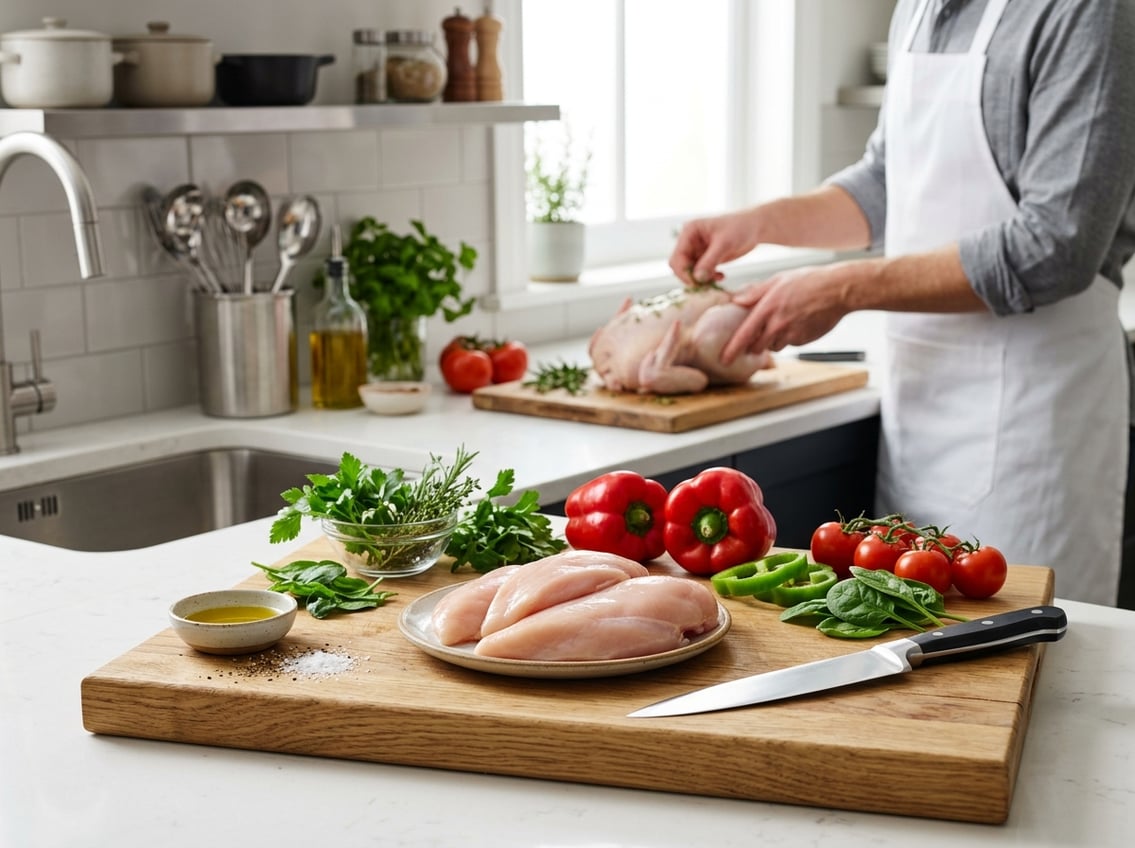
Chicken breast works best when you match the cooking method to the cut. Thin pieces cook quickly, while thicker pieces need gentler heat or careful timing.
You can use it in simple dinners, meal prep, sandwiches, salads, and sauced dishes. The key is even cooking and enough seasoning to support the mild flavor.
Cooking Chicken Breast Safely and Evenly
For safe cooking chicken breast, you want even thickness and steady heat. Pounding thicker ends to match thinner ends helps the whole piece finish at the same time.
Use a thermometer if you want the most reliable result. The meat should reach a safe internal temperature without staying on the heat long enough to dry out.
When to Choose Grilled or Roasted Preparations
A grilled chicken breast works well when you want light browning and quick cooking. It is a good choice for salads, sandwiches, and grain bowls.
A roasted chicken breast suits thicker pieces and more even heat. Roasting gives you a little more control than high direct heat, which can help with texture.
How Fried Versions Differ in Texture and Use
A fried chicken breast has a crisp outer layer and a richer bite. The coating helps protect the meat, which can make the inside stay juicier than bare breast meat.
Fried versions are useful for sandwiches, cutlets, and comfort-food meals. They focus more on texture and seasoning than the plain flavor of the meat.
Popular Chicken Breast Recipes and Meal Ideas
You can use chicken breast recipes for many styles of cooking. Try baked parmesan, stir-fry, or creamy skillet dishes.
Chicken breast works well in soups, tacos, pasta, and chopped meal-prep boxes.
For a simple approach, season, cook, slice, and add sauce or vegetables. This keeps the meat versatile and helps you avoid wasting leftovers.


