
When Is Chicken Breast Done Temp and Doneness Guide
Chicken breast is safe to eat at 165°F in the thickest part. That number is the standard safe internal temperature for chicken in the U.S.
If you want juicy chicken, you need to know not just what temperature chicken is done, but also when to remove it from the heat before it dries out.
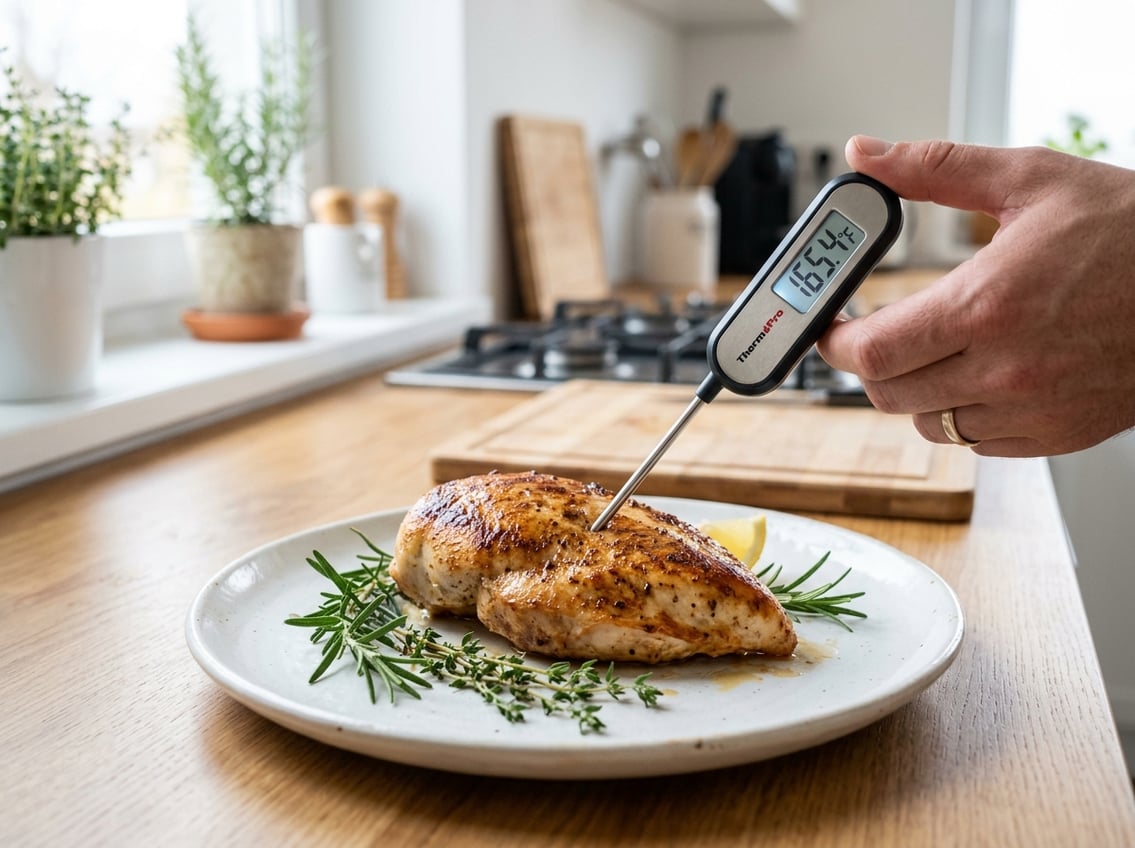
A thermometer takes the guesswork out of checking chicken temperature. Color, juice, and texture can help, but they do not replace a clear reading from a thermometer.
The Exact Safe Temperature for Chicken Breast
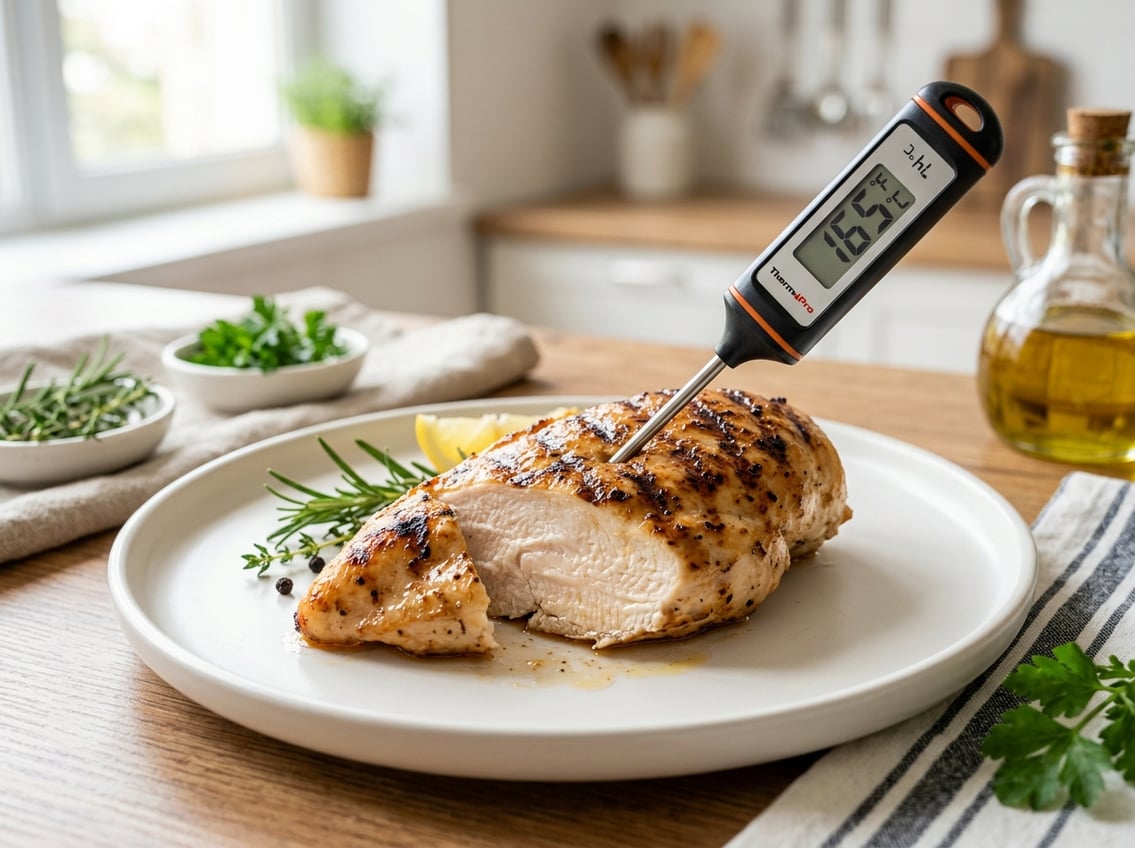
For chicken breast, the key number is 165°F at the center of the thickest part. That is the internal temperature that gives a safe result without guessing.
If you want to avoid overcooking chicken, stop cooking as soon as the thickest spot reaches the safe temperature. Let carryover heat finish the job.
Why 165°F Is the Safe Final Temperature
The USDA standard for poultry is 165°F, and most U.S. cooks rely on that safe internal temperature. At this point, harmful bacteria die quickly enough for home cooking.
Chicken breasts are lean, so they dry out faster than fattier cuts. Allrecipes notes that chicken breasts are easy to overcook because they have less moisture and uneven thickness, which makes precise temperature control important.
When to Pull Breast Meat Off the Heat
You do not always need to wait until the thermometer reads 165°F before removing chicken. Many cooks pull it at about 160°F to 162°F, then rest it so it climbs to the final safe temperature.
Heat keeps moving inward after cooking stops. Pulling a little early helps avoid overcooking while still reaching the correct internal temperature.
Carryover Cooking and Resting Time
Resting improves texture. A few minutes of rest lets juices settle and carryover cooking bring the chicken up the rest of the way.
According to Allrecipes’ chicken breast temperature guide, covering the breasts loosely with foil for a few minutes helps keep juices locked in.
How to Check Doneness Accurately
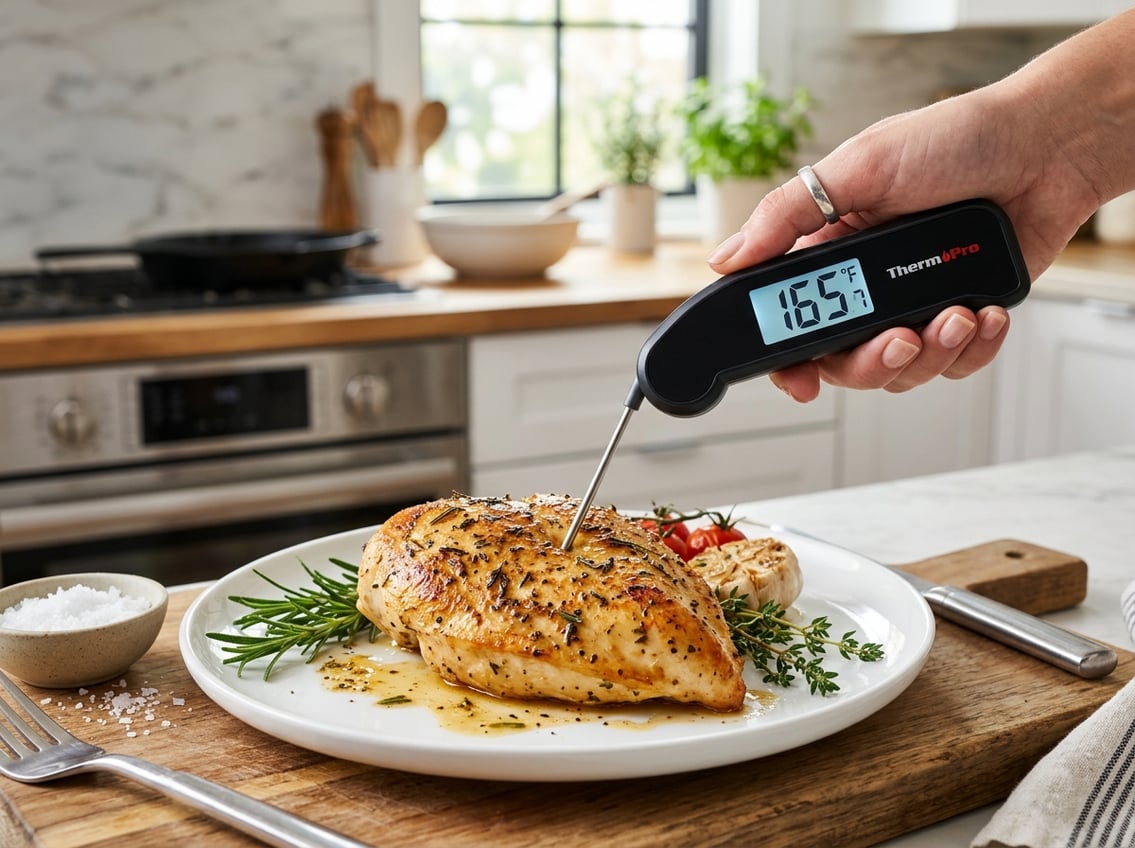
A thermometer gives you the most reliable answer. The right tool and the right placement matter as much as the number you read.
Use a meat thermometer every time you cook chicken breast, especially if the pieces are uneven in thickness. That is the best way to avoid overcooking while still protecting food safety.
Using a Meat Thermometer the Right Way
Insert the probe into the thickest part of the breast, and avoid touching bone or the pan. Wait for the reading to settle before deciding if the chicken is done.
An instant-read thermometer works best for quick checks near the end of cooking. It gives you a fast temperature reading without leaving the breast exposed to extra heat for long.
Best Spot to Probe a Chicken Breast
The thickest center point is the most important spot. If you probe a thin edge, you might get a false high reading and remove the chicken too early.
If the breast is uneven, check more than one place. The lowest reading tells you whether the chicken is safe.
Why an Instant-Read Thermometer Beats Visual Cues
Visual cues can mislead you. White meat can still be underdone, and clear juices do not always mean the center has reached the right temperature.
A thermometer gives a direct answer, while color only gives a rough hint. A quick temperature check is more useful than cutting into the meat early.
How Breast Meat Compares With Other Chicken Cuts
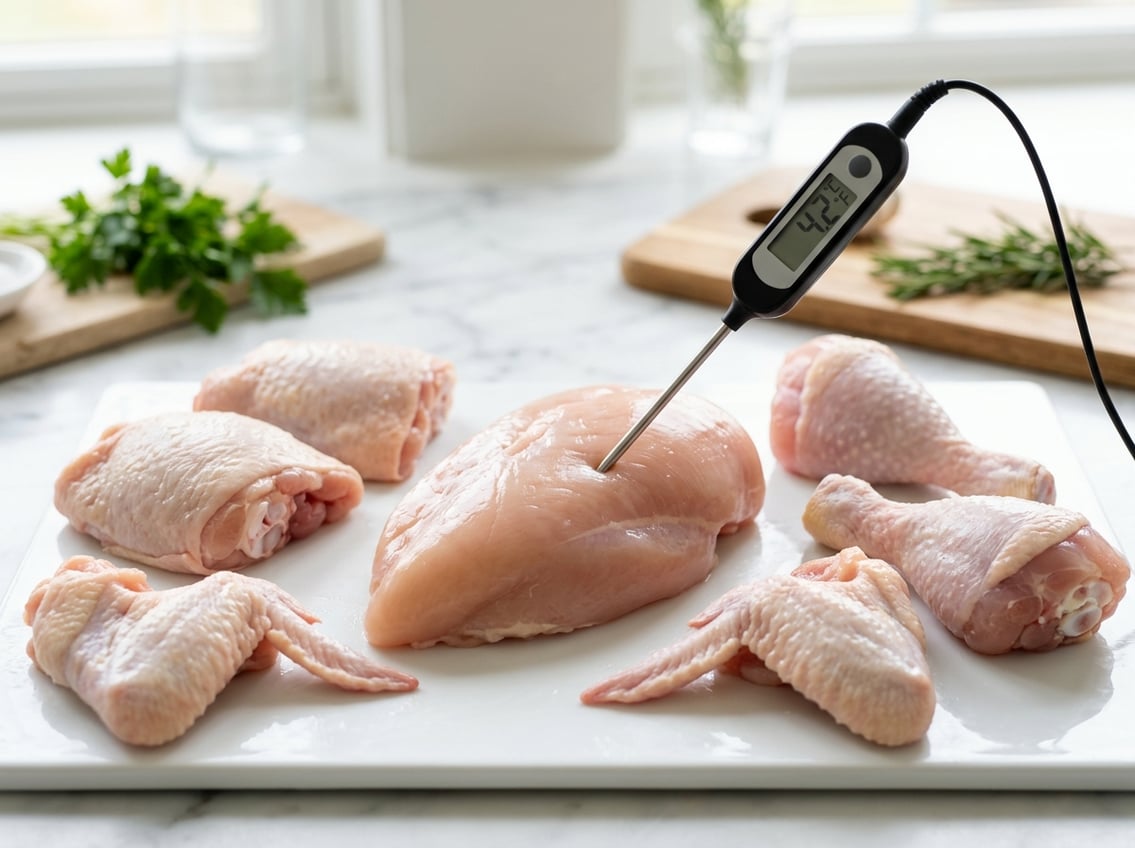
Different cuts need different finishing points. White meat, dark meat, whole birds, and ground chicken each have their own target temperature.
The same cooking temperature does not work equally well for every cut. Knowing the safe internal temperature for each piece helps you get better texture and safer results.
White Meat vs. Dark Meat Temperatures
Chicken breast is white meat, so 165°F is the standard finish point. Thighs and drumsticks often taste better at a higher finish point, since dark meat has more connective tissue and benefits from longer cooking.
Many chicken temperature chart references, including Springer Mountain Farms’ internal temperature chart by cut, list breasts at 165°F and dark meat at a higher target.
Whole Chicken Temperature Check Points
A whole chicken needs more than one temperature check. Probe the breast and the thickest part of the thigh, since both areas must reach a safe internal temperature.
The breast should reach 165°F, while the thigh may read higher and still be fine. Checking both points helps you avoid serving one part undercooked while another part is dry.
Ground Chicken and Reheated Chicken Basics
Ground chicken should reach 165°F throughout, since grinding spreads bacteria more widely through the meat. The same safe temperature applies when you reheat cooked chicken.
For leftovers, heat until the center reaches 165°F again. That gives you a simple rule for safety, whether you are dealing with a patty, filling, or chopped chicken breast.
Cooking Methods That Affect Final Results
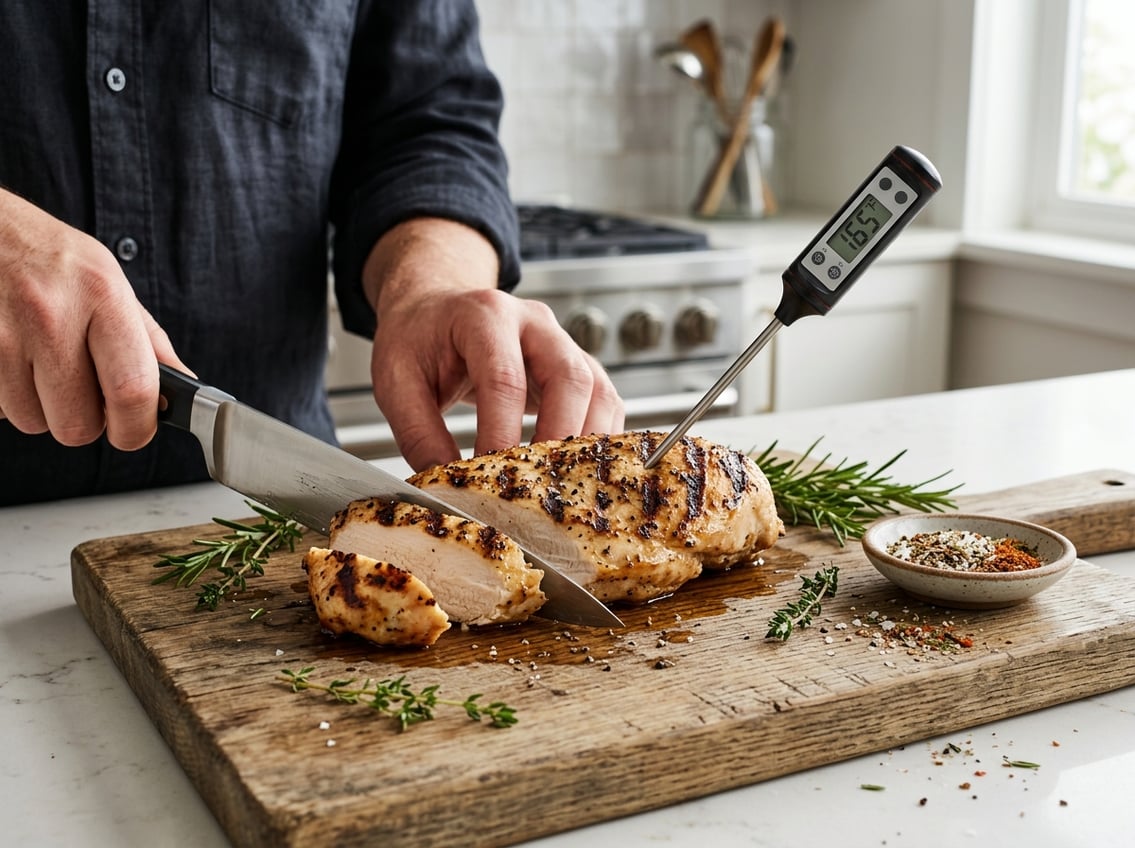
Cooking method changes timing, not the final target. Oven, grill, pan, and air fryer cooking all need the same end goal, which is the right temperature in the thickest part.
A good instant-read thermometer works across all methods. Chicken breast can move from underdone to dry very fast, so the method you choose affects how closely you need to watch the clock.
Oven, Grill, Pan, and Air Fryer Timing Differences
Thicker breasts take longer, and high heat cooks faster than gentle heat. Allrecipes reports that chicken breasts can roast at 450°F for about 15 to 18 minutes or cook in a skillet for a few minutes per side, depending on thickness.
Grilling and air frying often brown the outside quickly, so temperature checks matter even more. No matter the method, cook until the internal temperature reaches the safe point.
Sous Vide Chicken for Precise Doneness
Sous vide chicken gives you tighter control because the water bath holds a steady cooking temperature. That makes it easier to hit the exact level you want before a quick sear.
If you use this method, you still need to follow food safety rules and finish the chicken properly. The benefit is consistency, especially if you often struggle with dry breast meat.
Common Mistakes That Dry Out Chicken Breast
Cooking by time alone often dries out chicken breast. Breast size, starting temperature, and heat level all affect the result, so a timer is not enough.
Cutting into the chicken too soon or skipping resting time can also lead to dryness. Using high heat without checking the center may overcook the meat.
To avoid these mistakes, use a thermometer and rest the chicken before serving. Pull the chicken from the heat at the right moment for the best results.


