
Why Would Chicken Breast Be Stringy? Causes and Fixes
When you ask why would chicken breast be stringy, the answer usually comes down to the bird’s muscle structure, processing defects, or cooking heat.
Chicken breast is lean, so any change in texture shows up fast.
Stringy chicken breast is not always spoiled chicken. It can be a texture problem, like spaghetti meat, or it can be the result of overcooking and moisture loss.
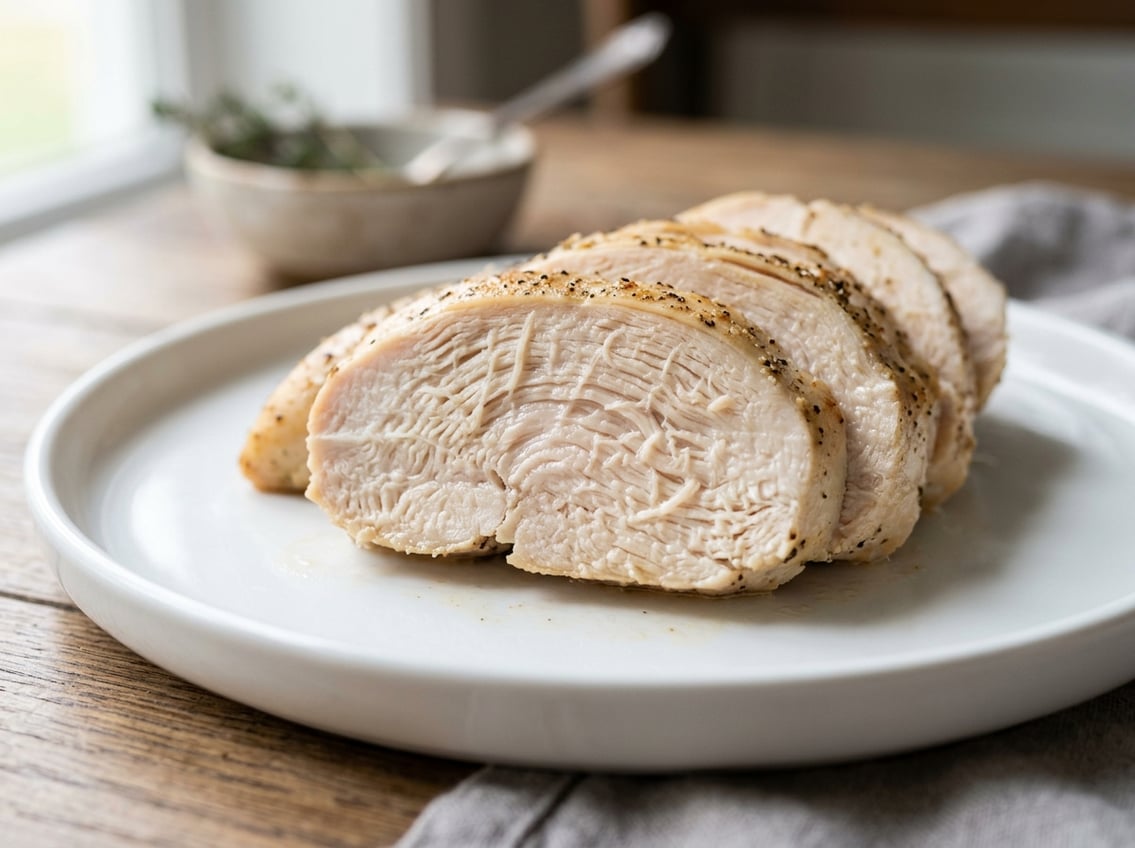
If your chicken breast looks loose, shredded, or fibers are pulling apart, you are likely seeing a structure issue rather than a flavor issue.
The texture may start in the bird and become more obvious after cooking.
You can often fix the problem with better shopping, gentler cooking, and a thermometer.
In some cases, use the meat in another dish instead of serving it whole.
What Stringy Texture Usually Means
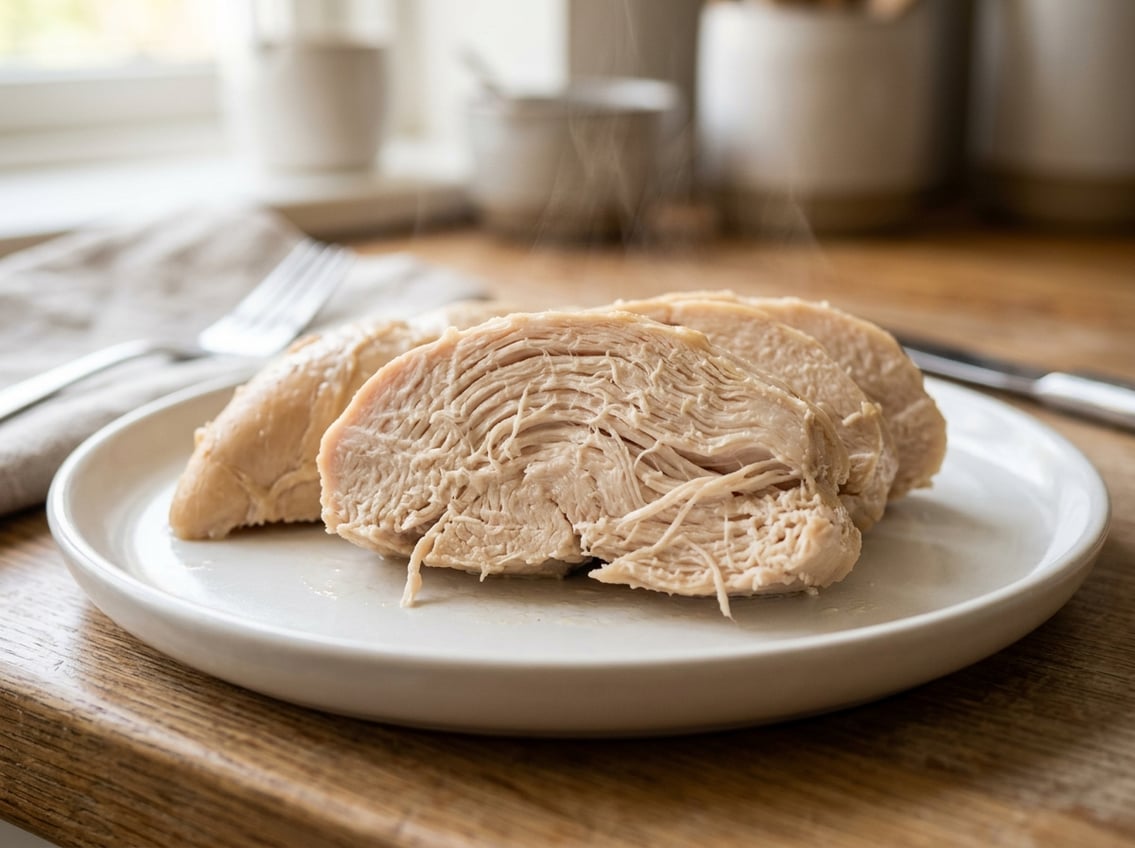
Stringy texture usually means the breast’s muscle bundles are separating or tightening in a way that changes the bite.
It can happen in normal cooked chicken, or it can point to a defect such as spaghetti meat, mushy breast, or woody chicken.
The key is to tell normal grain from damage in the meat’s structure.
That difference changes how the chicken looks, feels, and cooks.
How Normal Muscle Grain Differs From a Texture Defect
Normal chicken breast has visible muscle fibers, and that grain runs in one direction.
The fibers should stay packed together, not split into loose strands when you touch them.
A texture defect is different.
The surface may look ragged, weak, or split, and the meat can tear with little pressure.
What Spaghetti Meat Looks and Feels Like
Spaghetti meat is the common name for a defect where the breast looks like strands of pasta.
It can appear soft, loose, and fibrous, with visible separation between muscle bundles.
This is not the same as normal grain.
In severe cases, the meat may seem fragile and have extra drip loss, which makes it look drier after cooking.
How Woody Chicken and Mushy Breast Compare
Woody chicken feels dense, hard, and sometimes rubbery.
Mushy breast feels soft and weak instead, almost like the structure has fallen apart.
Spaghetti meat is usually loose and stringy, while woody chicken is firm and resistant.
Why the Meat Turns Fibrous or Falls Apart
Heat is part of the problem, yet the bird’s structure matters just as much.
Muscle fibers, myofibrils, and connective tissue all affect how the breast holds together, and weak structure makes the problem easier to see.
Fast growth in broiler chickens can also leave the breast less stable.
When that structure is weak, cooking can push it into a fibrous, shredded look.
How Rapid Growth in Broiler Chickens Affects Structure
Broiler chickens are bred to grow quickly, and the breast muscle can enlarge faster than its support tissue can keep up.
That mismatch can leave the muscle bundles less uniform.
As noted in Cook Answers, this is one reason spaghetti meat chicken shows visible strands.
The meat is still chicken, yet its internal structure is less balanced than a normal breast.
Why Weak Connective Tissue Strength Causes Separation
Connective tissue helps hold muscle fibers together.
If that support is weak, the fibers and myofibrils can pull apart more easily during processing or cooking.
That separation is what makes stringy chicken stand out.
Instead of a compact breast, you get a piece that breaks into strips and flakes unevenly.
How Overcooking and Carryover Cooking Dry Out the Breast
Overcooking tightens the fibers, pushes out moisture, and raises drip loss.
Even if you stop at the right moment, carryover cooking can keep the temperature rising after the meat leaves the heat.
A meat thermometer helps you stop at the right point, around 165°f (74°c).
If you cook far past that, the breast dries out and the fibers can feel even more stringy.
Is It Safe to Eat and When Should You Pass
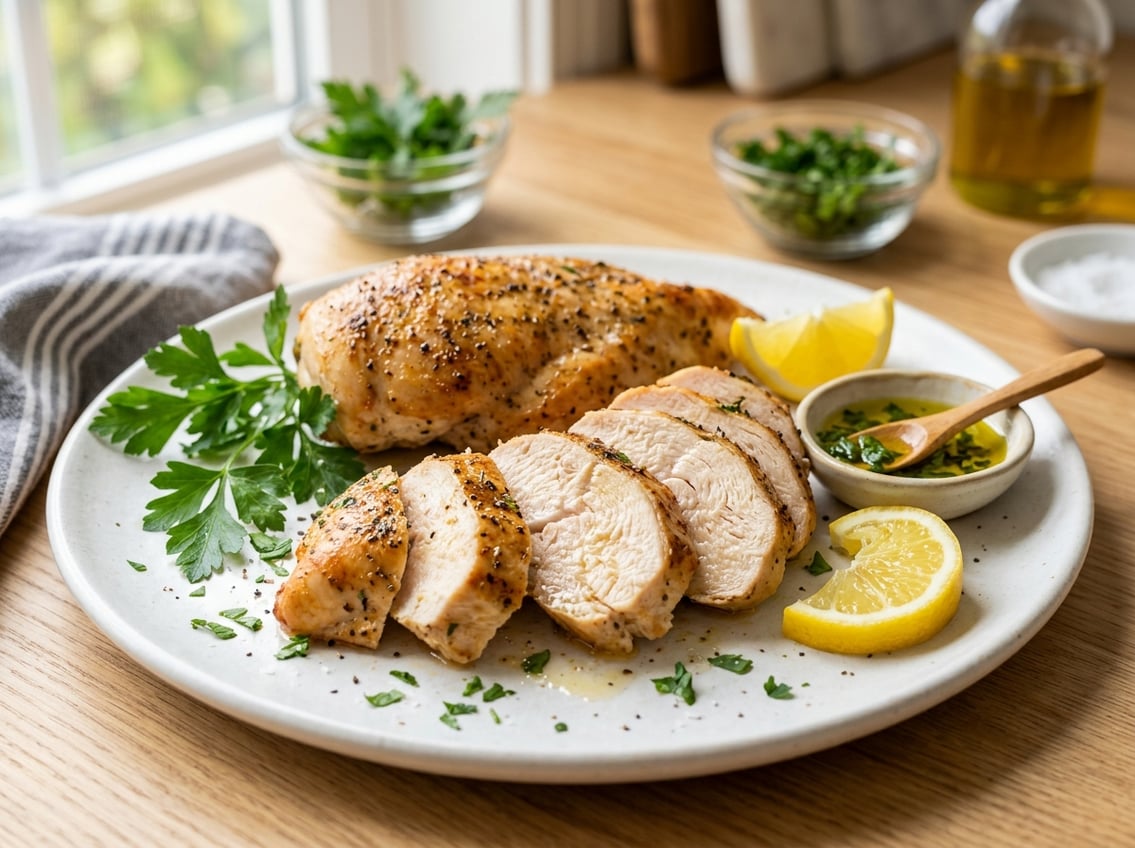
A strange texture does not always mean unsafe food.
The main question is whether you are seeing a quality issue, a spoilage issue, or both.
If the chicken was stored and cooked properly, stringiness alone may not be a safety problem.
You still need to check smell, color, and surface feel before you eat it.
Texture Problems Versus Signs of Spoilage
Spaghetti meat can look odd, yet still be safe after proper cooking.
Spoilage signs are different, and they matter more than texture.
Skip the chicken if it smells sour, feels slimy, or has unusual gray-green color.
A meat thermometer also helps you verify that the thickest part reached 165°f (74°c).
How Safety Differs From Eating Quality
Safety is about bacteria and handling.
Eating quality is about taste, moisture, and tenderness.
A piece of stringy chicken can be fully cooked and still taste dry or weak.
That means it may be safe, yet not pleasant as a plain chicken breast.
When to Repurpose Affected Meat Instead of Serving It Whole
If the meat is safe but tough or stringy, use it in dishes where texture matters less.
Shredded chicken, soups, casseroles, tacos, and salads can work well.
If you want to serve it whole, slice it thin against the grain.
That can make tender chicken feel more even and easier to chew.
How to Prevent and Improve Texture
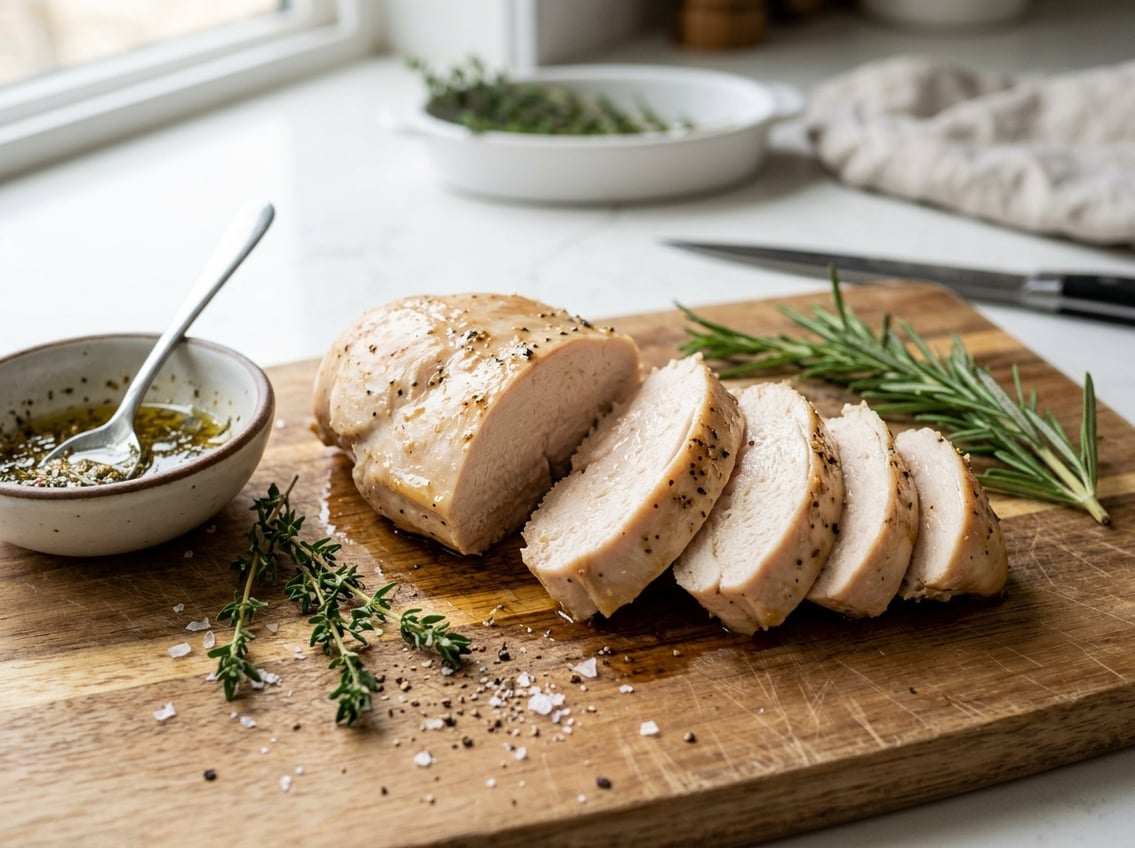
You can reduce stringiness at the store and in the kitchen.
Good shopping choices, careful cooking, and proper slicing all help you avoid spaghetti meat and keep chicken breast more tender.
Small changes make a big difference because breast meat is lean and easy to dry out.
How to Shop to Avoid Spaghetti Meat
Choose chicken breast that looks firm, even, and moist without seeming slimy.
Avoid pieces that look split, ragged, or unusually fibrous before cooking.
If you want to avoid spaghetti meat, smaller or slower-grown birds are often a better choice.
Some shoppers also look for organic chicken, which may fit that goal depending on the producer.
How to Cook Breast Meat Without Making It Stringy
Use a meat thermometer instead of relying on time alone.
Pull the chicken when it reaches 165°f (74°c), then let carryover cooking finish the job.
Gentle heat helps too.
High heat for too long squeezes out moisture and makes the meat tougher, especially in a lean chicken breast.
How Marinating, Resting, and Slicing Can Help
An acidic marinade improves surface tenderness and adds flavor.
Resting after cooking allows the juices to settle and helps reduce dryness.
Before serving, slice against the grain. This shortens the muscle fibers in each bite and makes the meat feel more tender.


