
Where Is Chicken Breast Cheapest? Best Stores and Prices
Where is chicken breast cheapest? In the U.S., you often find the lowest price during short weekly sales, at large grocery chains, or at warehouse-style stores when you compare the price per pound.
Right now, Hy-Vee advertises $1.99 for chicken breasts, according to weekly ads listing chicken breasts on sale.
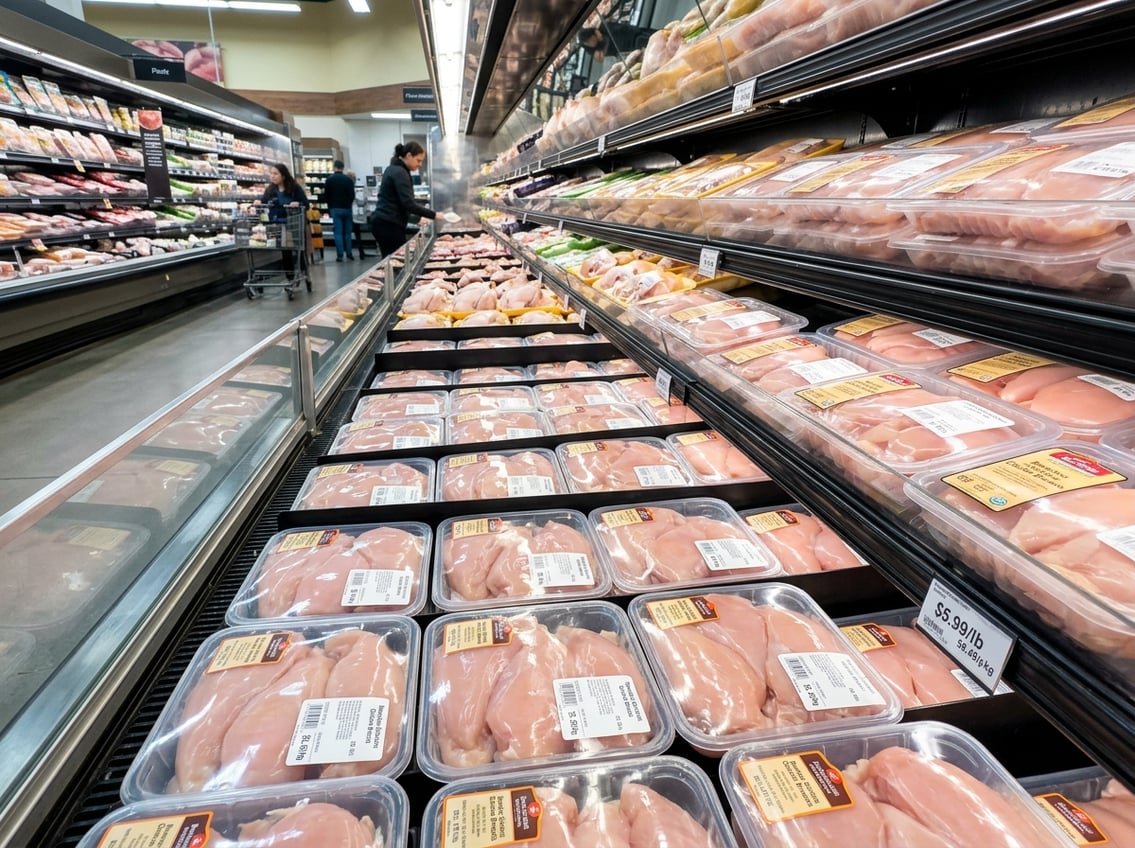
If you want the cheapest chicken breast, compare weekly ads, store apps, and pickup listings before you buy.
The lowest shelf price is not always the best deal if the pack is small, trimmed differently, or priced by a different cut.
Chicken breasts are one of the most bought proteins in U.S. stores, so prices move often.
You can save more when you shop sales, buy family packs, or choose frozen over fresh when the unit price is better.
Lowest-Price Stores Right Now
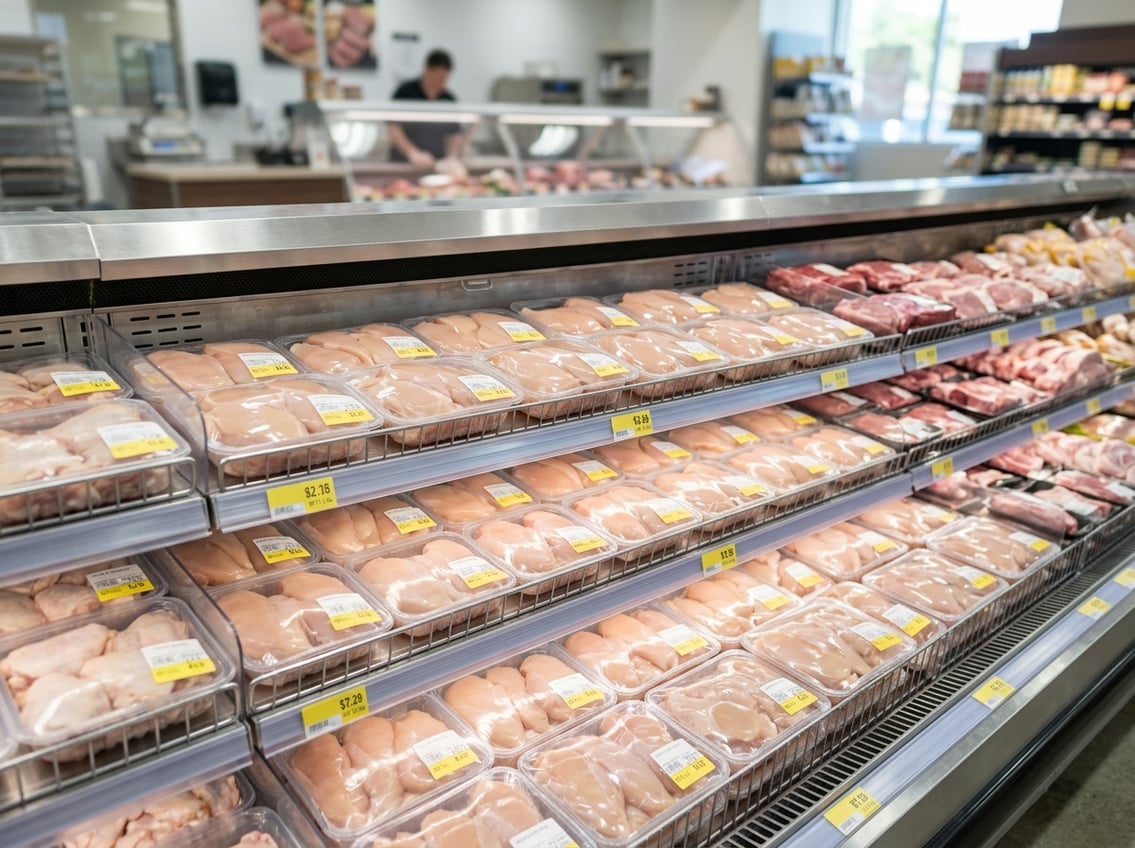
Some stores run lower chicken breast deals more often than others.
Big regional grocers use meat specials to draw traffic.
At the moment, weekly ads for chicken breasts list discounts at Albertsons, Food Lion, Hy-Vee, Kroger, ShopRite, Stop & Shop, and Super King Markets.
Hy-Vee lists the lowest price at $1.99, with the promotion valid from 05/01/2026 to 05/03/2026.
Short sales like this often give you the cheapest chicken breasts in a given week.
Which Stores Commonly Run the Lowest Chicken Breast Prices
Regional grocery chains often beat standard shelf pricing because they rotate meat promotions to match local demand.
Kroger, ShopRite, Food Lion, and Albertsons often advertise chicken breast deals in weekly flyers.
Big-box chains can also be good for price checks.
Walmart lists Freshness Guaranteed boneless, skinless chicken breasts.
Target shows boneless and skinless chicken breast options with fresh and frozen choices.
Fresh vs Frozen Price Leaders
Frozen chicken breasts often have a lower price per pound when you want to stock up.
Fresh chicken can be cheaper during a short sale, but frozen packs may give you better value if they last longer and reduce waste.
Fresh is worth watching when a store uses it as a loss leader.
Frozen is worth watching when you need flexibility and want to buy a larger amount without rushing to cook it.
How Local Sales Can Beat Everyday Pricing
Weekly ads can undercut normal shelf prices by a wide margin.
Some stores mark chicken breast down for only a few days, and that short sale can beat the usual market rate.
You can also use local timing to your advantage.
Meat markdowns often show up midweek, and some retailers use app-only coupons or pickup-only pricing to lower the final cost.
How to Compare Chicken Breast Prices Correctly
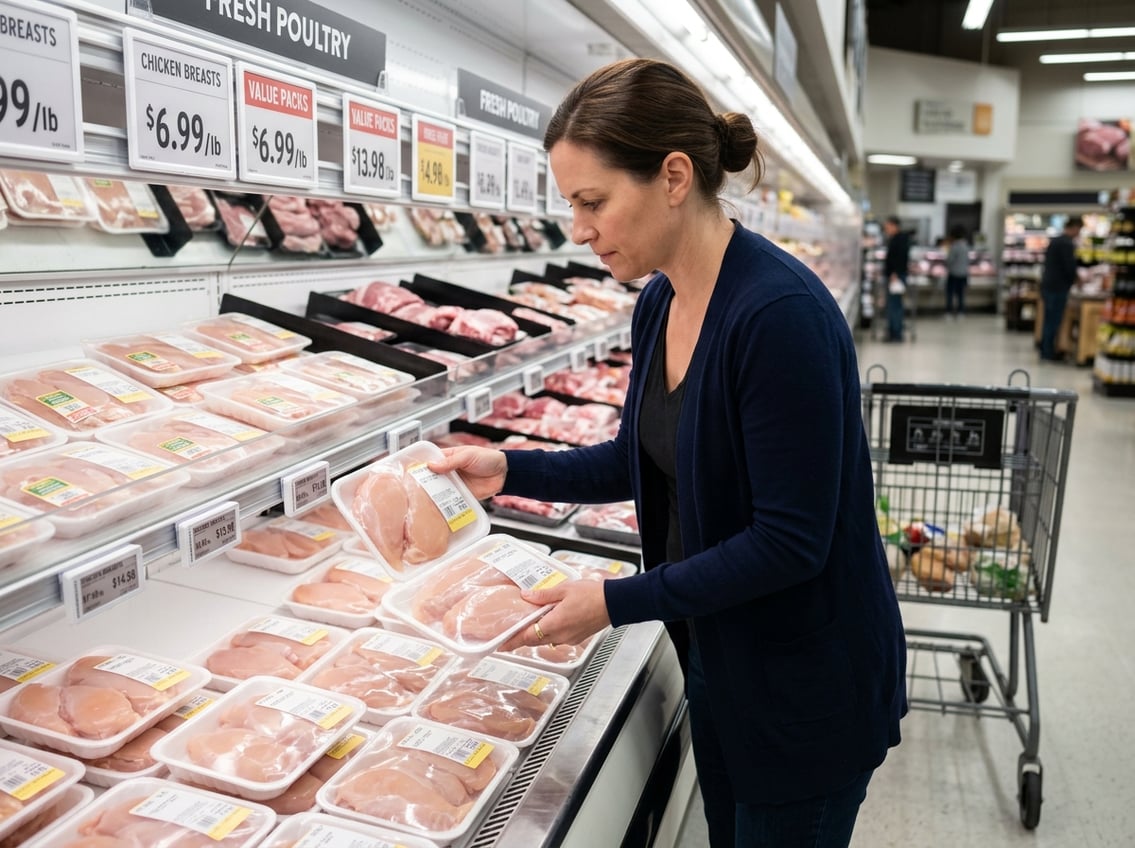
A low sticker price can hide a poor deal if the package is smaller, more processed, or trimmed in a way that changes yield.
To judge chicken breast value, compare the price per pound and the cut style, not just the number on the label.
The same idea applies across chicken breast fillets, thin-sliced cuts, and value packs.
A skinless chicken breast that costs a little more can still be cheaper in practice if it gives you more usable meat.
Why Price Per Pound Matters More Than Pack Price
A $9 pack may look cheaper than a $12 pack, yet the smaller pack can cost more per pound.
Check the shelf tag for unit pricing every time.
This matters even more with boneless skinless chicken breasts, since package sizes vary a lot.
A store may advertise a deal that looks good until you compare the pounds and see the real cost.
Comparing Chicken Breast Fillets, Thin-Sliced Cuts, and Value Packs
Chicken breast fillets and thin-sliced cuts often cost more per pound because you pay for extra processing.
They save prep time, so the higher price can make sense if speed matters to you.
Value packs usually give you the lowest unit price.
If you cook in batches, these larger packs often beat smaller trays.
When Boneless Skinless Chicken Breasts Are Worth Paying More For
Boneless skinless chicken breasts are worth a higher price when you want convenience and less waste.
You do not need to remove bones or skin, and that saves time in the kitchen.
Pay a little more when the cut quality is better, the package is well trimmed, or the deal lets you buy enough for several meals.
In those cases, the extra cost can still be a good value.
Best Places to Check Before You Buy
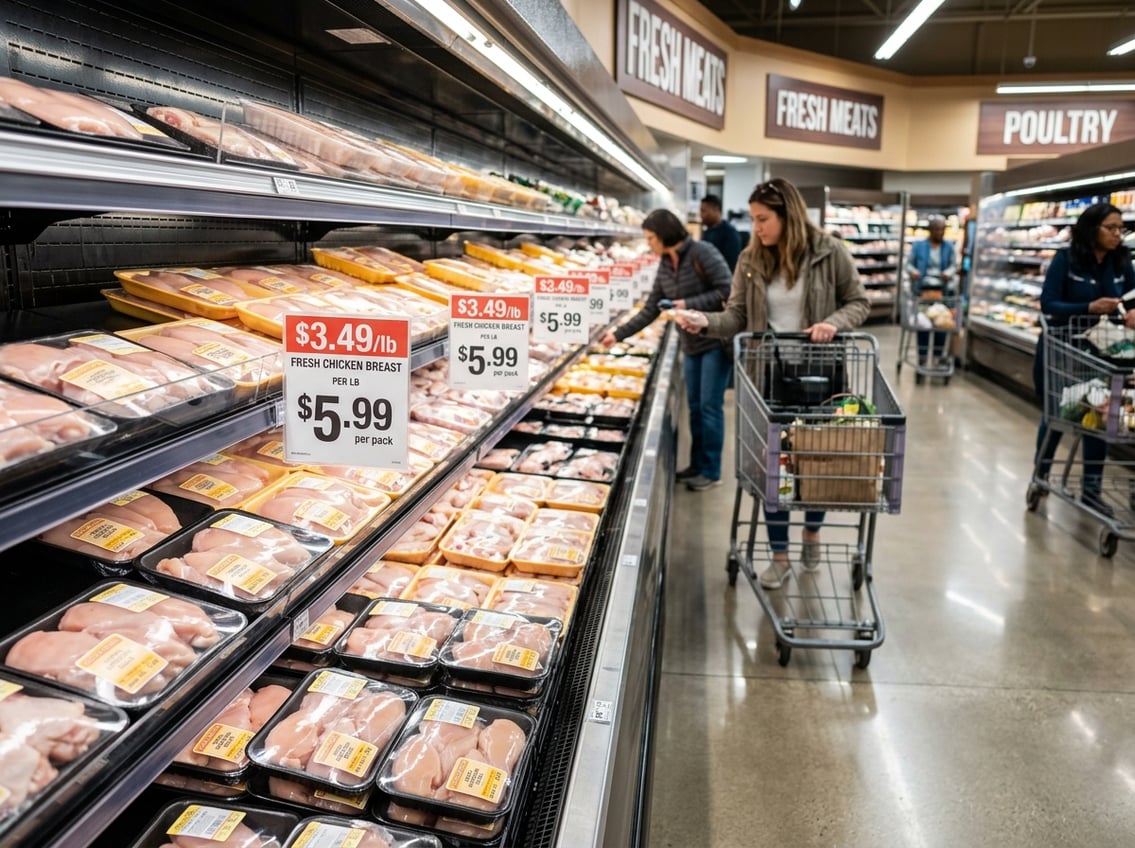
You usually find the best chicken breast price by checking several store types.
Weekly ads, store apps, and pickup listings can show different prices for the same chicken breasts.
Some offers are not advertised the same way everywhere, including sponsored placements, app-only deals, or member pricing.
Checking a few places before you leave home can save real money.
Grocery Store Weekly Ads and Digital Coupons
Weekly ads are still one of the fastest ways to find the cheapest chicken breast.
Flyers often show short sales that beat regular pricing for only a few days.
Digital coupons can lower the final cost even more.
You may see a sale in the ad, then stack it with an app coupon or loyalty reward at checkout.
Big-Box Retailers and Online Pickup Listings
Big-box stores are good for price checks because they update online listings often.
Walmart and Target both show chicken breast product pages, which makes it easier to compare fresh, frozen, and boneless options before you go.
Pickup listings can reveal local price changes that do not always show in a printed flyer.
If your store offers pickup, the online shelf price may give you a better read on the current market.
Delivery Apps, Wholesale Sellers, and Bulk Options
Delivery apps offer convenience, but the final cost often rises after service fees and markups.
That makes them useful for comparison, not always for the cheapest buy.
Wholesale sellers can be a good option when you have room to freeze extra chicken breasts.
Bulk buying works best when the unit price drops enough to offset the larger upfront spend and you can use the meat before quality falls.
What Affects the Real Value of a Cheap Pack
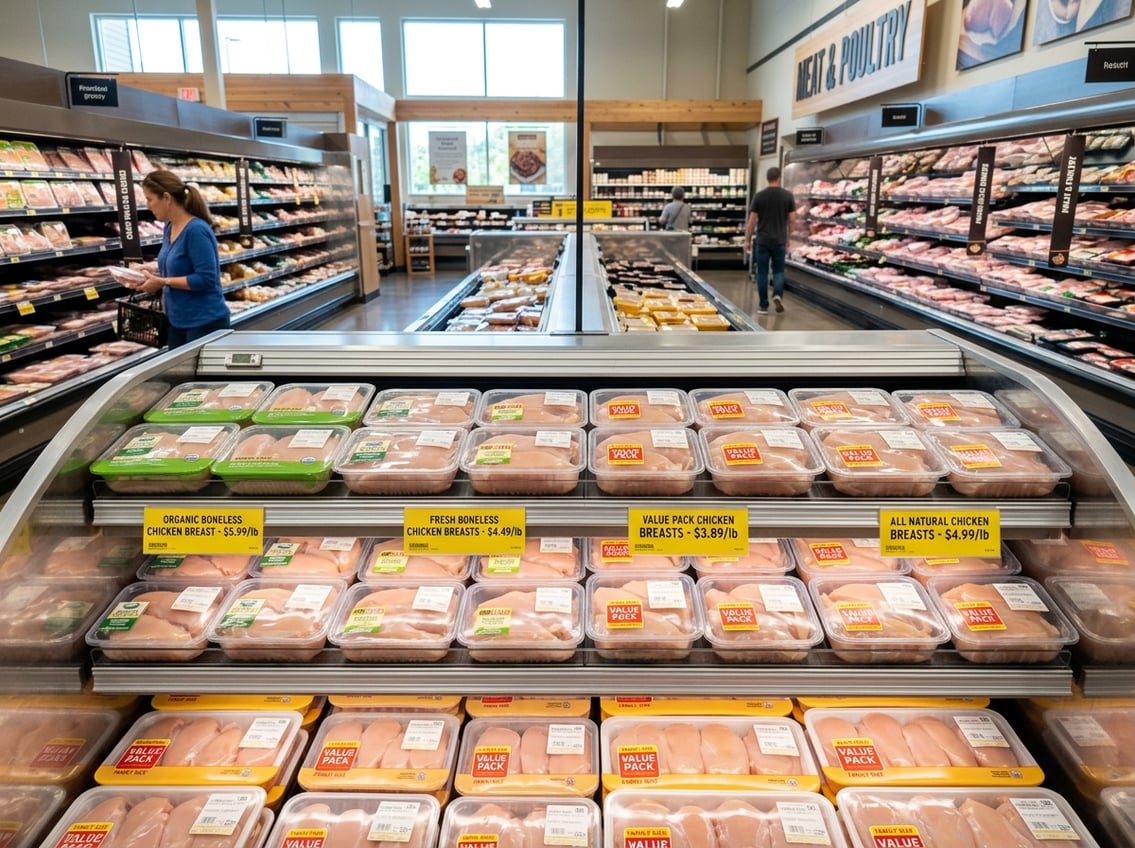
A cheap pack is only a good value if you can use it well.
Package size, trim level, and shopping method all affect what you really pay for boneless skinless chicken breasts.
The label can also hide extra costs.
Pickup fees, delivery fees, and missed discounts can turn a low posted price into a weaker deal.
Package Size, Family Packs, and Freezer Planning
Family packs often give you the best price per pound on chicken breast.
The tradeoff is that you need enough freezer space and a plan to use the meat before it gets old.
If you buy in bulk, portion the chicken right away.
Smaller freezer bags help you avoid waste and make weeknight cooking easier.
Quality, Texture, and Label Claims
A very cheap skinless chicken breast may have more water, uneven sizing, or a texture you do not like.
Quality matters if you want better browning, even cooking, or better meal prep results.
Labels like antibiotic-free or other premium claims can raise the price.
Those claims may matter to you, yet they do not always mean the pack is the best value for every household.
Pickup, Delivery, and SNAP Eligibility Considerations
Pickup helps you lock in a low store price without extra browsing or impulse buys.
Delivery usually costs the most because of fees and service charges.
If you use SNAP, check which stores and checkout methods qualify before you shop.
The cheapest shelf price only helps if the payment method and shopping channel still work for you.


