
Temp When Chicken Breast Is Done: Safe and Juicy Guide
You can use the temp when chicken breast is done as a simple safety target: 165°F, or 74°C, in the thickest part of the breast.
That is the standard answer to what temperature is chicken done for chicken breast in the U.S.
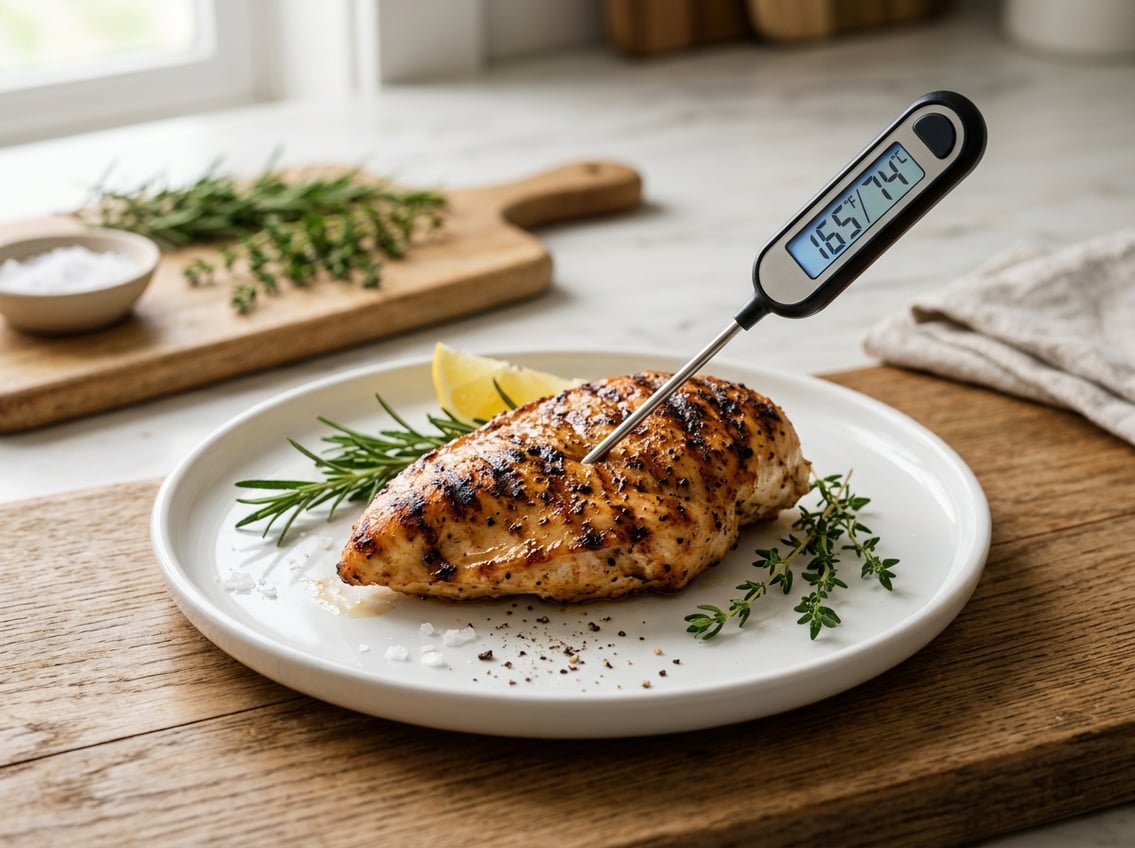
If you want chicken breast that is safe and still moist, check the internal temperature and avoid overcooking.
Time alone is not reliable, since thickness, oven heat, pan type, and starting temperature all change how fast chicken cooks.
The Safe Internal Temperature
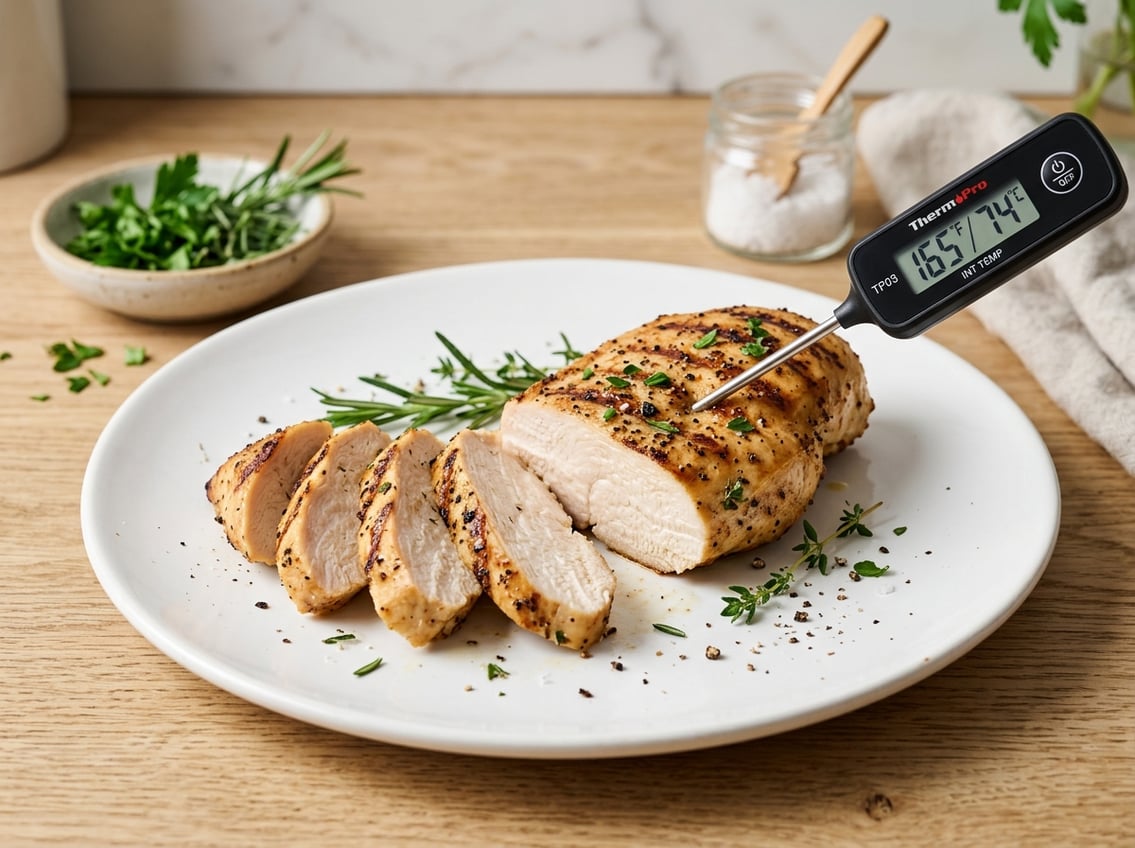
The safe answer to what temperature is chicken done is 165°F (74°C).
That is the USDA standard for chicken breast, and it applies whether you grill, bake, roast, sauté, or air fry.
For breast meat, that number gives you a clear safety point.
Once the thickest part reaches that temperature, the meat is safe to eat.
Why 165°F Is the Standard for Breast Meat
Chicken breast is lean, so it cooks fast and dries out fast.
The 165°F / 74°C target is the widely accepted safe minimum because it destroys harmful bacteria like salmonella and campylobacter.
You should trust this number more than cooking time, color, or touch.
According to the chicken internal temperature guide, 165°F is the USDA-recommended safe temperature for chicken.
When 160°F Can Be Enough Before Resting
You can pull chicken breast from the heat at 160°F if you plan to rest it.
During resting, carryover cooking raises the temperature a few degrees, which can bring it to 165°F without drying it out.
This works best when the breast is thick and the heat source is strong enough to keep cooking the meat after removal.
You still need to verify that the final temperature reaches 165°F.
Why Color and Juices Are Not Reliable Signs
Pink chicken is not always undercooked, and clear juices are not always a sign that it is done.
Color changes with age, lighting, marinade, and cooking method.
A meat thermometer gives you the real answer.
That is the best way to avoid overcooking chicken while still keeping it safe.
How to Check Doneness Accurately
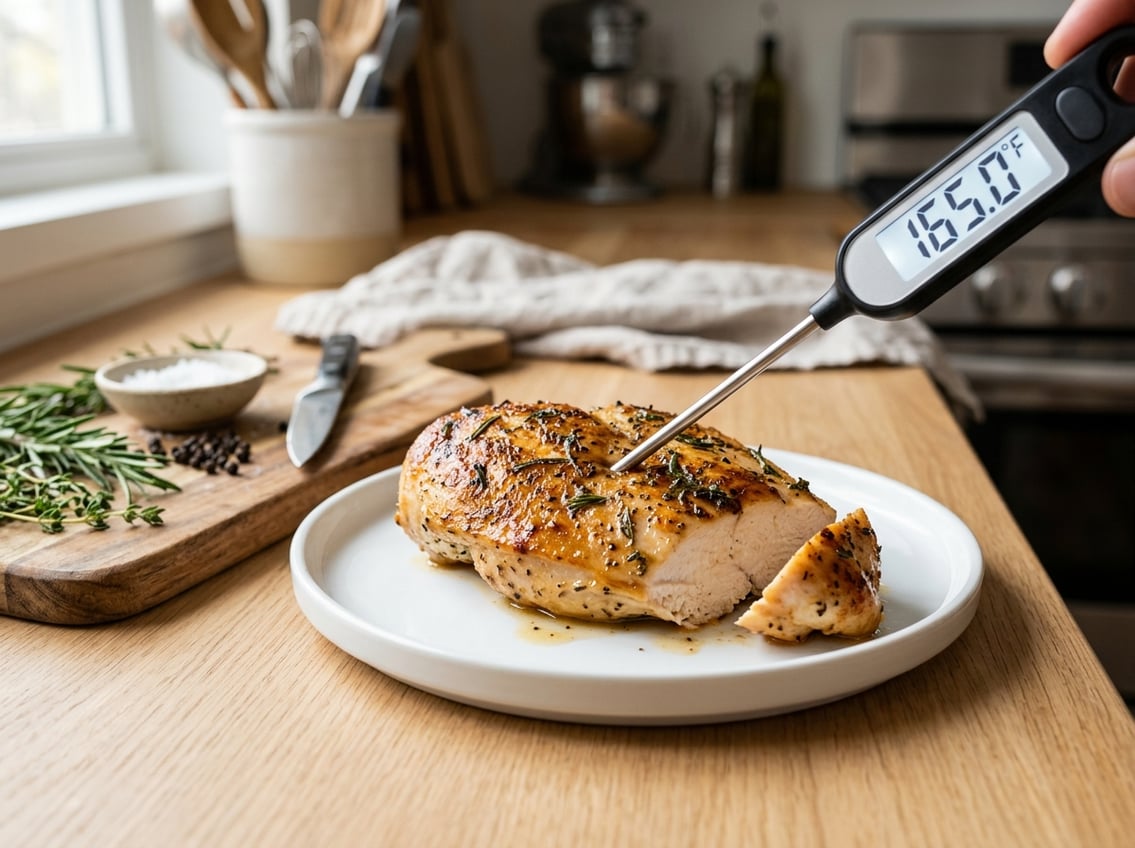
A good thermometer removes guesswork from chicken breast cooking.
You want the reading from the thickest part, and you want to avoid bone, fat pockets, and the edge of the pan.
An instant-read thermometer is the easiest tool for most home cooks.
It gives a fast, accurate reading so you can avoid overcooking chicken.
Where to Insert a Meat Thermometer
Insert the probe into the thickest part of the breast.
Aim for the center of the meat, not the thin tip.
If the breast is uneven, check more than one spot.
The lowest safe reading matters, since that is the part most likely to be underdone.
How to Use an Instant-Read Thermometer Correctly
Slide the probe in after the chicken has been off the heat for a few seconds.
Wait for the reading to settle before deciding if it is done.
For thin pieces, insert the probe sideways if needed.
That helps you reach the center without going through the whole cut too quickly.
Common Temperature-Reading Mistakes to Avoid
Do not let the probe touch bone, since bone can give you a false high reading.
Do not read near the surface, since that area heats faster than the center.
Do not test chicken right after cutting into it.
Letting the juices escape can make the meat less accurate and less juicy.
How to Keep Chicken Breast Juicy
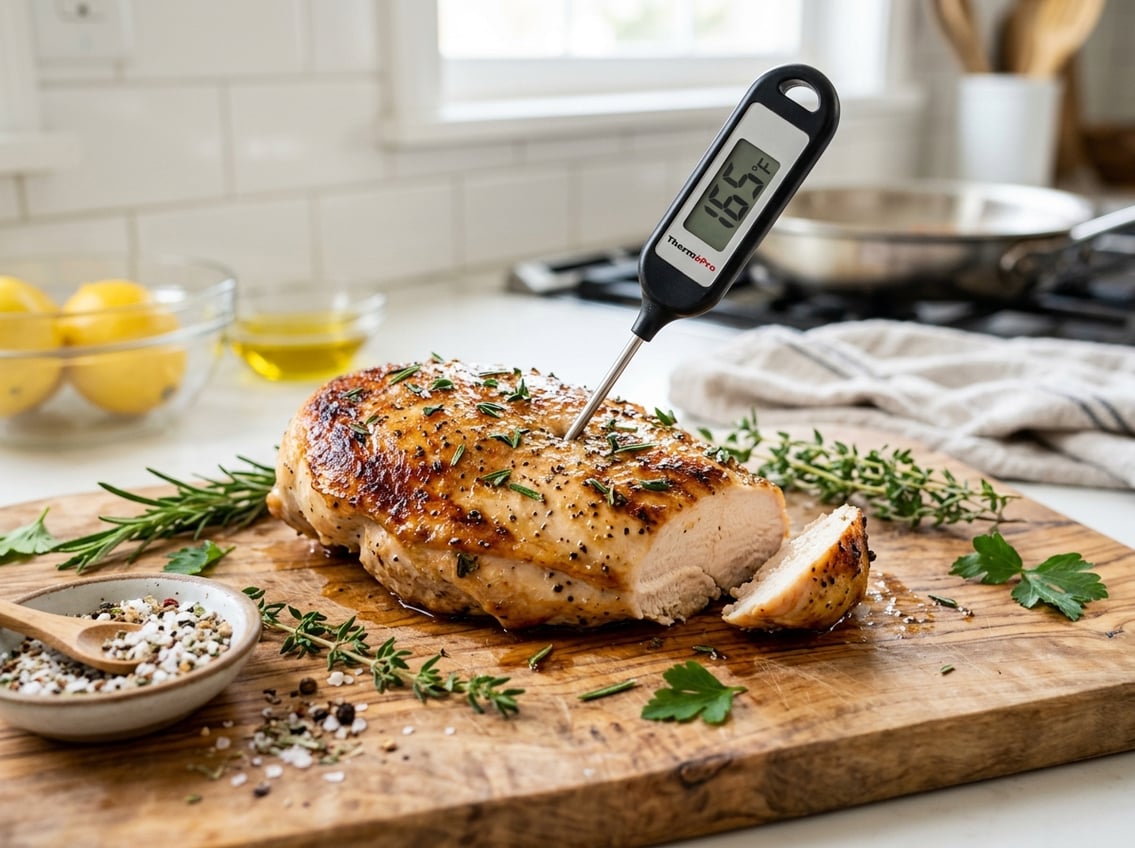
Juiciness comes from smart timing, not from cooking chicken well past the safe point.
If you want the best texture, you need to account for carryover cooking and the way heat moves through the meat.
The goal is to reach the safe temp without leaving the breast on heat longer than needed.
Carryover Cooking and Resting Time
Chicken keeps cooking after you take it off the heat.
The internal temperature can rise several degrees while the meat rests.
A short rest also helps juices settle back into the meat.
This keeps slices moister when you cut into them.
Best Pull Temperature for Moist Results
For many chicken breasts, 160°F is a good pull temperature if you plan to rest the meat for about 5 minutes.
The resting time often brings it to the safe 165°F.
If the breast is very thin, the carryover rise may be smaller.
In that case, check the temperature closely so you do not overshoot the finish point.
How Thickness and Cooking Method Affect Timing
Thick breasts need more time than thin ones.
Bone-in pieces also cook more slowly than boneless pieces.
Oven roasting, pan-searing, grilling, and air frying all change how fast the center heats.
A thermometer matters more than the clock because each method behaves differently.
How Breast Temperature Compares With Other Cuts
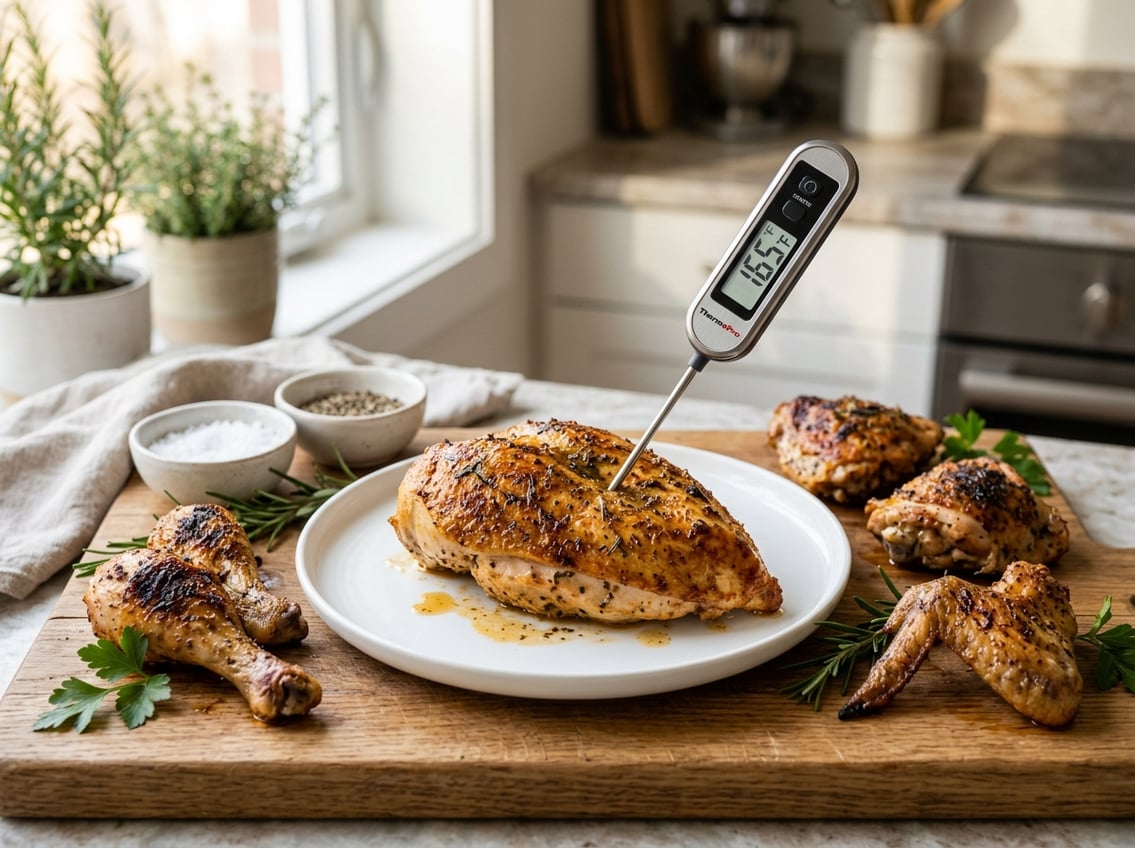
Chicken breast is not the only cut you will cook, and it does not behave like thighs or a whole bird.
Different cuts reach their best texture at different temperatures, even though 165°F / 74°C is still the safe minimum for poultry.
A meat thermometer helps you match the right doneness to each cut.
That matters most when cooking mixed pieces together.
Why Thighs Often Taste Better at Higher Temps
Dark meat has more connective tissue and fat than breast meat.
Thighs often become more tender and flavorful at a higher temperature, around 175°F.
That extra heat helps break down collagen.
Breast meat does not need that same high endpoint, since it is lean and dries out sooner.
What Changes When Roasting a Whole Chicken
When you roast a whole chicken, check more than one spot.
The breast and the inner thigh can finish at different times.
According to FoodSafety.gov roasting charts, you should always use a food thermometer and cook poultry to a safe minimum internal temperature.
For whole birds, both the breast and thigh should reach at least 165°F / 74°C.
Checking Breast and Thigh Separately
Insert the thermometer into the thickest part of the breast. Check the inner thigh without touching bone.
If one part is ready and the other is not, continue cooking until both are safe. This method helps you avoid undercooked spots and protects the more delicate breast meat from drying out.


