
Why Is Chicken Breast So Tough? Causes and Fixes
Chicken breast often turns tough because the meat loses too much moisture, cooks unevenly, or misses the right doneness window.
Chicken breast is lean, so it can go from tender to dry and rubbery very quickly.
If you want a juicy chicken breast, you need to control moisture, heat, and timing from the start.
Small changes before and during cooking can fix tough chicken breast and make a much better meal.
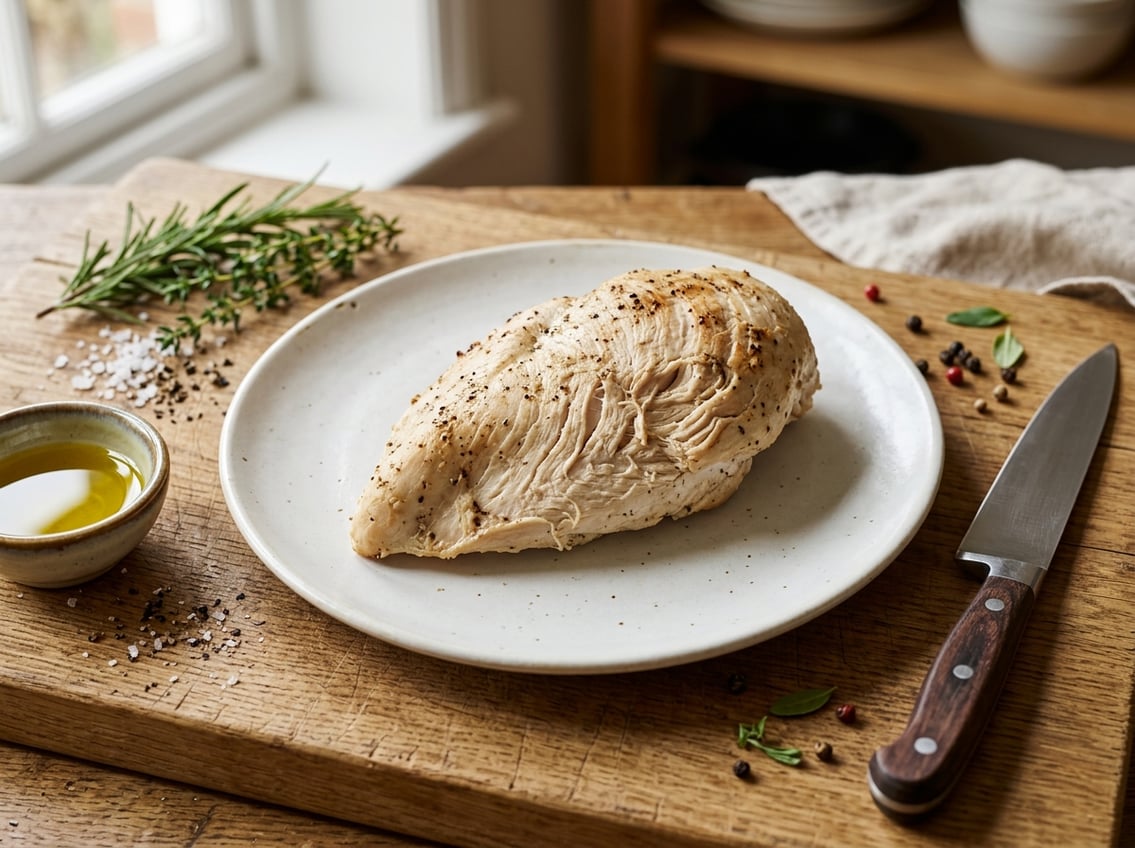
What Usually Makes Chicken Breast Turn Tough
Heat and moisture usually cause chicken breast to turn tough.
The meat is lean, so even a small mistake can leave you with tough chicken instead of juicy chicken breast.
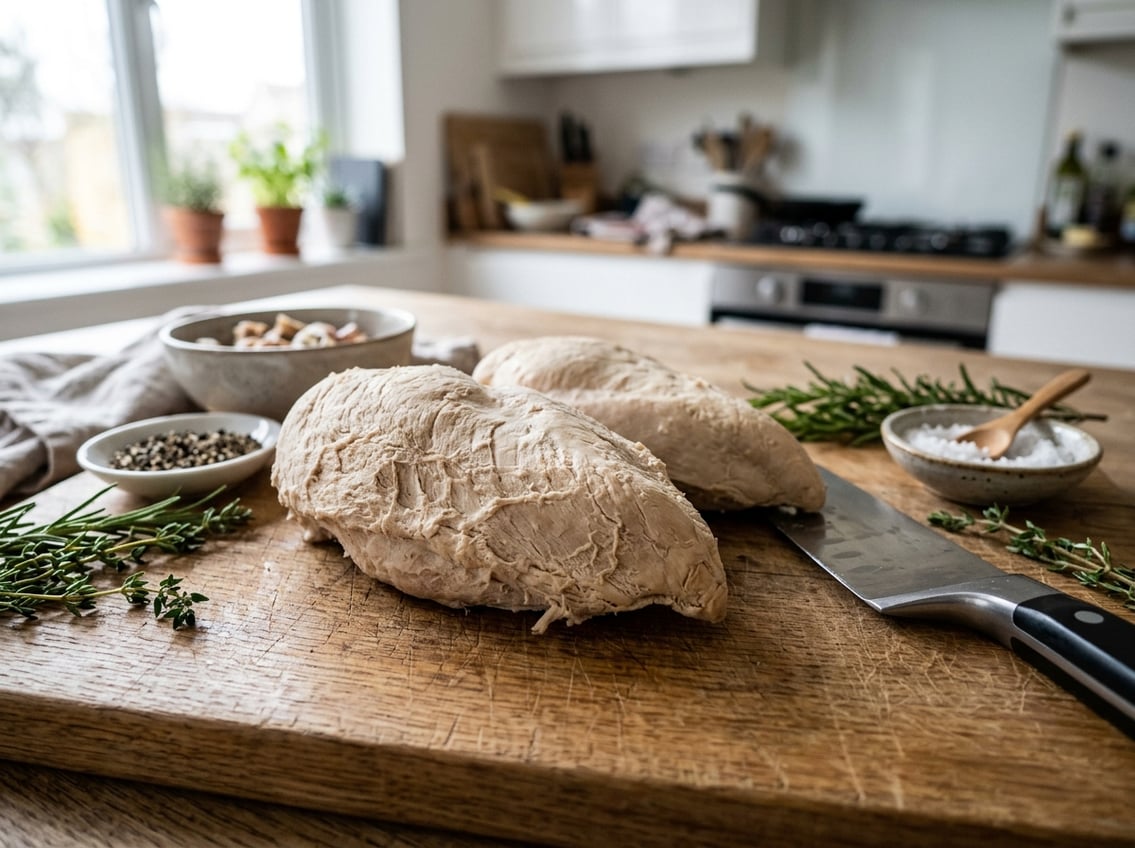
Overcooking and Moisture Loss
Overcooking dries out chicken breast and makes it tough.
As the meat cooks too long, the muscle fibers tighten and push out moisture, which leaves you with a firmer bite.
You can avoid this by using a meat thermometer.
Cook chicken breast to a safe internal temperature of 165°F (74°C), then stop cooking as soon as it reaches that point.
That helps retain moisture and keeps the texture closer to juicy chicken breast.
Undercooking and Rubbery Texture
Undercooking can also make chicken breast feel tough.
When the center is still undercooked, the texture can seem rubbery, soft, or unpleasantly springy.
A chicken breast that has not reached 165°F (74°C) is not at a safe internal temperature, so the goal is safe, fully cooked chicken.
High Heat and Uneven Thickness
Very high heat can toughen the outside before the inside cooks through.
That often happens when the cooking method is too aggressive for the size of the breast.
Uneven thickness makes the problem worse.
A thick end may still be raw while a thin end is already overcooked, so the final result is a mix of dry and rubbery texture.
Even thickness helps the chicken cook at the same rate from end to end.
How to Keep Chicken Breast Tender Before It Cooks
The best time to fix tough chicken breast is before it ever hits the pan or oven.
Simple prep steps can help tenderize the meat, improve seasoning, and help it retain moisture during cooking.
Dry Brining for Better Moisture Retention
Dry brining means salting the chicken breast ahead of time and letting it rest.
The salt helps the meat hold onto moisture better, which gives you a more tender chicken breast after cooking.
Use salt on all sides, then rest the chicken in the refrigerator for at least 4 hours, or overnight if you have time.
This is one of the simplest ways to improve flavor and retain moisture at the same time.
Marinating With Salt, Fat, and Acid
Marinating can help tenderize chicken breast and add flavor.
A good marinade often includes olive oil for fat, plus lemon juice or vinegar for a mild acid that helps loosen the proteins a little.
Do not overdo the acid or soak the chicken too long, since that can change the texture in an odd way.
A balanced marinade works well for chicken breast and can support a juicier result.
Pounding for Even Thickness and Better Texture
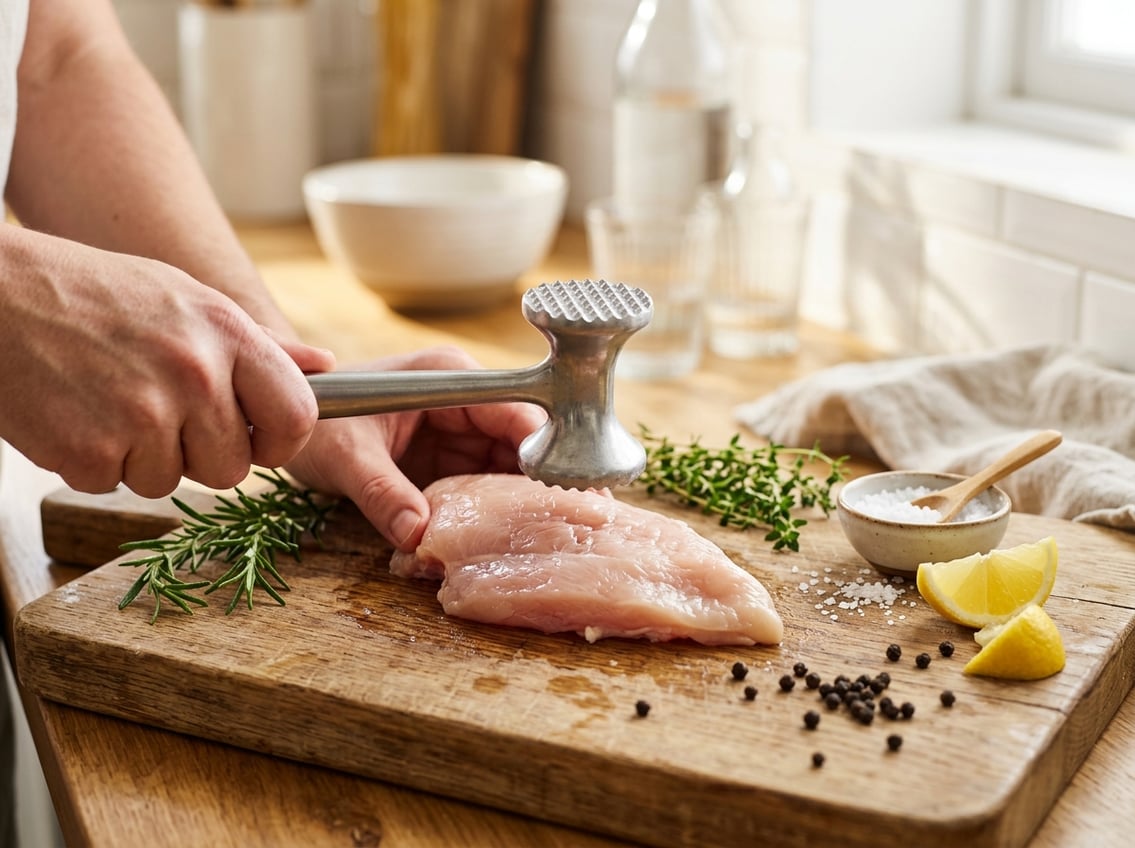
Pounding chicken breast helps it cook more evenly.
It also breaks up thicker spots, which reduces the risk of one part drying out before the rest is done.
Place the chicken between sheets of plastic wrap and use a meat mallet to pound it to an even thickness.
You do not need to flatten it completely, just make the piece more uniform so the cooking is easier to control.
Best Cooking Approaches for a Juicier Result
The cooking method matters as much as prep.
Some methods are more forgiving, while others demand close attention if you want juicy chicken breast.
Pan-Frying and Grilling Without Drying It Out
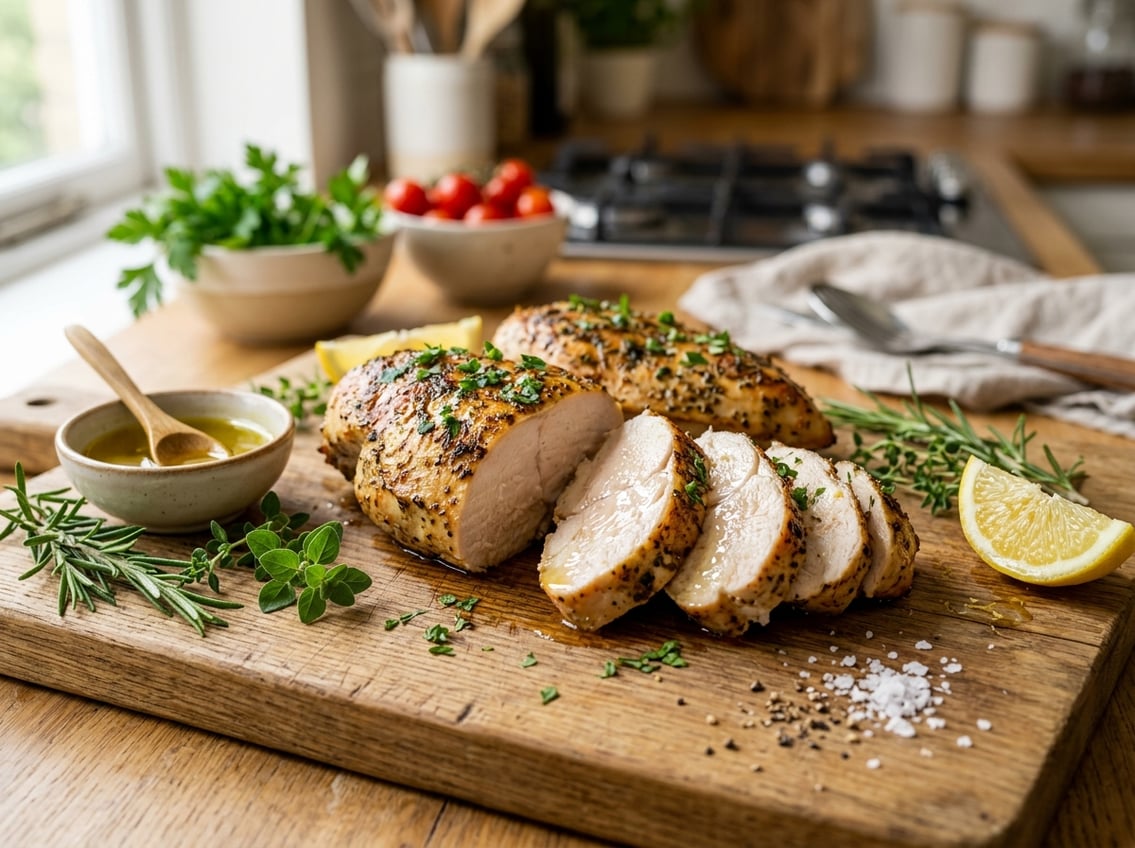
Pan-frying and grilling can give you great flavor, as long as you manage the heat carefully.
Use medium heat when possible, and avoid cooking the breast too long once the outside looks done.
A meat thermometer takes the guesswork out of it.
Pull the chicken at 165°F (74°C), then let it rest briefly so the juices settle back into the meat.
Roasting With Better Temperature Control
Roasting works well when you want more even cooking.
It gives you more control than direct high heat and can help the chicken breast stay tender.
For the best result, place the breasts in a single layer and check the temperature early.
Overcooking is still the main risk, so use a thermometer and stop at the safe internal temperature.
Poaching and Steaming for Gentle Cooking
Poaching and steaming are gentle cooking methods that help retain moisture.
They are useful when you want a very soft texture and a lower risk of overcooking.
These methods can produce a juicy chicken breast, especially if you season the water or steam environment lightly.
They may not give the same browned surface as pan-frying or grilling, but they are reliable for keeping chicken breast tender.
When the Problem Is the Chicken Itself
Sometimes the issue is not your technique.
The meat may already have texture problems before you cook it, or the breast may be unusually large, which makes even cooking harder.
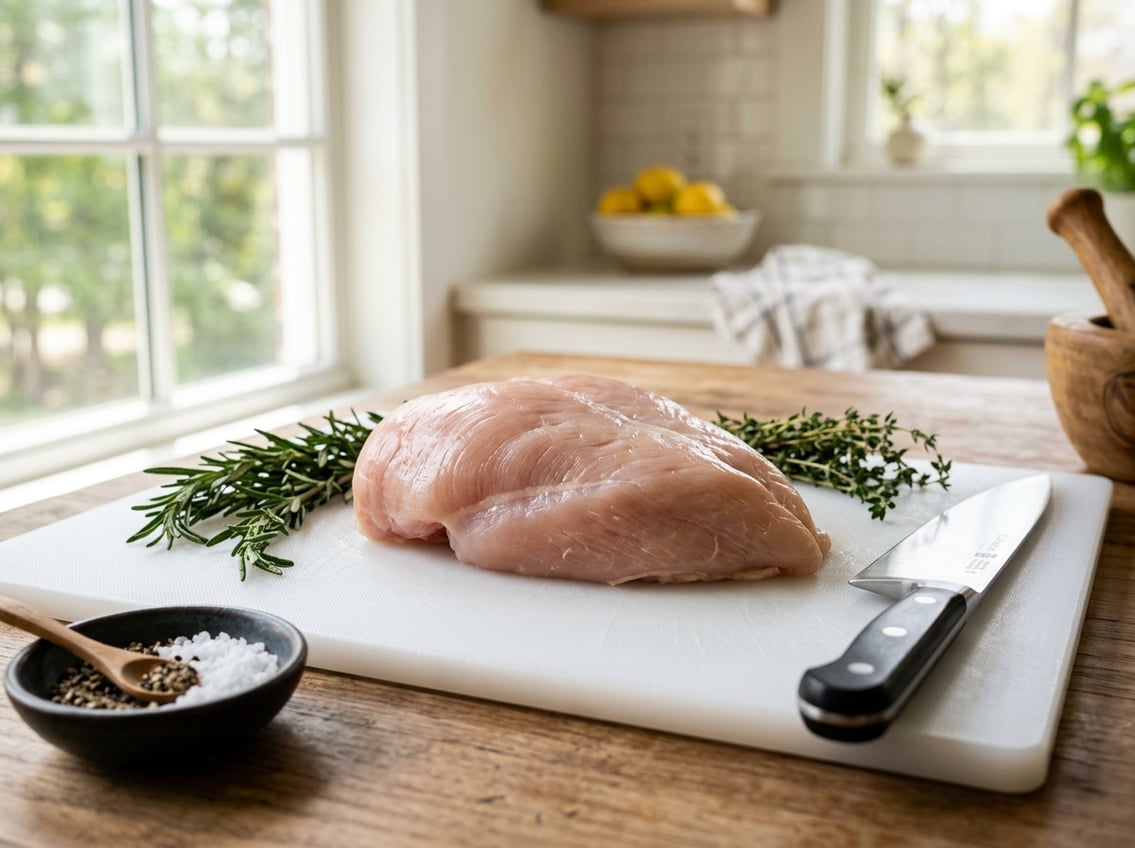
Woody Breast Syndrome and Texture Defects
Woody breast syndrome is a texture defect that can make chicken breast feel stiff, firm, or stringy.
It is not the same as simple overcooking, and it can leave you with tough chicken breast even when you cook it correctly.
If the raw chicken already feels very firm or oddly hard, the texture may be the issue.
In that case, no cooking method can fully fix it.
Poor Quality Chicken and Oversized Breasts
Poor quality chicken can lead to less predictable results.
Very large breasts are also harder to cook evenly, which raises the chance of dry outer layers and an underdone center.
Smaller, more even pieces usually cook more reliably.
If your chicken breast often turns tough, try comparing brands and sizes to see whether the problem is the meat itself.
Why Air-Chilled and Organic Chicken May Help
Air-chilled chicken often has a firmer, cleaner texture because producers use a different processing method than water-chilled chicken.
This may improve consistency, but it does not guarantee a tender chicken breast.
Organic chicken might appeal to you if you prefer a different production style or want a more predictable product.
Choose chicken breast that looks fresh, feels even, and cooks at a steady rate.


