
Why Does Chicken Breast Have Sodium? Key Reasons Explained
Chicken breast has sodium because it naturally contains a small amount. Many store-bought versions have extra salt because producers add it during processing.
Some sodium is built into the meat. Some gets added later through brining, seasoning, or packaged preparation.

Plain chicken breast can stay low in sodium if you buy and cook it carefully. The sodium level depends on whether the chicken is raw, brined, injected, seasoned, or sold as a processed product.
Where the Sodium in Chicken Comes From

Chicken breast sodium content is not the same in every package. Raw chicken has a natural baseline, while processed chicken can have much more sodium per 100 grams because of added ingredients and preparation methods.
Naturally Occurring Sodium in Raw Chicken
Raw chicken breast contains sodium naturally, even before you add any seasoning. Fresh, raw chicken breast usually has about 40 to 80 milligrams of sodium per 100 grams, depending on the cut and product.
Plain chicken is not sodium-free. It is still a low sodium food compared with most packaged meats and ready-to-eat meals.
How Processing Adds Extra Salt
Processing increases sodium content quickly. Producers add salt during trimming, marinating, curing, or packaging, which raises the sodium in chicken breast above its natural level.
Processed chicken breast often has more sodium because of salt or marinades. That is why two chicken breasts that look similar can have very different milligrams of sodium on the label.
Why Brining and Injections Raise Levels
Brining uses salted water, and injections push salty liquid into the meat. Both methods help chicken stay moist and flavorful and raise sodium per serving.
Grocery store chicken that looks extra juicy or comes with added solution often uses these methods. If you see words like “brined,” “enhanced,” or “contains up to X% solution,” expect the sodium to be higher than in plain raw meat.
How Much Sodium to Expect Per Serving
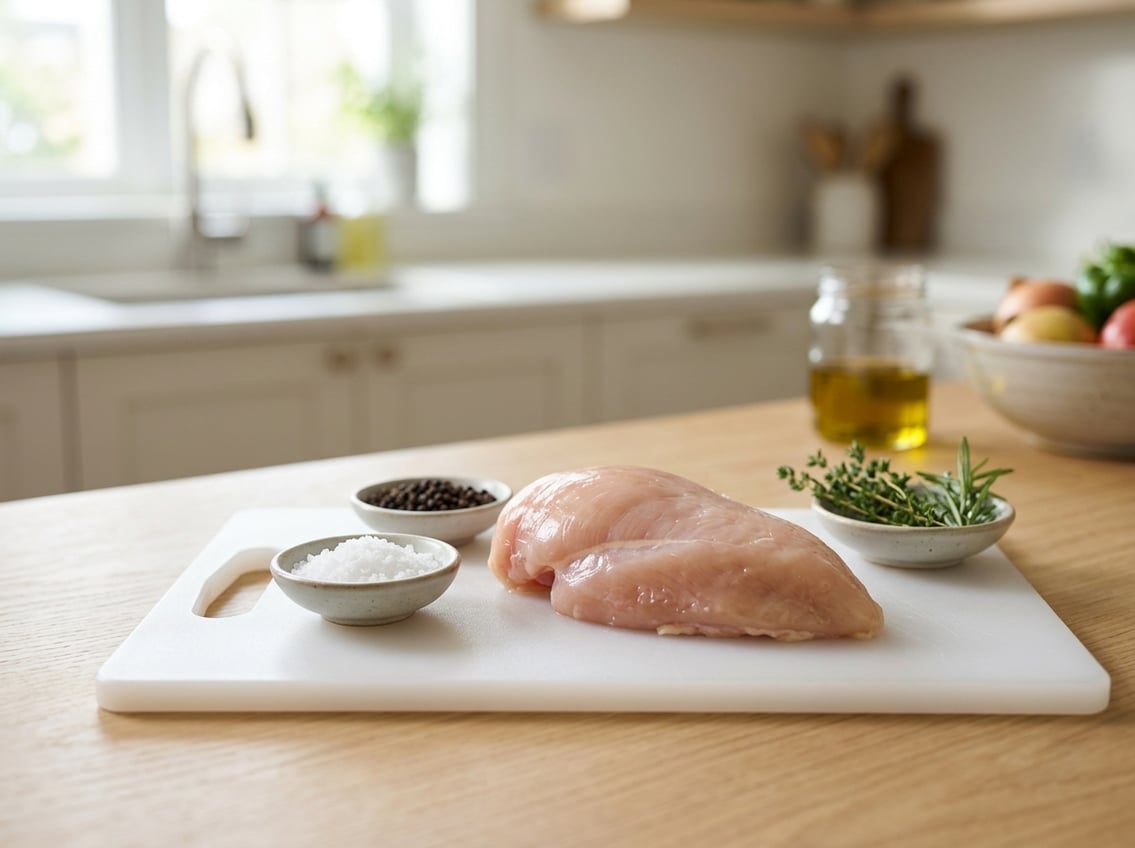
The amount of sodium depends on both the package and the serving size. A 3-ounce serving is common for nutrition tracking, but many home portions are larger, which changes the total.
Raw vs. Cooked Amounts
Cooking does not create sodium on its own. Baking, grilling, or roasting usually keeps the sodium close to the raw amount unless you add salt, seasoning blends, or a sauce.
Raw boneless skinless chicken breast is often around 40 to 70 milligrams per 100 grams. Unprocessed raw chicken usually has a low natural sodium level.
What a 3-Ounce Serving Usually Contains
A plain 3-ounce serving of chicken breast usually contains about 50 to 80 milligrams of sodium if it is raw and unseasoned. Cooked and lightly seasoned chicken can stay in that range if you do not add salt.
Processed or brined chicken can be much higher. Some prepared servings reach 150 to 200 milligrams or more.
How Portion Sizes Change the Total
Portion sizes matter because sodium adds up with every ounce. A 3-ounce portion may seem small, while a 6-ounce breast doubles the sodium without changing the recipe.
If your chicken breast is large, breaded, marinated, or served with a salty sauce, the total sodium can rise quickly.
When It Becomes a Health Concern
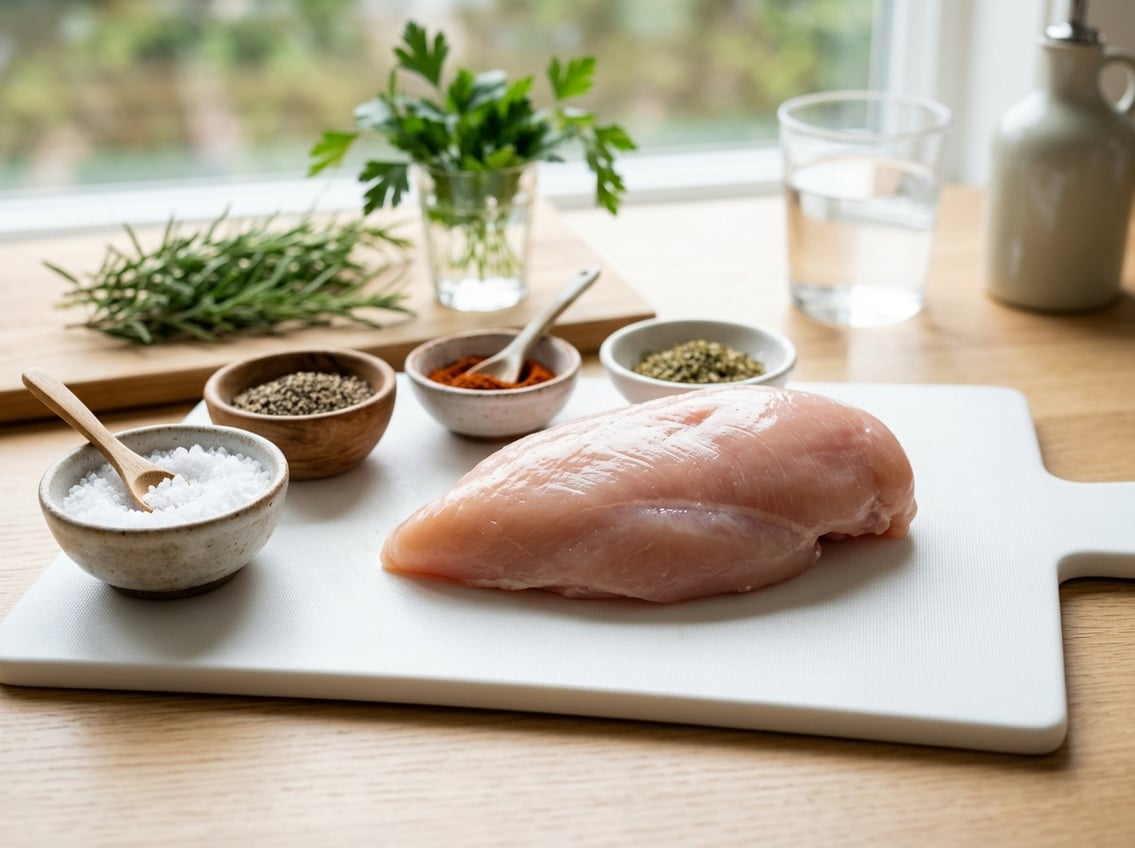
Sodium matters most when your total intake is high across the whole day. Chicken breast can fit well in a balanced diet, but it becomes a concern when processing and seasoning push it far above your target.
Why Sodium Matters for Blood Pressure
Too much sodium can raise blood pressure in some people. High blood pressure increases stress on the heart and blood vessels over time.
If you are reducing sodium intake, the goal is to keep your daily total in a range that fits your health needs and your doctor’s advice.
Who Should Pay Closer Attention
You should pay closer attention if you already have high blood pressure, kidney issues, or a low-sodium diet plan. People who eat a lot of packaged food may also need to watch chicken products more closely, since those foods often have hidden salt.
For these needs, plain chicken breast is usually a better choice than deli meat, breaded cutlets, or pre-marinated chicken.
How Chicken Fits Into a Balanced Diet
Chicken breast works well as a lean protein in a balanced diet. The key is to choose simple products and control the salt you add yourself.
If you pair chicken with vegetables, grains, and low-sodium sides, you can keep the whole meal reasonable.
How to Keep Chicken Breast Lower in Sodium

You can keep sodium low by checking the package, choosing simple ingredients, and seasoning with flavor instead of salt. Small changes in buying and cooking habits make a real difference.
How to Read Food Labels Before Buying
Read food labels before you put chicken in your cart. Look for the sodium amount per serving, the serving size, and words such as brined, enhanced, seasoned, or solution-added.
Nutrition labels help you compare brands directly. If two products look similar, the one with fewer milligrams of sodium is usually the better pick for reducing sodium intake.
Better Seasoning Choices Without Extra Salt
Use low-sodium seasoning or plain spices instead of salty blends. Good choices include herbs and spices, garlic powder, onion powder, paprika, and oregano.
You can also brighten flavor with lemon juice or vinegar. These add taste without raising sodium the way salt-based seasoning blends do.
Simple Prep Swaps That Reduce Sodium
Choose baking, grilling, roasting, or air frying without added salt. These methods let the chicken flavor stand on its own.
Marinate with olive oil, citrus, garlic, and herbs instead of salty sauces.
Compare brands carefully when you buy pre-seasoned chicken. Some brands use much more sodium than plain raw breast.


