
How Many Chicken Breasts Is 1 Lb? Quick Weight Guide
Usually, 1 to 2 boneless, skinless chicken breasts make up 1 lb. Smaller breasts can mean 2 or 3 pieces per pound.
The exact number depends on the size, thickness, and trimming of each breast. A pound of chicken breast is not a fixed piece count.
Weigh the chicken breasts when accuracy matters. Chicken breasts in a pound can vary a lot from one package to the next.
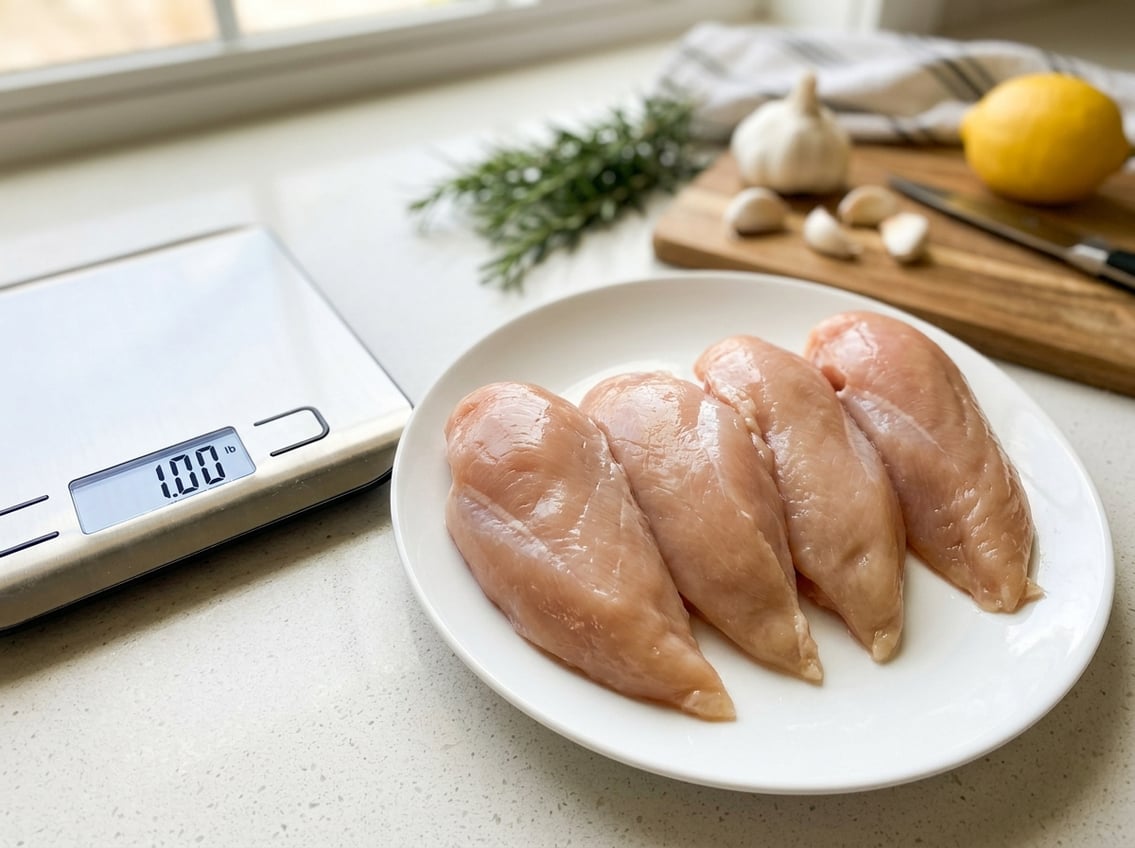
If you shop by package weight, you can still plan meals with confidence. A pound of chicken breast may be one large piece, two medium pieces, or several smaller ones.
Typical Piece Count for 1 Pound
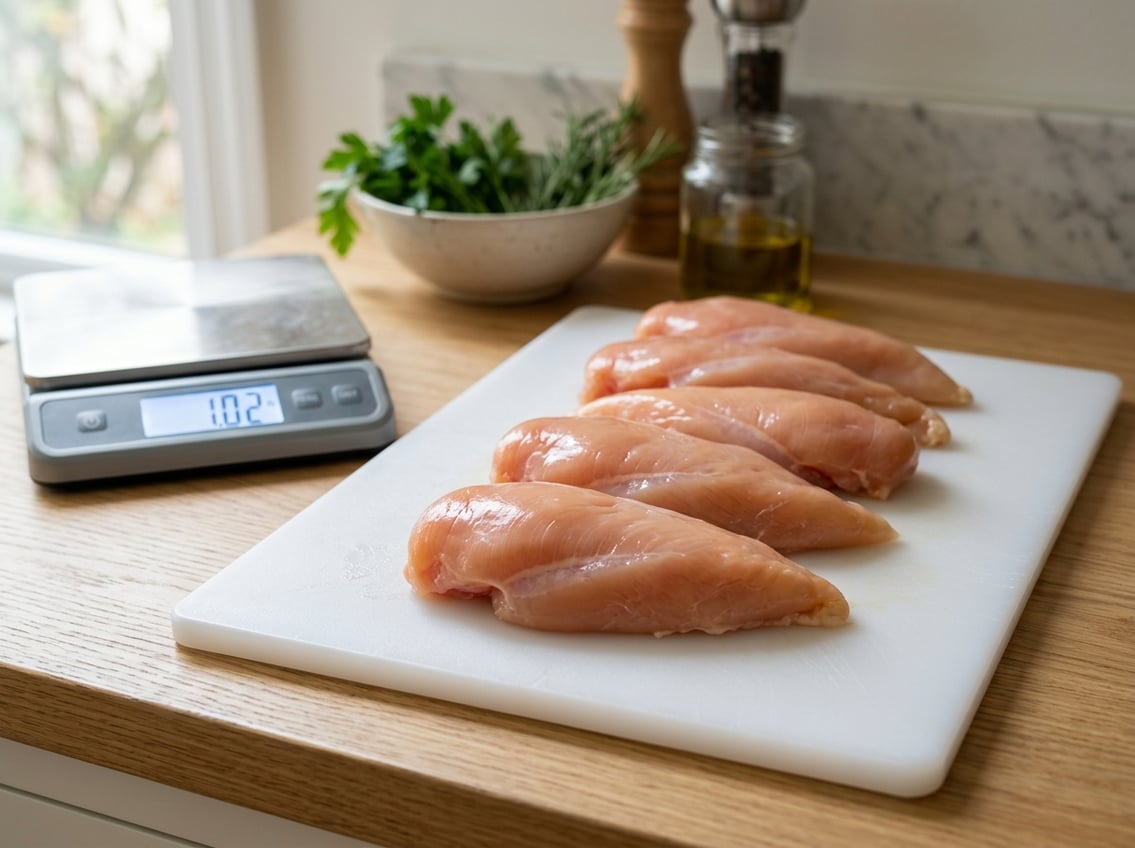
For large pieces, you usually get 1 to 2 breasts per pound. For smaller ones, you may get 2 to 4.
This range comes from differences in chicken breast weight and how the meat was trimmed.
A typical boneless, skinless breast often weighs more than people expect. Knowing the weight of a chicken breast helps you estimate portions more accurately.
Average Size Range by Ounces
A simple ounce guide helps you estimate the count in a pound:
- 4 to 6 ounces each: about 2 to 4 breasts per pound
- 6 to 8 ounces each: about 2 breasts per pound
- 8 to 10 ounces each: about 1 to 2 breasts per pound
- Over 10 ounces each: often 1 breast per pound
Medium boneless, skinless breasts are often the most common grocery size. Two breasts per pound is a practical average for many shoppers.
What 1 Pound Looks Like in Small, Medium, and Large Pieces
A pound of chicken breast can look very different from one store to another. Small pieces may fit three or four breasts into 1 lb, while one large breast may fill the package.
If you are shopping for portions, size matters more than piece count.
Two chicken breasts in a pound may be enough for a family dinner. Smaller breasts might serve more people.
Raw vs. Cooked Yield Differences
Raw chicken loses water as it cooks, so cooked weight is less than raw weight.
If a recipe calls for 1 lb raw chicken breast, measure raw weight before cooking.
Why the Number Changes
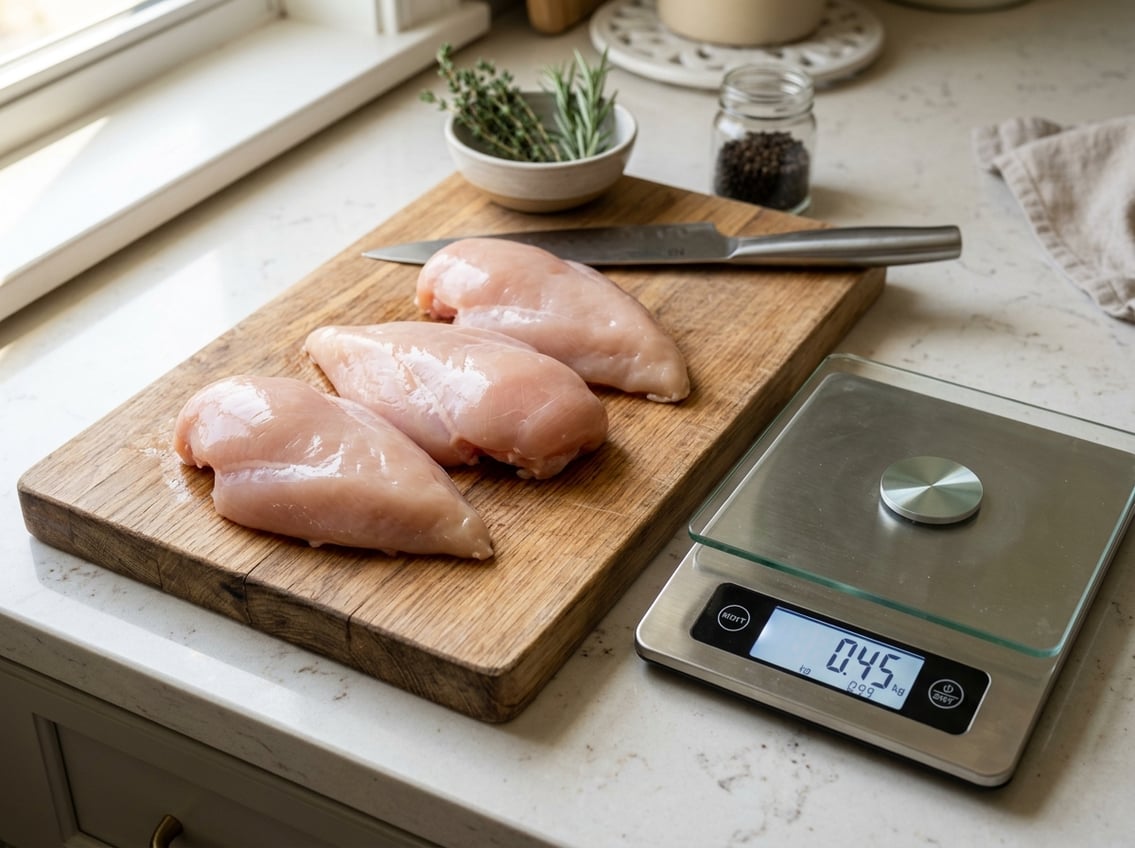
The number changes because chicken breast weight is not standard across all products. Breed, age, trimming, and whether you buy frozen or fresh all affect the weight.
The same label weight can contain different amounts of usable meat. A bone-in cut weighs more than a boneless cut, and a skin-on breast weighs more than a trimmed one.
Boneless Skinless vs. Bone-In or Skin-On
Boneless, skinless breasts make it easier to estimate how many chicken breasts are in a pound. They are sold with only the meat, so the count usually reflects the actual edible portion.
Bone-in or skin-on chicken breasts weigh more per piece because the bone and skin add weight. A package of bone-in breasts may show fewer pieces per pound than a boneless package of the same total weight.
Thickness, Trimming, and Brand Differences
Two breasts that look similar can weigh very differently. Thick, wide breasts usually weigh more than thin ones.
Brand differences matter too. Some processors trim more fat and uneven edges, while others leave more natural shape.
Fresh vs. Frozen Weight Considerations
Fresh chicken is usually easy to weigh as it is. Frozen chicken can be sold with a light glaze or ice crystals, which may affect the package weight slightly.
If you cook frozen chicken breasts, the weight matters for portion planning. Thawing often gives you a more accurate look at size and thickness.
For best accuracy, weigh the meat after thawing.
How to Buy and Measure the Right Amount
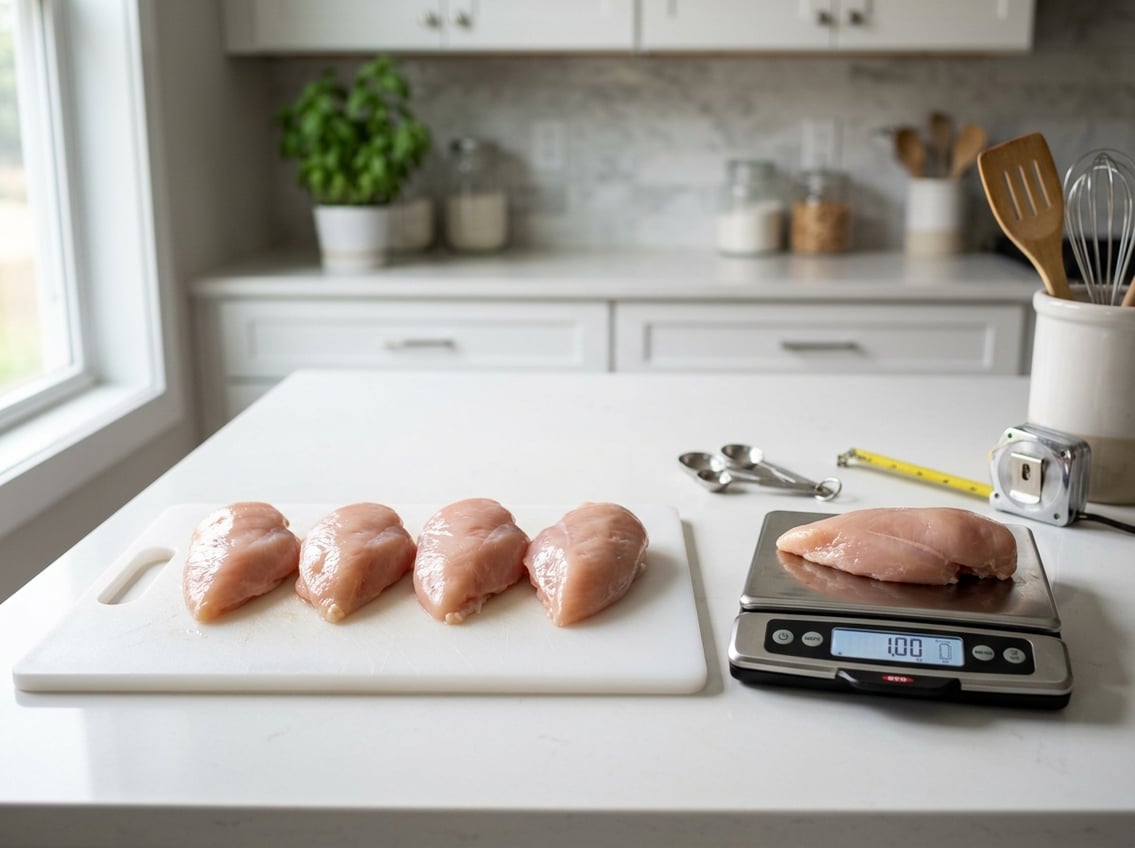
When buying chicken breasts, package weight is more useful than counting pieces. A kitchen scale gives you the most reliable answer when you need a specific amount.
If you keep similar sizes in mind, meal planning gets easier.
Using Package Labels and a Kitchen Scale
Check the label first. The net weight tells you how many pounds you are buying.
For exact portions, place each breast on a digital scale. This confirms the weight and avoids guessing how many pieces equal 1 lb.
Buying Similar Sizes for Even Portions
Choose packages with pieces that look close in size if you want even cooking. Smaller, same-size breasts help you portion meals more consistently.
If each piece weighs about the same, you can estimate how many chicken breasts are in a pound with less effort.
How Much to Purchase for Common Meals
A quick planning guide helps with shopping:
- 2 people: about 1 lb
- 3 to 4 people: about 1.5 to 2 lb
- Meal prep for several lunches: 2 to 3 lb
- Casseroles, salads, or tacos: buy extra if you want leftovers
If you are following a recipe, trust the weight listed instead of the piece count. A recipe that calls for 1 lb should get 1 lb, even if that means just one large breast.
Cooking Tips Based on Breast Size
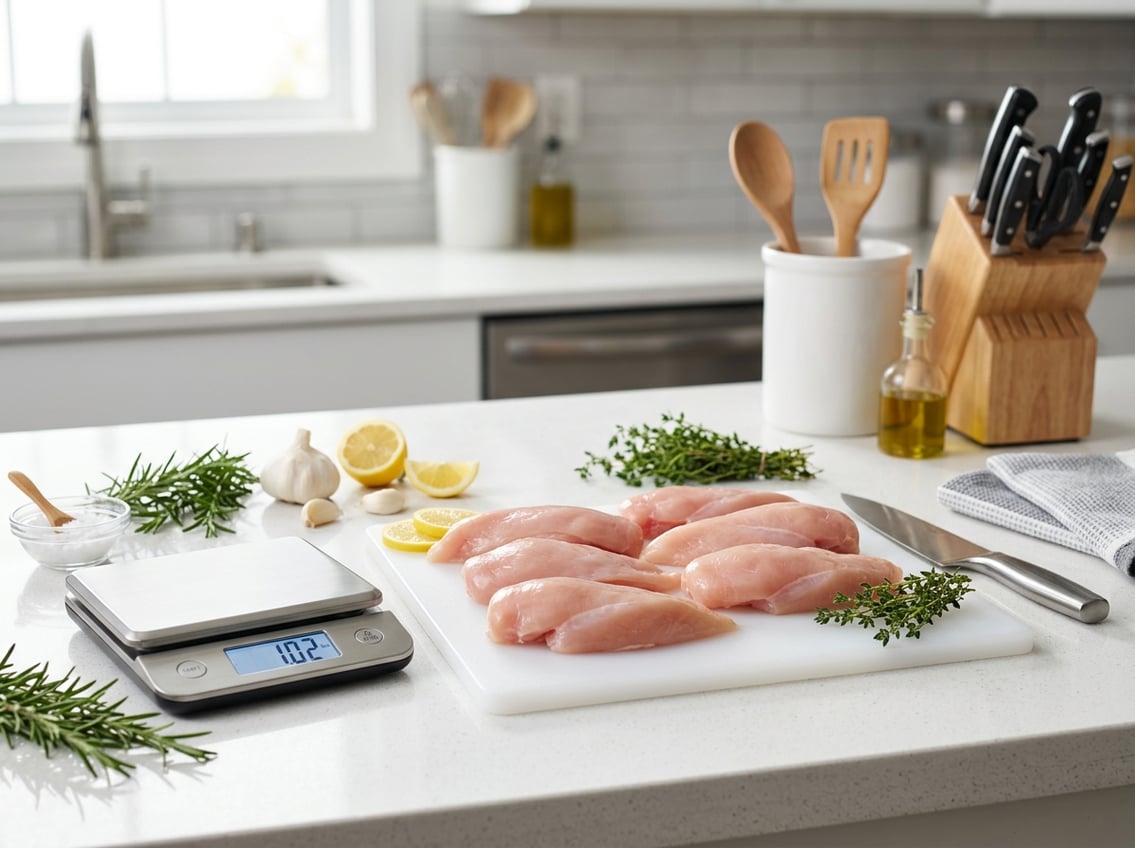
The size of the breast changes cooking time and moisture loss. Smaller pieces cook faster, while thicker pieces need more time to reach a safe internal temperature.
A meat thermometer gives you the most reliable result.
Adjusting Time for Smaller vs. Larger Pieces
Thin breasts cook quickly and can dry out if left too long. Thick breasts need more time, and very large pieces may need to be split or pounded flat.
Thicker breasts need longer cooking times, and a thermometer should show 165°F in the center. That is the safest target for cooked chicken.
Ways to Keep Breast Meat Juicy
You can help chicken stay tender by keeping the thickness even. Pounding or butterflying the breast gives you a more even shape.
A few other simple steps help too:
- Avoid overcooking
- Let the chicken rest after cooking
- Use a marinade or brine when the recipe allows it
- Cook at the right temperature for the method you choose
When to Thaw and When to Cook From Frozen
Thaw chicken in the refrigerator before cooking for better control over texture and timing.
You can cook frozen chicken breasts in some cases, but they take longer and require careful handling.
A guide from Chef’s Resource explains that frozen chicken does not work well in a slow cooker because it may stay in unsafe temperatures too long.


