
Which Is Better Chicken Breast or Leg? Key Differences
Which is better, chicken breast or leg, depends on your goal, your taste preference, and the way you cook. If you want the leanest option with the fewest calories, choose chicken breast. If you want more flavor and juicier meat, pick chicken leg.
Both can fit a healthy diet, and the better choice changes with the meal you are making.

Quick Answer: Which Cut Fits Your Goal?

You get the best results when you match the cut to your goal. Chicken breasts are usually lower in calories and higher in lean protein, while chicken legs have more fat, richer flavor, and a juicier bite.
According to a nutrition comparison of chicken breast vs leg, the difference is clear enough to matter in daily meal planning.
Best Pick for Weight Loss and Low Calories
If you are trying to lose weight or keep calories down, choose chicken breast. It gives you a lot of protein with less fat and fewer calories than chicken leg.
Best Pick for Flavor, Juiciness, and Dark Meat Fans
If you want deeper flavor and a softer, juicier texture, pick chicken leg. Dark meat holds moisture well, so it is easier to keep tender during cooking.
Best Pick for High Protein and Lean Protein Needs
If you want high protein with less fat, chicken breast fits best. It works well when you want a lean protein source for meals after workouts or for lighter eating plans.
Best Pick for Heart Health and Lower Saturated Fat
If your goal is lower saturated fat, chicken breast usually has the edge. Dark meat, including chicken legs, contains more fat, so it is less lean than breast.
Nutrition Differences That Matter

The main nutrition differences come down to protein, fat, and calories. Chicken breast is the leaner cut, while chicken leg offers more fat and a richer nutrient mix from dark meat.
Those differences can shape how each cut fits your meals and your health goals.
Protein, Fat, and Calories Compared
A 3-ounce serving of chicken breast has about 27 grams of protein, around 3 grams of fat, and about 140 calories, according to the chicken breast vs leg breakdown.
The same source reports chicken leg at about 26 grams of protein, around 10 grams of fat, and about 170 calories.
That means the protein is similar, while the fat and calories are not. If you are trying to build muscle with fewer calories, breast is usually the cleaner fit.
Iron and Zinc in White Meat vs Dark Meat
Chicken leg, as dark meat, offers more iron than chicken breast. Chicken breast still provides useful minerals such as zinc, but leg meat often gives you a stronger iron boost.
That can matter if you want more mineral density in your food.
Cooked Portions and What Cooked Chicken Breast Changes
Cooked chicken breast shrinks as moisture leaves the meat, so portion size matters. A cooked serving often looks smaller than raw chicken, even though the protein stays concentrated.
If you track macros, weigh cooked portions consistently. That makes your calorie and protein counts more accurate when you plan meals to build muscle or manage intake.
Flavor, Texture, and Cooking Results
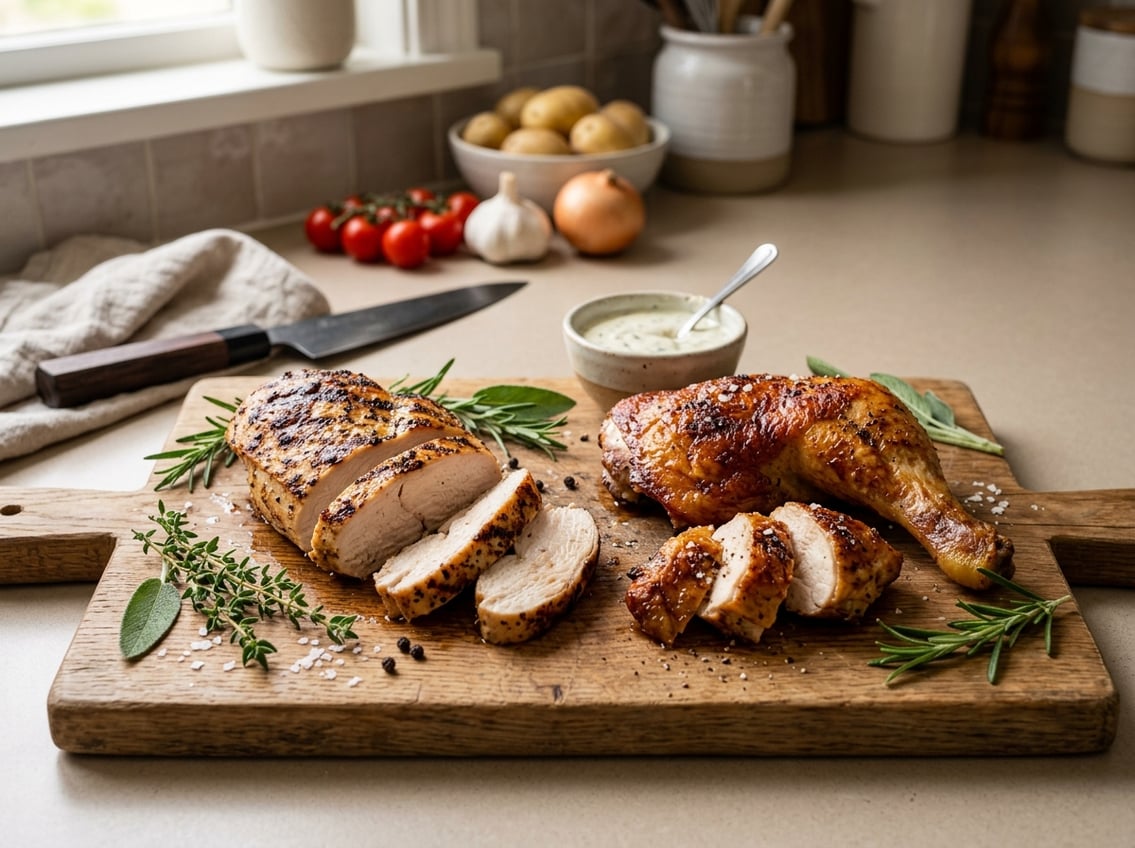
Flavor and texture often decide the winner in real life. Chicken breast is mild, firm, and lean.
Chicken leg has a deeper flavor, more fat, and a naturally juicy chicken texture. Your cooking methods change the result a lot.
Why Legs Stay Juicy and Breasts Dry Out Faster
Chicken leg has more fat and connective tissue, so it stays moist during longer cooking. Chicken breast has less fat, so it dries out faster if you cook it too long.
That is why a juicy chicken leg is easier to achieve for many home cooks. Breast needs tighter temperature control and shorter cooking time.
Best Cooking Methods for Each Cut
For chicken breast, grilling and baking work well when you watch the time closely. For chicken leg, roasting and slower methods often give the best texture.
- Chicken breast: grilling, baking, pan-searing, quick stir-fries
- Chicken leg: roasting, braising, stewing, slower barbecue-style cooking
How Marinades and Seasonings Change the Outcome
Marinades and seasonings help both cuts, but they matter more for breast. Acid, salt, oil, and spices can add flavor and help chicken breast taste less plain.
Chicken leg already has more built-in flavor, so strong marinades are less essential. Still, they can add depth for grilling, roasting, and baking.
How to Prevent Chicken Breast From Drying Out
To prevent chicken breast from drying out, use even thickness, moderate heat, and a thermometer. Pull it from the heat when it reaches a safe internal temperature, then rest it before slicing.
You can also use salt ahead of time or cook it with a bit of moisture, such as in a covered pan or sauce. These steps help prevent chicken breast from drying during cooking.
Best Uses in Real Meals
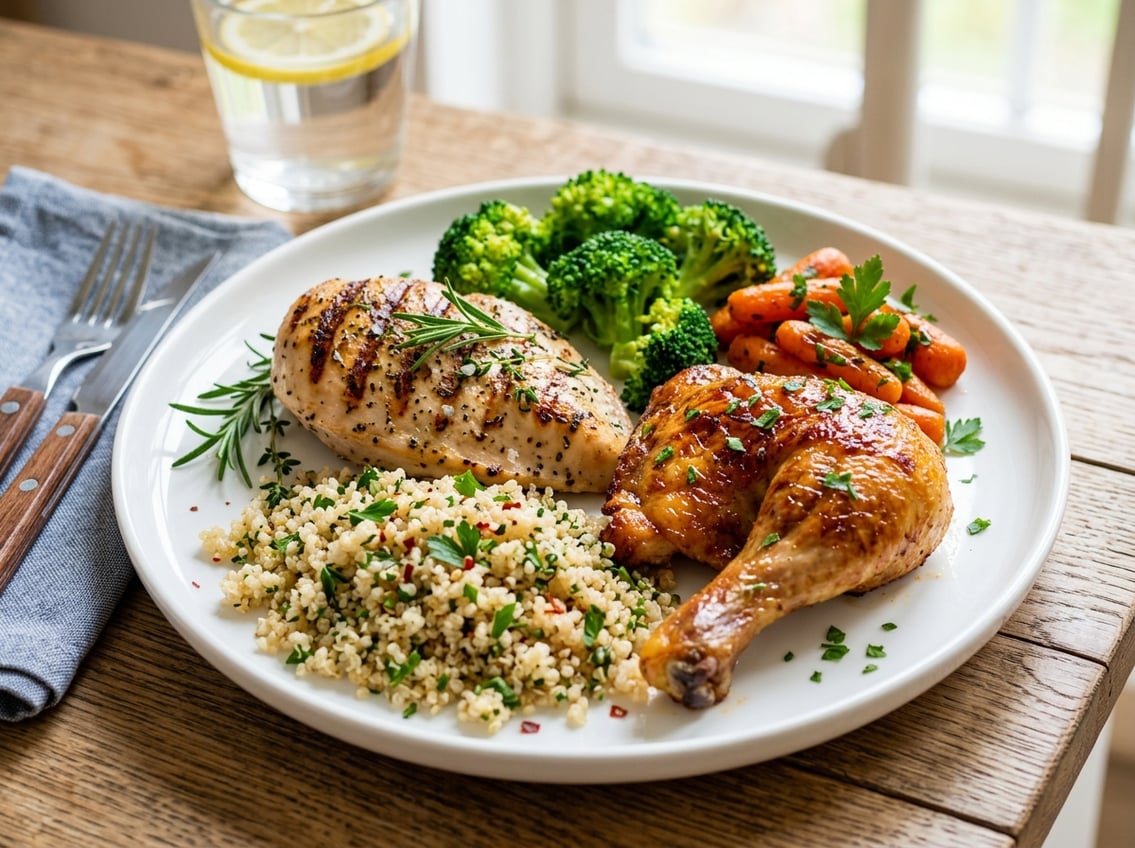
Your best choice often depends on the meal, not just the nutrition label. Chicken breasts work well when you want lean protein and easy slicing.
Chicken legs suit meals that benefit from richer flavor and softer texture.
When to Choose Breast for Meal Prep
Choose chicken breast for meal prep when you want a simple protein to portion across several days. It works well in salads, wraps, bowls, and rice meals.
It also fits well when you want lower calories without giving up much protein. For high protein meal prep, breast is usually the most practical pick.
When to Choose Legs for Roasting, Grilling, and Hearty Dishes
Choose chicken legs for roasting, grilling, and hearty dishes that need more flavor. They pair well with bold sauces, spices, and recipes that cook a little longer.
Chicken thigh also works in the same style of meals, especially when you want dark meat richness. Legs are often a better fit for family-style dinners and comfort food.
How to Decide Based on Budget, Convenience, and Preference
Chicken breast usually offers the easiest lean option.
Chicken leg provides better flavor and is often easier to cook well while keeping the meat moist.
Price can matter too. Legs often cost less.
Choose the cut that fits your goal, cooking style, and taste.


