
Chicken Breast Versus Chicken Thigh Nutrition Compared
Chicken breast and chicken thigh both fit into healthy meals, yet they serve different goals. Chicken breast is usually the leaner choice, while chicken thigh gives you more fat, more flavor, and a richer texture.
If you want higher protein with fewer calories, choose chicken breast. If you want more tenderness, a little more fat, and stronger flavor, chicken thigh may fit your plate better.
The difference matters most when you care about calorie control, protein intake, saturated fat, or how filling the meal feels. Skin, cooking method, and seasoning can change the numbers, so the cut alone does not tell the whole story.
Nutrition Differences at a Glance
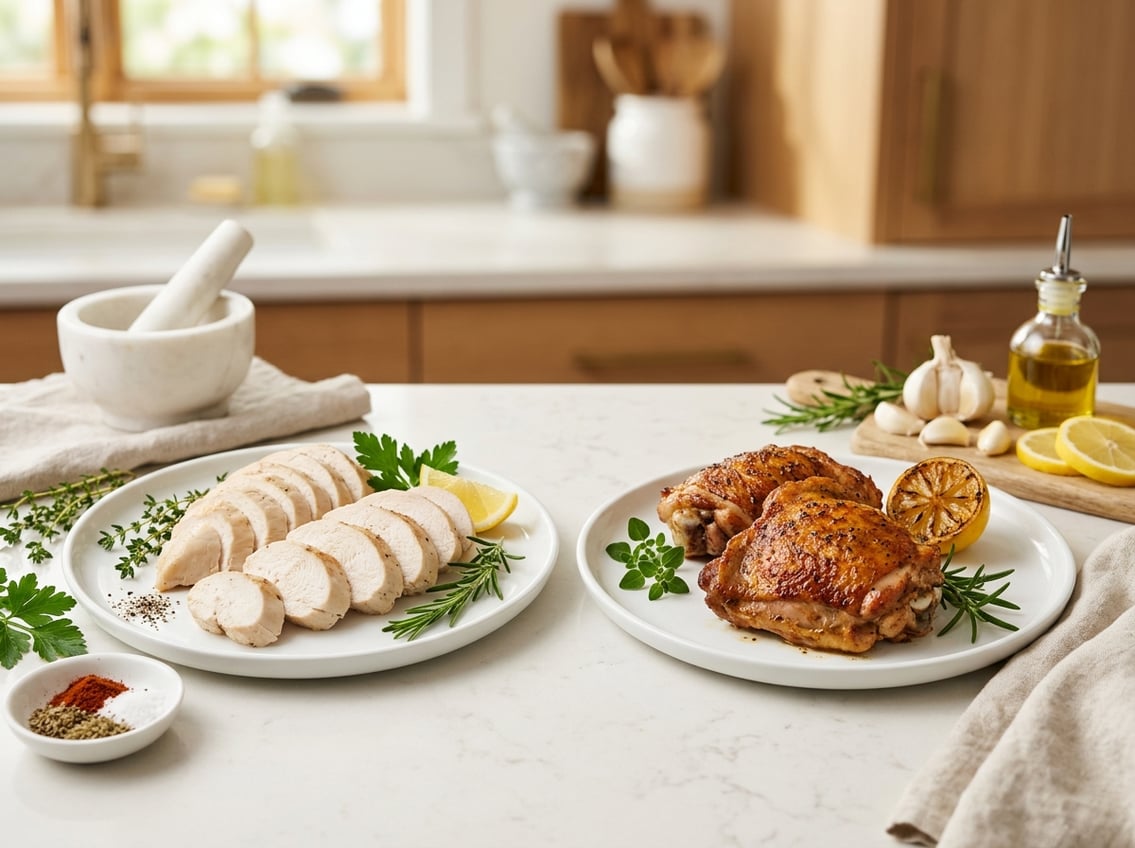
Chicken breast and chicken thigh both give you complete protein, which makes them useful as part of a balanced diet. The biggest gap is in fat and calories, while some micronutrients lean in one direction or the other.
According to a detailed nutrition comparison, chicken breast has more protein and less fat per 100 grams. Chicken thigh brings more zinc, riboflavin, and unsaturated fat.
Calories, Protein, and Fat Per 100 Grams
Per 100 grams, cooked chicken breast has about 187 calories, 33.44 grams of protein, and 4.71 grams of fat. Cooked chicken thigh has about 218 calories, 28.18 grams of protein, and 10.3 grams of fat.
Chicken breast is the better lean protein choice when you want more protein per calorie. Chicken thigh still provides solid protein, but the extra fat raises the calorie count.
Micronutrients Each Cut Provides More Of
Chicken breast provides more vitamin B3, vitamin B6, selenium, phosphorus, and choline. Chicken thigh provides more zinc, vitamin B2, monounsaturated fat, and polyunsaturated fat.
That pattern matches what you usually expect from white meat and dark meat. Breast is more often chosen for lean protein, while thigh offers a richer nutrient mix and more saturated fat along with more unsaturated fat.
White Meat Versus Dark Meat Explained
Chicken breast is white meat, which usually has less fat and a lighter texture. Chicken thigh is dark meat, which tends to hold more fat and moisture.
The color difference comes from the muscle type and how often the muscle works. Dark meat usually has more myoglobin, which also helps explain the deeper flavor and juicier bite.
Which Cut Fits Different Health Goals
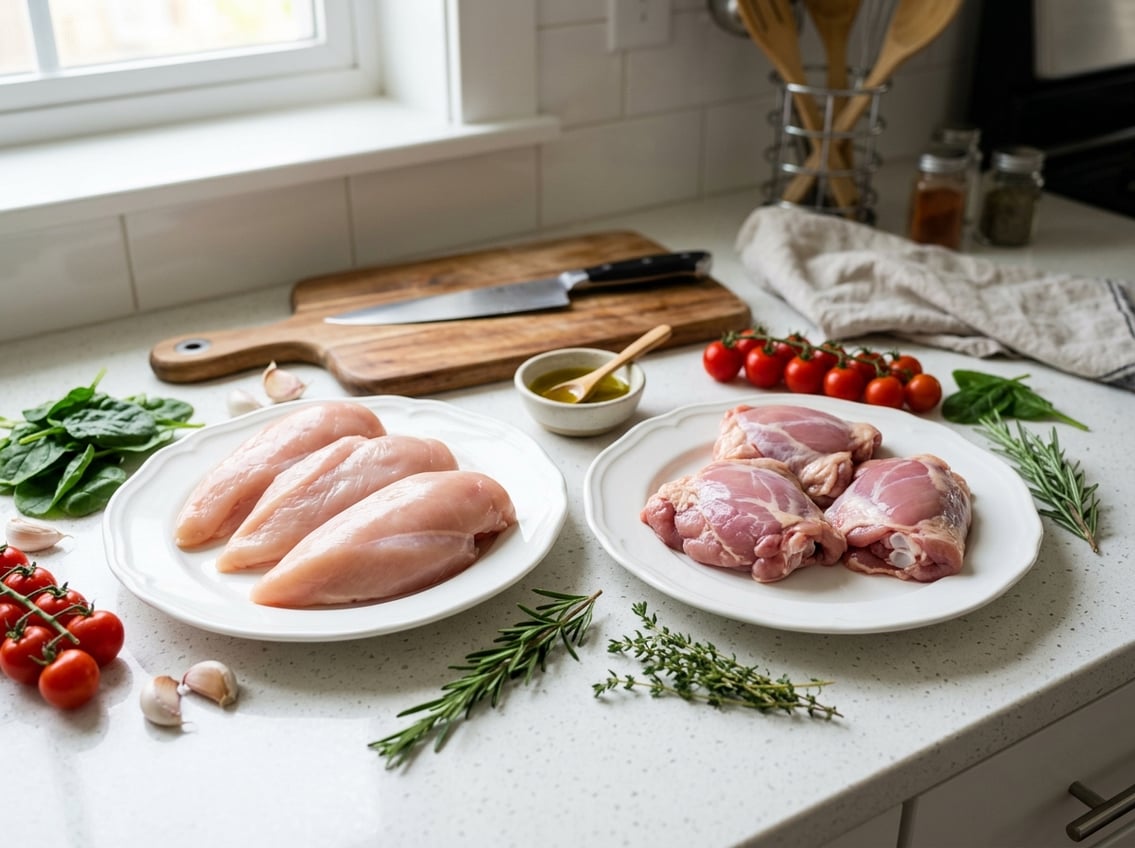
Your best choice depends on what you want from the meal. Skinless chicken breast is usually the strongest pick for low-calorie, high-protein eating.
Skinless chicken thighs can be useful when you want more flavor, more fat, and better satiety.
Best Option for Higher Protein and Lower Calories
If your goal is to get the most lean protein for the fewest calories, choose skinless chicken breast. It gives you a higher protein-to-calorie ratio, which helps when you are tracking intake closely.
This makes it a common choice for weight management and athletic meal prep. A plain breast is also easy to portion and easy to fit into a calorie target.
When Extra Fat and Satiety Can Be Helpful
Skinless chicken thighs can work well when you want a meal that feels more filling. The extra fat can improve flavor and help the food stay moist during cooking.
For meals with vegetables, rice, or potatoes, thighs can make the plate more satisfying without needing heavy sauces.
Heart Health and Saturated Fat Considerations
If heart health is a priority, lower saturated fat intake often matters. Chicken breast contains less saturated fat than chicken thigh in the comparison from FoodStruct.
That does not mean chicken thigh is off limits. The skinless breast is usually the more conservative choice when you want to keep fat, especially saturated fat, lower.
How Skin and Cooking Change the Nutrition
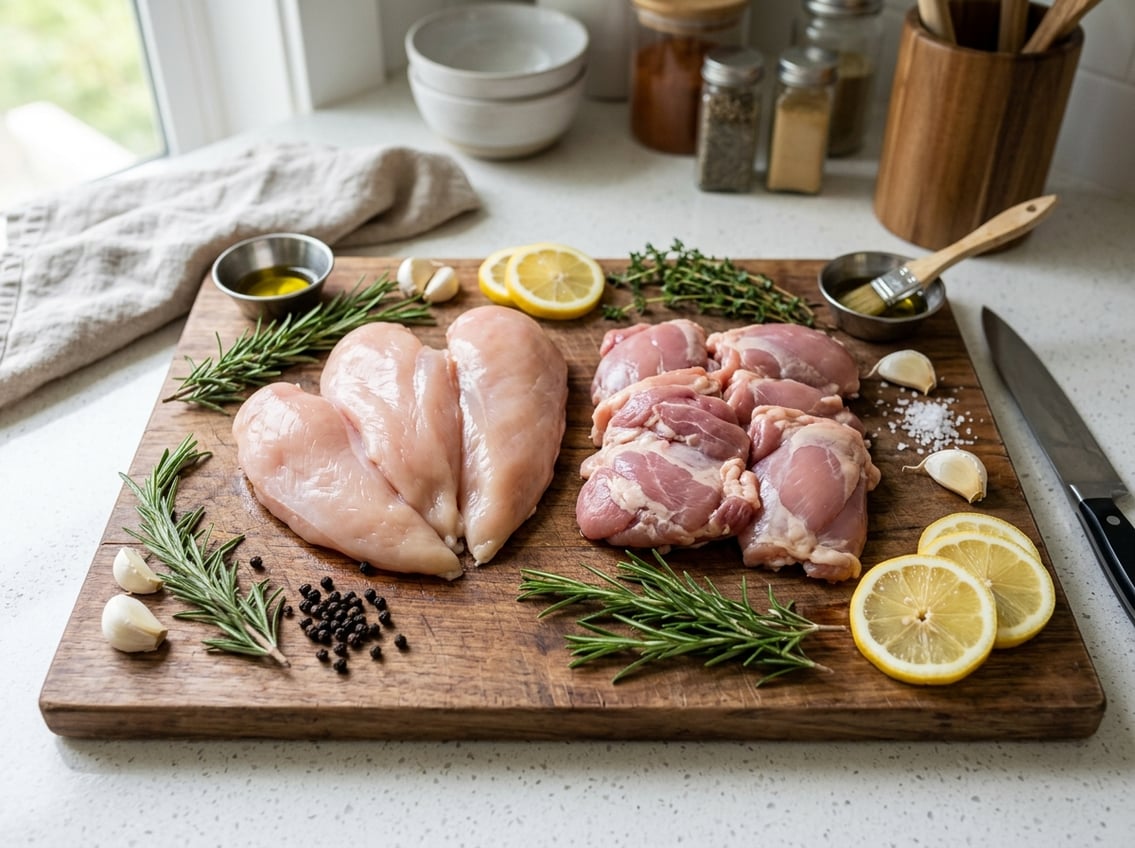
Skin and cooking method can change the nutrition much more than many people expect. A skin-on thigh can be much richer than a skinless one, and frying usually adds far more fat than roasting or grilling.
Skin-On Versus Skinless Nutrition Impact
Skinless chicken breast is one of the leanest common protein choices. Skinless chicken thighs are still higher in fat than breast, even after the skin is removed, though they become lighter than skin-on cuts.
Chicken skin adds calories and fat fast. If you want a fair nutrition comparison, compare skinless cuts cooked with little added oil.
Roasted, Grilled, Fried, and Baked Comparisons
Roasting, grilling, and baking are usually the easiest ways to keep chicken closer to its natural nutrition. Frying often adds oil, which increases calories and total fat.
If you bread and fry chicken, the difference between breast and thigh matters less than the breading and oil. A grilled breast can stay very lean, while a fried thigh can become much higher in calories.
How Marinated Chicken Can Add Sodium and Sugar
Marinated chicken may taste better, yet store-bought marinades can add sodium and sugar. That matters if you are watching blood pressure, fluid retention, or total carbs.
A sweet marinade can also make a lower-calorie cut less lean than expected. Simple marinades with herbs, lemon, garlic, and a little oil usually keep nutrition more predictable.
Choosing the Better Cut for Everyday Meals
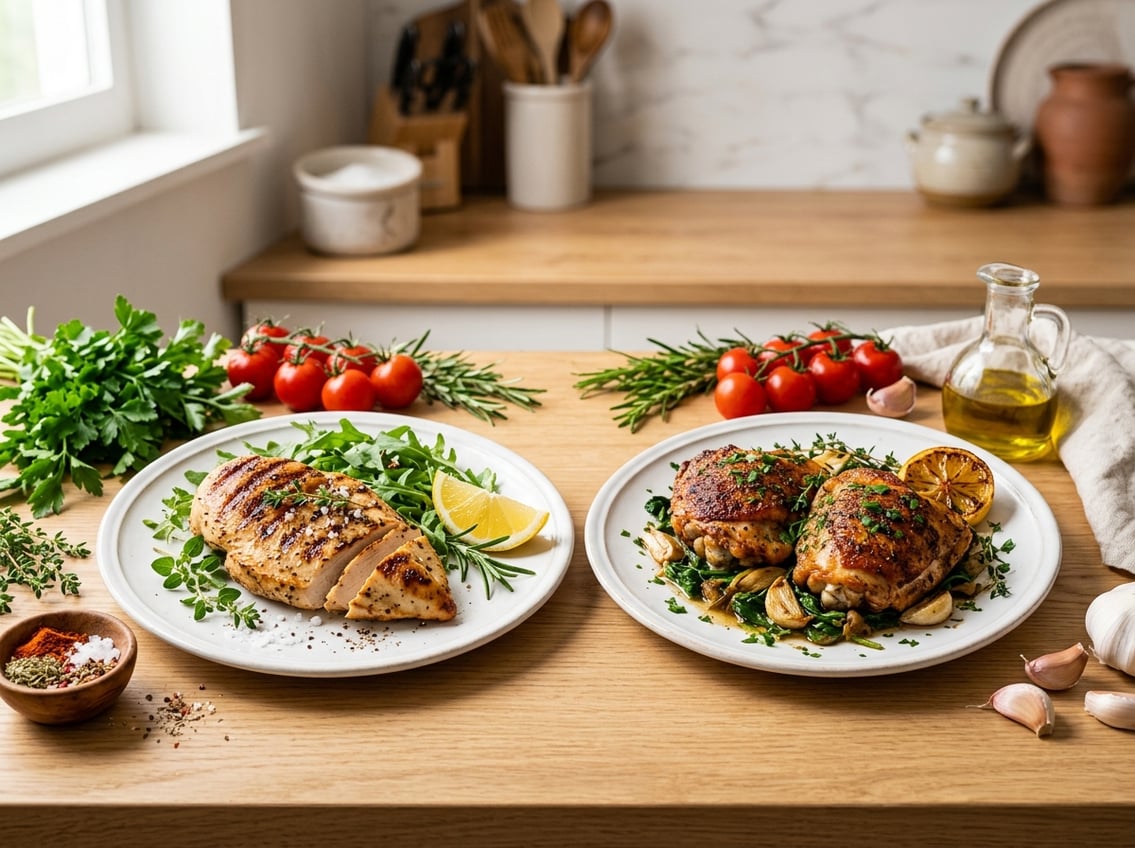
For everyday eating, the better cut depends on how you cook, how much time you have, and how much flavor you want. Chicken breast is easy to use in many quick meals.
Chicken thigh can be more forgiving and often tastes richer.
Best Uses for Meal Prep and Quick Cooking
Chicken breast works well for meal prep because it is simple to portion and easy to pair with many sides. It also cooks quickly when sliced thin or pounded to an even thickness.
If you want a reliable lean protein for salads, grain bowls, or wraps, breast is a strong default choice. It is especially useful when you need a predictable calorie count.
When Thighs Win on Flavor, Tenderness, and Value
Chicken thighs show their benefits in flavor, tenderness, and often price. Thigh meat stays moist more easily, so it is less likely to dry out during longer cooking.
That makes thighs a smart choice for roasting, braising, sheet pan meals, and recipes with sauce. In many kitchens, they also deliver better value per serving.
Simple Serving Guidance for Balanced Meals
Think about the whole plate, not just the cut, when you prepare balanced meals.
Pair chicken with vegetables and a fiber-rich carb if you want one.
Choose a portion size that matches your goals.
Pick skinless chicken breast for the lightest option.
Select skinless chicken thighs if you want more richness and a more satisfying bite.


