
Should Chicken Breast Be Juicy? What Good Texture Means
You may ask yourself, should chicken breast be juicy. The short answer is yes, it should feel moist, tender, and cleanly sliced, not wet or underdone.
A properly cooked chicken breast still has some natural juices. That shows you kept the meat from drying out.
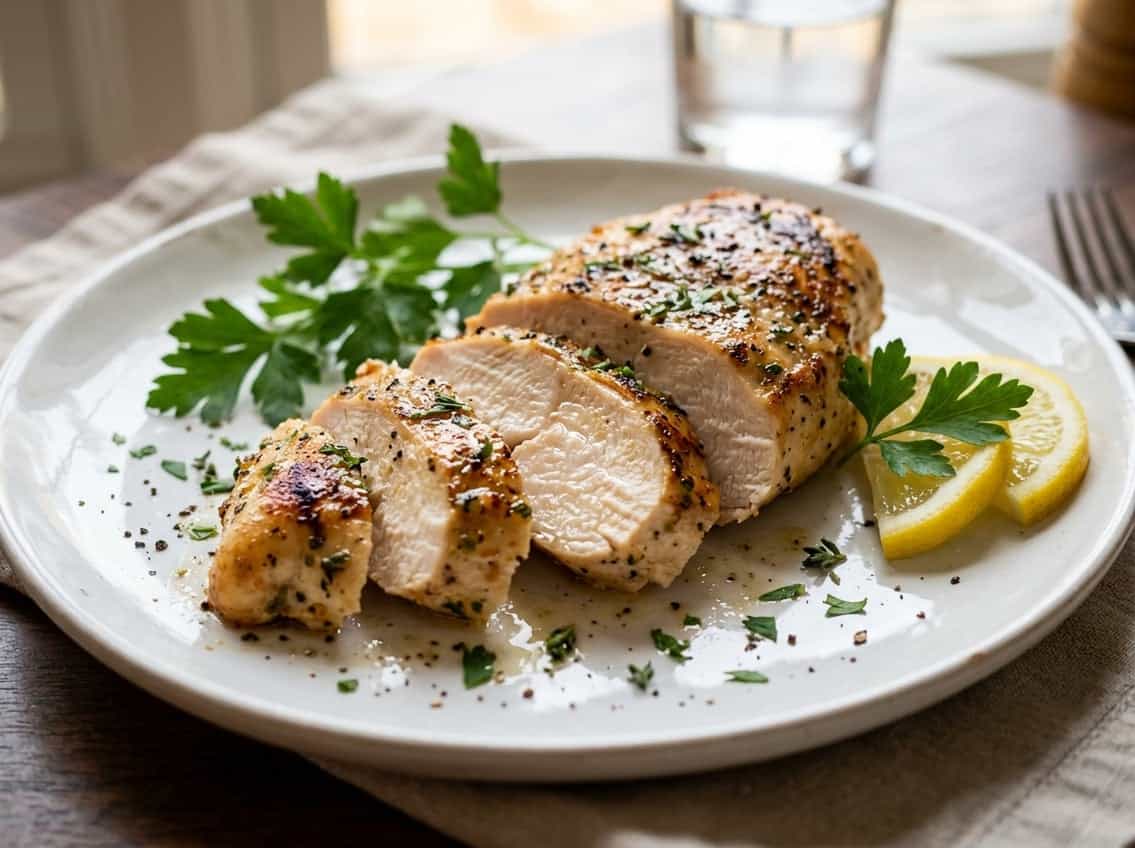
Chicken breast is lean, so texture matters more than fat. When you know what good texture feels like, you can tell the difference between a juicy chicken breast and meat that is safe but overcooked.
When you cook chicken breast with the right heat, timing, and rest time, you get better results. A meat thermometer helps you stop at the right point, which matters more than guessing by sight or touch.
What Properly Cooked Chicken Breast Should Feel Like
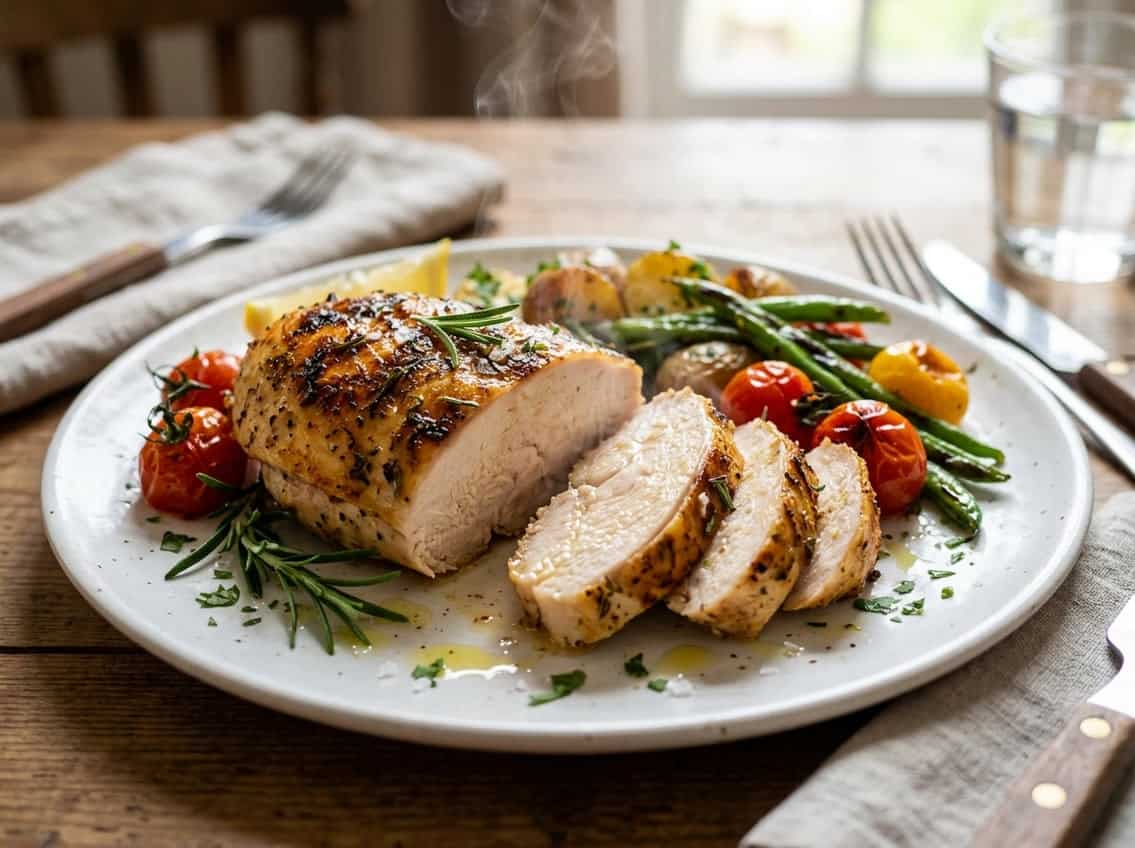
Properly cooked chicken breast feels firm, springy, and moist when you cut into it. The meat holds together without looking stringy or chalky.
A tender chicken breast still releases a small amount of juice when sliced. Boneless skinless chicken breasts are easy to overcook because they have little fat and cook quickly.
A meat thermometer gives you a more reliable result than guessing by color or pressing on the meat.
The Difference Between Juicy, Tender, and Wet
Juicy means the meat still has moisture inside and feels pleasant to eat. Tender means the fibers are soft enough to chew easily.
Wet chicken can mean surface liquid, undercooked meat, or chicken that has not rested long enough for the juices to settle.
Why Dry or Stringy Meat Signals Overcooking
Dry or stringy meat usually means the protein tightened too much during cooking. As chicken gets hotter than needed, moisture leaves the meat and the texture turns firm, then tough.
If your chicken breasts keep turning stringy, you may be using too much heat or cooking for too long.
How Internal Temperature Affects Texture
Internal temperature matters more than time alone for cooked chicken breast. Chicken stays more juicy when you remove it at the right point and let carryover heat finish the job.
A simple guide to juicy baked chicken breasts recommends using a thermometer and pulling the meat around 160°F, then letting it rest so it reaches a safe finish temperature.
How to Keep It Moist Without Undercooking It
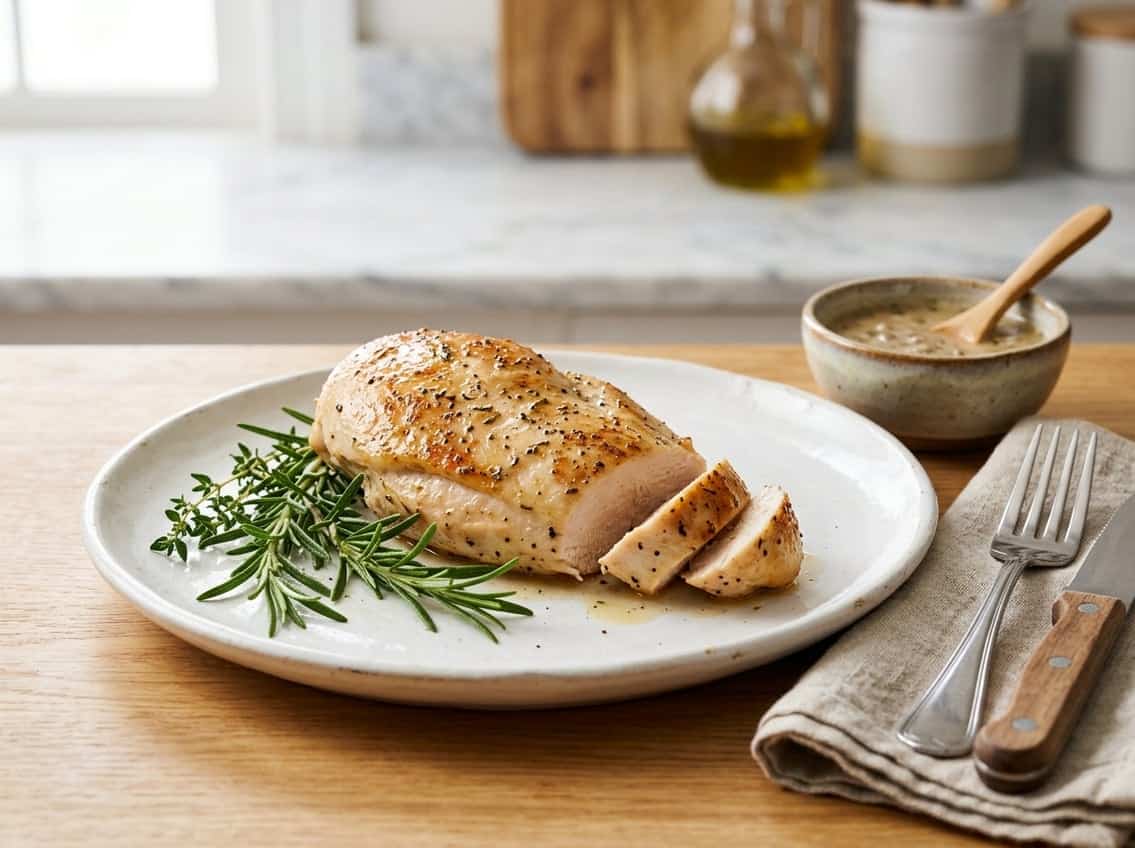
Moist chicken depends on three things: resting, even thickness, and careful timing. When you manage those well, baked chicken breast and pan-cooked chicken can stay juicy without crossing into underdone territory.
The goal is to cook evenly, then stop at the right temperature.
Why Resting, Thickness, and Timing Matter
Resting lets juices move back through the meat instead of spilling out on the cutting board. Thin ends cook faster than thick centers, so pounding the breast to even thickness helps the whole piece finish at the same time.
Timing matters because even a few extra minutes can dry out chicken breast. That is why a meat thermometer is more dependable than a timer alone.
Best Methods for Baked Chicken Breast and Pan Cooking
For baked chicken breast, moderate oven heat works well because it cooks the meat through without blasting out too much moisture. Lightly coating the surface with olive oil or another oil helps with browning and keeps the outside from drying early.
For pan cooking, start with even heat and avoid crowding the pan. A covered-pan method, like the one described by The Kitchn, traps steam and helps the meat cook through gently.
When Searing Helps and When It Does Not
Searing helps when you want color and flavor on the outside. It can also work well if you finish the chicken in the oven or lower the heat after browning.
Searing does not help if you keep the heat too high for too long. In that case, the outside can dry out before the center finishes, which hurts the texture of your chicken breast.
Prep Methods That Improve Juiciness and Flavor
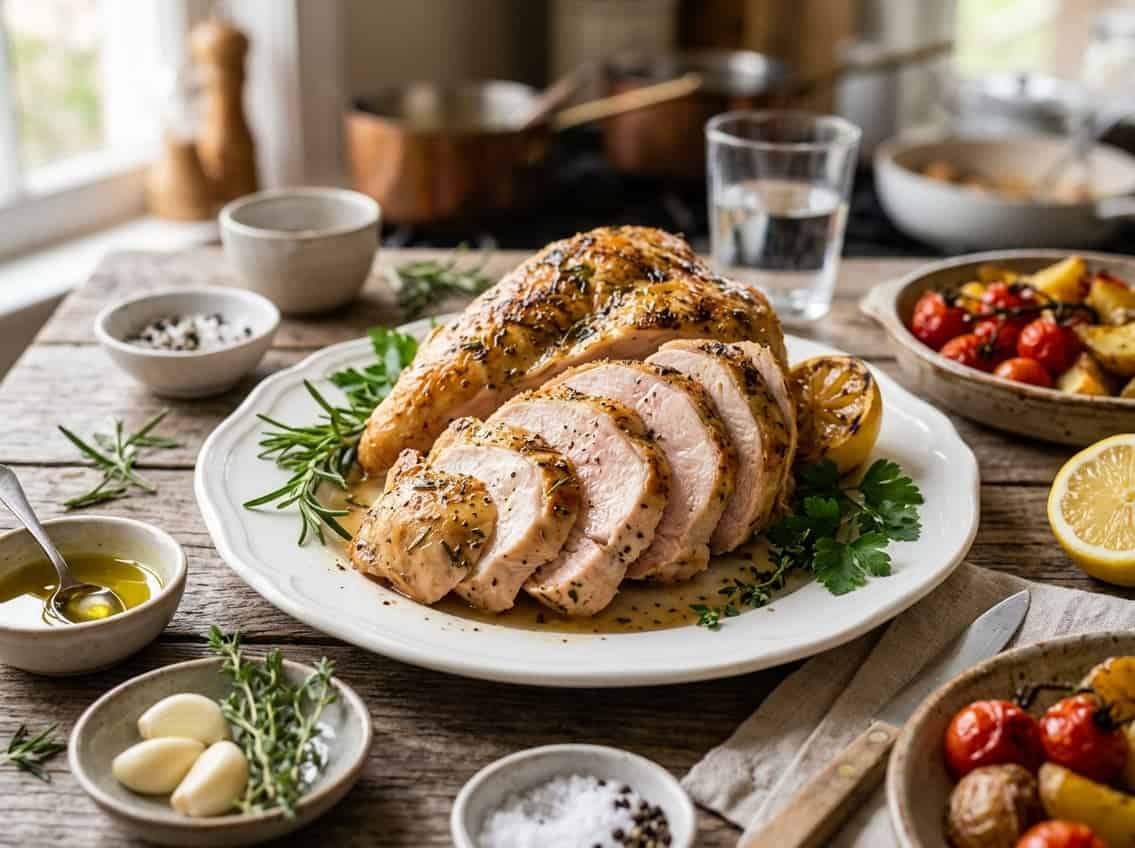
Prep makes a real difference with lean chicken. A good brine, marinade, or seasoning blend can improve both flavor and texture before you even start cooking.
The best method depends on how much time you have and how much flavor you want. Salt, acid, herbs, and spices each do a different job.
When to Use a Brine for Lean Chicken
A brine is useful when you want more forgiveness from a lean cut. A wet brine uses a saltwater solution, while a dry brine uses kosher salt or another salt rubbed onto the surface and left to rest.
Both methods help the meat hold onto moisture better. They are especially useful for boneless skinless chicken breasts that tend to dry out fast.
How Marinade Changes Flavor and Tenderness
A marinade adds flavor and can slightly change texture, especially when it includes acid like vinegar, yogurt, or buttermilk. Acid helps tenderize the surface, while other ingredients add depth.
Use marinades with care, because too much acid or too long in the liquid can make the texture soft in an unhelpful way. A short soak works well for most chicken breast cuts.
Dry Rubs, Herbs, and Simple Seasoning Options
A dry rub gives you strong surface flavor without adding extra liquid. Spices, garlic powder, thyme, rosemary, and garlic are all useful choices for chicken breast.
Simple seasoning can also work well. Salt, pepper, a little oil, and a light glaze with honey can create good flavor without hiding the chicken itself.
Common Results and What They Tell You
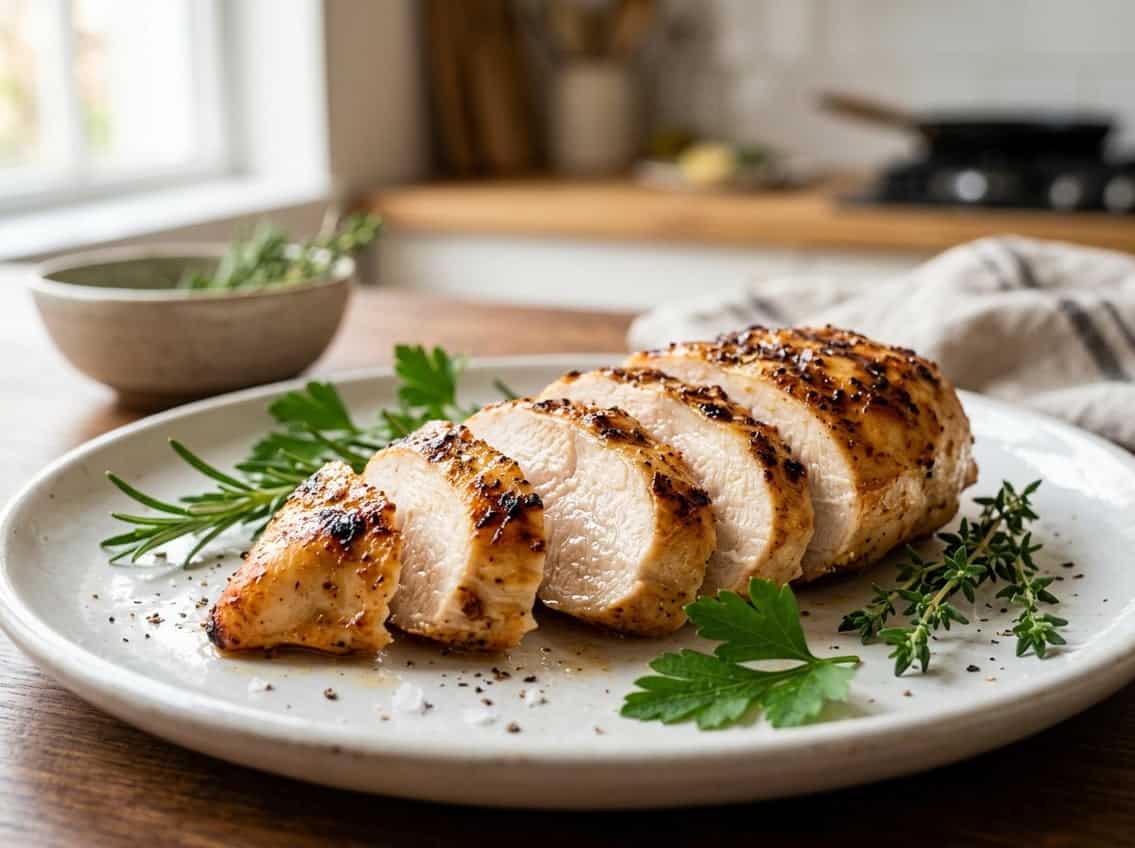
Your chicken texture gives you clues about what went wrong. Rubbery, tough, mealy, or stringy meat usually points to heat control, timing, or prep problems.
If you learn the signs, you can adjust the next time and get closer to a tender chicken breast.
Why Chicken Turns Rubbery, Tough, or Mealy
Rubbery chicken often means you cooked it too hot or too long. Tough meat can also come from skipping rest time or cooking pieces that were too uneven in thickness.
A mealy texture can happen when you overhandle the meat, overcook it, or treat it with too much acid for too long. In boneless skinless chicken breasts, these problems show up fast because the cut is so lean.
How to Rescue Overcooked Meat for Salads or Shredded Chicken
Overcooked chicken is not useless. Slice it thin for sandwiches, chop it for soups, or turn it into shredded chicken for tacos, casseroles, or chicken salad.
If the meat feels dry, mix it with broth, sauce, mayo, yogurt, or another moist ingredient. That can improve the eating experience, even if the original baked chicken breast lost too much moisture.
Mistakes to Avoid With Boneless Cuts
Do not rely on color alone. Always use a meat thermometer, since boneless chicken can look done before the center is ready.
Do not overcrowd the pan. Allow the chicken to rest after cooking.
Check the thickness of each piece before cooking. Adjust your cooking method based on the size of each piece.


