
Whole Chicken Breast in Oven Cooking Guide
When you cook whole chicken breast in oven, you want meat that is fully cooked, lightly browned, and still moist.
The best results come from even seasoning, the right pan setup, and careful timing.
A good chicken breast recipe depends more on technique than on a long ingredient list.
You get the juiciest baked chicken breast when you dry the surface, use the right heat for the cut, and pull it at the correct internal temperature.
That simple approach answers the core question of how to bake chicken breast without ending up with dry or stringy meat.
Best Oven Method for Juicy Results
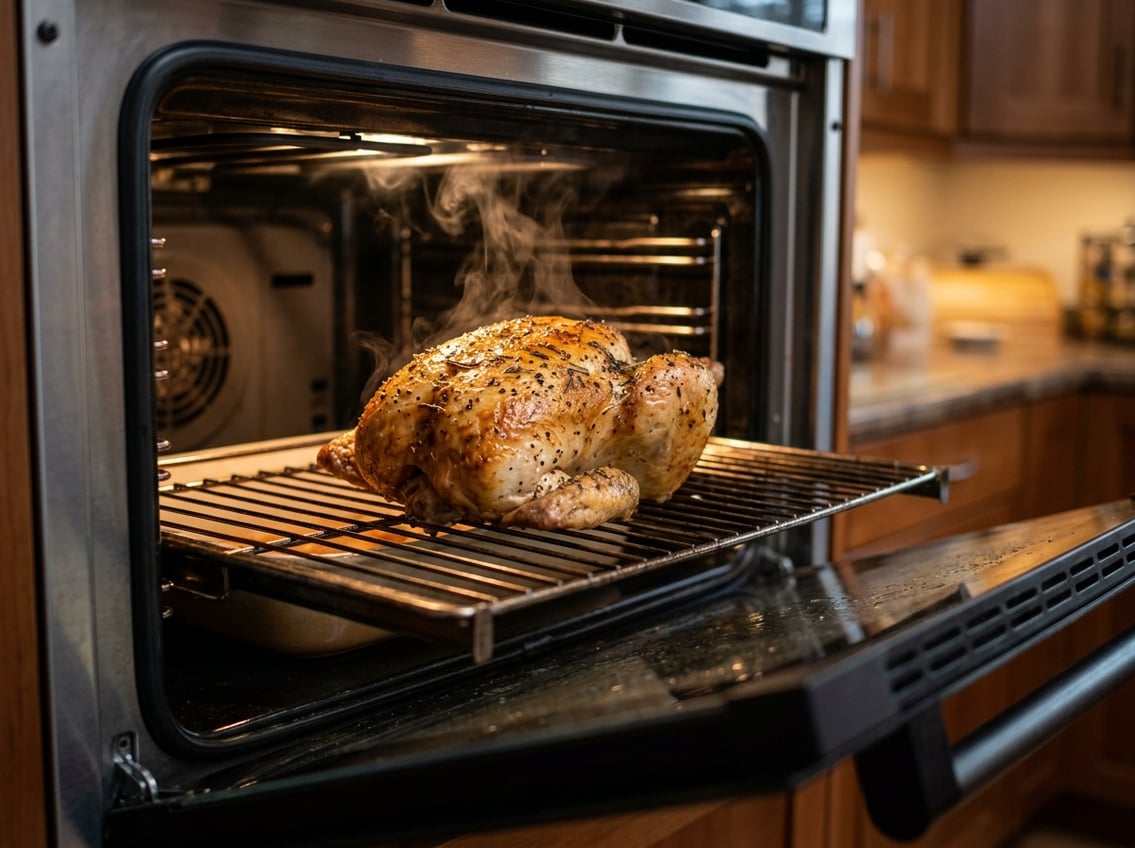
Start with dry skin or dry surface meat, even seasoning, and a hot oven to brown the outside before the inside overcooks.
A solid baked chicken breast recipe keeps the process simple so you can focus on texture.
Choose Bone-In or Boneless Cuts
Bone-in, skin-on chicken breast usually stays juicier and tastes more like a roasted cut.
Boneless chicken breast cooks faster and works well when you need speed, but it needs closer attention.
If you want the easiest path to a tender oven baked chicken breast, bone-in is often more forgiving.
Boneless can still work well when the pieces are even in size.
Pat Chicken Dry for Better Browning
Always pat chicken dry before seasoning.
A dry surface browns better, while wet skin or wet meat steams in the oven.
This step matters for both color and texture.
Better browning gives you a more appealing baked chicken breast and helps the seasoning stick.
Seasoning and Pan Setup
Use salt, pepper, and a little oil or melted butter as the base.
Add garlic powder, paprika, thyme, rosemary, or lemon zest if you want more flavor.
Set the chicken on a rack in a roasting pan or on a baking sheet so hot air can move around it.
That setup helps the whole chicken breast in oven cook more evenly.
When to Use High Heat vs. Moderate Heat
High heat works well for skin-on pieces when you want more browning in less time.
Moderate heat is often better for larger or thicker cuts because it gives the center time to cook through.
For many home cooks, 375°F to 400°F gives a good balance between color and tenderness.
That range is common in how to bake chicken breast guides because it is dependable without being too aggressive, similar to the method used for a roast chicken recipe.
Cooking Time and Internal Temperature
Cooking time changes with size, thickness, and whether the breast is bone-in or boneless.
The safest and most useful guide is the internal temperature of the thickest part, not the clock alone.
How Thickness Changes Bake Time
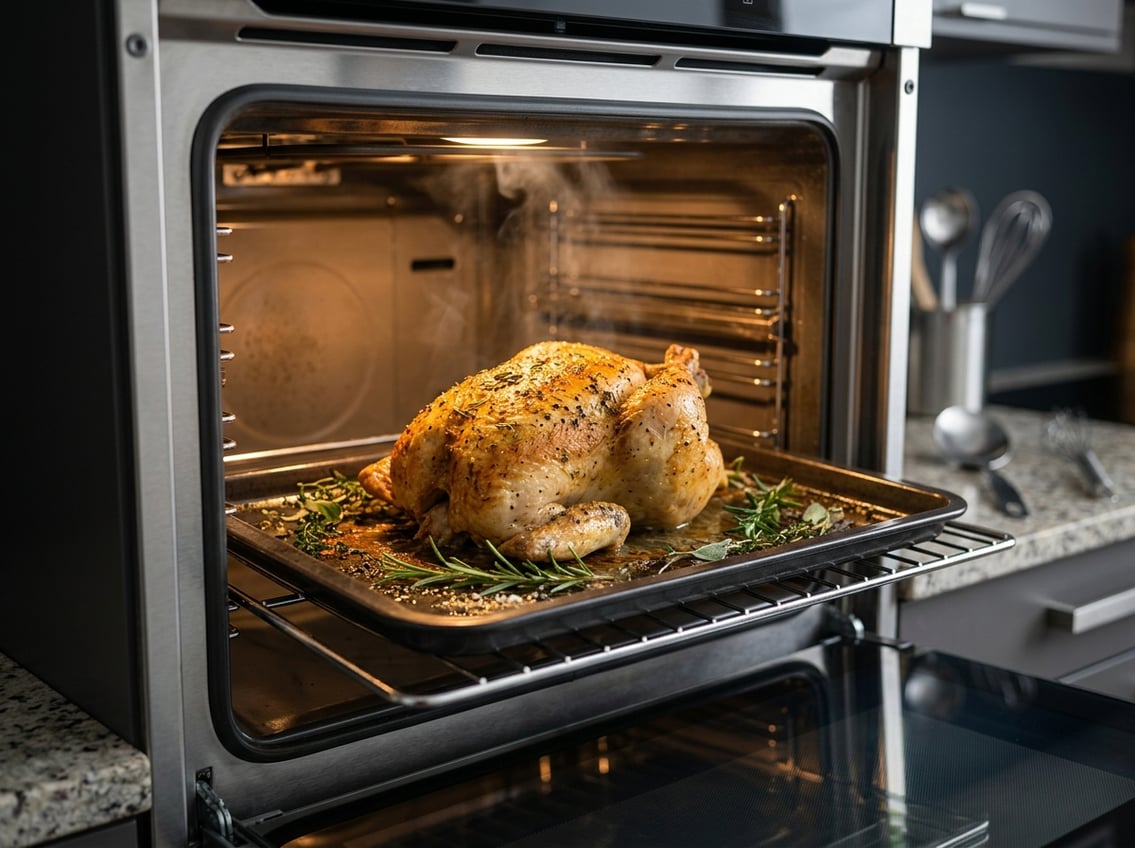
A thick breast needs more time than a thin one, even if both weigh the same.
If the thick end is much larger than the thin end, the thinner part can dry out before the center is done.
For even cooking, you can gently pound boneless breasts to a more uniform thickness.
That simple step helps baked chicken breast cook more predictably.
Bone-In vs. Boneless Time Ranges
Boneless breasts often bake in about 20 to 30 minutes at 375°F to 400°F, depending on thickness.
Bone-in breasts usually need longer, often 30 to 45 minutes or more.
If you are working with a larger cut, start checking early and leave extra time if needed.
The range is more useful than a fixed number because oven performance can vary.
Why an Instant Read Thermometer Matters
An instant read thermometer takes the guesswork out of oven baked chicken breast.
You can check the thickest part and avoid slicing open the meat too early, which releases juices.
The USDA safe temperature for poultry is 165°F, and that is the number you should aim for in the center.
A reliable thermometer is the easiest way to make a baked chicken breast recipe work consistently.
Carryover Cooking and Resting Time
Chicken keeps cooking after it leaves the oven, so pull it a little before it reaches the final target if needed.
That carryover heat can bring the temperature up a few degrees while it rests, as noted by The Spruce Eats.
Rest the chicken for 5 to 10 minutes before slicing.
A short rest helps the juices settle back into the meat, which improves the texture of baked chicken breast.
Moisture, Flavor, and Common Mistakes
Juicy chicken depends on moisture control, seasoning, and not overcooking the meat.
A few small habits can improve almost any chicken breast recipe.
When to Brine Chicken Breast
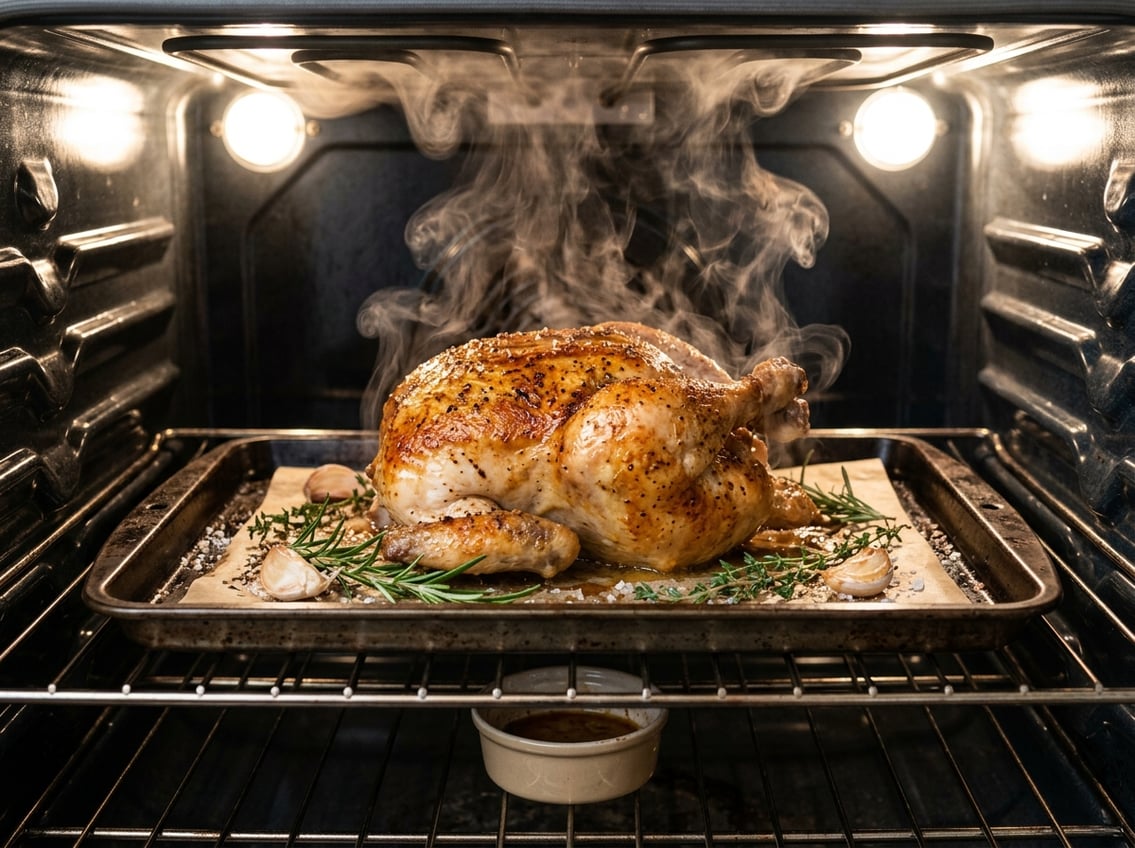
You can brine chicken breast when you want extra insurance against dryness, especially for lean boneless cuts.
A short saltwater brine or a dry salt seasoning ahead of time can help the meat hold moisture better.
For a simple baked chicken breast recipe, even 30 minutes of salting ahead can improve flavor.
A longer brine makes more sense when you have extra time and want a more seasoned result.
How to Avoid Dry or Rubbery Meat
Do not overbake.
Chicken breast turns dry fast once it goes past the safe point, so temperature matters more than color alone.
Avoid cutting into the meat too soon, and do not cook cold chicken straight from the fridge for too long at high heat.
Letting the meat sit briefly at room temperature while the oven preheats can help it cook more evenly.
Simple Flavor Variations
You can keep the base simple and still change the flavor a lot.
Lemon and herbs work well, as do paprika and garlic, Italian seasoning, or a light mustard coating.
Brush the chicken with oil first, then add spices.
That gives the seasoning something to cling to and helps the top brown in the oven.
Mistakes That Ruin Texture
The most common mistakes are wet skin, too much heat for too long, and no thermometer.
Thick and thin pieces baked together without adjusting time also cause uneven results.
Another easy mistake is crowding the pan.
Leave space around each piece so the hot air can move and the whole chicken breast in oven cooks more evenly.
How This Compares With Roasting a Whole Bird
Cooking just the breast gives you faster timing and less waste if you want white meat only.
Roasting a full bird gives you more variety, more drippings, and a different balance of texture across the meat.
Whole Breast vs. Roasted Whole Chicken
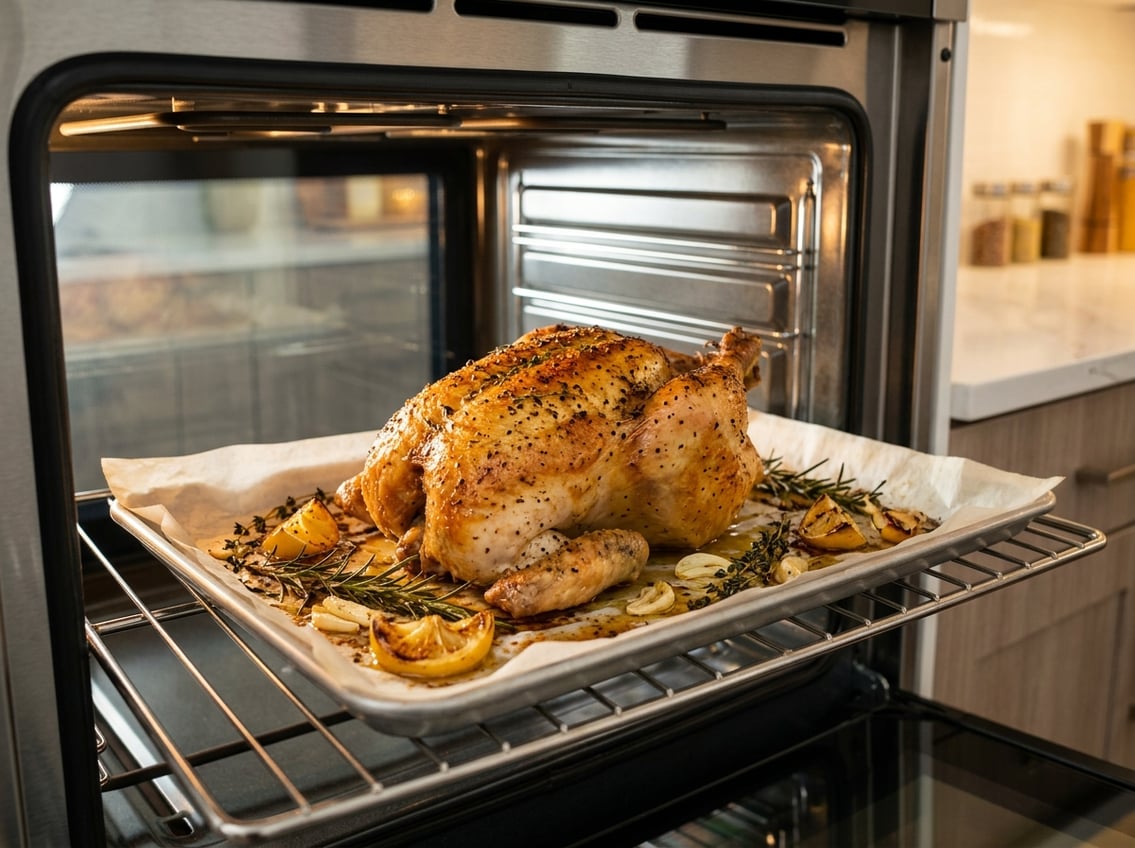
A whole roasted chicken gives you both white and dark meat, plus more serving options.
According to Better Homes & Gardens, a whole bird also benefits from drying the skin, seasoning well, and resting after roasting.
A single breast is simpler and faster.
It works well when you want a smaller dinner or plan to use leftovers in salads, sandwiches, or meal prep.
When a Roast Chicken Recipe Makes More Sense
A roast chicken recipe makes more sense when you want a full meal with built-in sides and enough food for several people.
It also fits better when you want crispy skin across the whole bird and more flavor variety.
If your goal is a weeknight protein with less prep, a baked chicken breast recipe is usually the easier choice.
If your goal is a classic Sunday meal, roasted chicken is the better fit.
Shared Techniques for Crisp Skin and Even Cooking
Dry skin, good seasoning, and proper resting time help both methods.
Truss the bird and use a pan that allows airflow. Check the temperature carefully to ensure even cooking.
Dry the surface and season it well. Stop cooking at the right internal temperature for the best texture.


