
What Is Chicken Breast Tenderloin? Key Differences
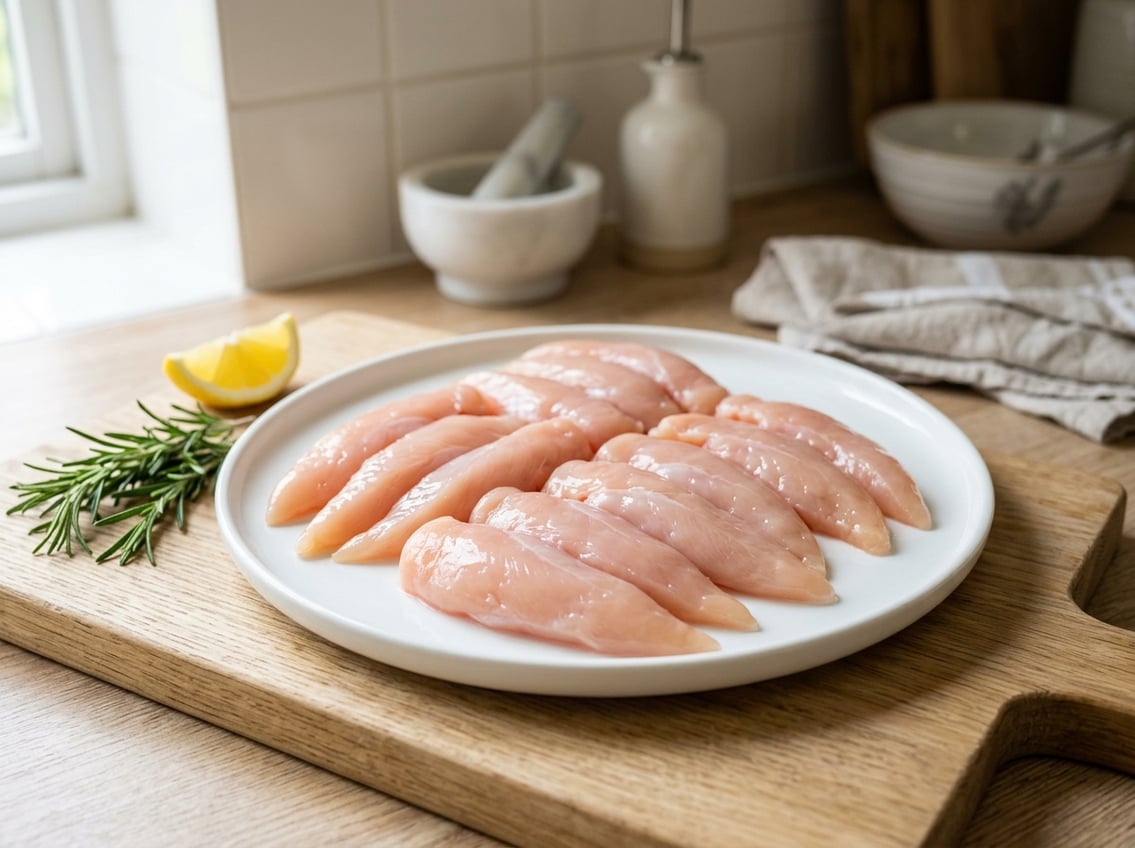
Chicken breast tenderloin is the small, tender strip of white meat tucked under the chicken breast. People also call it chicken tenderloin, chicken tender, or just tender.
It is easy to confuse this cut with chicken breasts because stores do not always label it the same way. Some packages mean the true strip under the breast, while others use the term for trimmed breast meat.
Where This Cut Comes From
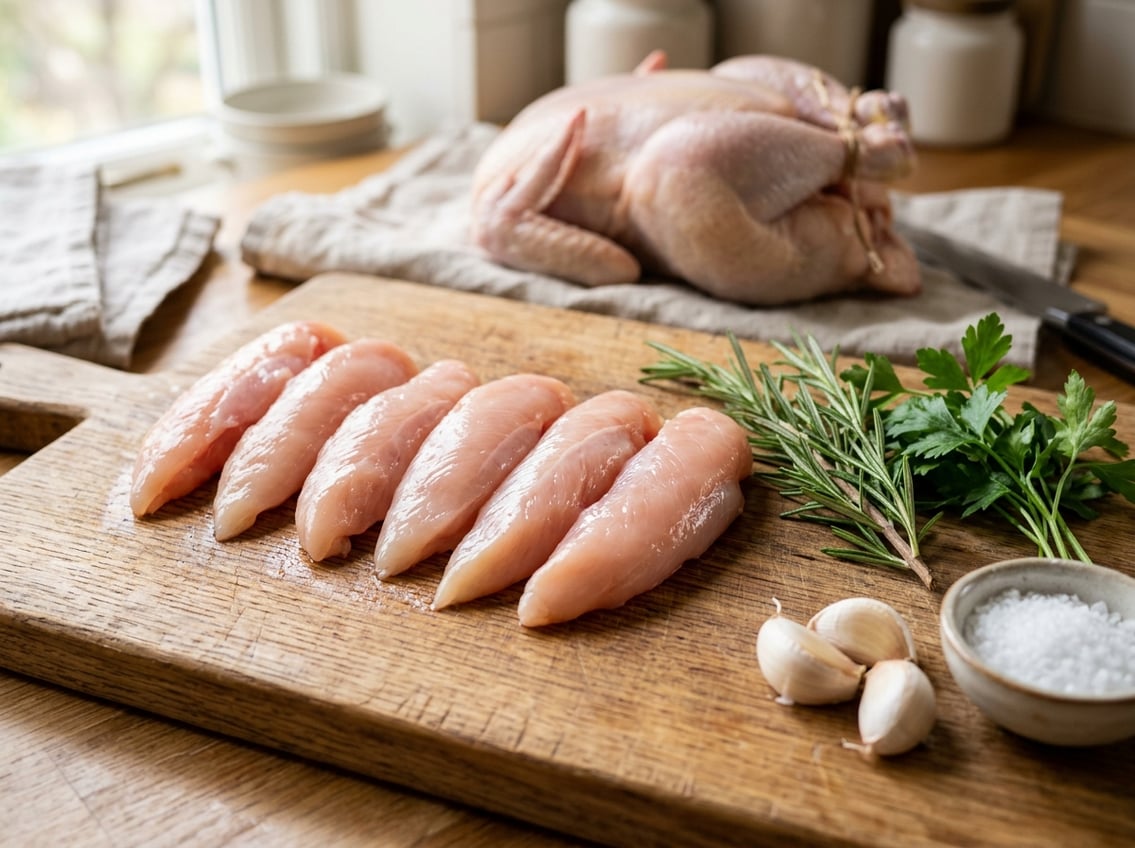
The underside of the chicken breast holds the tenderloin, where it sits as a narrow strip of white meat. The main breast is the larger muscle, while the tenderloin is the smaller piece beneath it.
This cut is naturally soft and cooks quickly. The breast is the pectoralis major muscle, while the tenderloin is the smaller pectoralis minor beneath it.
How It Sits Under the Breast
The chicken tenderloin sits directly under the chicken breast and often stays attached until trimming. In whole chicken breasts, you may not notice it right away because it is slim and tucked in close to the bone side.
Some store packs sell chicken tenderloins separately. Other labels may use breast tenderloin for a strip cut from breast meat.
The Difference Between the Main Breast Muscle and the Tender Strip
The main chicken breast is thicker, wider, and more uniform. The tenderloin is smaller and more delicate, so it feels softer when cooked.
The breast gives you a larger fillet, while the tender strip gives you faster cooking and a softer bite.
Why the Tendon Matters
A small tendon often runs through the tenderloin. That tendon can feel chewy if left on, so many cooks remove it before cooking or buying.
If you see a white strip on a chicken tender, that is usually the tendon. Pulling it out helps the meat eat more evenly and keeps the texture cleaner.
How It Compares With Chicken Breast
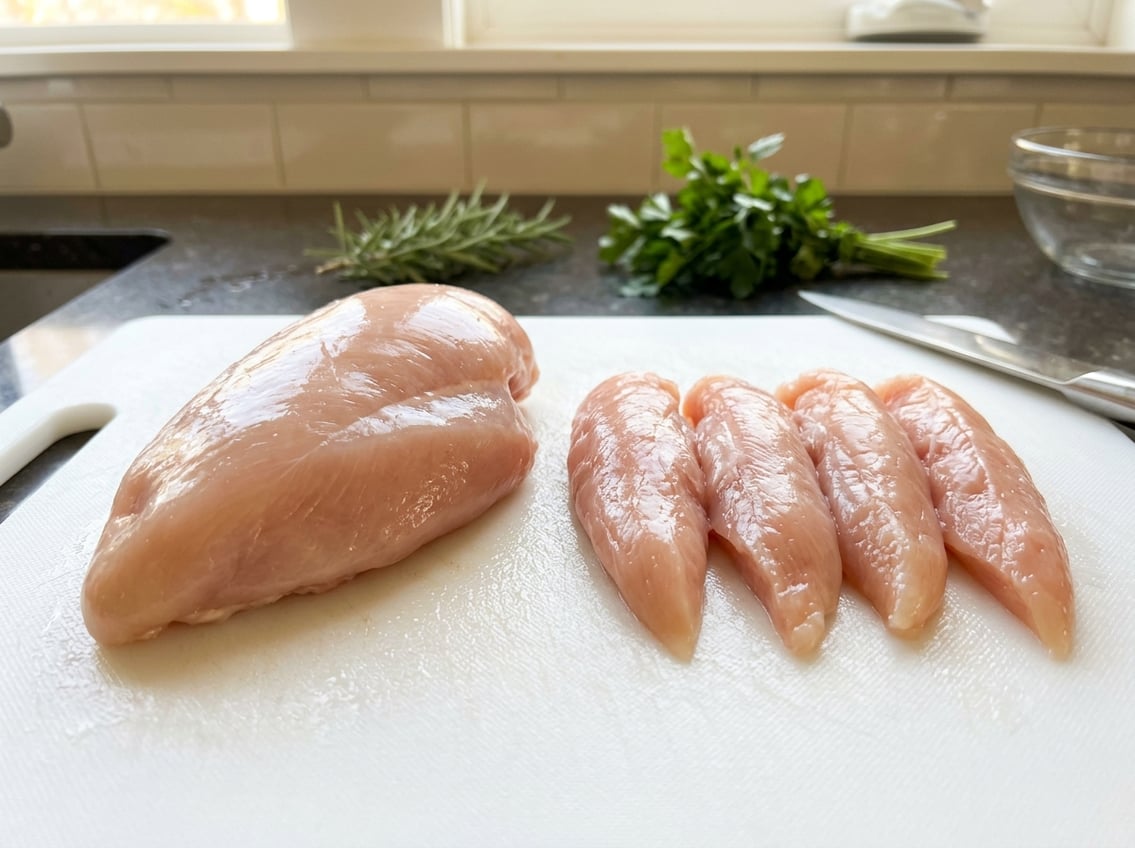
Chicken breast and chicken tenderloin are both lean white meat, but they work differently in the kitchen. The main differences are size, shape, texture, cooking time, and how easily you can get even cooking.
Size Shape and Texture Differences
Chicken breasts are larger, thicker, and more uniform. Chicken tenderloins are smaller, long, and thin, which makes them feel more delicate.
That shape difference matters in recipes. Tenderloins are often used for chicken tenders, chicken strips, and chicken fingers, while chicken breasts are better for full cutlets and stuffed dishes.
Cooking Time and Even Cooking
Chicken tenderloins cook faster than chicken breasts. Their smaller size makes them easier to overcook, so they need close attention.
Chicken breasts take longer because they are thicker, and they can dry out if the thick end finishes much later than the thin end. For even cooking, you often need to pound breasts to a similar thickness, while tenderloins usually need only a short cook.
Price Availability and Store Labels
Chicken breasts are usually easier to find and are often sold in larger packs. Chicken tenderloins may cost more per pound in some stores because they are smaller and sometimes already trimmed.
Store labels can be confusing. Some packages call the true strip under the breast a chicken tenderloin, while others use “breast tenderloin” for sliced breast meat. Shape is the best clue, since true tenderloins are long and narrow.
Best Ways to Cook It
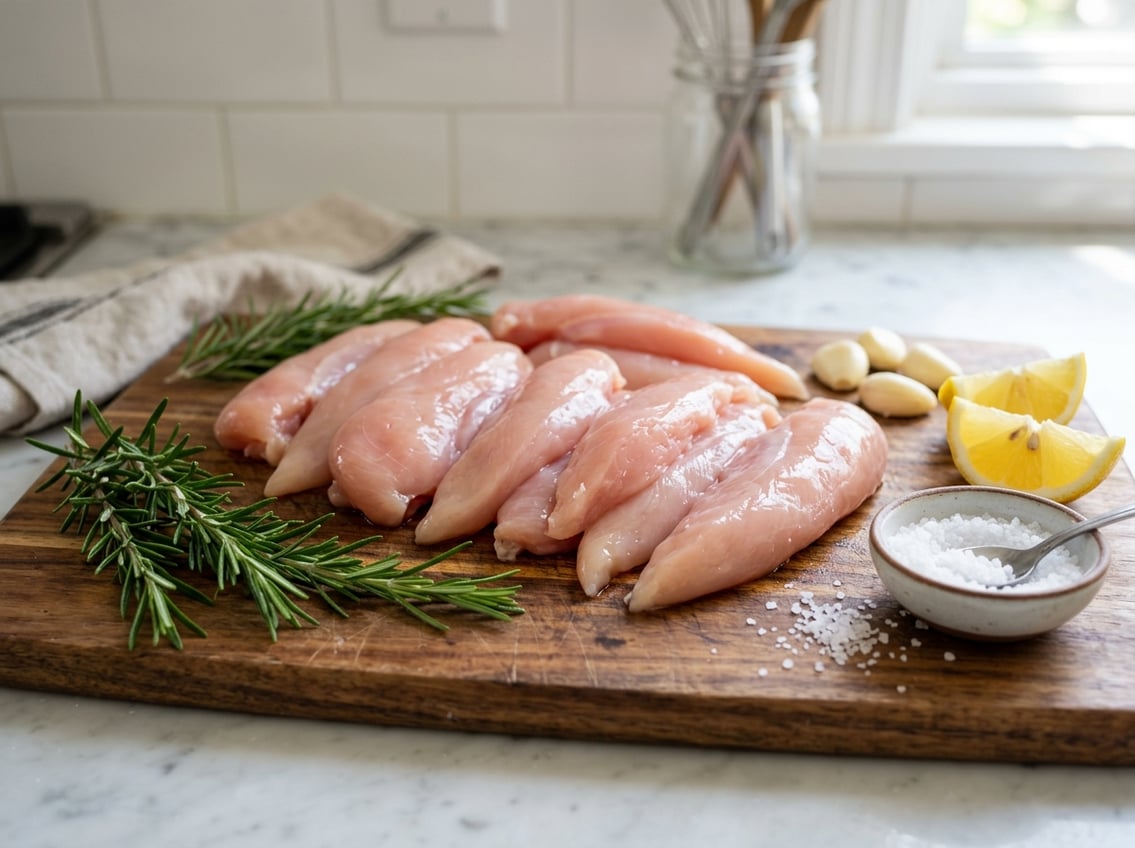
The best method depends on how much time you have and whether you want a plain, breaded, or sauced result. Since tenderloins are thin, they do well with fast cooking and careful timing.
When to Bake Sear Grill or Bread It
You can bake chicken tenderloins, sear them in a skillet, grill them, or bread them for a crisp coating. Baking works well for simple hands-off meals.
Breaded chicken tenders and chicken fingers work best when you want a crunchy exterior. If you prefer smoky flavor, bbq chicken tenders do well on the grill or under a broiler finish.
How to Marinate for Better Flavor
Marinating chicken helps tenderloins pick up flavor fast. A simple mix of oil, acid, salt, and spices is enough for most weeknight meals.
Because the meat is thin, you do not need a long soak. Even 20 to 30 minutes can help before you cook chicken tenderloin in the oven, skillet, or grill.
How to Cook Chicken Tenderloin Without Drying It Out
Use medium to medium-high heat and keep the cook time short. A thermometer helps, since tenderloins can go from juicy to dry quickly.
Pull them from the heat when they reach a safe internal temperature of 165°F. If you are making chicken strips or chicken tenders, avoid crowding the pan so the pieces brown instead of steam.
Best Uses in Everyday Recipes
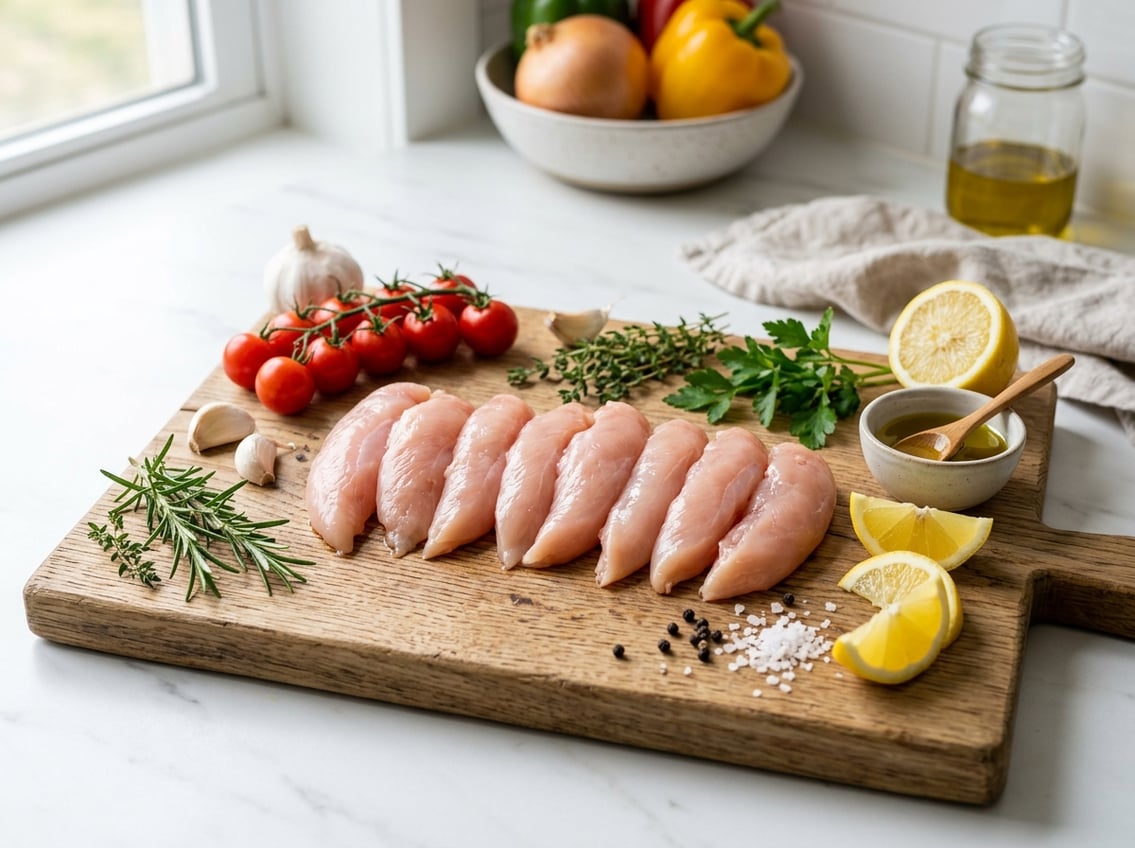
Chicken tenderloins fit best in meals that need quick cooking, small portions, or a soft texture. Chicken breasts make more sense when you want a larger piece that can be sliced, stuffed, or topped with sauce.
Dishes That Work Better With Tenderloins
Chicken tenderloin recipes are a strong fit for stir-fries, skillet dinners, salads, and breaded chicken tenders. They also work well in simple baked dishes where speed matters.
You can use them for chicken fingers, chicken strips, and quick lunch bowls. Their size makes them easy to portion and serve.
When Chicken Breast Is the Better Choice
Chicken breast recipes are better when you want a full fillet or need a thicker cut that holds together well. Chicken breast is a strong choice for chicken parmesan, sliced sandwiches, and oven-baked dishes.
For dishes like chicken parm, the larger shape gives you more surface for breading, sauce, and cheese. The breast also gives you more control when you want neat slices.
Easy Swaps in Common Recipes
You can often swap chicken tenderloins into chicken breast tenderloin recipes that call for strips or cutlets.
If a recipe uses chicken breasts, slice them into even pieces so they cook at the same rate.
You can also use chicken breasts in place of tenderloins if you adjust the cook time.
Tenderloins finish sooner, so shorten the cooking time when you use them instead of breasts.


