
Is the Chicken Breast White Meat? Quick Answer and Why
The answer to is the chicken breast white meat is yes. Chicken breast comes from the chicken’s chest area, where the muscle works for short bursts of movement instead of constant activity.

Chicken breast is lighter in color, leaner in texture, and usually lower in fat than chicken thighs and other dark meat cuts. If you are choosing between chicken cuts for flavor, nutrition, or cooking speed, breast meat is usually the mildest and leanest option.
The Short Answer and How Chicken Is Classified
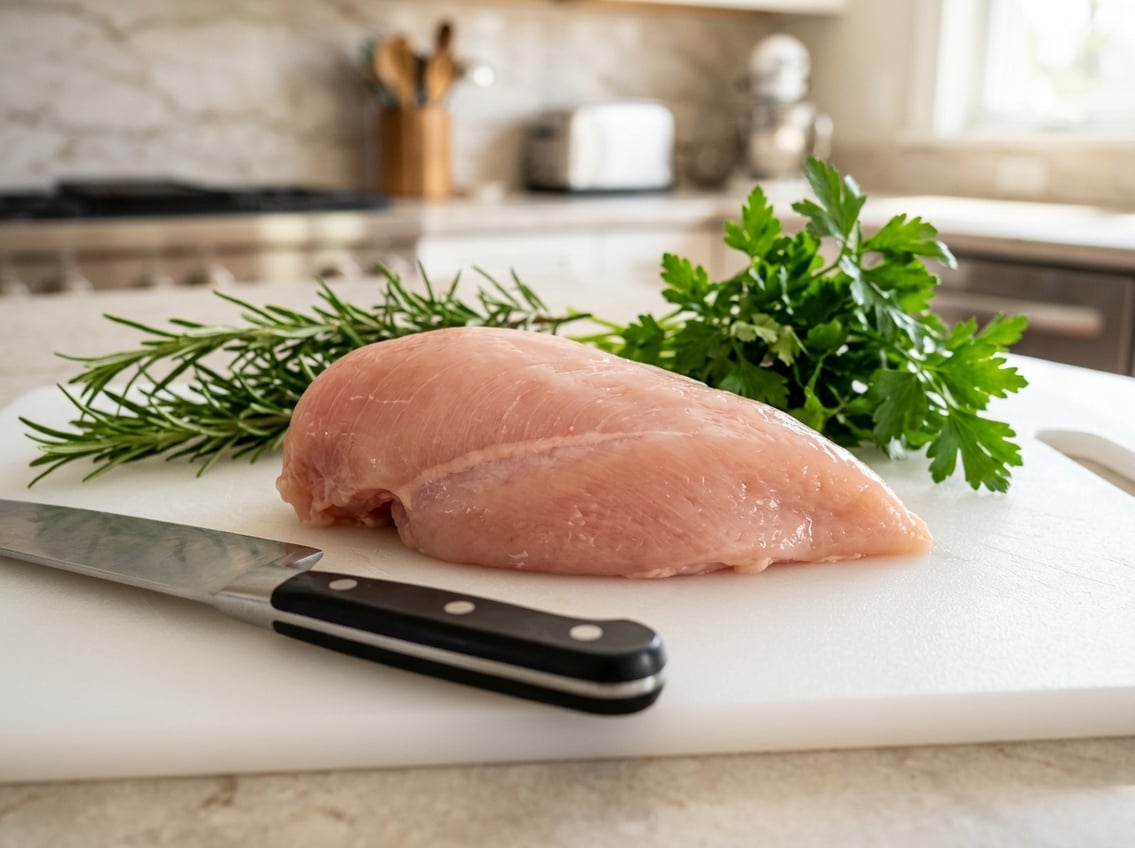
People generally classify chicken as either white meat or dark meat. The breast and the tenderloin are white meat, while chicken thighs are dark meat.
Chicken wings are usually grouped with white meat too, even though they often taste richer because of the skin and cooking method.
Why Breast Meat Counts as White Meat
The muscle on the chicken’s chest stays pale because it has less myoglobin than the leg muscles. That matches the way poultry defines white meat, including the chicken breast and chicken tenderloin.
Which Chicken Cuts Are White or Dark
The main white-meat chicken cuts are the breast, tenderloin, and wings, as noted in a guide to white meat chicken parts. Dark meat includes the thighs and drumsticks, which work more often and carry more myoglobin.
Where Chicken Wings Fit In
Chicken wings sit in a gray area for many people because they are small and often cooked with skin on. By classification, they are white meat, just like the breast and tenderloin, according to what parts of a chicken are white meat.
Why the Color Differs: Anatomy, Muscles, and Myoglobin

The bird uses each muscle differently, which causes the color difference between white meat and dark meat. Chest muscles support quick movement, while leg muscles support standing, walking, and sustained activity.
Myoglobin is the key protein behind the color difference. More of it means a darker look.
Chicken Anatomy and Muscle Composition
Chicken anatomy explains why breast meat and dark meat do not look the same. The breast uses fast-twitch muscle fibers for brief movement, while chicken thighs use fibers built for longer work.
How Myoglobin Affects Meat Color
Myoglobin stores oxygen in muscle cells, and the more a muscle depends on oxygen, the more myoglobin it has. A basic explanation of meat color and myoglobin shows why darker meat usually comes from muscles that work harder.
Why Flight Muscles Stay Paler Than Leg Muscles
A chicken’s breast muscles work for short, explosive motions, not long effort. That lower workload keeps the muscle composition lighter in color, so breast meat stays paler than chicken thighs and other dark meat cuts.
Nutrition and Health Differences Between White and Dark Meat
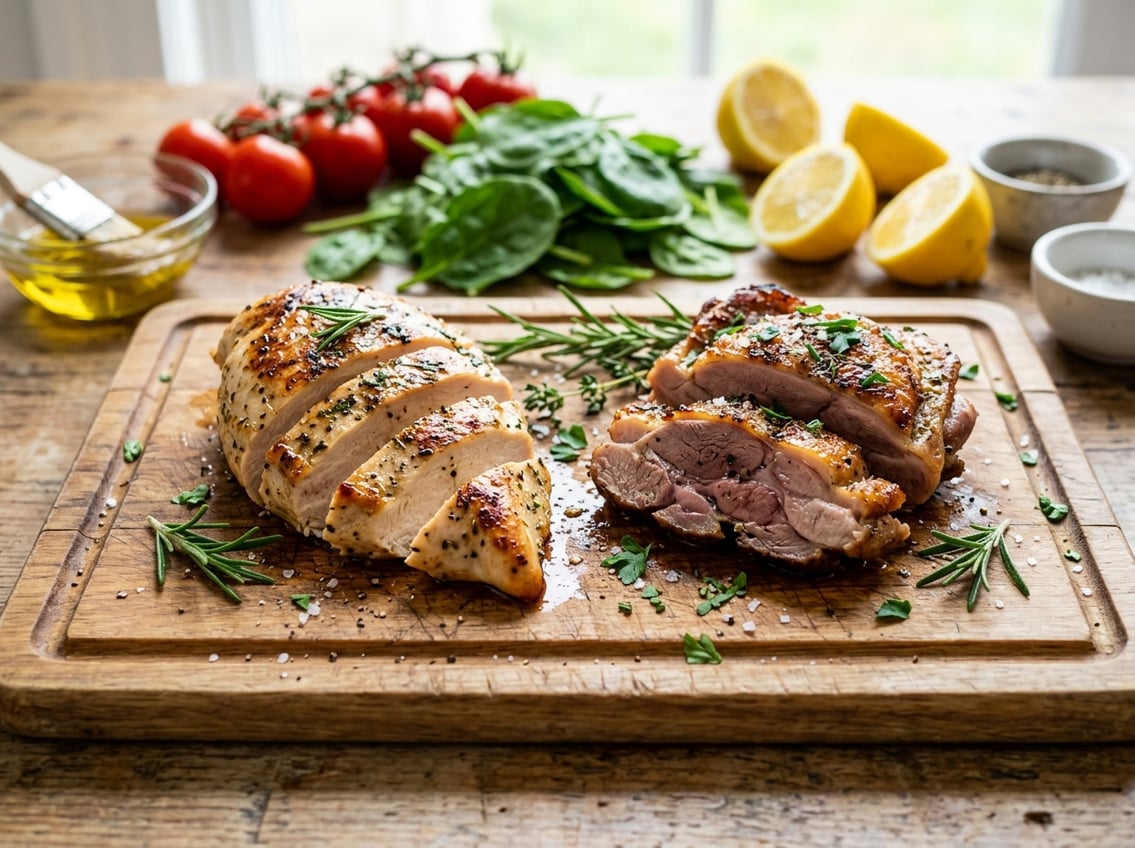
People often choose chicken breast as lean protein because it has less fat than dark meat. Skinless chicken breast also gives you a high-protein option with fewer calories, which makes it easy to fit into many meal plans.
Dark meat can offer more richness and a softer texture.
Why Chicken Breast Is Seen as Lean Protein
Chicken breast is one of the most common lean protein choices in the U.S. It gives you a high amount of protein with very little fat, which is why it is often used for weight-conscious meals and fitness diets.
Skinless and Boneless Options Compared
Skinless chicken breast reduces fat because the skin holds much of it. Boneless chicken breast is mainly about convenience, since it cooks fast and is easy to slice, grill, or add to salads.
Potential Benefits of White Meat
The main benefits of white meat include lower fat, fewer calories, and easy portion control. A recent comparison of white meat and dark meat notes that white meat is often seen as the lighter choice.
Cooking Uses and Best Dishes for Breast Meat

Breast meat cooks faster than dark meat because it is leaner. You need to watch the timing, since overcooking can dry out skinless chicken breast quickly.
When you want a mild base that works with sauces, seasoning, and meal prep, chicken breast is a dependable choice.
How White Meat Cooks Compared With Dark Meat
White meat usually needs less time on the heat than dark meat. Chicken thighs are more forgiving because of their higher fat content, while boneless chicken breast needs closer attention to keep it moist.
Browning, Juiciness, and the Maillard Reaction
The Maillard reaction is the browning that happens when proteins and sugars react under heat. Grilling chicken develops flavor, but because breast meat is lean, you often need marinade, brining, or careful heat control to keep it juicy.
Common Recipes That Use Chicken Breast
Chicken breast works well in grilled chicken and chicken salad.
You can use it in chicken Caesar salad, chicken parmesan, and chicken marsala.
It also fits in soups and can create chicken stock, especially when you want a mild meat flavor that does not overpower the dish.


