
What Should Chicken Breast Temp Be? Safe and Juicy Guide
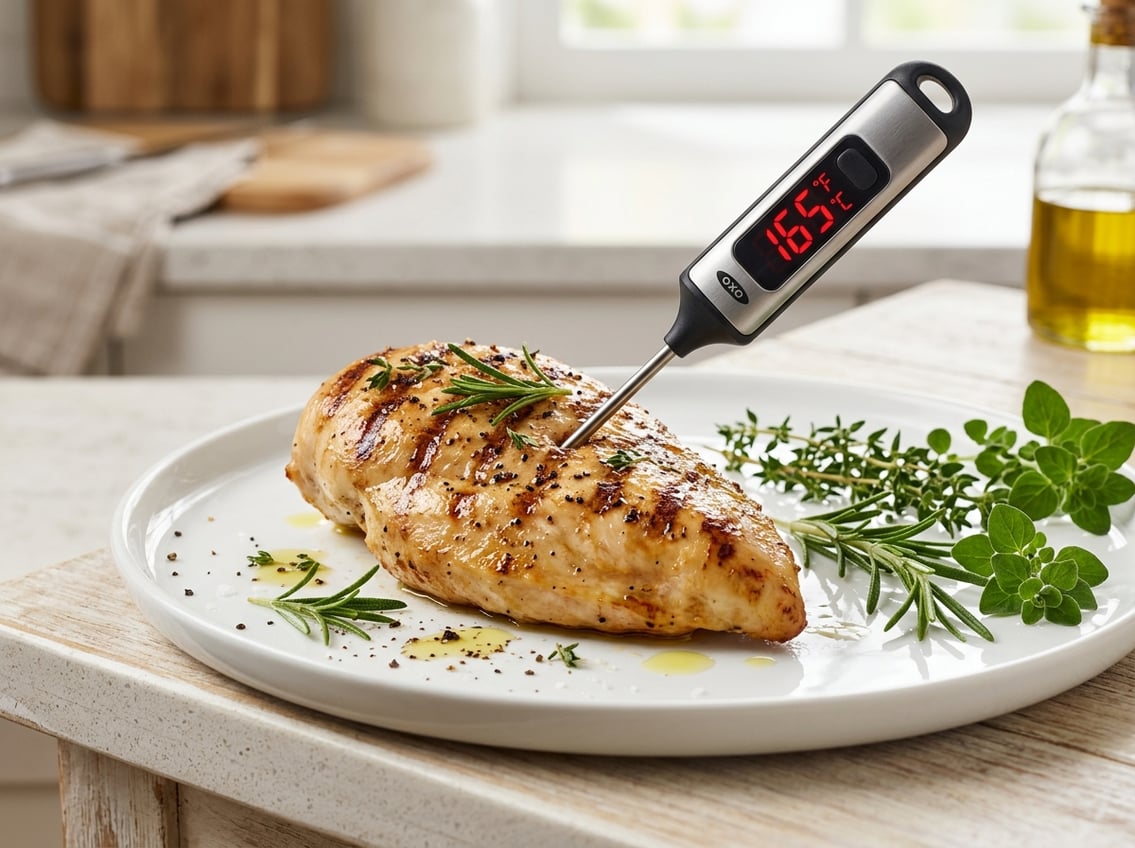
What should chicken breast temp be? The short answer is 165°F in the thickest part of the meat.
That is the safe minimum internal temperature for chicken breast, and it gives you a clear target whether you are baking, roasting, or pan-cooking.
If you check the chicken with a meat thermometer and pull it at the right temperature, you can get safe chicken breast without drying it out.
That matters because chicken breast is lean, so a small mistake in heat or timing can make it tough fast.
You do not need guesswork.
With the right chicken temperature, a reliable thermometer, and a few simple cooking habits, you can serve chicken that is both safe and juicy.
The Exact Internal Temperature to Aim For
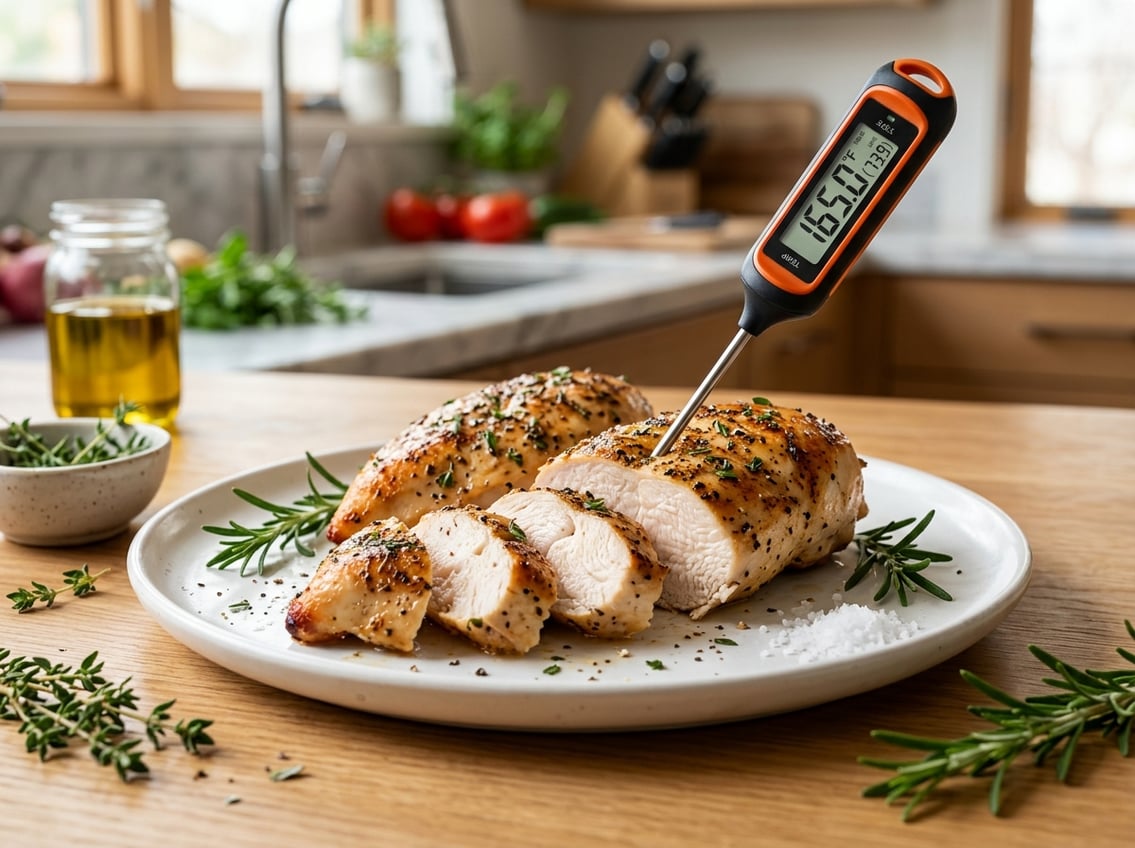
The target temperature for chicken breast is 165°F.
That number applies to the thickest part of the meat, not the edge or the surface.
A meat thermometer or instant-read thermometer gives you the best way to check the true temperature.
If you cook by color alone, you can end up with chicken that is still underdone inside or dry from overcooking.
Why 165°F Is the Safe Minimum
Chicken needs to reach a safe internal temperature to reduce the risk of harmful bacteria.
The USDA standard for chicken breast is 165°F, and that remains the clearest food-safety target.
Some cooks remove chicken a little earlier and let carryover heat finish the job, as long as the center reaches a safe final temperature.
That can work if you are accurate, but 165°F is the simplest number to trust.
When to Pull Chicken Breast Off the Heat
If you are resting chicken after cooking, you may see people pull it at about 160°F to 163°F and let it climb a few more degrees.
That method can help preserve moisture if your thermometer reading is precise.
For most home cooks, pulling at 165°F is the safest and easiest rule.
If you want the juiciest result, take it off heat as soon as it reaches target temperature, then rest it for a few minutes before slicing.
Why Color and Juices Are Not Reliable
Chicken breast can look white and still be undercooked in the center.
It can also release clear juices even when it has spent too long on the heat.
Color changes with lighting, seasoning, cut thickness, and cooking method.
A thermometer gives you the real chicken temperature, which is what matters for safety and texture.
According to Allrecipes, lean chicken breast can go from perfect to dry very quickly, which is why temperature control matters so much.
How to Measure Doneness Correctly
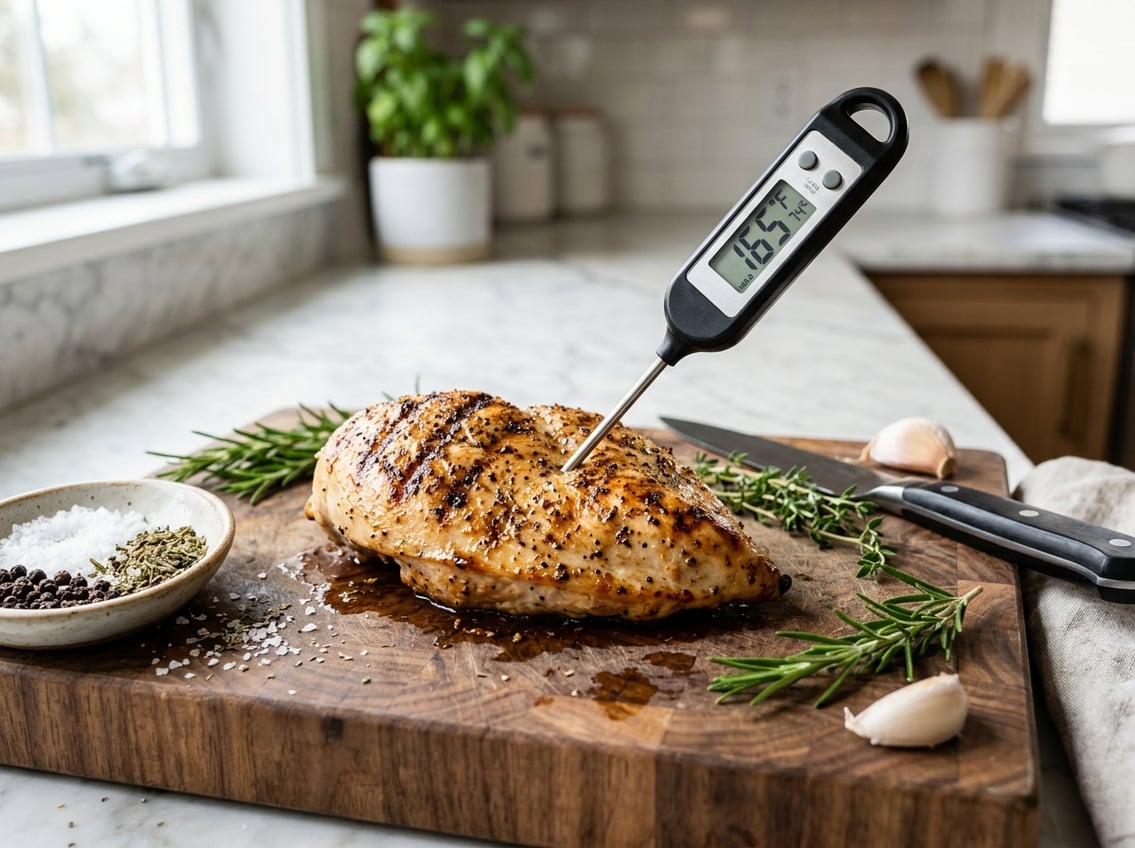
To get a correct reading, measure the thickest part of the chicken and avoid touching bone, pan, or fat.
A quick check with an instant-read thermometer usually gives you the most useful result.
Test each piece separately if the breasts are different sizes.
Uneven thickness is common, especially with bone-in chicken breasts.
Where to Insert the Thermometer
Insert the thermometer into the thickest part of the breast, aiming for the center of the meat.
Slide it in from the side when possible, because that can make it easier to find the middle.
If the piece has bone, keep the tip away from the bone.
Bone can give a false reading because it heats differently than the meat around it.
How to Check Boneless and Bone-In Pieces
With boneless chicken breasts, check the thickest spot in the center.
This is usually the fastest and most accurate method.
With bone-in chicken breasts, check the thickest part near the middle, then confirm the thermometer is not touching bone.
Bone-in pieces can cook a little differently, so you may need to test more than once if the shape is uneven.
Common Temperature Reading Mistakes
A few mistakes can give a false reading.
The most common ones are:
- touching bone with the thermometer tip
- checking only near the thin end
- reading the temperature too soon after opening the oven door
- not letting the digital thermometer settle for a second or two
- using an old thermometer that is not calibrated well
A good instant-read thermometer makes this much easier.
If you cook chicken often, it is one of the most useful kitchen tools you can own.
Best Oven Settings for Juicy Results
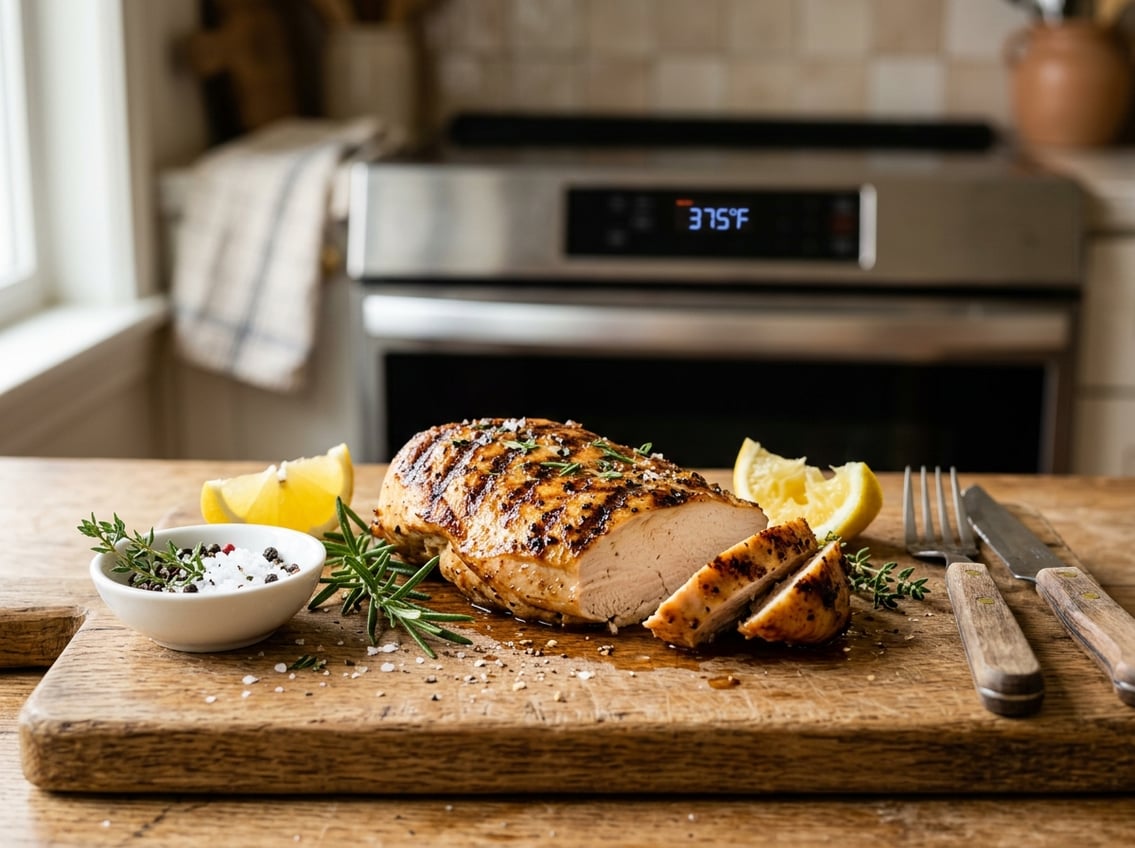
The oven setting you choose changes both texture and timing.
Higher heat can brown the outside faster, while moderate heat gives you more room to avoid dryness.
For most home cooks, the goal is simple: cook the chicken to the correct temperature without overexposing it to heat.
Time, oven temp, and thickness all matter together.
Baking Chicken Breasts at 375°F
Baking chicken breasts at 375°F is a reliable middle-ground option.
It is often a good choice when you want a little more control and a slightly gentler cook.
According to Allrecipes, boneless chicken breasts can bake at 375°F for about 30 to 35 minutes.
Bone-in pieces usually take longer.
This lower setting is useful when your pieces are thicker or when you want less risk of overbrowning.
Baking Chicken Breasts at 400°F to 450°F
If you want faster cooking and more browning, higher heat works well.
Allrecipes notes that roasting at 450°F can produce chicken breasts in about 15 to 18 minutes, depending on thickness.
That range is often a strong choice for baking chicken breasts when you want a firmer exterior.
A hotter oven can be especially helpful if you finish the chicken with a short rest after it comes off the heat.
How Thickness Changes Cook Time
Thickness matters more than the exact oven number in many cases.
A thin breast can finish much faster than a thick one, even in the same oven.
If your chicken pieces are uneven, pound them to a more even thickness or cut them into similar sizes.
That helps each piece reach the same temperature at about the same time, which makes it easier to keep the meat juicy.
How Cut and Cooking Method Affect Final Doneness
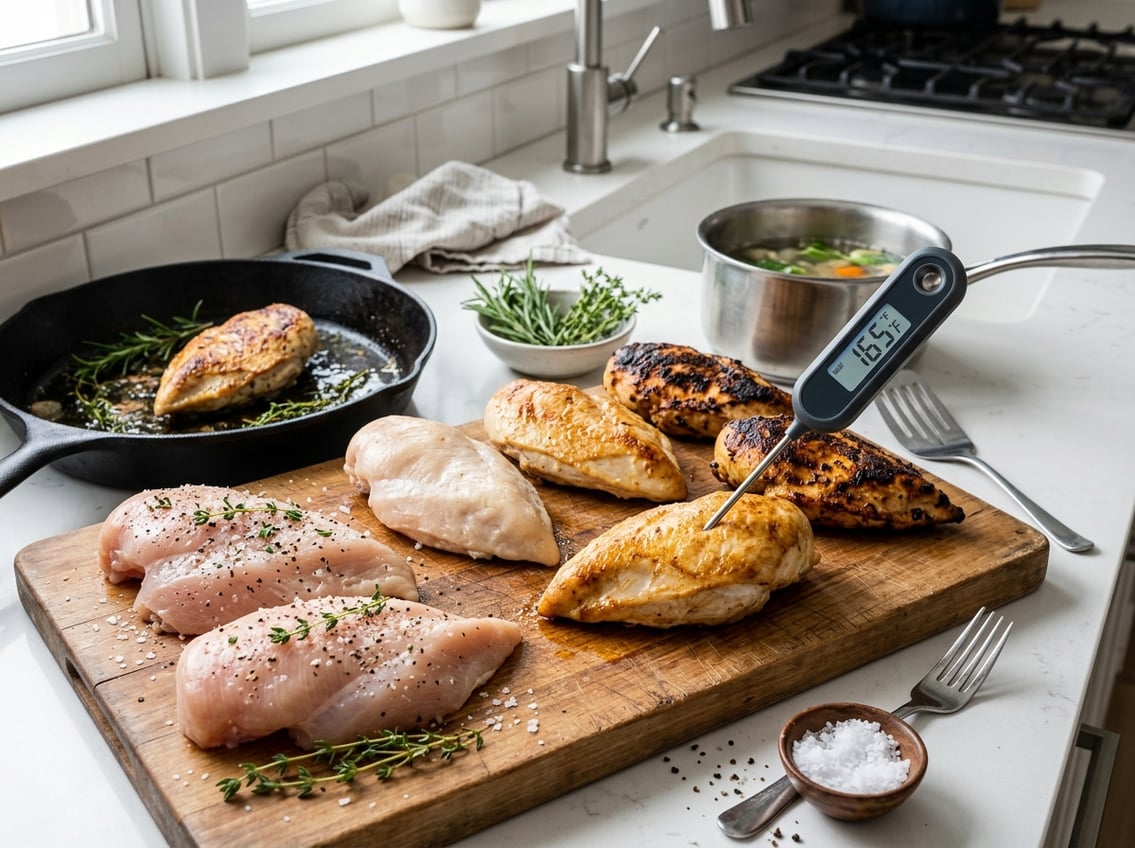
The best chicken temperature depends on the cut and how you cook it.
Boneless breasts, bone-in breasts, and whole birds all heat at different rates.
You also need to account for where the cut comes from on the bird.
White meat and dark meat do not behave the same way during cooking.
Boneless Breasts vs. Split Breasts
Boneless chicken breasts cook faster because there is no bone slowing the heat from moving through the meat.
They also dry out more easily, so you need closer attention to temperature.
Split breasts, which are bone-in chicken breasts, usually take longer but can stay juicier.
The bone helps moderate heat on the inside, though you still need to check the thickest part carefully.
Why Dark Meat Is Often Cooked Higher
Dark meat usually has more fat and connective tissue, so it stays tender at a higher finished temperature than chicken breast.
That is why chicken thighs often taste best cooked past the point where breast meat would feel dry.
Chicken breast is leaner, so it is best treated more gently.
If you cook it much beyond 165°F, you may lose moisture fast.
How Roasting a Whole Chicken Differs
Roasting a whole chicken is more complicated because the breast and thighs do not finish at the same time.
The breast usually dries out first if you keep cooking for the thighs.
You often need to check multiple spots with a thermometer when roasting a whole chicken.
Aim for the breast to reach its safe target while letting the darker meat cook a little longer if needed.


