
What to Do if Chicken Breast Is Still Frozen Fast
What you do if chicken breast is still frozen depends on how much time you have and how frozen it is.
You can cook it from frozen, thaw it safely, or save it for later, as long as you keep it out of the temperature danger zone and avoid cross-contamination.
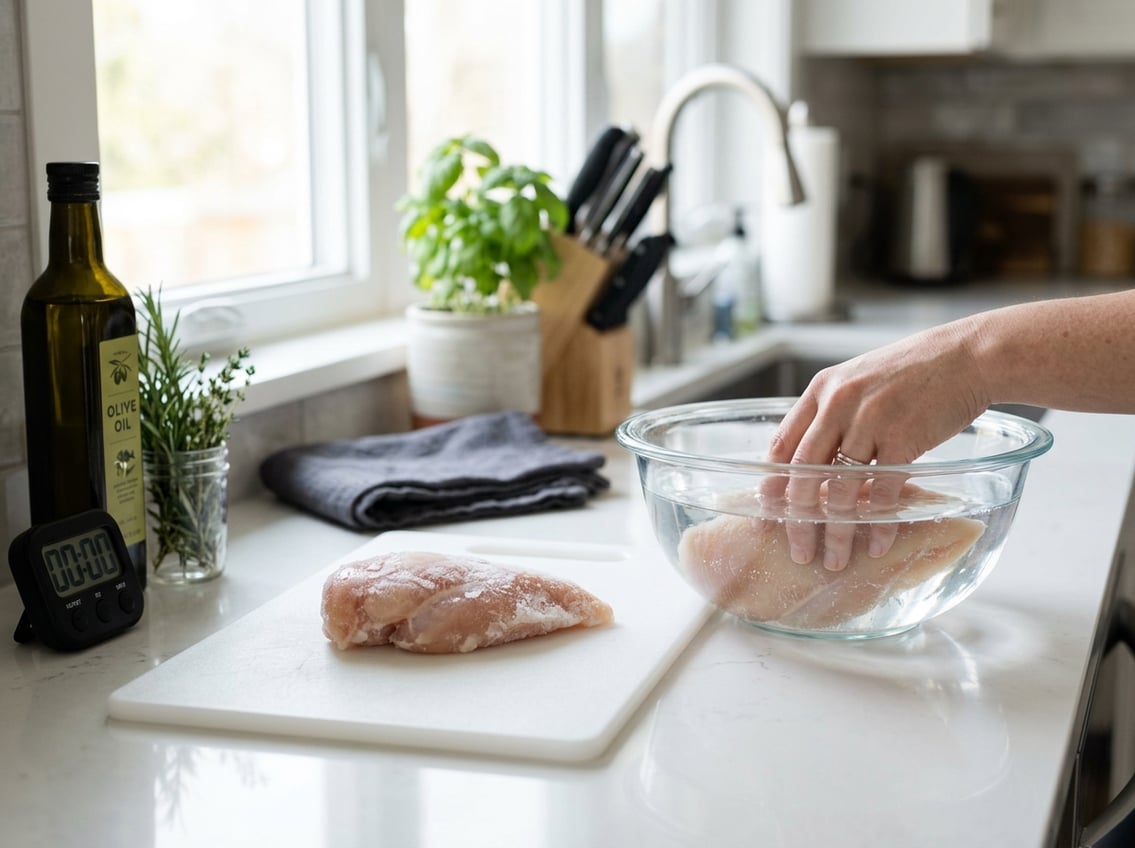
A fully thawed chicken breast gives you the most even texture.
Thawed chicken is easier to season and portion.
You can cook frozen chicken if you are short on time and use a method that brings the center to a safe temperature.
Choose the safest path for your timeline.
If the chicken is only slightly frozen, you may be able to thaw it quickly.
If it is solid, use a method that cooks it safely all the way through.
Decide Whether to Cook, Thaw, or Save It for Later
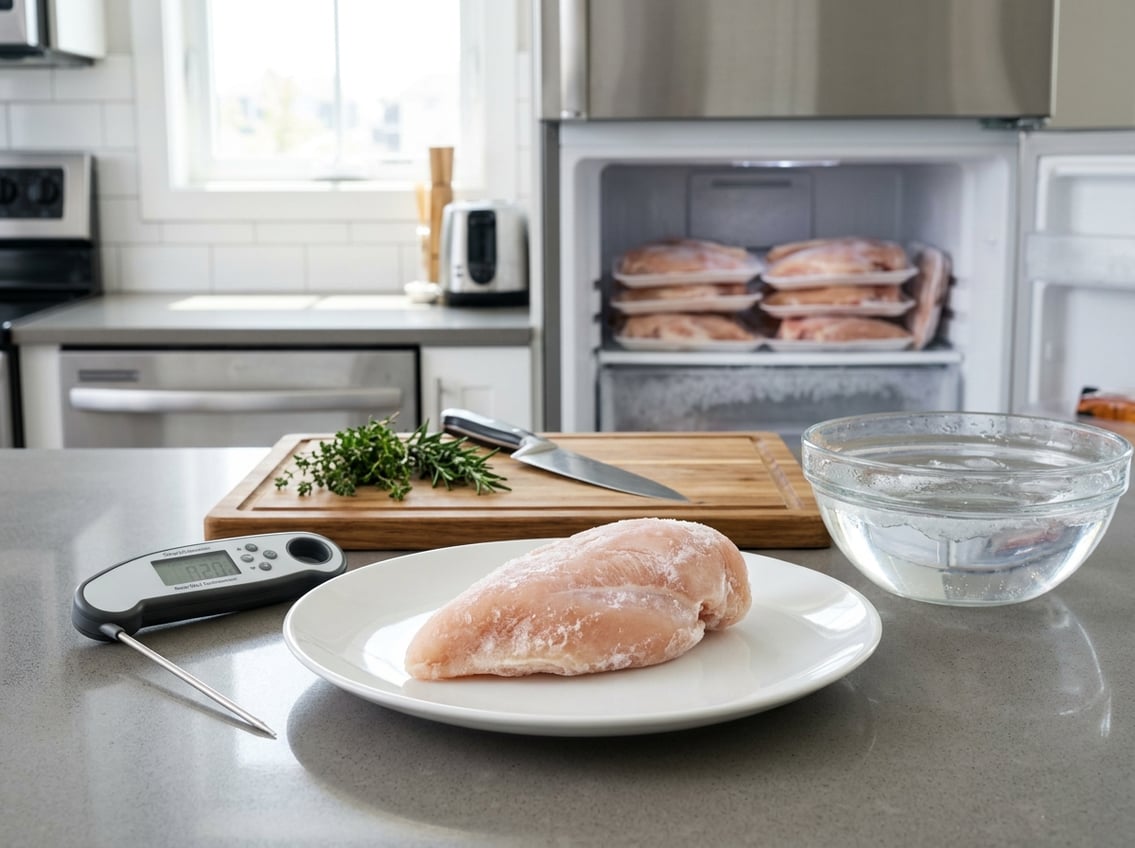
First, decide whether to cook frozen chicken breast now or give it time to thaw.
The best choice depends on your schedule, the cooking method, and how evenly frozen the meat is.
When You Can Cook Chicken Straight From Frozen
You can cook frozen chicken when you need dinner fast and have a method that works with longer cook times.
Baking, simmering, and pressure cooking work well for cooking frozen chicken.
This works best for individual boneless breasts that are not stuck together.
Frozen chicken will take about 50% longer to cook than thawed chicken, so use methods that heat it through evenly.
When Fully Thawed Chicken Is the Better Choice
Choose thawed chicken when you want the best texture, faster cooking, and more even seasoning.
Thawed chicken gives you more control if you plan to grill, pan-sear, or slice it thin.
If you have time, thaw chicken in the refrigerator and cook it soon after.
That gives you more reliable results and lowers the chance of a cold center.
What to Do if It Is Only Partially Frozen
If the outside feels soft and the center is still icy, you have a few options.
You can keep thawing, cook it a little longer than usual, or switch to a method that handles uneven thickness better.
A partially frozen breast often cooks unevenly in a hot skillet.
If dinner can wait 30 to 60 minutes, cold water thawing is usually the safer and better-tasting choice.
Safe Handling Rules Before Anything Else
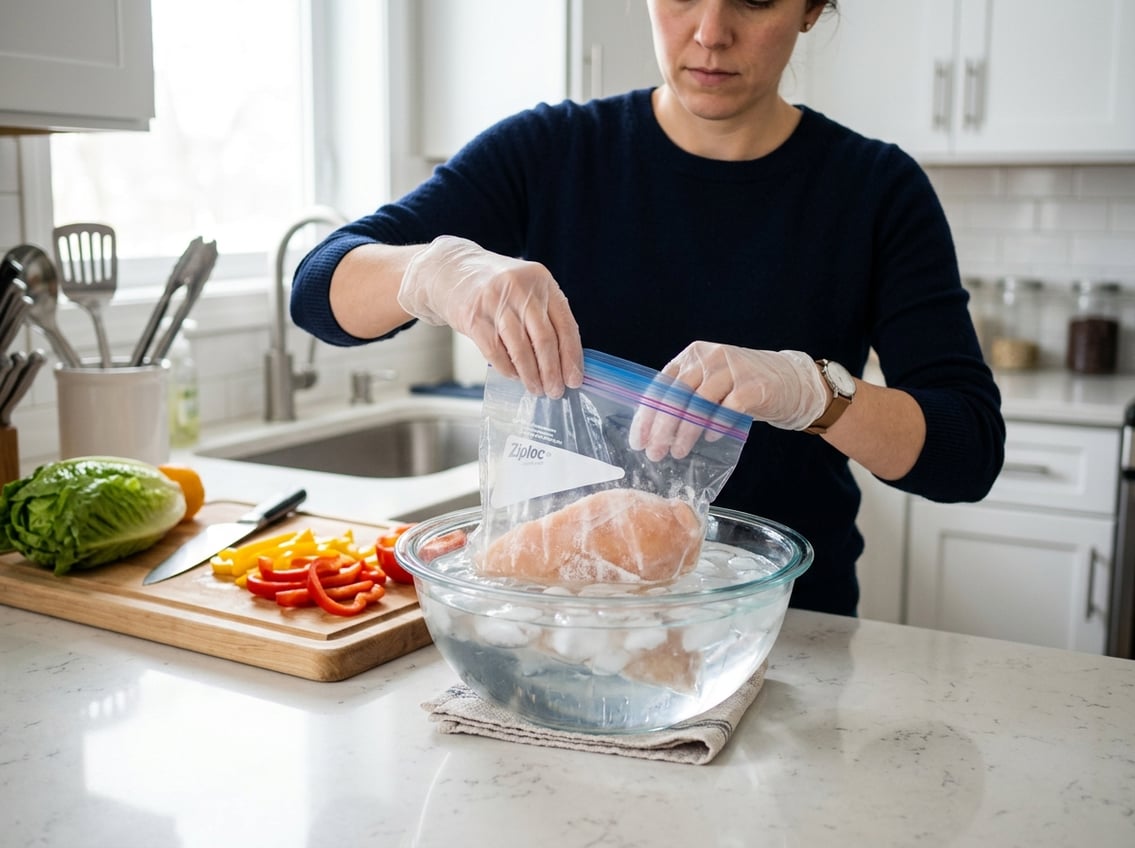
Safe handling matters before you start thawing or cooking chicken.
Keep chicken cold until it is ready for the pan, oven, or pressure cooker.
The goal is to keep it out of unsafe temperatures and away from other foods.
Avoid the Temperature Danger Zone
The temperature danger zone runs from 40°F to 140°F, where bacteria can grow quickly.
You should never thaw food on the counter or in warm water.
Keep chicken in the refrigerator, in cold water, or in a cooking method that brings it to a safe internal temperature fast.
If the meat starts warming on the counter, put it back in a safe method right away.
How to Prevent Cross-Contamination
Use a clean plate, cutting board, and knife for raw chicken.
Wash your hands with soap after touching the package or the meat, and sanitize any surface that touched raw juices.
Keep frozen chicken and thawed chicken away from ready-to-eat foods like salad, bread, or fruit.
Use separate tongs or utensils when you move it to the stove or oven.
Why Campylobacter and Other Bacteria Matter
Raw and undercooked poultry can carry bacteria such as campylobacter.
These germs can cause foodborne illness if the chicken stays too cool, too long, or is cooked unevenly.
Use a food thermometer and make sure the thickest part reaches 165°F (74°C).
Best Ways to Get Dinner on the Table
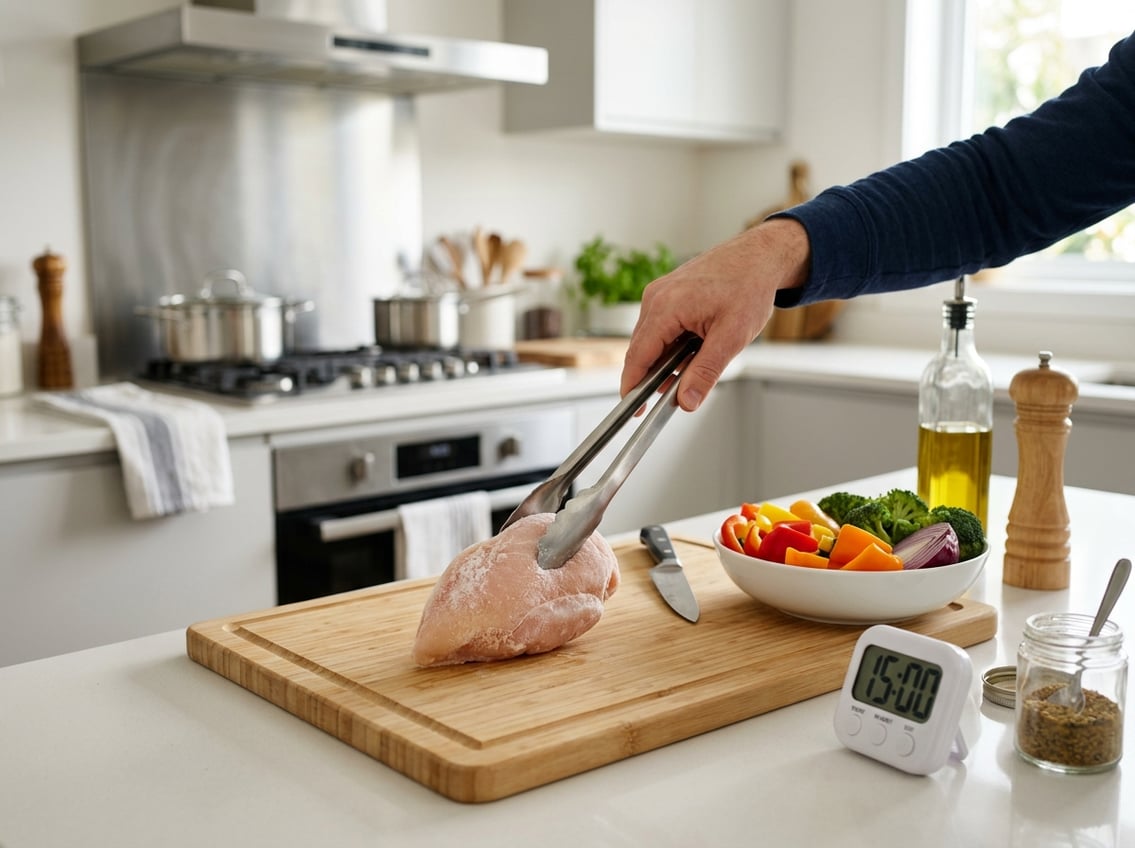
If you need to cook frozen chicken breast tonight, choose a method that heats the center safely.
Baking, simmering, and pressure cooking all work, as long as you check the temperature and allow extra time.
Bake Chicken Breast From Frozen
Baking is one of the easiest ways to cook frozen chicken breast.
Place the breasts on a baking sheet or in a baking dish, season them, and bake at a moderate oven temperature until they reach 165°F (74°C).
Expect a longer cook time than with thawed chicken.
Add about 50% more time than your normal recipe, then check the center with a thermometer.
If the pieces are uneven in thickness, the thicker ones may need extra time.
Simmer It on the Stovetop for Better Moisture
Simmering in broth, sauce, or water helps protect the meat from drying out.
Simmering works well when you want shredded chicken for tacos, soups, or casseroles.
Keep the liquid at a gentle simmer, not a hard boil.
The chicken is done when the thickest part reaches 165°F (74°C) and the meat is no longer pink in the center.
Use a Pressure Cooker for the Fastest Safe Option
A pressure cooker or Instant Pot cooks frozen chicken breast quickly and helps it stay moist.
Follow the cooker’s timing guide for frozen poultry, then check the final temperature with a thermometer.
The chicken needs to reach 165°F (74°C) before you serve it.
How to Thaw and Store It Safely
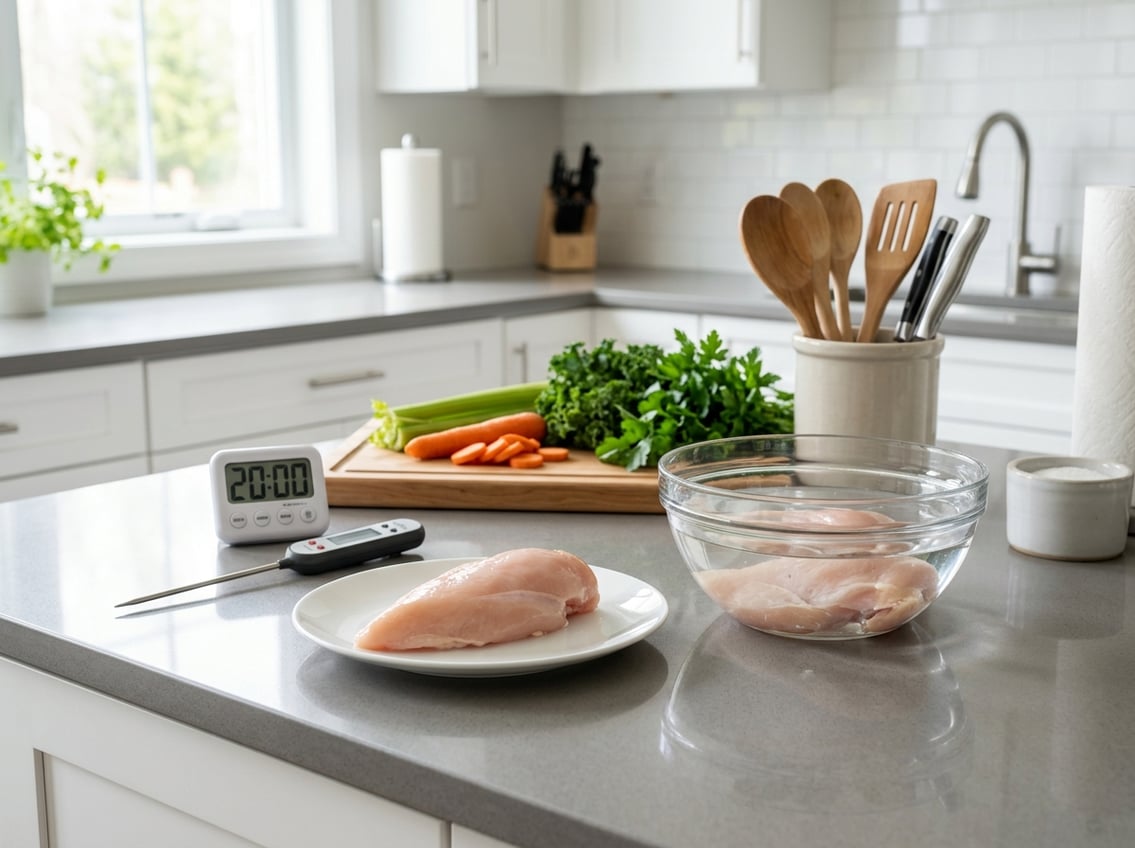
If you do not need to cook it right away, safe thawing gives you better texture and more flexibility.
The safest methods are refrigerator thawing and cold water thawing.
Microwave thawing is a last-minute option if you cook it immediately.
Refrigerator Thawing for the Best Safety Margin
Refrigerator thawing is the best choice when you can plan ahead.
Chicken breasts can take 1 to 2 days to thaw in the refrigerator, depending on size.
Place the chicken on a plate or tray to catch drips.
Keep it refrigerated until you are ready to cook it, then cook it soon for the best quality.
Cold Water Thawing When You Need It Faster
Cold water thawing is a good option when you need chicken ready the same day.
Seal the chicken in a leakproof bag, submerge it in cold water, and change the water every 30 minutes.
Small chicken breasts may thaw in about an hour or less.
Cook the chicken right after it is thawed, because this method moves the meat through the danger zone more quickly.
When You Can Refreeze Chicken
You can refreeze chicken if you thawed it in the refrigerator and kept it cold the whole time.
The texture may change a little, but it is still safe to freeze again.
Do not refreeze chicken that you thawed in cold water or the microwave unless you cook it first.
If you want to keep it longer, cook the thawed chicken, then freeze the cooked leftovers.


