
What Is the Best Way to Reheat Chicken Breast? Tips
The oven usually works best for reheating chicken breast when you want the meat to stay juicy and evenly heated.
If you need speed, use the stovetop for sliced pieces, and turn to the microwave only when time matters more than texture.
The main goal when you reheat chicken breast is to warm it gently to 165°F without driving out too much moisture.
Add a little liquid, cover the meat, and pick a method that fits the cut and how it was cooked the first time.
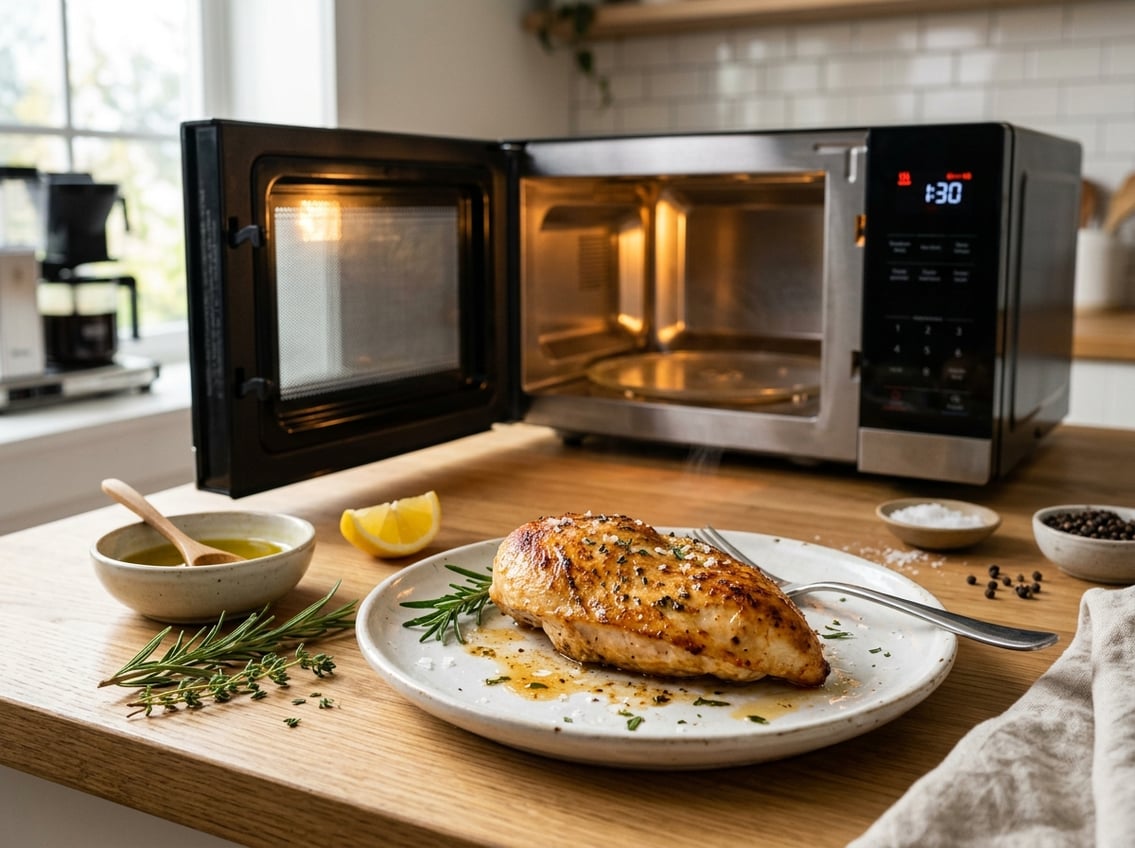
Chicken breast can go from tender to dry fast, so your method matters.
Match the reheating approach to the original cooking style, whether the chicken came from the oven, stovetop, grill, or rotisserie.
Quick Answer: The Best Method for Juicy Results
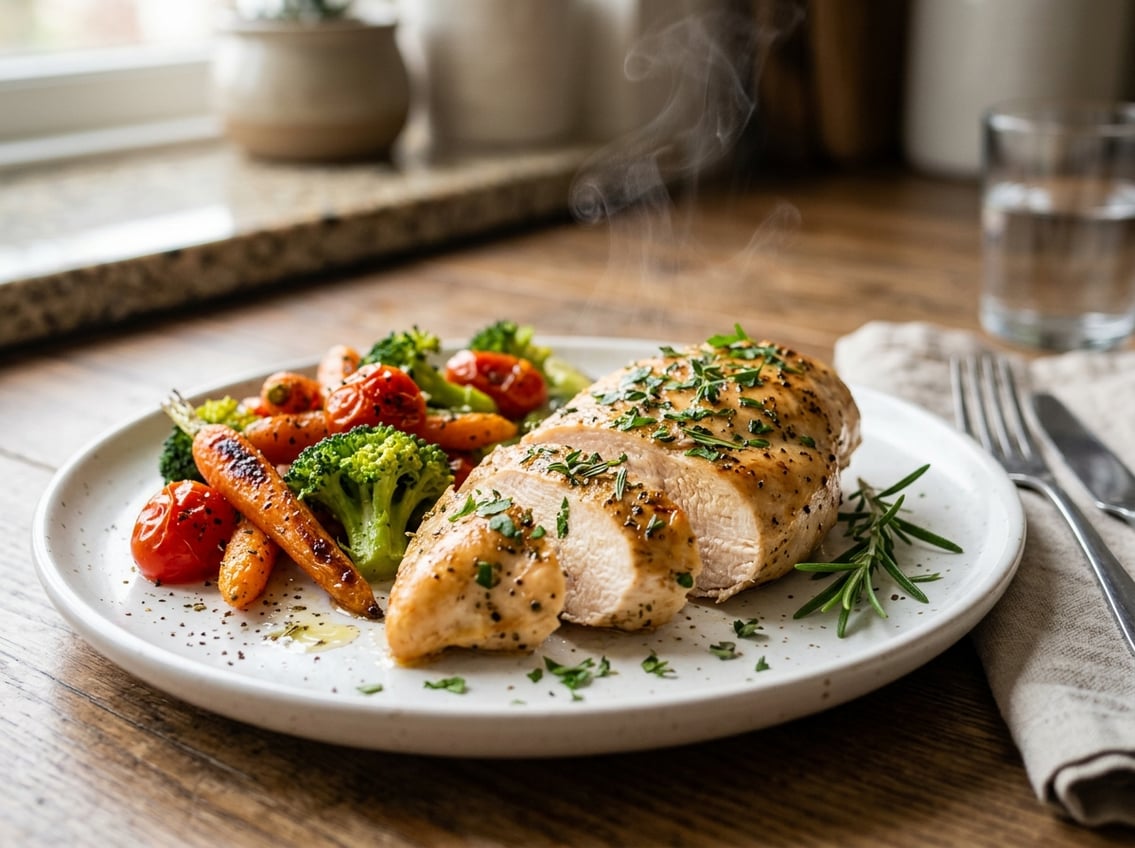
If you want to reheat chicken breast without drying it out, choose the oven for whole pieces.
It heats more evenly than the microwave and gives you more control than high heat on the stove.
Why the Oven Usually Works Best for Whole Breasts
Whole chicken breasts need gentle heat so the outside does not overcook before the center warms.
A covered dish with a splash of broth or water traps steam and protects the texture.
This method follows The Kitchn’s reheating guide, which uses 350°F and a covered baking dish.
That setup works especially well for boneless breasts and skin-on pieces.
When the Stovetop Is Better Than the Oven
Choose the stovetop when you have sliced chicken or smaller portions.
A skillet with a little broth warms the meat quickly and lets you turn the pieces so they heat evenly.
This method is practical when you only need a small amount for a sandwich, salad, or grain bowl.
It gives you more control than a microwave and often takes less time than the oven.
Why the Microwave Is a Last-Resort Option
The microwave works fast, but it can make chicken rubbery if you heat it too long.
Slice the meat first, add moisture, and heat in short bursts for best results.
Use the microwave when speed matters most, not when you care about texture.
A damp paper towel or a cover helps hold in steam and improves the result.
How to Keep the Meat Moist While Heating
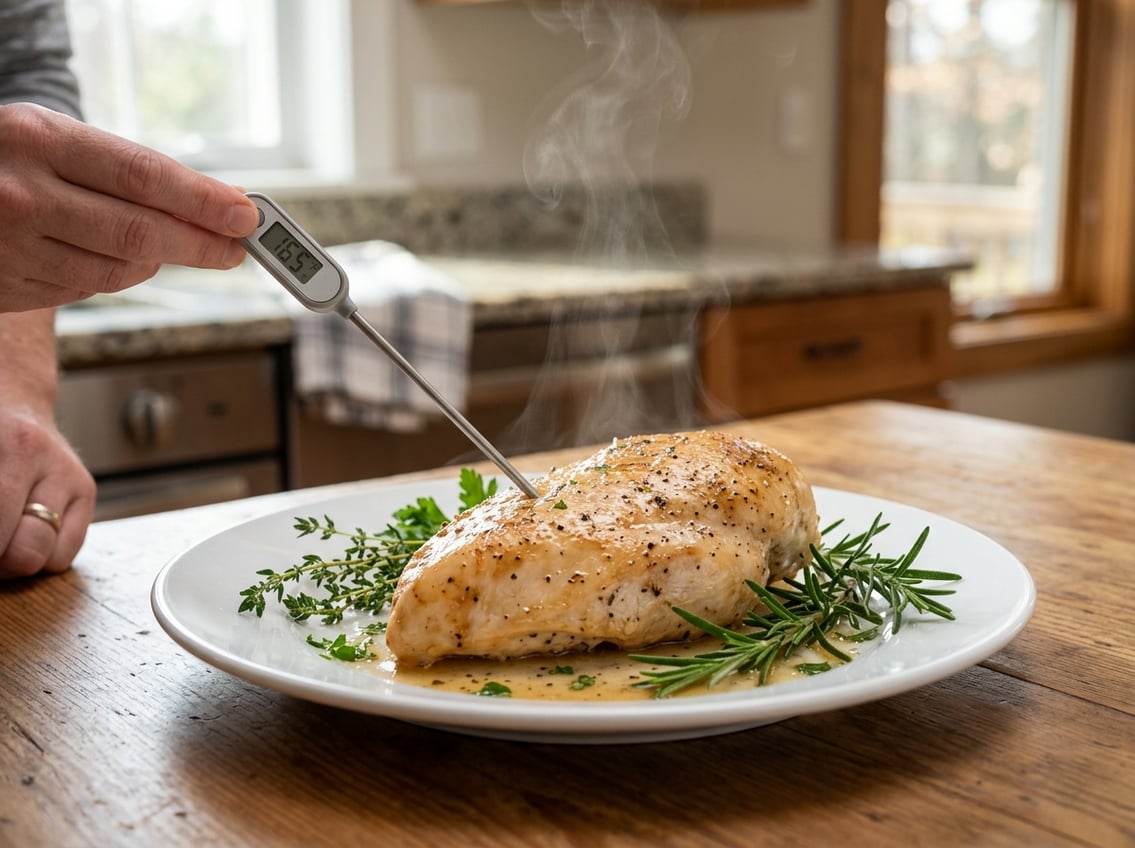
Moisture loss is the main problem when you reheat cooked chicken.
The best way to reheat chicken adds gentle steam, keeps the heat moderate, and stops once the meat reaches a safe temperature.
Add Liquid and Cover to Create Gentle Steam
A few tablespoons of broth or water make a big difference.
Cover the pan or dish to trap steam and help the chicken warm through without drying out.
You do not need to submerge the meat.
Just add enough liquid to coat the bottom of the dish or pan, then cover tightly with foil or a lid.
Use 165°F as the Finish Temperature
For reheating chicken breast, 165°F is the safe internal temperature to reach.
Once the thickest part reaches that point, it is ready to eat.
Do not keep heating past that point unless the chicken still feels cold in the center.
Extra time usually means extra dryness.
Match the Reheating Method to the Original Cook
Try to reheat chicken in a way that matches how it was cooked first.
Oven-cooked chicken usually reheats best in the oven.
Grilled or pan-seared pieces often do well in a skillet.
Breaded or crisp skin pieces may benefit from a brief finish under a broiler or in an air fryer.
Step-by-Step Methods by Equipment
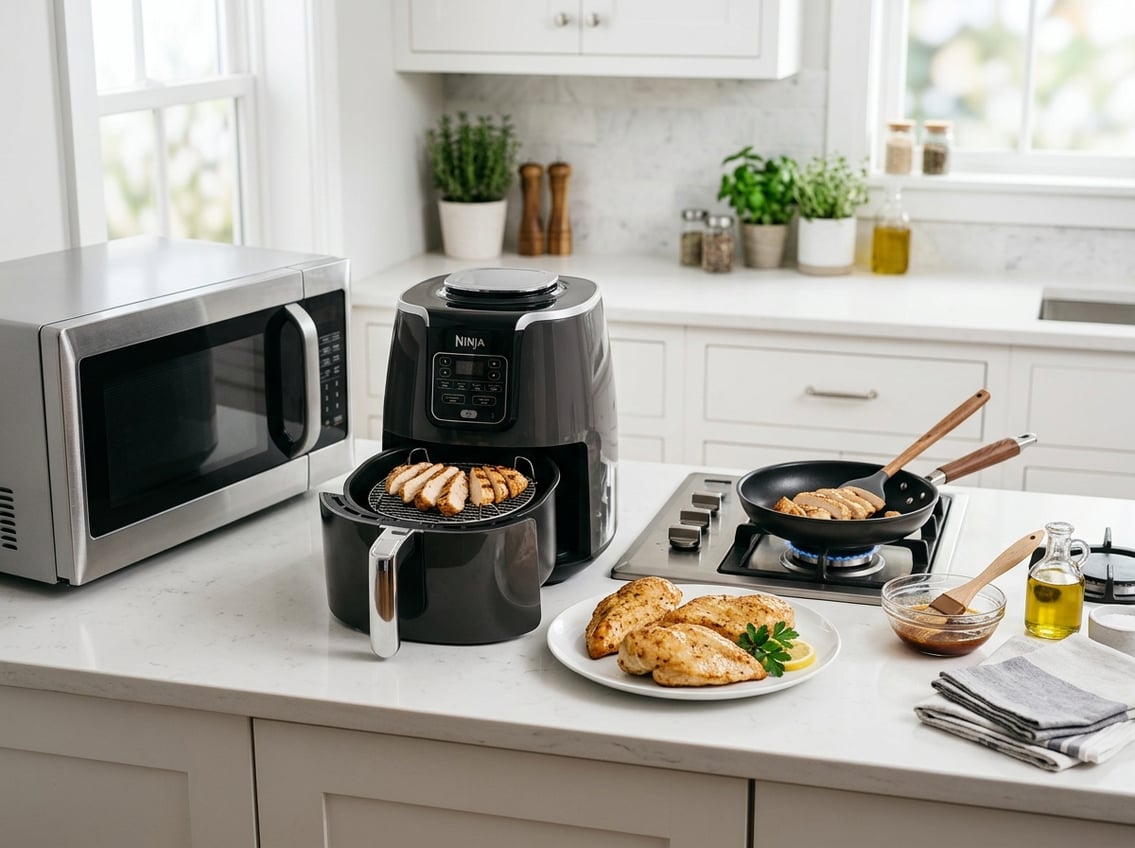
Each appliance has a different strength.
Use the oven for whole breasts, the stovetop for smaller pieces, the microwave for speed, and the air fryer when you want a crisp outside.
Oven Instructions for Boneless and Skin-On Pieces
-
Preheat the oven to 350°F.
-
Place the chicken in a baking dish with a small amount of water or broth.
-
Cover the dish with foil.
-
Heat for about 10 minutes for boneless, skinless breasts, or 15 to 20 minutes for skin-on pieces.
-
Check that the center reaches 165°F.
For skin-on chicken, uncover it for the last minute or two to help crisp the skin.
Stovetop Instructions for Sliced or Smaller Portions
-
Let the chicken sit out briefly to take off the chill.
-
Add a small amount of broth or water to a skillet.
-
Place the chicken in the pan and cover with a lid.
-
Heat over medium to medium-high, turning the pieces as needed.
-
Stop when the center reaches 165°F.
This method works well for chopped chicken, thin slices, or shredded meat.
It is fast and helps you control the texture.
Microwave Instructions for Fast Single Servings
-
Slice the chicken into smaller pieces.
-
Place it on a microwave-safe plate or dish.
-
Add a small splash of water or broth.
-
Cover with a microwave-safe lid or a lightly damp paper towel.
-
Heat in 1-minute bursts until the chicken reaches 165°F.
Check the chicken after each burst so you do not overcook the edges.
This is the quickest option, not the juiciest one.
Air Fryer Notes for Crisp Exterior
Use an air fryer for breaded or skin-on chicken breast portions.
Set a lower temperature and keep the time short so the outside stays crisp but the inside warms through.
A light spray of oil helps with browning.
Avoid high heat for long periods.
The air fryer works best when you want a firmer exterior, not the softest texture.
How to Reheat Rotisserie Chicken Breast Portions
Keep the heat gentle for rotisserie chicken breast, since it dries out fast.
The oven is the easiest choice for several pieces.
Use the microwave for one quick serving.
For how to reheat rotisserie chicken breast portions, cover the meat with a little broth and foil, then warm it until it reaches 165°F.
If the skin matters to you, uncover it briefly at the end to bring back some texture.
Storage and Safety Rules Before Reheating
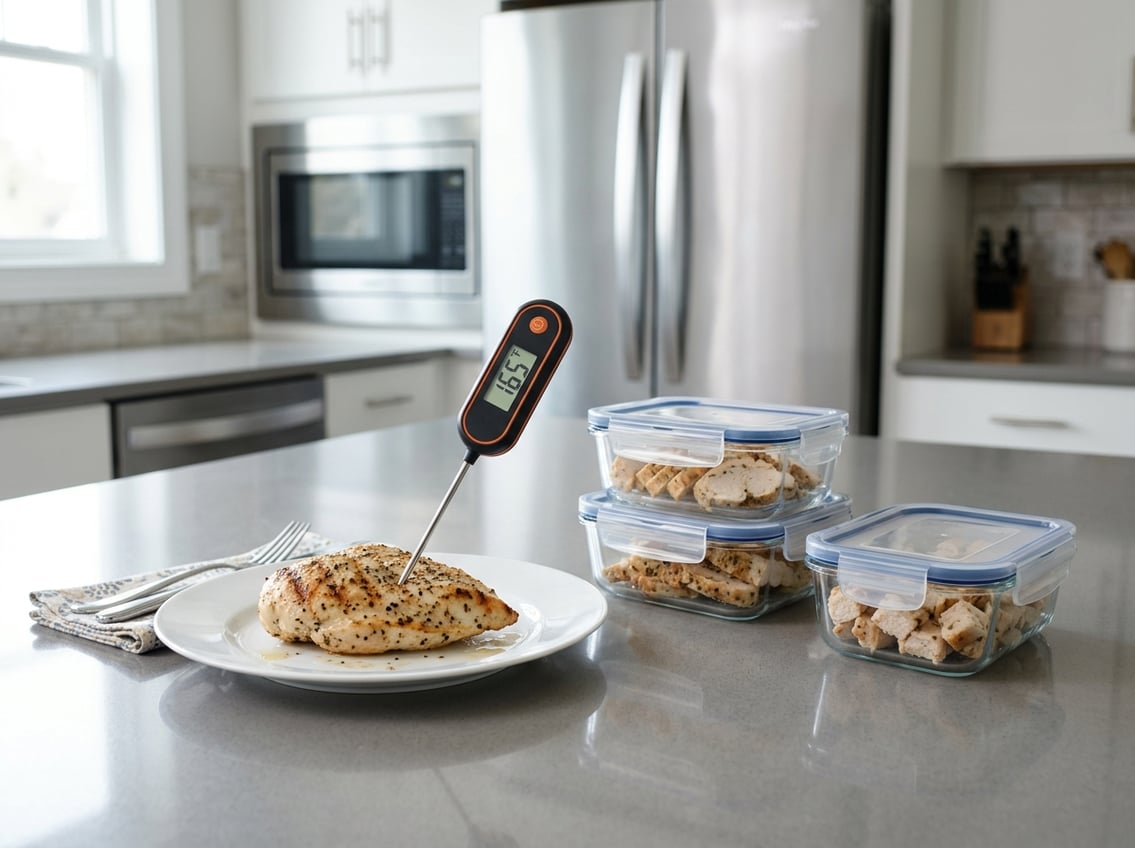
Safe storage matters as much as the reheating method.
If you store the chicken well, you have a much better chance of getting a good result when you reheat cooked chicken.
How Long Leftover Chicken Breast Stays Good
Refrigerate cooked chicken within two hours of cooking.
Use it within 3 to 4 days, as noted in food safety guidance on reheating cooked chicken.
Keep it in a sealed container on a shelf in the coldest part of the fridge.
If it smells off, feels slimy, or looks discolored, do not eat it.
Why Chicken Should Only Be Reheated Once
Reheat chicken only once.
Repeated heating and cooling hurt texture and raise food safety risk.
Warm only the amount you plan to eat.
If you expect leftovers again, leave that portion cold until you are ready to use it.
When to Throw It Out Instead of Reheating
Do not reheat chicken that has been left out too long.
If it sat at room temperature for more than two hours, or more than one hour in hot weather, throw it out.
Throw it out if you are unsure how long it has been stored.
When you are not sure about food safety, it is not worth the risk.


