
Can You Buy Chicken Breast With Skin? Where to Find It
Can you buy chicken breast with skin? Yes, and you can often find it in more than one form, including skin-on chicken breast and boneless skin-on chicken breasts.
The cut is less common than standard chicken breasts, so knowing where to look saves time.
If you want better flavor and juicier meat, buy chicken breast with skin, especially for roasting, pan-searing, and grilling.
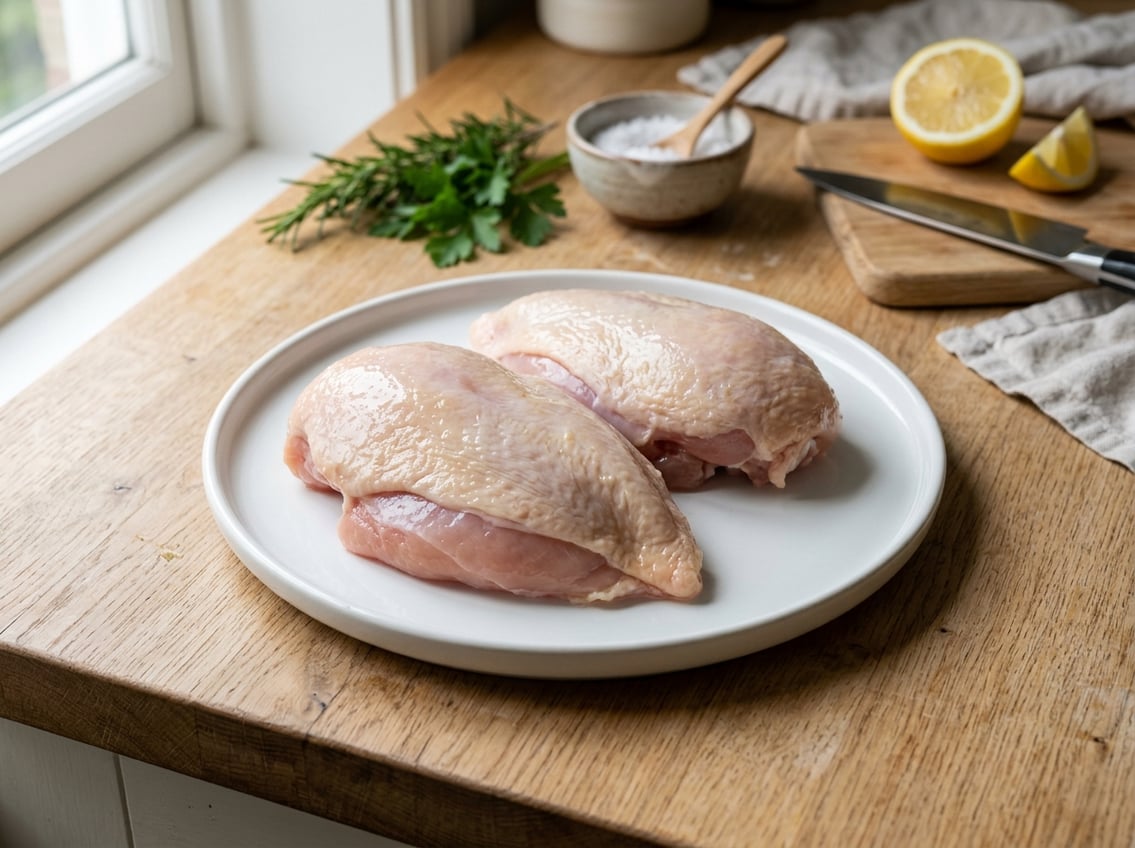
You will see skinless chicken breast more often than skin-on chicken in many U.S. stores.
Even so, grocery meat counters, butcher shops, and online sellers carry the skin-on version.
Some retailers also list boneless skin-on chicken breast for delivery or pickup.
Where to Find This Cut
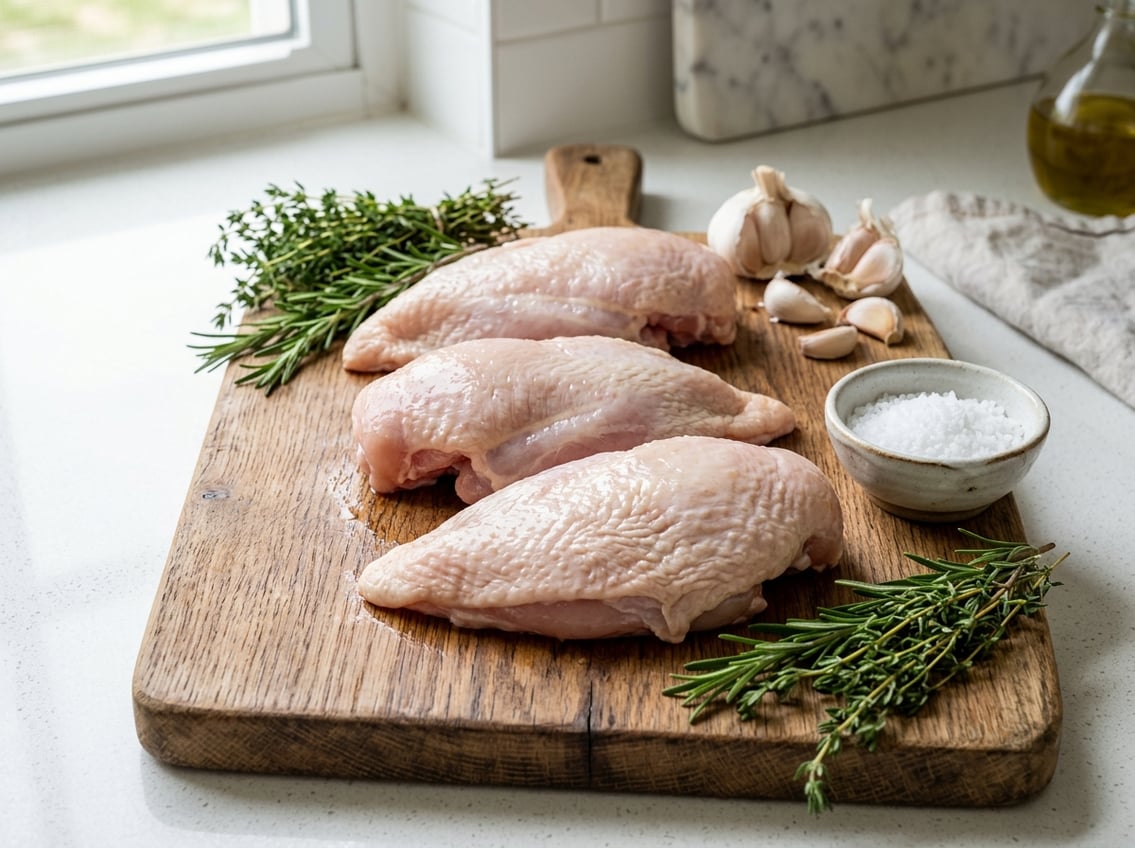
You can find skin-on chicken breast in several places, though you may not always see it in the main poultry case.
Full-service meat counters and specialty sellers offer this cut more often than basic prepackaged displays.
Grocery Stores
Start with larger grocery chains, especially those with a strong meat department.
Some retailers list chicken breast with skin online, and stores like Kroger let you search for chicken with skin for local pickup or delivery.
Packaged options may be limited, so check the fresh meat case, the butcher counter, and the online inventory for your local store.
If you only see skinless cuts, ask whether the store can trim a skin-on breast from a larger batch.
Butcher Shops and Online Sellers
A butcher shop is often the easiest place to buy this cut.
You can ask for skin-on chicken breasts or boneless skin-on chicken, and the butcher can prepare it to your needs.
Online meat sellers carry this cut more often than standard supermarkets.
That helps if you want air-chilled, fresh, or custom-trimmed chicken breasts that are hard to find nearby.
How to Ask for a Custom Trim
If you only see skinless breast in the case, ask the butcher for a boneless skin-on chicken breast or a skin-on breast trimmed to your preferred thickness.
You can also ask for the skin left intact but with the rib meat cleaned up.
Use clear wording.
Say, “I want chicken breast with skin, boneless if possible,” or “I need skin-on chicken breasts for roasting.”
That makes it easier for staff to give you the right cut.
Common Labels You May See in Stores
Store labels can vary.
Look for terms like skin-on chicken breast, boneless skin-on chicken, skin-on chicken breasts, or chicken breast with skin.
You may also see labels such as fresh, frozen, air-chilled, or thin-sliced.
If the label says boneless skinless chicken breast, that is a different cut, so check carefully before you buy.
What to Buy and How to Choose
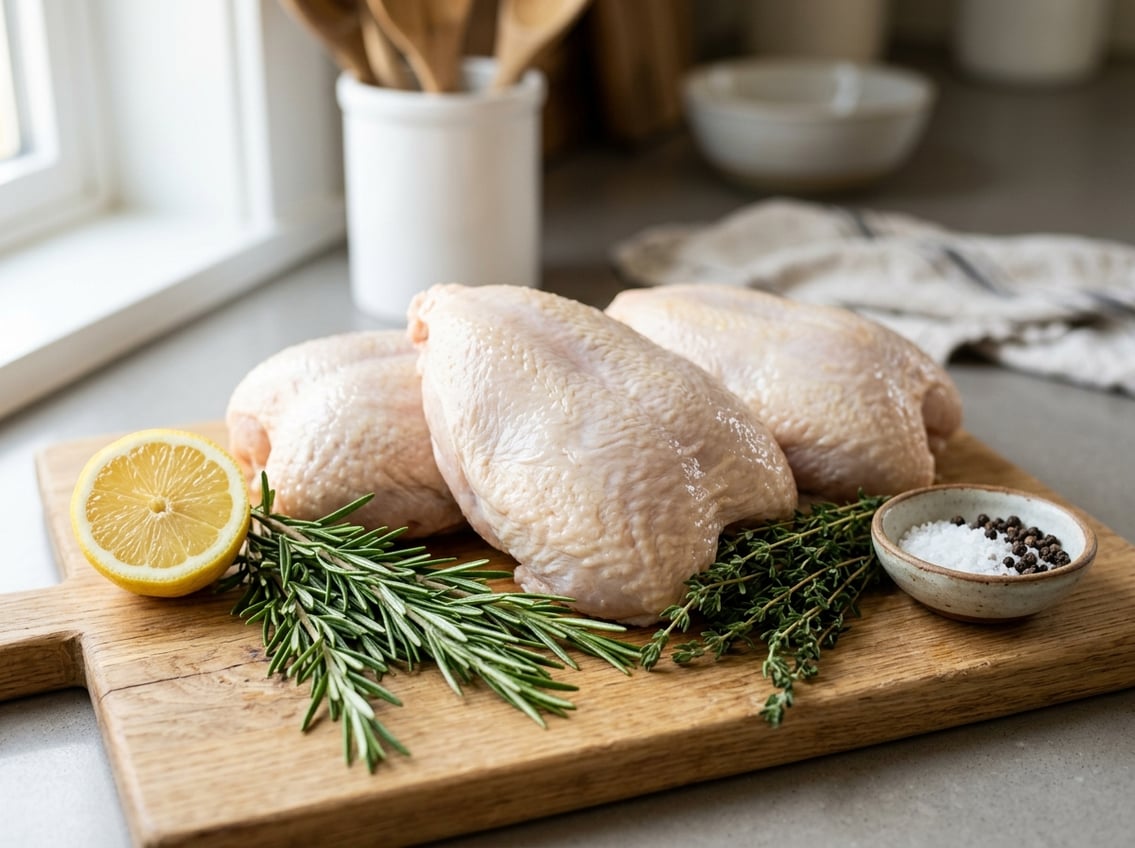
The best choice depends on how you plan to cook the chicken breast and how much prep work you want.
Bone-in and boneless cuts both work, while skin-on and skinless options affect flavor, moisture, and cooking time.
Bone-In vs. Boneless Options
Bone-in chicken breast usually cooks a little slower and gives you extra flavor.
Boneless skin-on chicken is easier to slice, serve, and portion, which helps for weeknight meals.
If you want simple carving and even pieces, pick boneless.
If you want more margin against dryness, bone-in can be a strong choice.
Skin-On vs. Skinless for Different Needs
Skin-on chicken breast gives you more flavor and a richer texture.
The skin protects the meat during cooking, which is useful for high heat and longer oven times.
Skinless chicken breast is a better match when you want lower fat or a cleaner taste for soups, stir-fries, and light meals.
If you want crisp skin or a browned surface, choose skin-on chicken.
Signs of Good Quality Before You Purchase
Look for chicken breast that is pink and moist, not gray or slimy.
The skin should look intact and clean, with no strong odor.
Choose pieces that are similar in size if you want even cooking.
If the package is leaking or heavily discolored, pick another tray.
Flavor, Cooking, and Nutrition Trade-Offs
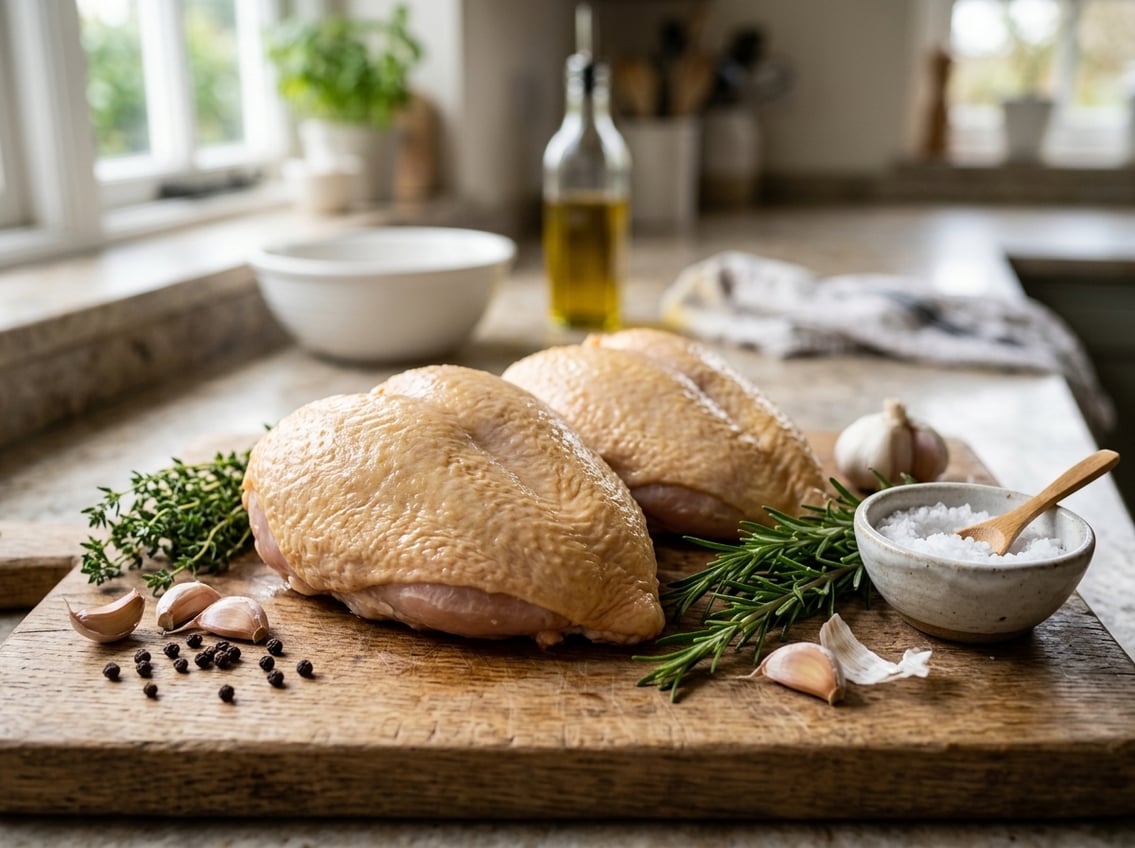
Skin changes both texture and moisture, so your cooking method matters.
It also changes the nutrition profile, since skin adds fat and calories to each serving.
Why the Skin Changes Texture and Moisture
The skin acts like a protective layer during cooking.
It helps the meat stay moist, which is one reason skin-on chicken breast can taste richer than skinless chicken breast.
It also crisps when heated properly, giving you a firmer bite and more contrast in texture.
That makes it useful when you want the chicken to stand on its own, not just disappear into a sauce.
Best Cooking Methods for Crisp Results
For crisp skin, start skin-side down in a hot skillet or roast the chicken breast in a hot oven.
Dry the skin well before cooking, since moisture makes crisping harder.
Pan-searing and roasting work well for skin-on chicken breast.
Grilling can work too if you manage the heat carefully.
If you cook over very high heat, watch closely so the skin does not burn before the meat finishes.
Calories, Fat, and Cholesterol Considerations
Skin adds fat and calories to chicken breast. Skinless chicken breast remains the leaner option.
If you track your intake, check portion size and cooking fat along with the chicken itself.
Chicken breast is a high-protein food. Skin-on versions still provide that benefit.
The skin mainly changes the amount of fat and cholesterol you consume. Your choice depends on your diet goals and how often you plan to serve it.


