
How Can I Cook Chicken Breast Without Drying It Out
You can keep chicken breast juicy by using the right heat, checking the internal temperature, and letting the meat rest before slicing.
If you want reliable results, focus on doneness and thickness, not just time.
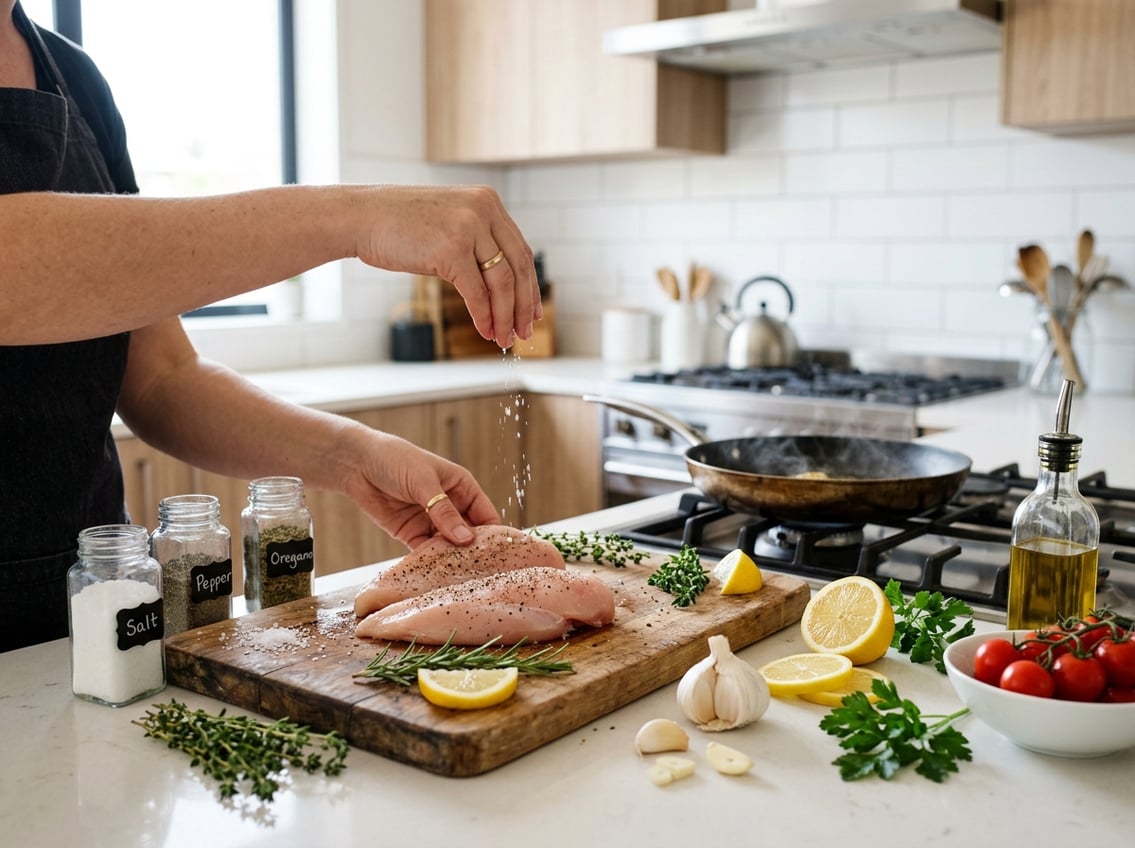
Treat chicken breast as a lean cut that needs careful timing, gentle heat, and proper prep to avoid drying out.
Chicken breast is mild, cooks quickly, and works well in many dinner recipes.
The downside is that it can become tough if you overcook it.
Once you use the right cooking method, you get more juicy chicken breast dinners.
The Fastest Way to Get Juicy Results
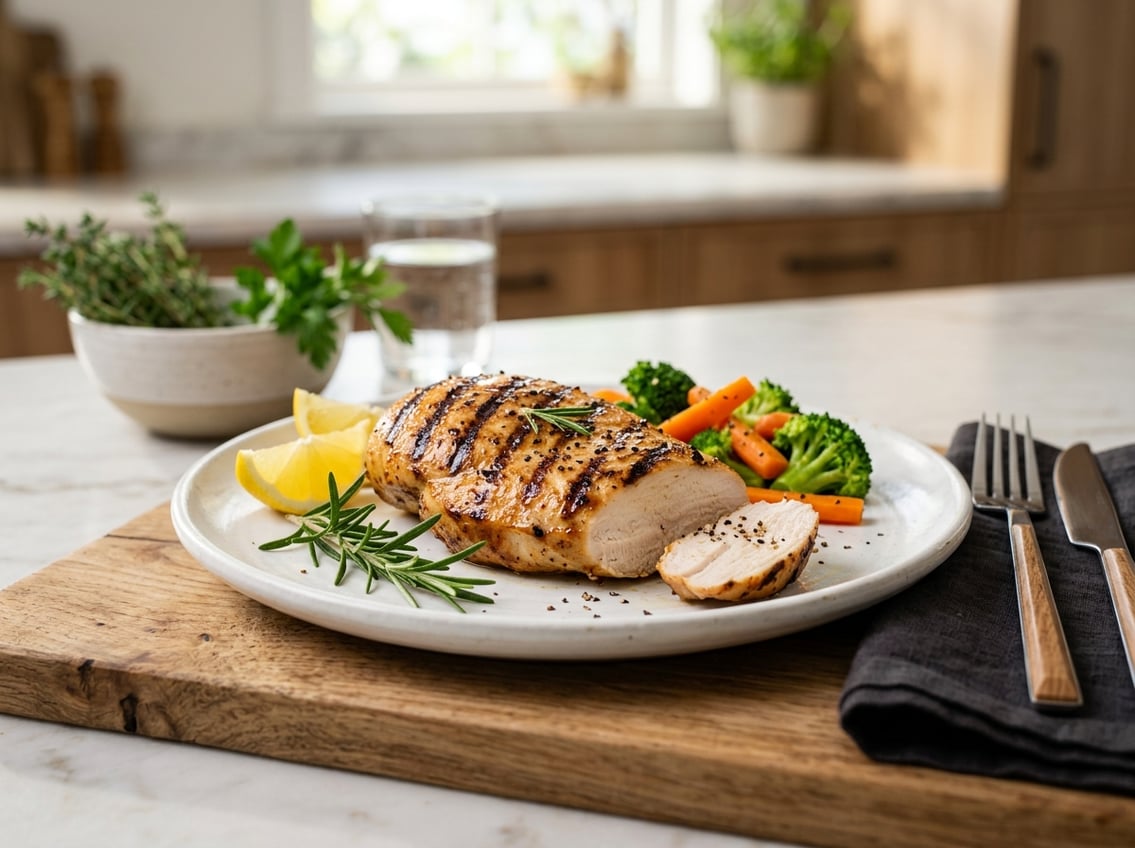
Check the temperature, adjust for thickness, and rest the meat before cutting.
These steps help you avoid dry chicken more than adding sauce after cooking.
Check Internal Temperature First
Use an instant-read thermometer to take the guesswork out of cooking.
Chicken breast is safe at 165°F, so pull it from the heat just before it reaches that point.
According to this guide to cooking chicken breasts, using a meat thermometer and resting the meat gives you better texture.
Match Cook Time to Thickness
Thin breasts cook faster than thick ones, so the same timer will not work for every piece.
If one end is much thicker, pound it lightly or cook it more gently so the thinner edge does not dry out.
Let the Meat Rest Before Slicing
Letting chicken rest helps the juices settle back into the meat.
Five minutes is enough for most chicken breasts, and a larger piece may need a little longer.
Best Cooking Methods for Everyday Meals
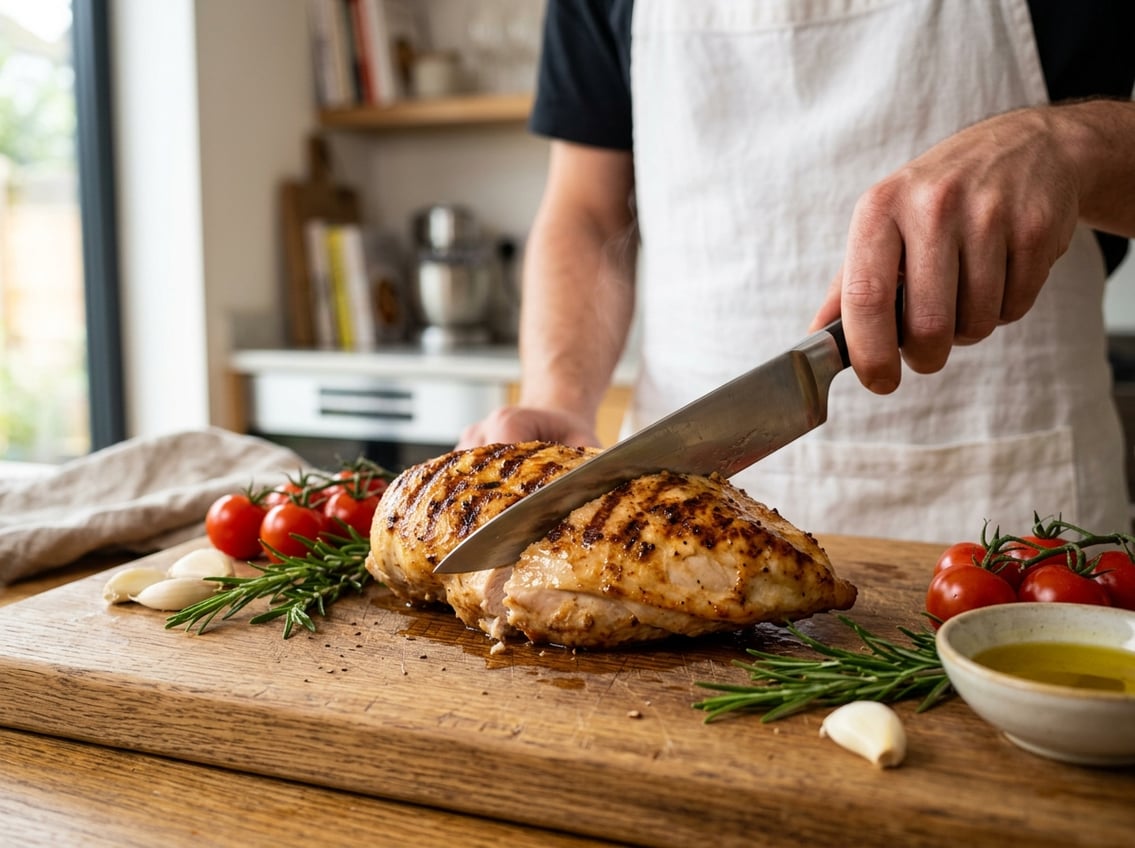
Choose a cooking method based on your time and how you plan to use the meat.
Baking, skillet cooking, and poaching each give you a different texture and level of browning.
Oven Method for Even Cooking
Baking chicken breasts with moderate heat in a preheated oven gives even results.
A light coating of oil, salt, and seasoning helps the surface stay moist while the inside cooks.
For many home cooks, this is the easiest way to prepare chicken breasts for meal prep or dinner.
Skillet Method for Quick Browning
Use a skillet to get a browned outside and a juicy center by controlling the heat.
Start with a hot pan, sear the chicken breast, then lower the heat so the middle finishes without burning the outside.
As noted in this pan-cooked chicken breast method, cooking with a thermometer and a good sear helps you get a juicy result.
Poaching Method for Salads and Shredding
Poaching is gentle and works well for salads, soups, or shredded filling.
Keep the liquid at a low simmer instead of a hard boil to keep chicken breast moist.
This method is a good choice when you want to cook chicken breast in advance for cold dishes.
How to Prep Chicken Breast for Better Texture
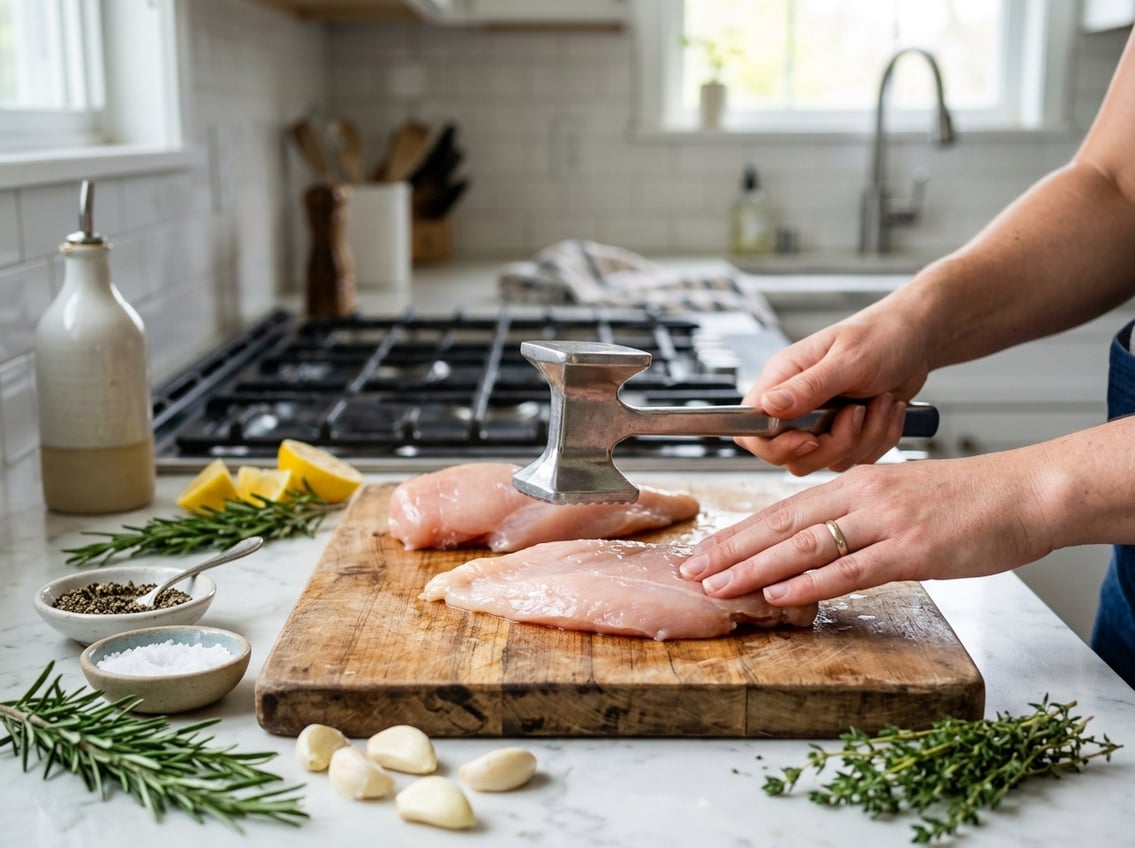
Good texture starts before you cook the chicken.
The cut you choose, how evenly it is shaped, and how you season it all affect how tender it turns out.
Choosing Boneless or Thicker Cuts
Boneless skinless chicken breasts are the most common choice for fast meals.
Thicker pieces usually stay juicier than thin cutlets as long as they cook evenly.
If you buy skinless chicken breasts, pick pieces that are similar in size so they finish at the same time.
Flattening for Even Cooking
Pound the thicker end until the breast is more even so the whole piece cooks at the same speed.
Even shaping gives you better results with less risk of overcooking.
Seasoning, Brining, and Light Marinades
Salt helps the meat hold moisture.
A short brine or a light marinade supports juicy chicken breast, especially for lean cuts.
For a simple flavor base, use oil, salt, pepper, and a small amount of acid like lemon juice or vinegar.
Keep marinating time short so the texture stays firm.
Serving, Storing, and Reheating Without Dryness
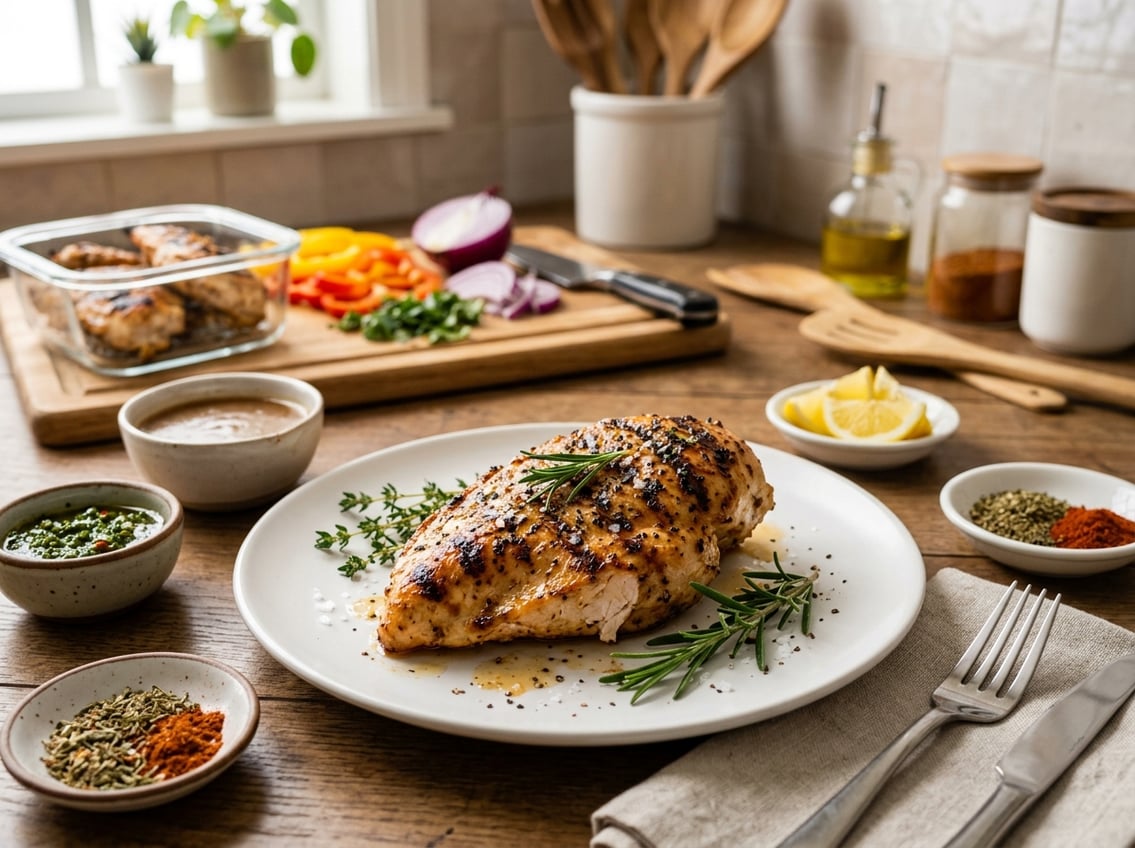
How you slice, store, and reheat leftovers matters almost as much as how you cook them.
A well-cooked chicken breast can become dry if you cut it too soon or reheat it too much.
Best Ways to Slice and Serve
Slice chicken breast against the grain to make each bite more tender.
Serve it with a sauce, pan juices, or a moist side like rice, vegetables, or salad dressing.
How to Store Cooked Portions
Cool cooked chicken quickly and store it in a sealed container in the refrigerator.
Keep portions separate if you plan to use them later in wraps, grain bowls, or pasta.
Proper storage helps you avoid dry chicken during the next meal.
How to Reheat Gently
Warm cooked chicken breast using low heat. Cover a skillet and add a splash of broth to help keep moisture in the meat.
You can also use a low oven or a microwave at reduced power. If the chicken seems dry, add a little sauce or broth before reheating so the texture stays closer to juicy chicken breasts.


