
What Part Is the Chicken Breast? Location and Cuts
When you ask what part is the chicken breast, you mean the front, meaty section of the bird that sits on either side of the breastbone.
It is the main source of white meat on a whole chicken and one of the easiest chicken parts to recognize once you know the landmarks.
The chicken breast is the front chest portion of the bird, made mostly of the pectoral muscles, and it is the cut most people buy when they want lean protein.
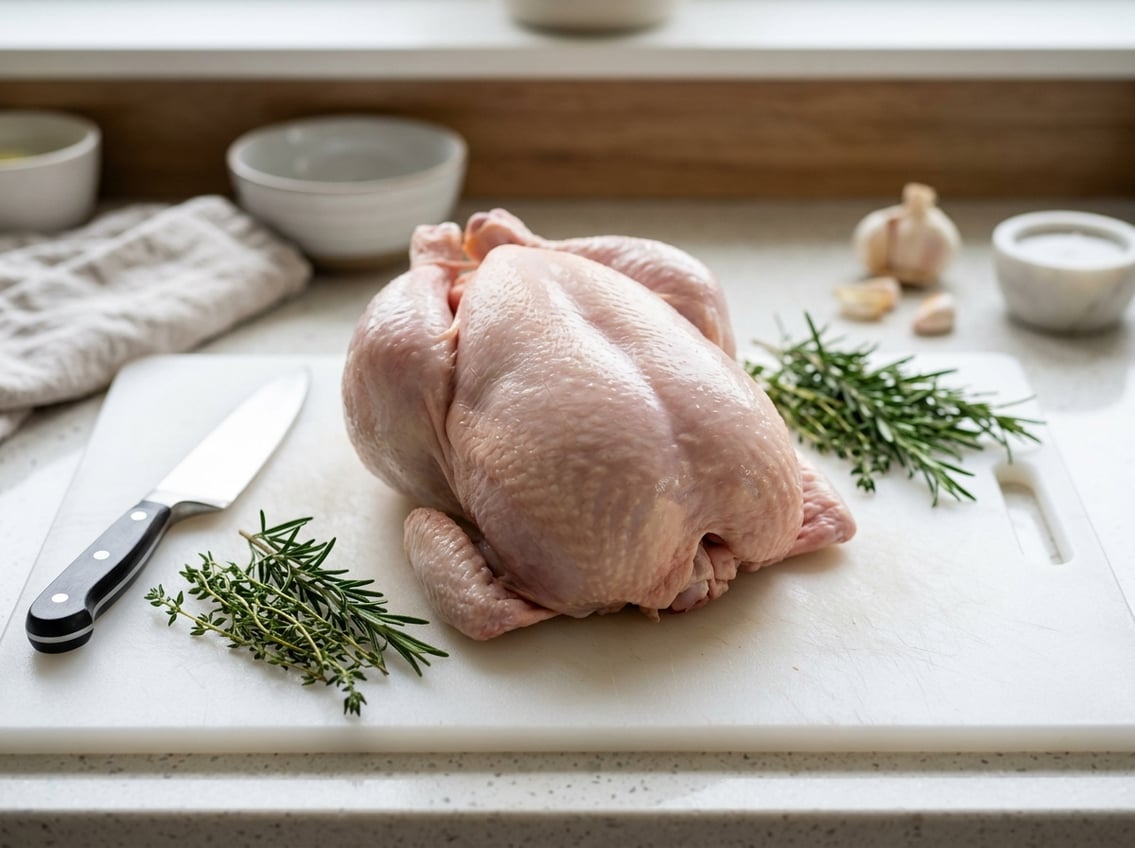
You can find the breast in several store cuts, from bone-in halves to boneless pieces.
If you know where it sits on the bird, you can read labels faster and choose the right cut for cooking.
Where the Breast Sits on the Bird
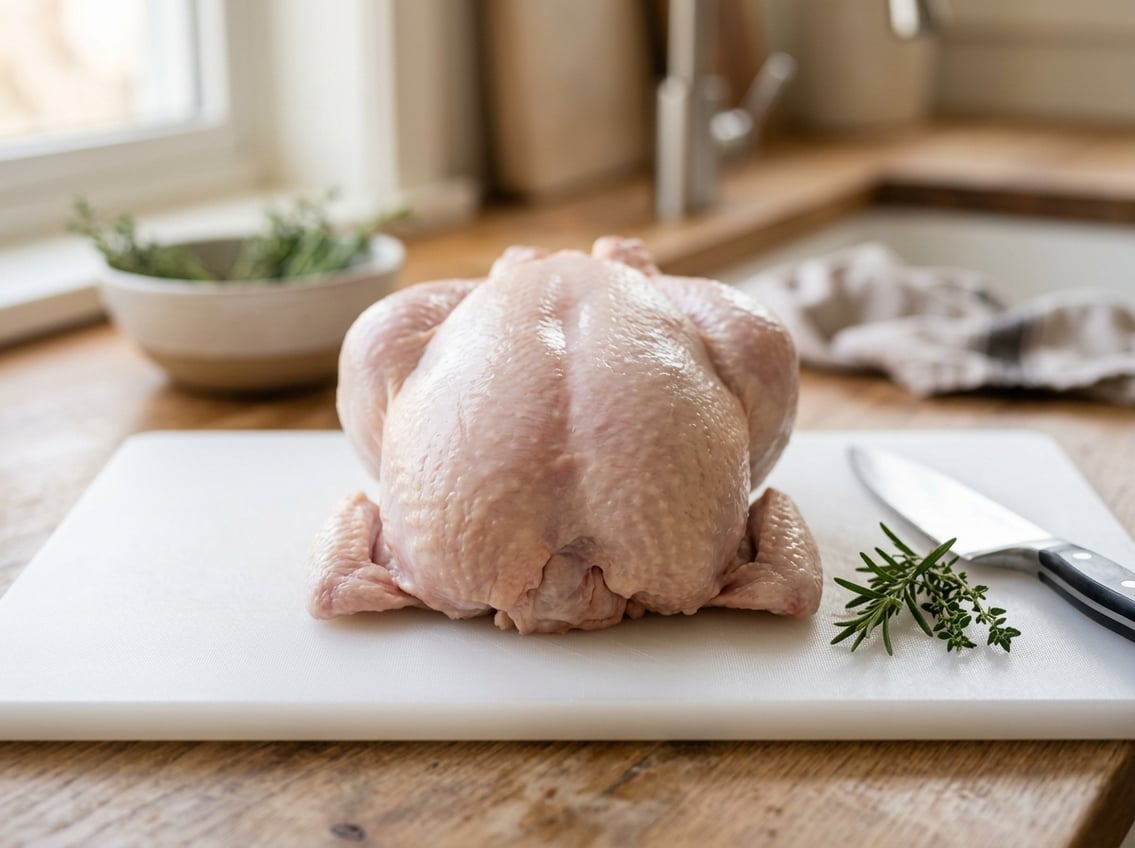
The breast sits on the front of the chicken, centered over the chest.
On a whole chicken, it is the broad, rounded area between the neck and the legs, and it is the largest source of white meat.
The shape and bone structure around it help you find it fast.
The breast lies over the breastbone, rib cage, and the bird’s main chest muscles.
How to Spot It on a Whole Chicken
On a whole chicken, look for the widest meaty area on the front of the bird.
It is usually covered by skin and rises slightly on both sides of the center line.
A good clue is the area between the wings and the legs.
If you can see the front chest, you are looking at the breast area.
The Breastbone, Rib Cage, and Breast Area
The breastbone runs down the middle of the chest and divides the breast into two sides.
This bone is also called the keel bone in poultry anatomy.
The breast meat sits on top of the rib cage.
Bone-in cuts often keep some rib structure attached, which makes some packages look thicker or more shaped than others.
Pectoral Muscles and the Tenderloin
The breast is made mostly of the pectoral muscles, especially the pectoralis major.
The pectoralis minor lies underneath and is smaller.
That smaller inner piece is often called the tenderloin or chicken tenderloin.
Some stores sell it separately as chicken tender, while others leave it attached to the breast.
Breast Cuts You Will See at the Store
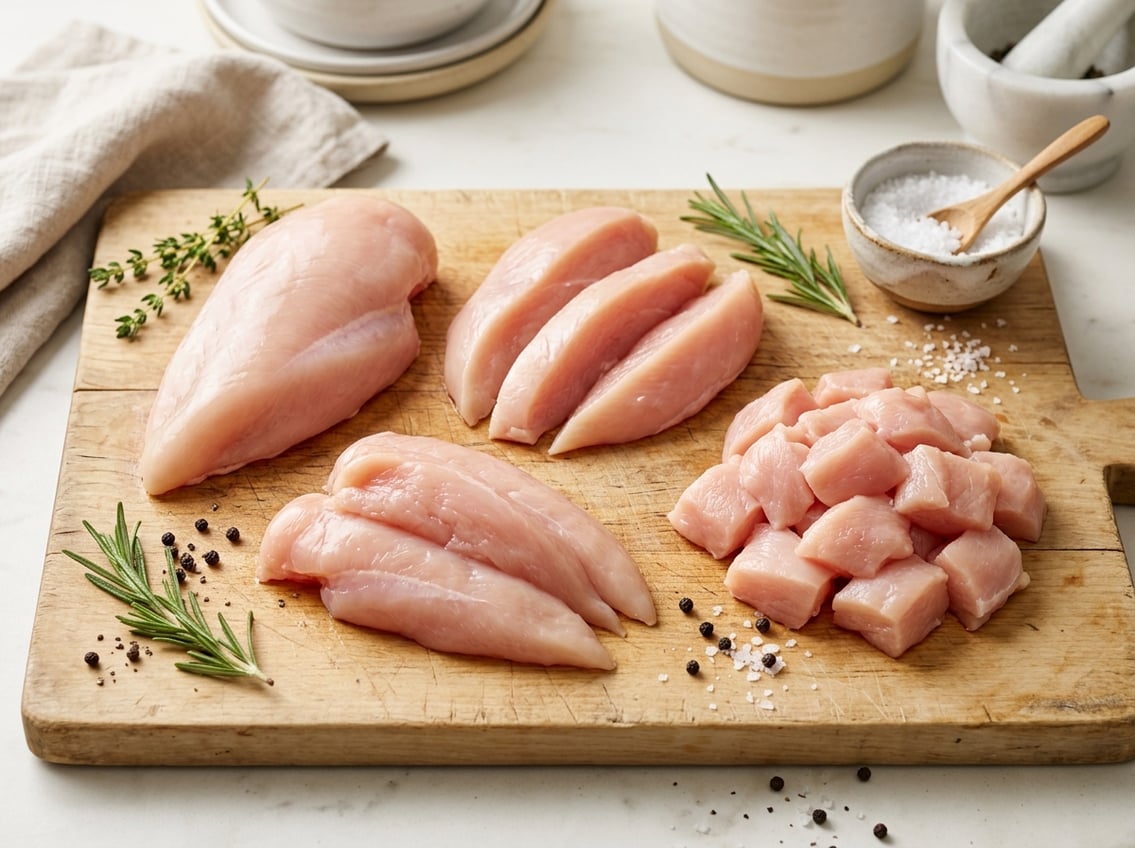
Store labels can look confusing because the same chicken breast may be sold with different amounts of bone, skin, and attached meat.
The cut names usually tell you how much of the whole chicken is still attached.
The key terms to watch for are whole breast, split breast, breast with ribs, breast quarter, and boneless breast.
These are all common poultry parts in the meat display case.
Whole Breast, Split Breast, and Breast With Ribs
A butcher removes a whole breast as the intact breast from the bird.
They cut a split breast into two halves, usually along the breastbone.
A breast with ribs keeps part of the rib cage attached.
That extra bone can help the meat stay moist during cooking and can add flavor to stock later.
Breast Quarter and Boneless Breast Labels
A breast quarter usually includes part of the breast with the wing and some back attached.
This cut shows where the breast ends and the shoulder or wing area begins.
A boneless breast has the bones removed.
If the label says skinless or boneless, skinless, it tells you whether the skin is still on the meat.
How Retail Chicken Cuts Are Displayed
Stores often arrange chicken cuts by size and bone content in the meat display case.
Broilers and heavy broilers are common market birds, and stores may break a whole chicken into several separate poultry parts.
Labels can vary by store, so it helps to read closely.
A package may say breast fillet, breast with ribs, or split breast, and each one means a different amount of trimming.
How Breast Compares With Other Chicken Parts
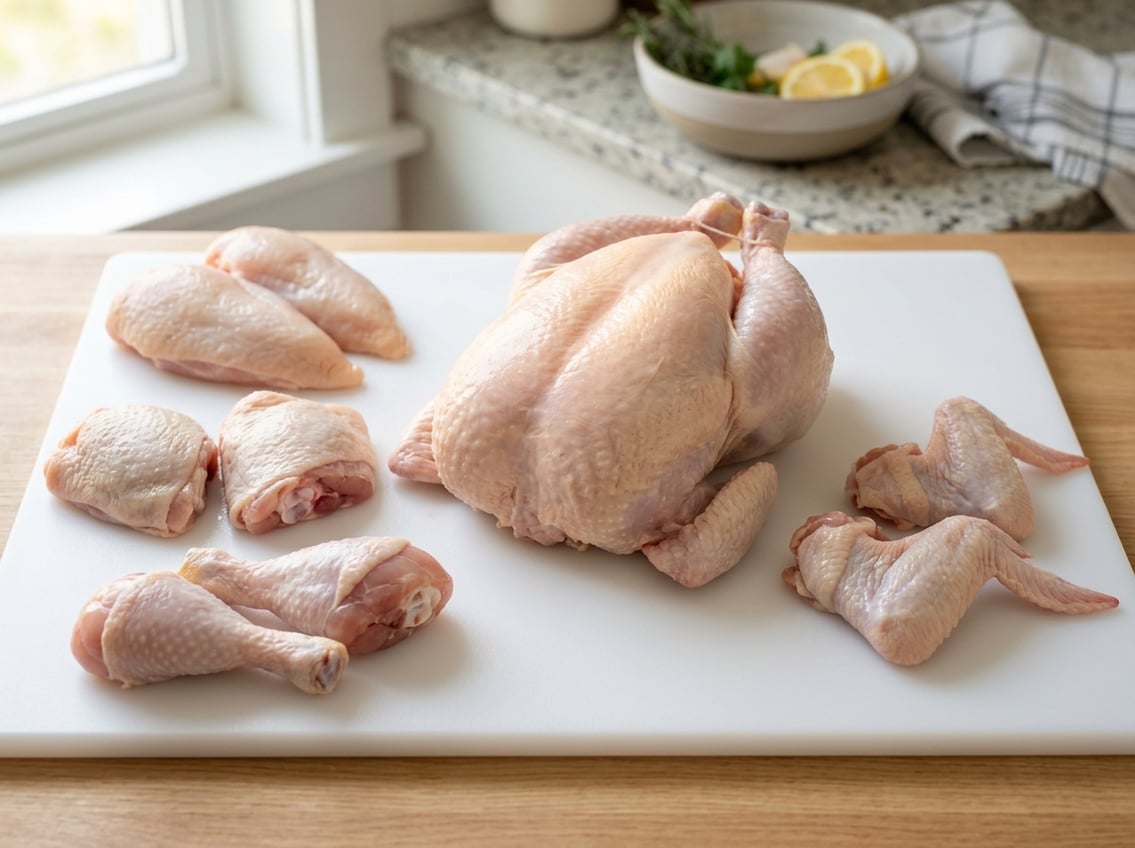
Chicken breast is leaner and milder than many other parts of a chicken.
Other cuts, like thigh, drumstick, and wings, bring more fat, stronger flavor, or different textures.
That difference matters when you choose a cut for roasting, grilling, frying, or slow cooking.
The right part depends on how juicy, rich, or tender you want the meat to be.
Breast vs Thigh and Drumstick
Chicken breast has less fat than chicken thigh.
Thighs and drumsticks come from the leg, along with the whole leg and leg quarters.
These dark meat cuts usually stay moist longer during cooking.
Breast cooks faster, while thighs and drumsticks often taste richer and hold up better in longer cooking.
Breast vs Wings and Wing Sections
Chicken wings are smaller and people use them differently from breast.
A whole wing usually breaks into a drumette, wingette or wing flat, and wing tip.
Wings are popular for recipes like baked chicken wings and fried chicken wings, where skin and bone matter a lot.
Breast gives you more meat per piece, while wings give you more skin, bone, and flavor.
White Meat vs Dark Meat
Chicken breast is white meat.
Thighs, legs, and wings are usually grouped as dark meat.
The difference comes from how the muscles work and how much fat they carry.
White meat is usually leaner and milder, while dark meat is often juicier and more flavorful.
Buying, Cooking, and Safety Basics
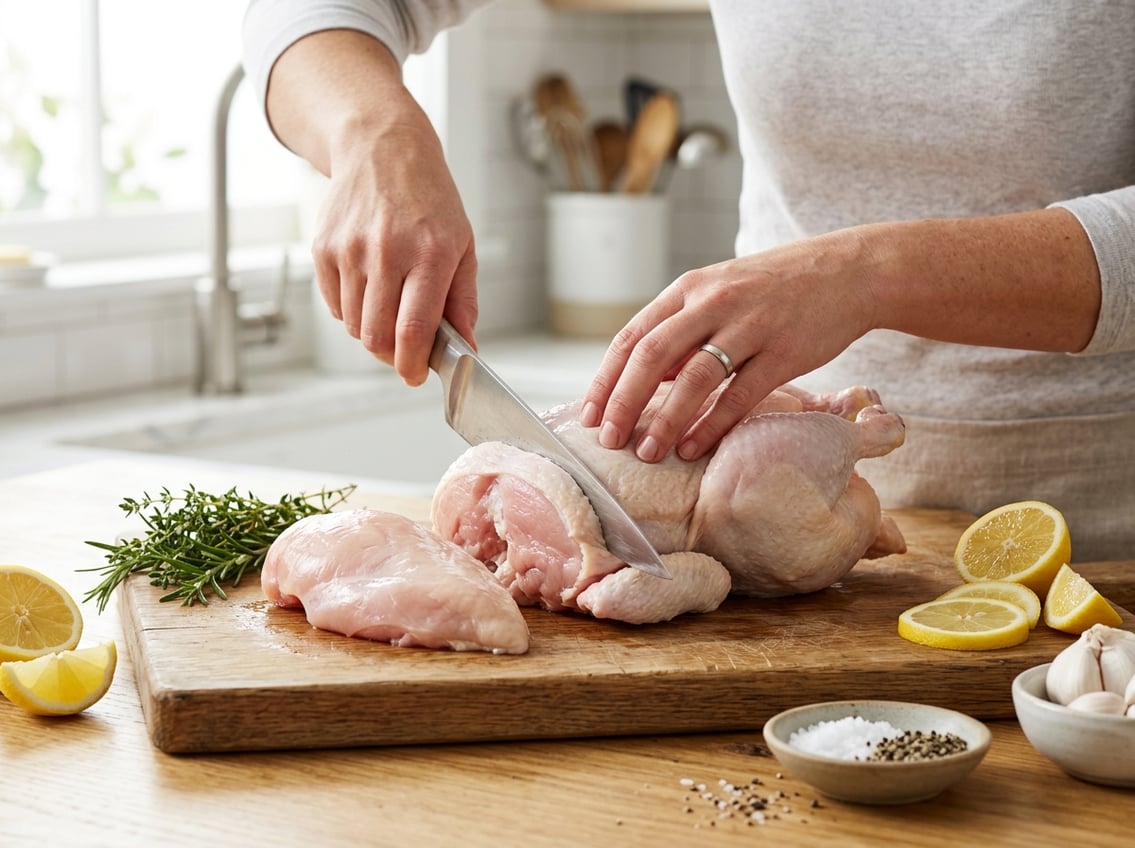
Chicken breast is popular because it is easy to use and works with many cooking methods.
It also has strong nutritional value when you want a simple lean protein.
Good handling matters just as much as the cut itself.
Raw chicken can carry salmonella or campylobacter, so clean prep and proper cooking are important.
Nutritional Benefits and Lean Protein Value
Chicken breast is known for its nutritional benefits and lean protein content.
It is a common choice when you want a high-protein meal with less fat than many other meats.
Cooking method changes the result.
Baked chicken or grilled chicken breast keeps the cut lighter than fried chicken, which adds more fat from breading and oil.
Best Uses for Baked, Grilled, and Fried Preparations
Chicken breast works well for baked chicken, grilled chicken, and fried chicken.
It also slices cleanly for salads, sandwiches, pasta, and meal prep.
Because it is lean, it can dry out if overcooked.
A marinade, seasoning, or sauce can help keep the texture better, especially for grilled chicken breast.
Safe Handling, Giblets, and Stock Uses
Keep raw chicken cold. Wash hands, tools, and surfaces after contact.
Use kitchen shears to separate parts cleanly when you break down a bird.
If your whole chicken includes giblets, you may find the gizzard and liver inside the cavity. You can use those parts and the carcass to add flavor to chicken stock.


