
Do Chicken Breasts Have Carbs? Nutrition Explained
You might wonder, do chicken breasts have carbs because chicken breast is such a common protein in meal plans, especially when you are tracking macros or eating low carb.
Plain chicken breast has no meaningful carbohydrates.
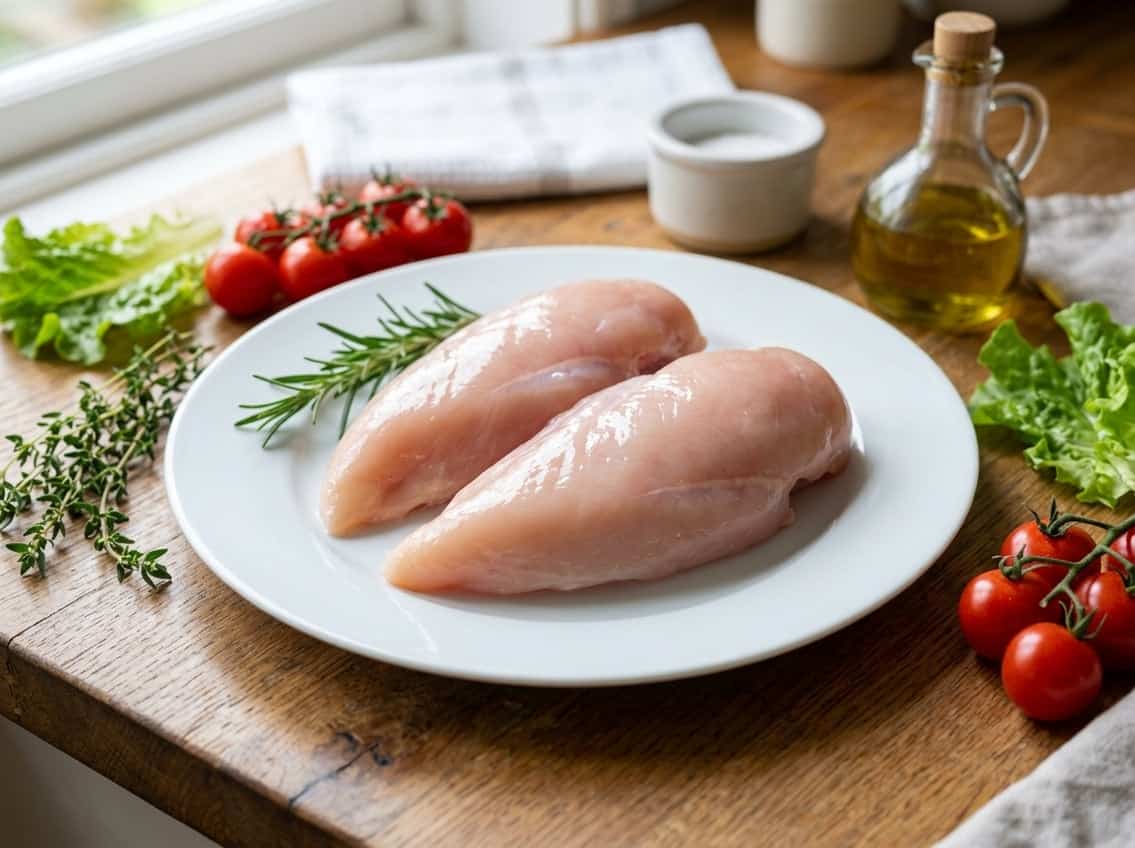
Chicken breast is a straightforward choice when you want lean protein without adding carbs from the meat itself.
The carb count only changes when you add breading, sauces, marinades, or carb-heavy sides.
If you eat plain chicken breast, you get protein, fat, and calories, not carbs in any meaningful amount.
The Direct Carb Answer
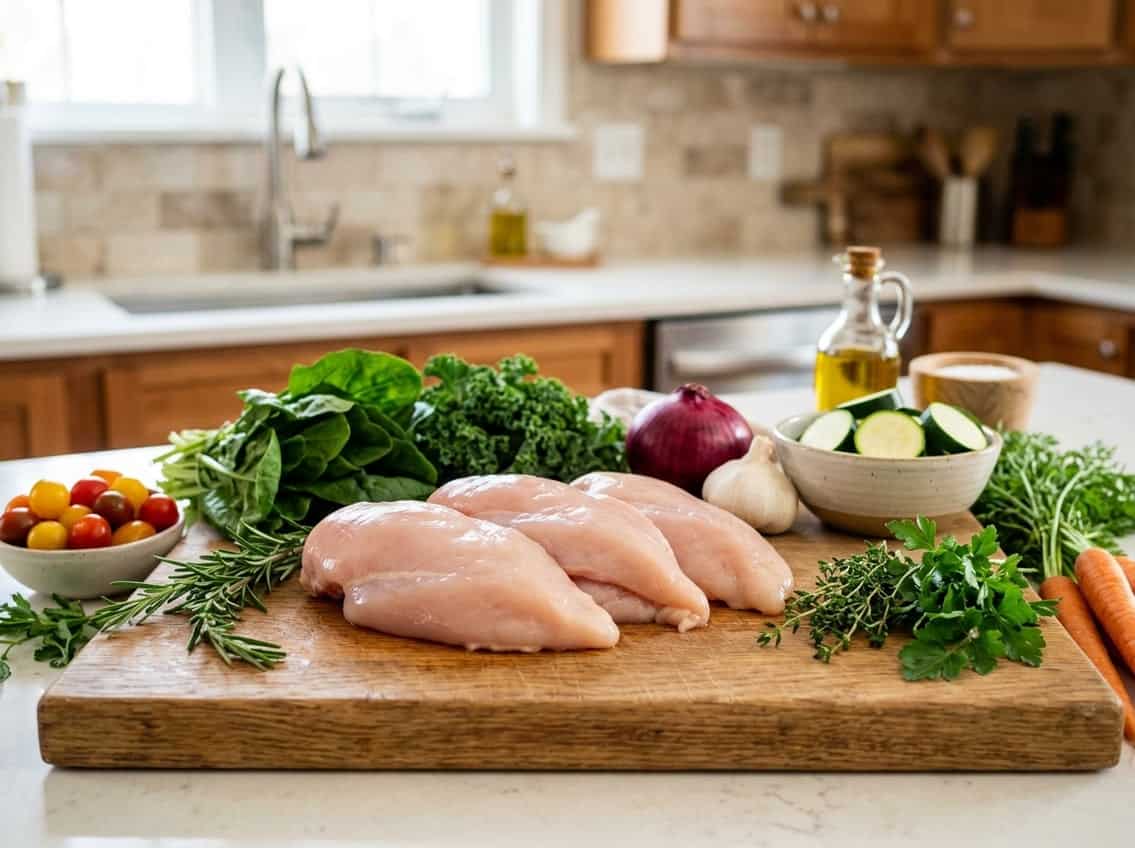
Plain chicken breast is naturally carb-free, whether you eat it raw or cooked.
As long as the chicken is not coated, stuffed, or served with sugary additions, it remains carb-free.
Why Plain Chicken Breast Has Zero Carbs
A plain skinless chicken breast contains 0g of carbohydrates, 0g of fiber, and 0g of sugar.
Chicken is animal muscle tissue, and it does not naturally contain starch or sugar the way grains, beans, and vegetables do.
Some animal foods can contain tiny trace amounts of glycogen, a stored carbohydrate.
However, those amounts are so small that nutrition labels for chicken breast round them to zero.
For practical nutrition tracking, plain chicken breast has no carbs.
Serving Size and Carb Count
Serving size does not change the carb count if the chicken is plain.
A 3-ounce serving of cooked chicken breast still counts as essentially zero carbs.
A larger portion remains at zero carbs unless you add ingredients that contain carbs.
What does change is the protein, fat, and calorie total.
A bigger breast gives you more of those nutrients, while the carbohydrate count stays at zero.
Skinless vs. Skin-On Differences
Skinless and skin-on chicken breast both stay carb-free when plain.
The skin adds fat and calories, not carbohydrates.
If you are counting macros, the main difference is that skin-on chicken breast has more fat and energy per serving.
If you are counting carbs, both versions still work the same way.
Chicken Breast Macros and Nutrition
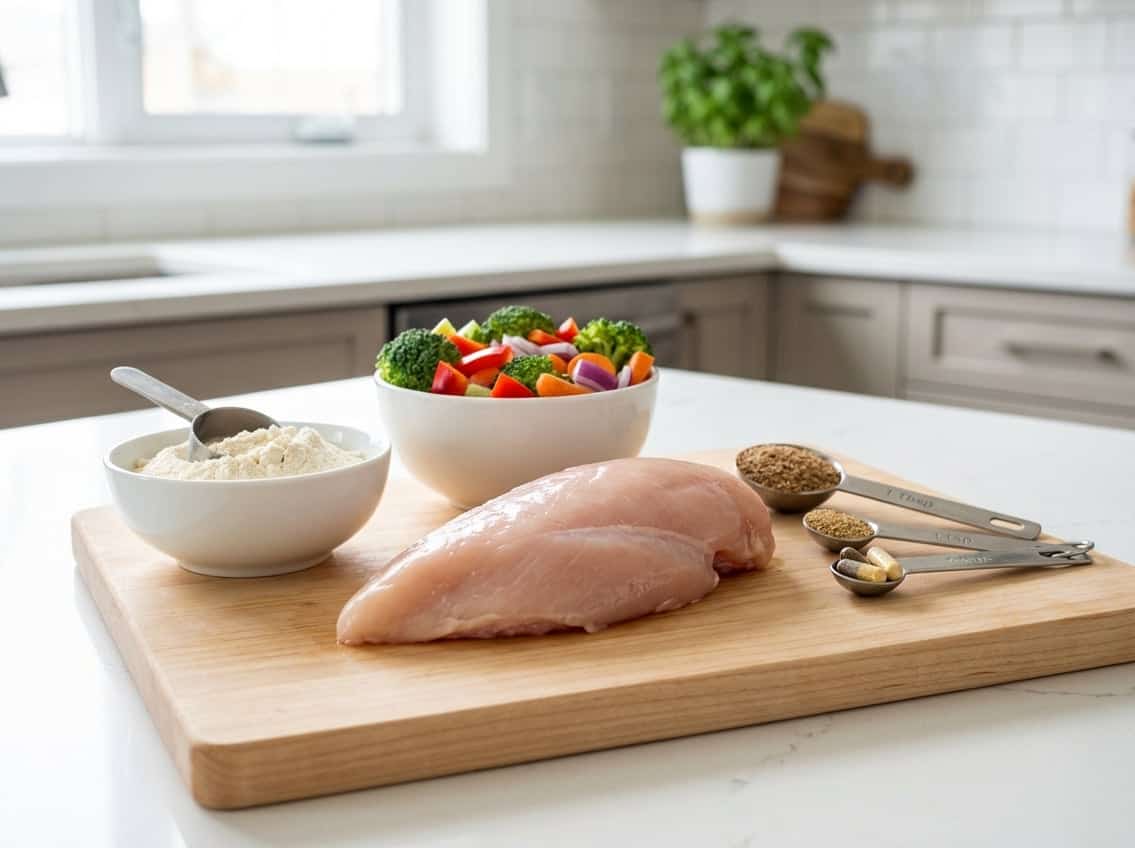
Chicken breast provides a lot of protein for relatively few calories.
Skinless cuts have very little fat and no carbs in plain form.
Protein, Fat, and Calories
A cooked, roasted, skinless chicken breast from Eat This Much contains 142 calories, 0% carbs, 21% fat, and 79% protein.
Another nutrition breakdown lists chicken breast at about 165 calories per 100g with 31g protein, 3.6g fat, and 0g carbs, according to FitCommit.
Chicken breast fits well when you want lean protein for muscle repair and maintenance.
It is a high-protein meal with low calories and is easy to measure and track.
Chicken Breast and Low-Carb or Keto Eating
Chicken breast is naturally keto-friendly because it does not add carbs on its own.
It works well in low-carb eating plans where you want to keep meals simple and predictable.
Your sauces, sides, and cooking fats determine the rest of the meal’s carb total.
If you want a strict keto meal, plain chicken breast is an easy base.
Key Vitamins and Minerals
Chicken breast gives you useful micronutrients beyond protein.
It is a good source of vitamin B6 and niacin.
It also provides selenium and phosphorus.
These nutrients support energy metabolism, nerve function, and thyroid health.
When Carbs Get Added During Preparation
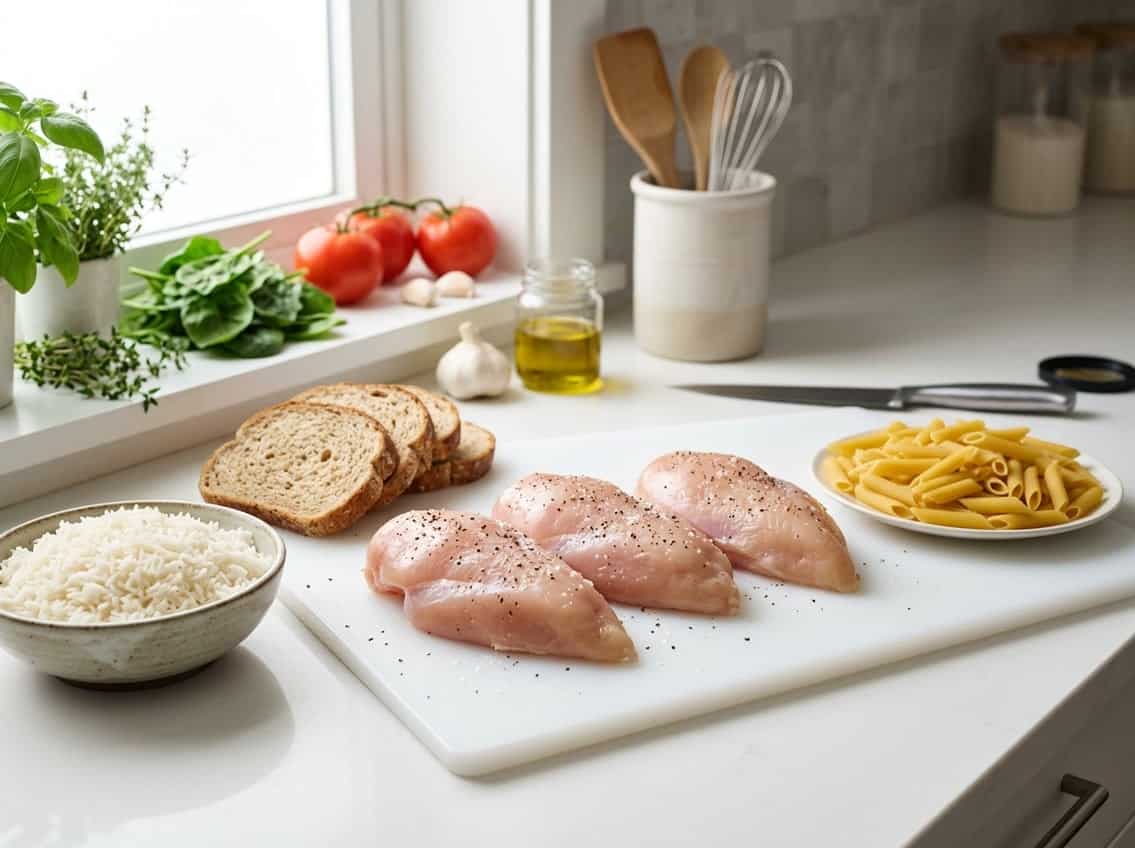
Preparation can change the carb count quickly.
Grilling and roasting usually keep chicken breast low-carb.
Breading, frying, sauces, and assembled dishes can add a noticeable amount of carbohydrates.
Grilled and Roasted Options
A grilled or roasted chicken breast stays carb-free when you season it with salt, pepper, herbs, and other non-starchy spices.
Cooking method alone does not add carbs to the meat.
Plain baked, roasted, broiled, or grilled chicken breast is a reliable choice when you want to keep carbs near zero.
The chicken itself remains the same, while the extras make the difference.
Fried and Breaded Versions
Fried chicken breast with coating contains added carbohydrates because the breading uses flour, breadcrumbs, or similar ingredients.
Breaded chicken can move from zero carbs to a much higher total very quickly.
If you are tracking carbs closely, the coating is the main issue, not the chicken.
Sauces, Marinades, and Prepared Dishes to Watch
Sweet sauces and marinades often add sugar or syrup. BBQ sauce, teriyaki, honey mustard, and similar blends can raise the carb total even when you use plain chicken.
Prepared meals need extra attention. A chicken salad or chicken caesar salad may stay low carb if you use simple ingredients.
Croutons, sweet dressings, candied nuts, or packaged mixes can add carbs quickly. If you are counting carefully, read the label or ask how it is made.


