
How Can I Make Chicken Breast Juicy and Flavorful
Focus on prep, cooking method, and seasoning to make chicken breast juicy and flavorful. Even thickness, enough salt, and proper heat help keep the meat moist.
If you want a reliable chicken breast recipe, start with proper prep. Use controlled heat and rest the meat before slicing.
That approach works for busy nights, meal prep, or any time you want juicy chicken breast without guesswork.
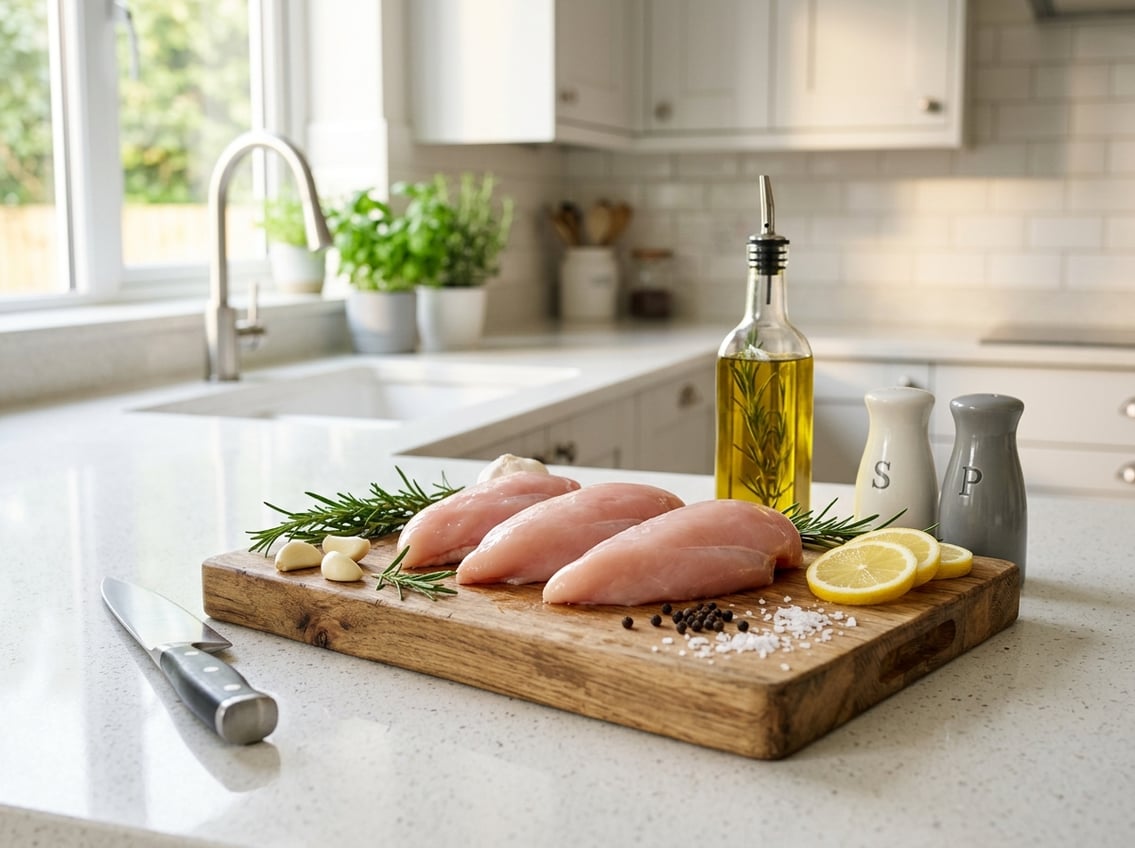
Start With the Best Prep for Better Texture
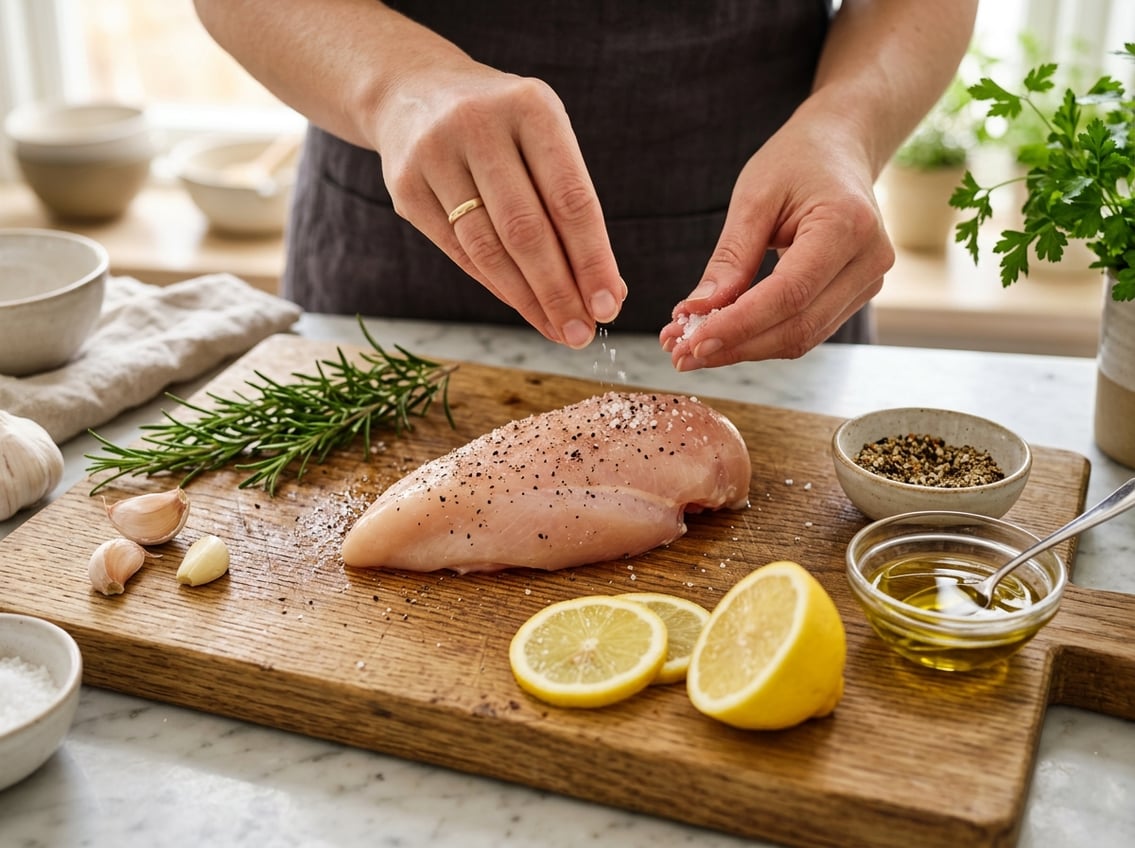
Good prep creates tender chicken breasts before cooking. Choose a cut that fits your method, make the meat even, and season it to support moisture and flavor.
Choose Between Boneless and Bone-In Cuts
Boneless chicken breast cooks faster and works well for quick dinners. Bone-in chicken breasts stay juicier and taste richer because the bone helps with even heat and the skin adds protection, as noted by Real Simple.
For most weeknight recipes, boneless skinless chicken breasts are the easiest choice. If you want a more forgiving result and do not mind extra cooking time, bone-in can help you get juicier chicken.
Why Even Thickness Matters
A thick end and a thin end cook at different rates. If you leave the breast uneven, the thin side dries out before the thick side is done.
Gently pound a boneless chicken breast to an even thickness, or slice larger breasts into cutlets. That step helps chicken cook more evenly and keeps the texture soft.
When to Use a Chicken Marinade
A chicken marinade adds extra flavor and some moisture. It works especially well for skinless chicken breast, since there is no skin to carry as much flavor.
Use a marinade when you have at least 30 minutes, and longer if the mix is mild. Salt, acid, oil, and herbs all help, but avoid too much vinegar or lemon for too long.
Simple Seasoning Blends That Work
If you do not want a marinade, use a dry seasoning blend. Build flavor with black pepper, garlic powder, onion powder, chili powder, or cajun seasoning.
Try these quick blends:
- Garlic powder, onion powder, black pepper, and salt
- Chili powder, garlic powder, and a little cumin
- Cajun seasoning with olive oil for a bold crust
- Black pepper and garlic powder for a clean, versatile base
Use the Right Cooking Method for Juicy Results
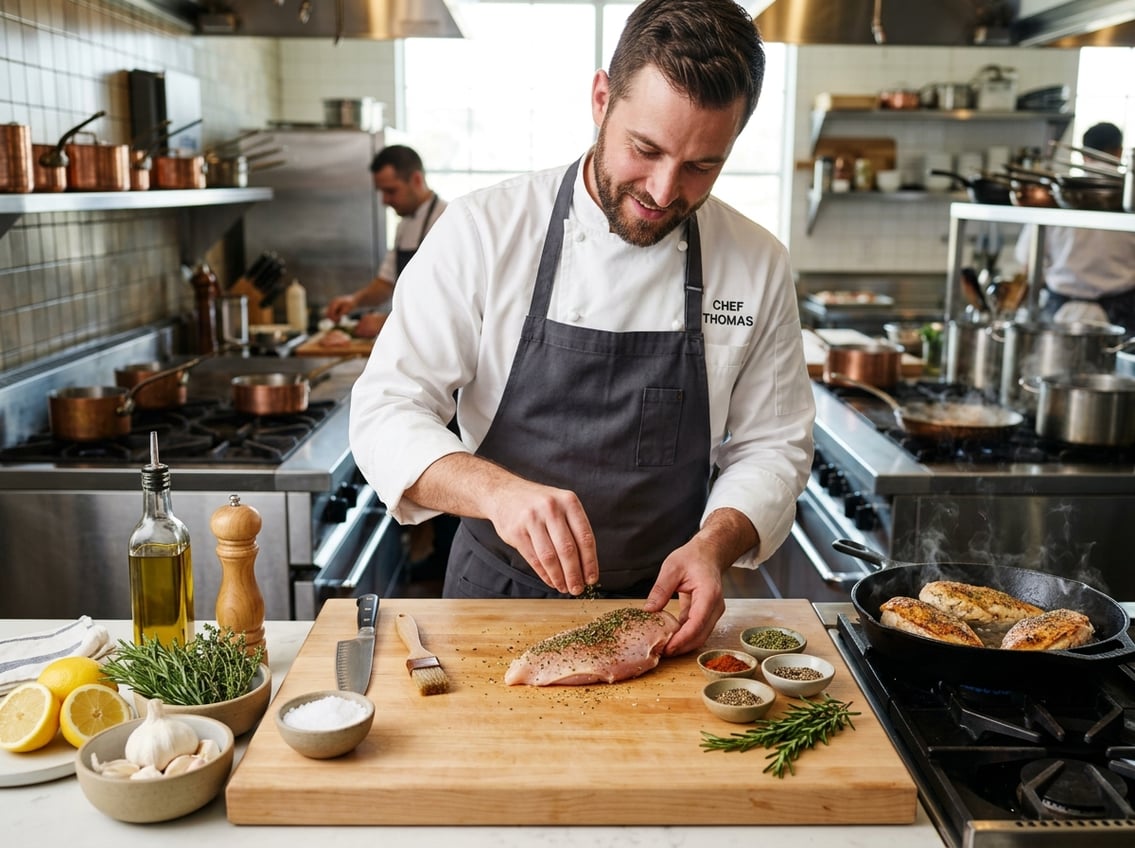
Choose your cooking method based on time and control. A skillet gives you fast browning, the oven gives steady heat, and the grill adds char if you watch the temperature.
Skillet Cooking With a Quick Pan Sauce
Heat oil in a pan, sear the chicken, then finish it gently until done. This method gives you a golden crust and lets you make a pan sauce with butter, broth, lemon, or wine.
A white wine pan sauce or butter sauce works well after pan-searing. The browned bits in the pan add flavor and richness.
How to Bake Chicken Breasts Without Drying Them Out
To bake chicken breasts, use moderate-high heat and check early. Many guides recommend about 425°F, which helps the outside cook before the inside dries out, according to Real Simple.
Place chicken on a sheet pan, brush with oil, season, and pull them when the center reaches safe temperature.
How to Grill Chicken Breast Evenly
Pound chicken breast first so the thickest part does not stay raw while the edges dry out. Real Simple notes that pounded, boneless skinless chicken breasts cook more evenly on the grill.
Preheat the grill, oil the grates, and turn the chicken only once. Grilled chicken breasts should have grill marks, light char, and a juicy center.
Check Temperature and Rest Before Slicing
Check the temperature to finish. Chicken should reach 165°F in the thickest part, and you can pull it a little early if it will rest, as noted by Real Simple.
Rest the chicken for 5 minutes before slicing. That short wait keeps juices in the meat.
Build Flavor With Easy Meal Styles
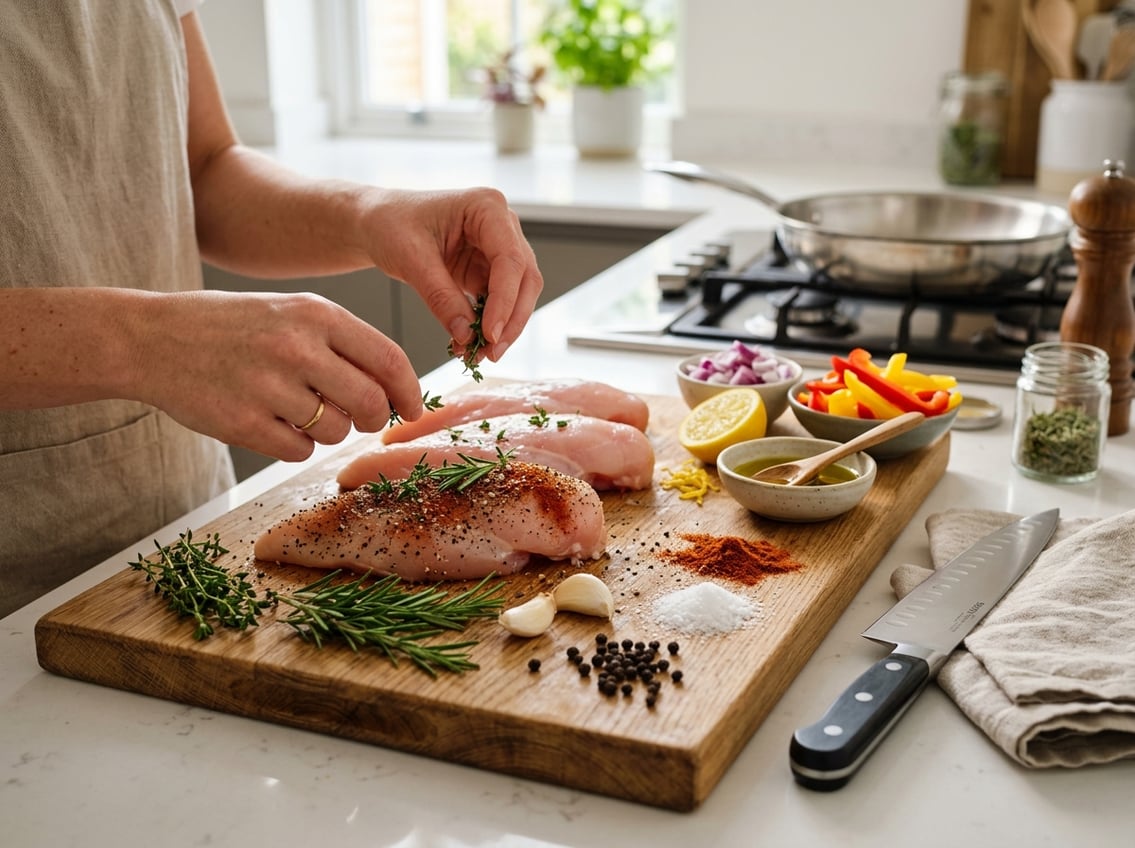
Once you know how to cook chicken breast well, you can turn it into many different meals. The same method becomes crispy, saucy, bold, or light depending on the coating, seasoning, and sides.
Crispy and Breaded Dinner Options
Breaded dishes add texture and help protect the meat. Think chicken parmesan, chicken schnitzel, chicken cutlets, and chicken cordon bleu.
Pound the chicken evenly first for best results. Thinner pieces cook quickly and stay tender under the crust.
Saucy Skillet Favorites
For more moisture, choose a pan sauce meal. Chicken marsala, chicken piccata, and chicken saltimbocca all use a skillet and sauce for flavor.
A quick sauce can also rescue plain chicken by adding acidity or richness.
Bold Weeknight Seasoning Ideas
For faster meals, use strong seasoning and keep the sides simple. Ranch chicken, cajun chicken pasta, chicken fajitas, and baked lemon chicken all work well with boneless chicken breast.
You can also use feta, herbs, garlic, or lemon for a fresher style. These recipes are easy to adjust based on what you have.
Fresh Salad and Light Serving Ideas
Chicken breast works well in lighter meals. Use sliced chicken for chicken caesar salad, grilled chicken salad, or a bowl with tahini dressing.
Cool the chicken slightly before slicing for salad meals. This keeps the meat firm and helps the chicken hold onto the dressing without turning dry.


