
Can Chicken Breast Be a Little Pink? Safety Guide
You may ask, can chicken breast be a little pink? The short answer is yes, sometimes, if it has reached a safe internal temperature.
The real test is 165 degrees Fahrenheit in the thickest part, not the color you see when you slice it open.
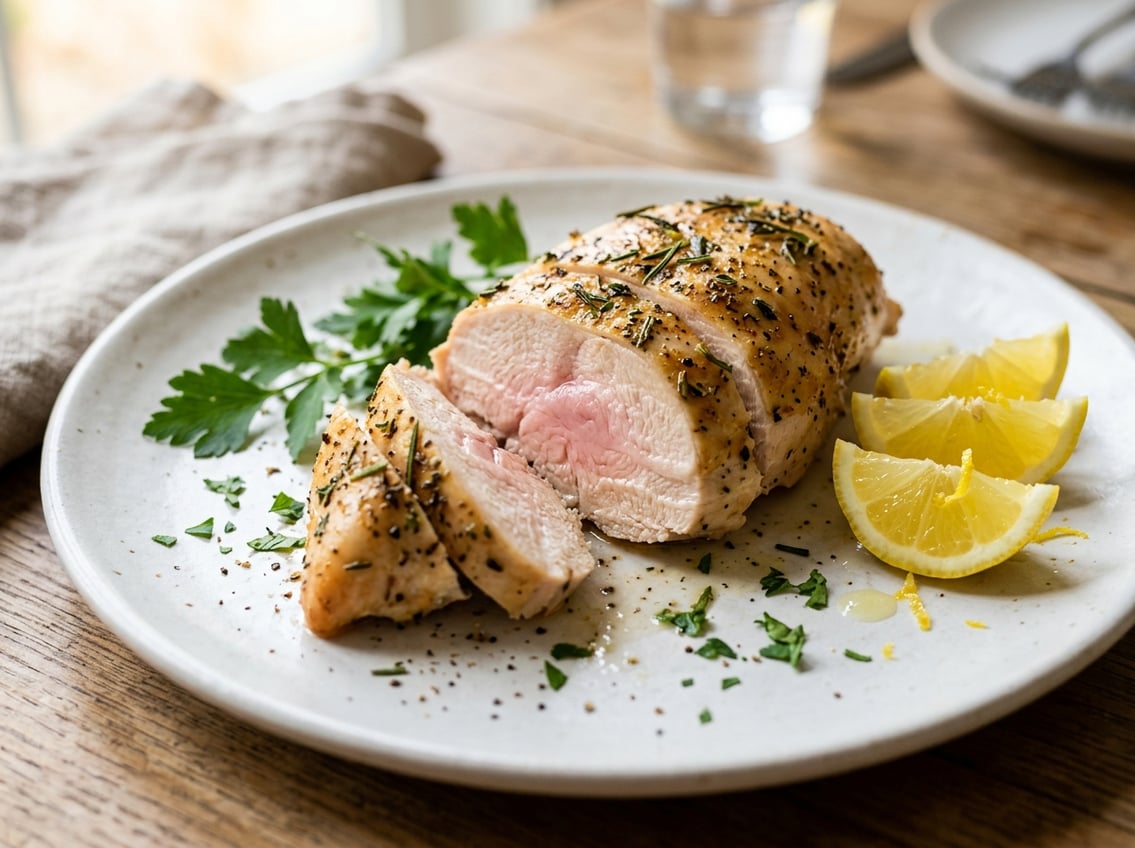
A pink chicken breast can look alarming, especially if you expect fully cooked poultry to turn completely white.
Color alone can mislead you, since smoking, freezing, bone contact, and natural pigments can leave a rosy tint even when the meat is safe.
If you want to avoid both foodborne illness and dry chicken, focus on temperature first.
That is the simplest way to judge whether your chicken is done.
What Makes Chicken Breast Safe to Eat
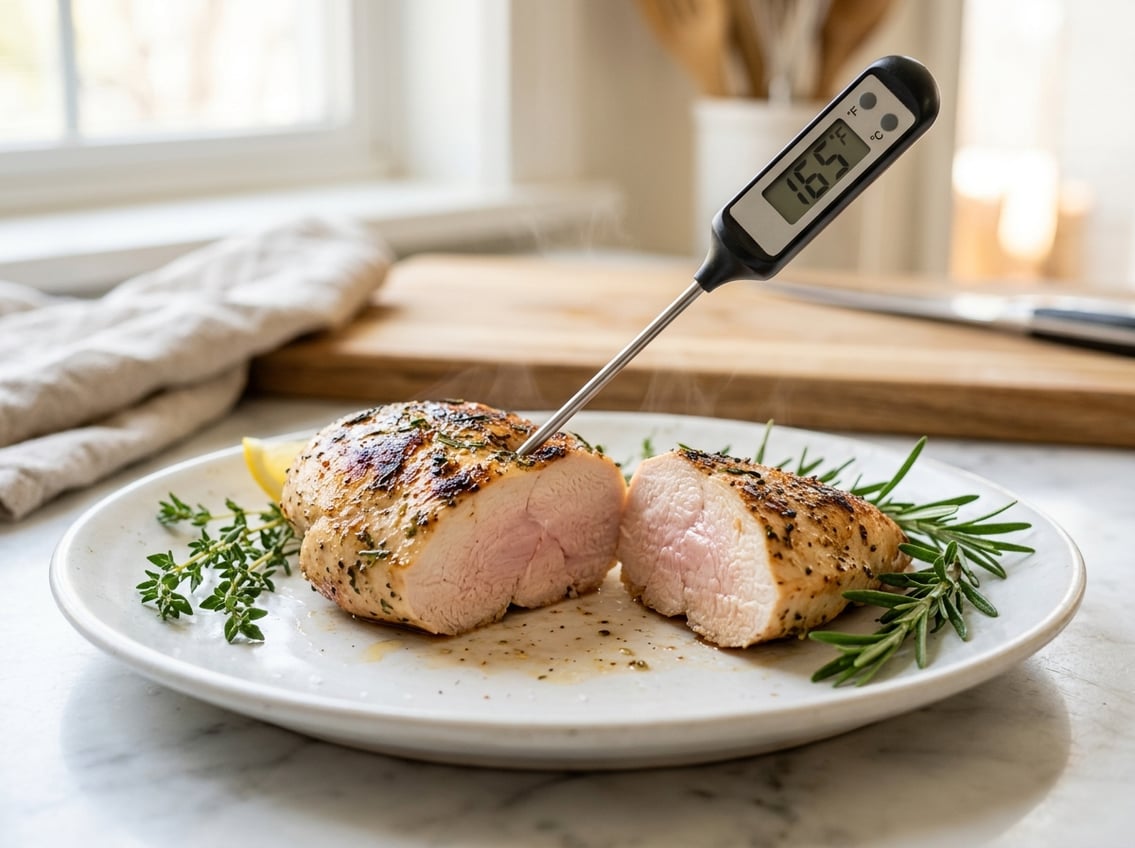
Chicken becomes safe to eat when it reaches the right internal temperature in the thickest part.
A pink chicken breast is not a reliable safety signal by itself, since undercooked chicken can still look pale in some spots and cooked meat can still show pink in others.
Why Temperature Matters More Than Color
Color can change for reasons that have nothing to do with safety.
Heat, smoke, marinade, and bone contact can all affect how the meat looks after cooking.
A thermometer gives you a direct reading of doneness.
Harmful bacteria like campylobacter may still be present if the meat has not reached a safe temperature.
The Safe Internal Temperature for Poultry
The standard target for chicken is 165 degrees Fahrenheit.
Use that number whether you roast, grill, pan-sear, or air fry.
According to safe temperature guidance for chicken breast, 165 degrees Fahrenheit is the key number for food safety.
If your chicken breast reaches that temperature in the thickest part, it is safe to eat even if a small area still looks faintly pink.
Why Undercooked Chicken Is Risky
Undercooked chicken can carry bacteria that cause food poisoning.
Campylobacter is one of the main concerns, and it can lead to stomach cramps, diarrhea, fever, and nausea.
If your chicken breast looks pink and your thermometer reads below 165 degrees Fahrenheit, keep cooking it.
Do not use color alone to make the call.
How to Check Doneness Accurately
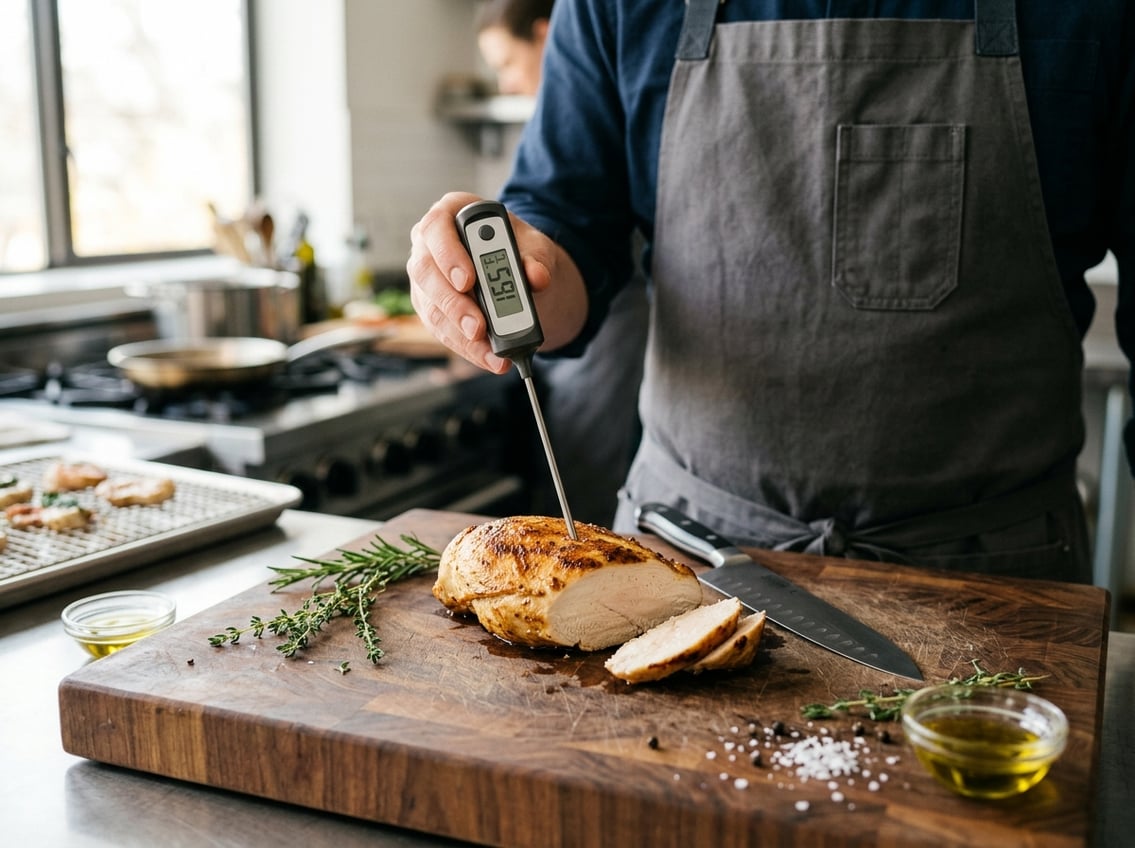
A good thermometer removes most of the guesswork from chicken cooking.
Using a meat thermometer is the best way to tell whether the center is safe, and it works better than timing alone or judging by appearance.
Using a Meat Thermometer the Right Way
Check the thickest part of the breast with a meat thermometer or food thermometer.
Make sure the tip is not touching the pan, baking dish, or bone, since that can give a false reading.
An instant-read thermometer is often the easiest tool for home cooking.
Insert it near the center, wait for the number to settle, and look for 165 degrees Fahrenheit before serving.
Where to Insert an Instant-Read Thermometer
Place the probe into the thickest part of the chicken breast.
If the breast is large, check more than one spot, since the center and edges may cook at different speeds.
Bone-in chicken needs extra care.
The meat near the bone can stay pink longer, so test close to the thickest meat without touching the bone itself.
When Visual Signs Can Still Help
Visual signs can support your temperature check, not replace it.
Fully cooked chicken usually looks opaque, and the juices often run clear when pierced.
A shiny center, raw-looking fibers, or cloudy juices are warning signs.
If you see those signs and the thermometer is still below 165 degrees Fahrenheit, keep cooking.
Why Fully Cooked Chicken Can Still Look Pink
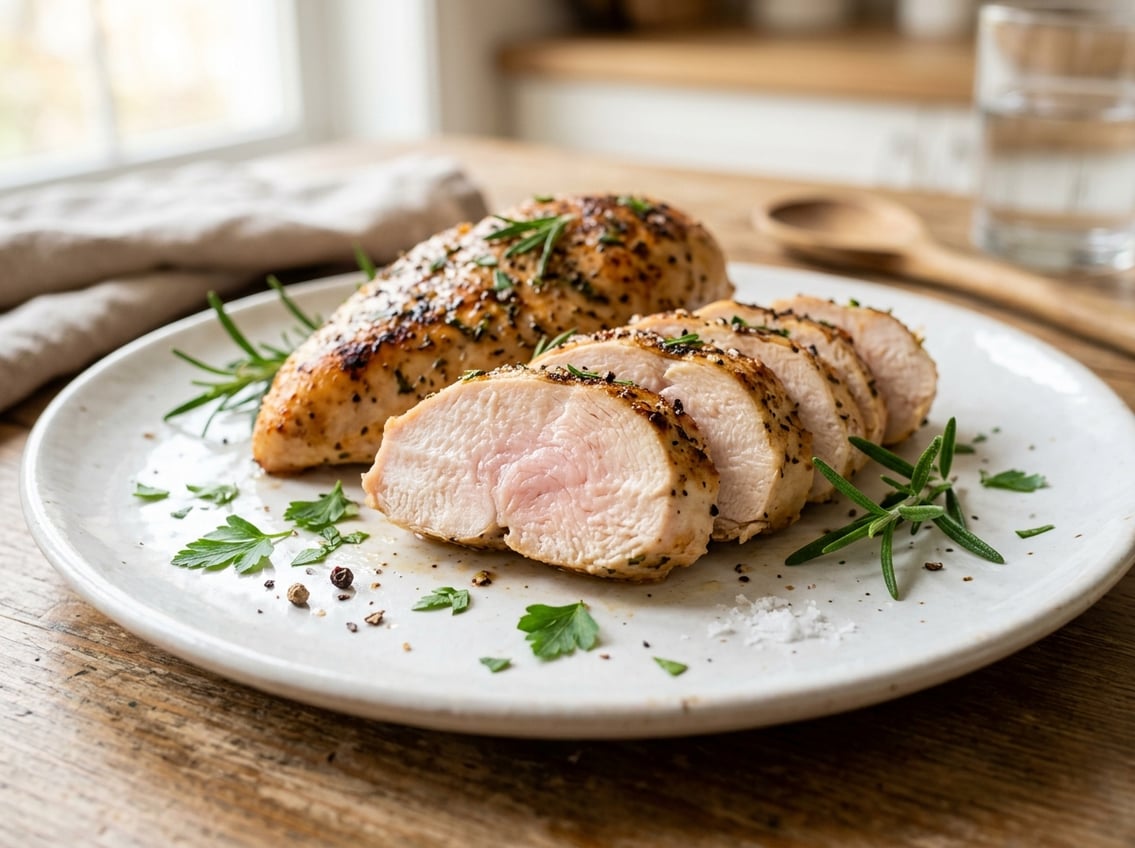
A pink chicken breast does not always mean the meat is unsafe.
Several normal cooking and meat science factors can leave cooked chicken with a pink tint.
Myoglobin, Bone Pigment, and Natural Color Variation
Chicken muscle contains myoglobin, a protein that affects color.
As the meat cooks, the color usually turns white or tan, yet some areas may still keep a light pink tone.
Bone-in pieces can show more color near the bone because pigments from the bone area can tint the meat.
That is why a pink chicken breast near the center or bone is not always undercooked chicken.
How Freezing, Smoking, and Brining Affect Appearance
Freezing can change how meat fibers hold moisture and how light reflects from the surface, which may make pink areas more noticeable.
Smoking can also leave a pink ring or blush in the meat even when it is fully cooked.
Brining and some marinades can affect color too.
A seasoned chicken breast may look different from plain roasted chicken, even when both are safe.
When Pink Color Is Normal and When It Is Not
Pink is often normal when the thermometer says 165 degrees Fahrenheit and the texture is firm, moist, and opaque.
That is especially true in bone-in, smoked, or brined chicken.
Pink is a problem when the meat feels soft or jelly-like, looks glossy in the center, or the thermometer reads under 165 degrees Fahrenheit.
In that case, treat it as undercooked chicken and cook it longer.
Cooking Practices That Reduce Guesswork
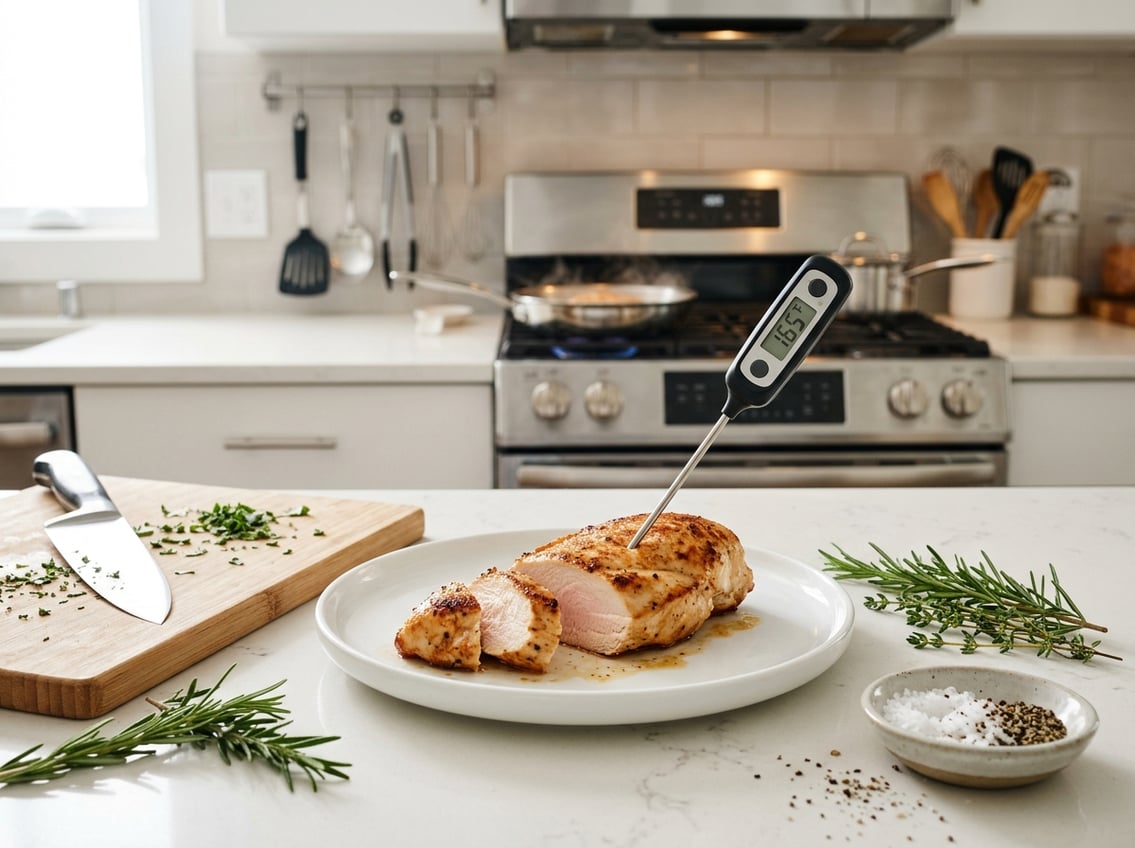
Good technique makes chicken easier to cook safely and evenly.
A reliable meat thermometer, the right heat level, and careful checking all help you avoid both dry meat and undercooked chicken.
Boneless vs Bone-In Breast Considerations
Boneless chicken breasts usually cook faster and more evenly.
Bone-in breasts take longer, and the meat near the bone may stay pink longer even after the outer parts are done.
If you cook bone-in chicken, use a food thermometer in the thickest meat area.
That gives you a better answer than looking at the surface or assuming the center is done.
Resting, Rechecking, and Avoiding Overcooking
Let chicken rest for a few minutes after cooking.
The internal temperature can rise slightly during resting, and the juices settle into the meat.
If you are unsure, recheck with an instant-read thermometer before slicing too early.
That small step can help you confirm 165 degrees Fahrenheit without drying out the breast.
Common Mistakes That Lead to Unsafe Results
Trusting color, time, or clear juices alone is the biggest mistake. These clues can help, but they do not prove the chicken is safe.
People often insert the thermometer too close to the pan. They may also skip thick spots or fail to cook large breasts long enough.
Using a meat thermometer the right way greatly lowers the chance of serving undercooked chicken.


