
Should Chicken Breasts Be Rinsed Before Cooking? Safety First
You should not rinse chicken breasts before cooking in a typical home kitchen. Rinsing raw chicken can spread germs around your sink, counters, utensils, and nearby food, which raises the risk of foodborne illness.
Your safest move is to skip rinsing chicken breasts. Pat them dry if needed, and cook them to 165°F so heat kills harmful bacteria.
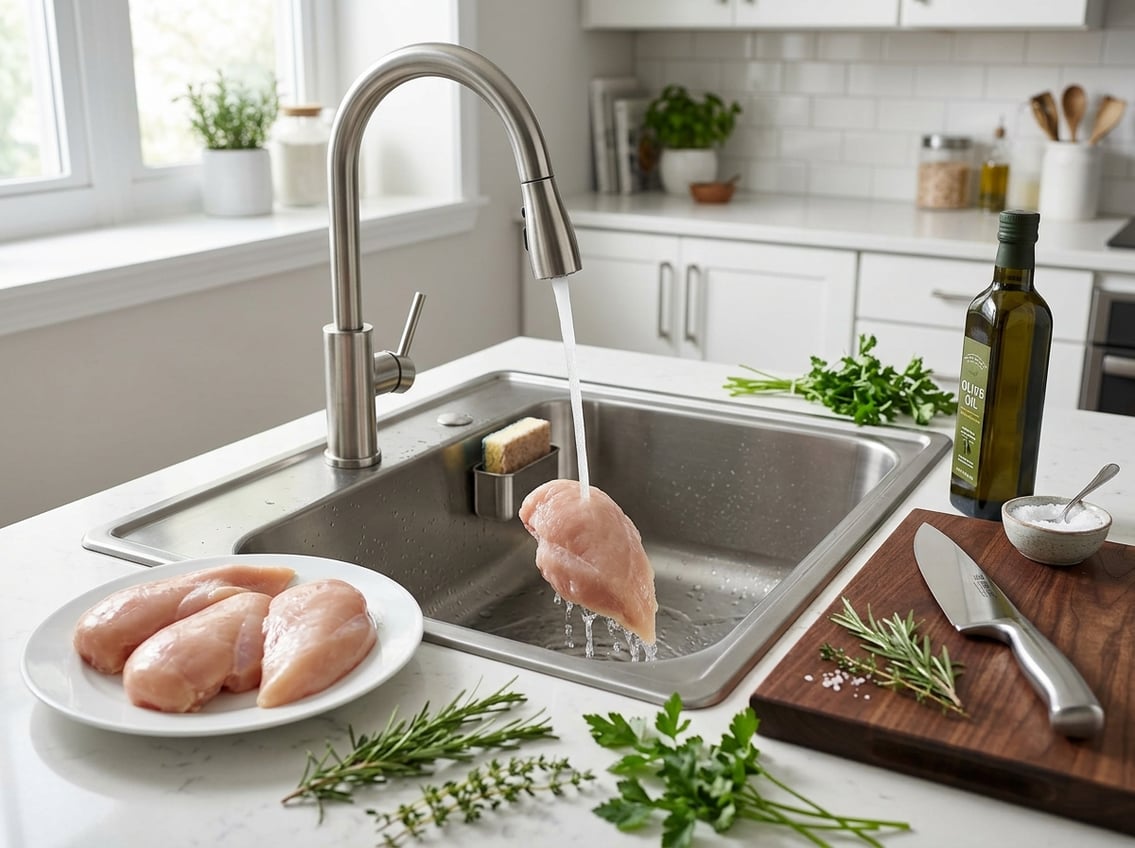
Many people search for rinsing chicken and washing raw chicken because it can seem cleaner. The problem is that these habits do not make poultry safer.
They can make your kitchen harder to clean and more likely to spread contamination.
The Direct Answer and Why It Matters
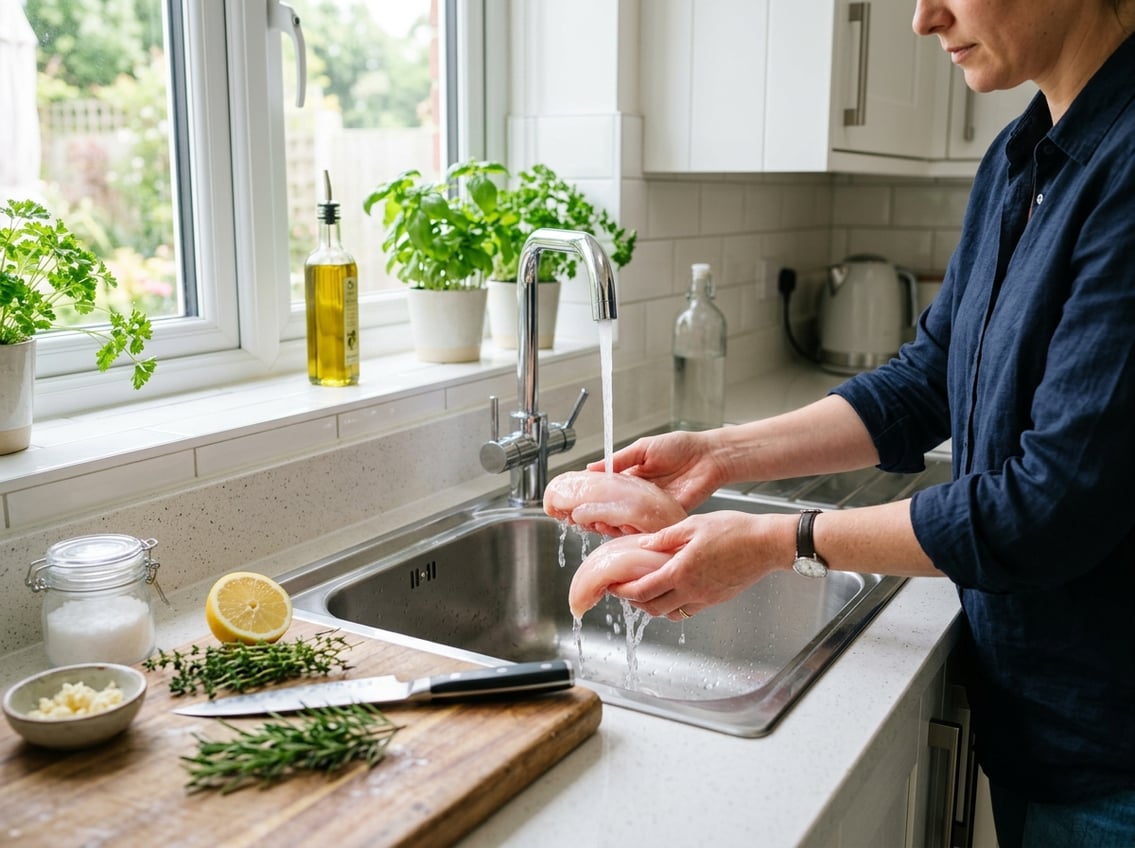
Food safety experts advise against rinsing chicken before cooking because water can move bacteria from raw poultry to other surfaces. You want to prevent foodborne illness, not create extra cleanup and risk.
According to the USDA and CDC advice on raw chicken handling, cooking—not rinsing—makes chicken safe.
Why Food Safety Experts Say Not to Rinse Poultry
When you rinse raw chicken, droplets splash into the sink, onto the counter, and onto nearby dishes. Those splashes carry bacteria from the chicken to places you may not clean well enough.
Experts recommend not rinsing raw chicken. Careful handling and full cooking work better for preventing foodborne illness.
How Campylobacter and Salmonella Spread in the Kitchen
Raw poultry often carries campylobacter and salmonella, two common causes of foodborne illness. These germs spread when juices touch hands, sinks, towels, or cutting boards.
A quick rinse does not remove all bacteria. It moves them to other foods or surfaces, which causes cross-contamination.
Why Cooking Works Better Than Washing
Heat reliably destroys harmful bacteria in the meat itself. Cooking chicken to the right internal temperature is what keeps it safe.
Safe cooking matters more than rinsing, because heat reaches the bacteria where they are.
How to Prep Chicken Breasts Safely
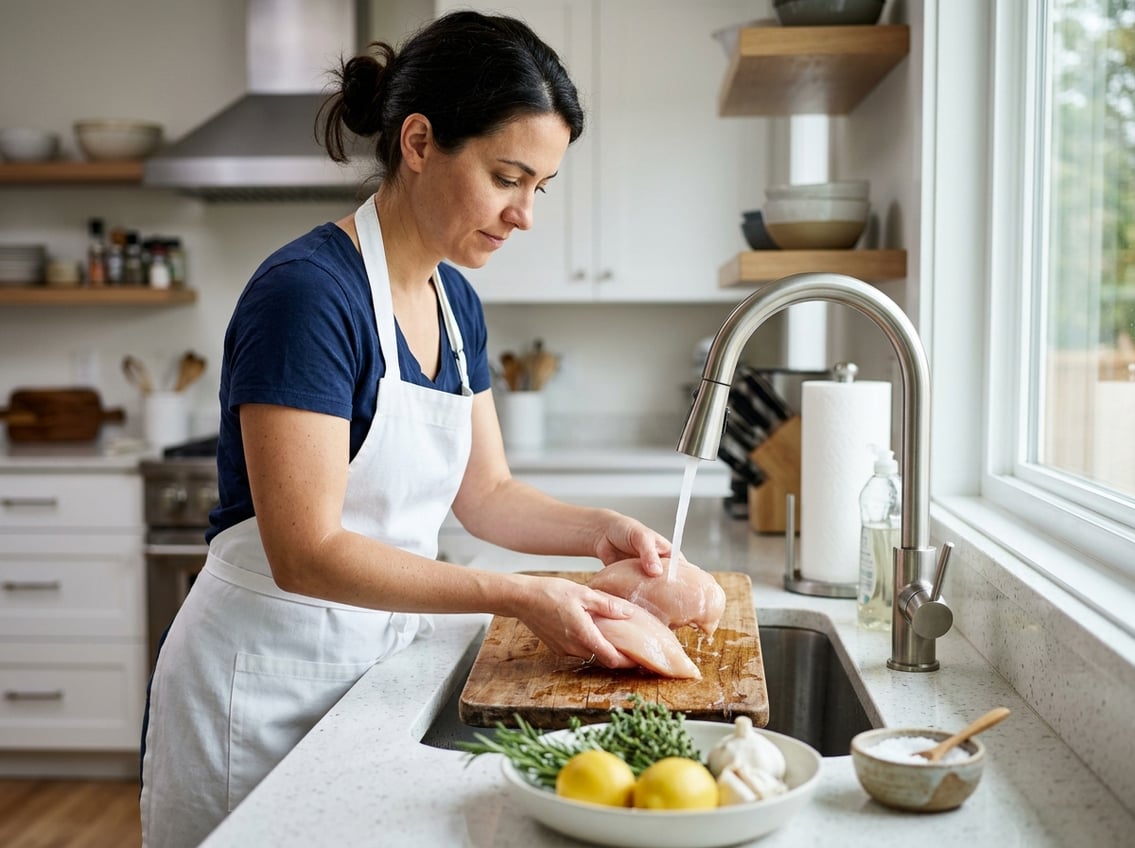
You do not need to rinse chicken breasts to get them ready for the pan or oven. Clean prep means keeping moisture under control, using separate tools, and limiting contact between raw chicken and ready-to-eat foods.
Patting Dry Instead of Running Under Water
If your chicken breast looks wet from the package, use paper towels to pat it dry. This helps with browning and keeps the surface from steaming in the pan.
Patting dry avoids splash risk. Throw the paper towels away right after use.
Handling Packaging Liquids Without Making a Mess
Package juices can leak when you open the tray. Open it over the sink or a plate, then move the chicken straight to your cutting board.
Do not pour or rinse those juices down the sink while splashing water around. Careful handling is safer.
Tools and Surfaces to Keep Separate During Prep
Use a separate cutting board for raw chicken. Keep knives, plates, and tongs that touch raw meat away from cooked food or vegetables.
Wash hands with soap after touching raw chicken. Clean the board, counter, sink, and any tools that touched it before moving on to other foods.
Safe Handling From Fridge to Stove
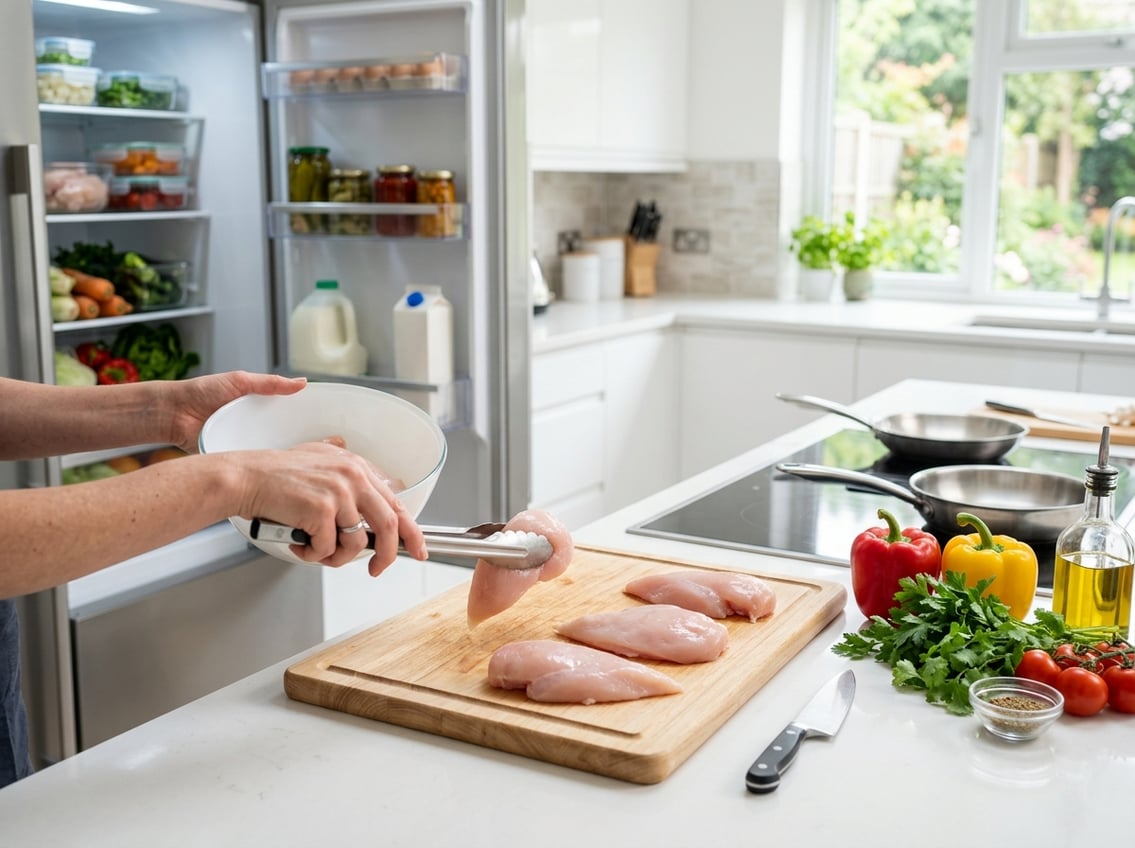
Safe chicken prep starts before cooking and ends after the meat is done. If you store raw chicken well, clean up carefully, and check the final temperature, you reduce the chance of salmonella and campylobacter exposure.
How to Store Raw Chicken to Prevent Leaks
Store raw chicken on the lowest shelf of your fridge. Keep it sealed in its package or in a leakproof container so juices cannot drip onto other foods.
If you will not cook it soon, refrigerate it promptly or freeze it. Good storage avoids cross-contamination before you even start handling raw chicken.
Cleaning Hands, Sinks, and Counters After Contact
Wash your hands with soap and warm water for at least 20 seconds after handling raw chicken. Then clean the sink, faucet handles, counter, and any utensil that touched the meat.
If juice splashes nearby, sanitize the area right away. Cleaning the kitchen stops spread after contact has already happened.
The Internal Temperature That Makes Chicken Safe
Chicken breasts are safe when the thickest part reaches 165°F. Use a food thermometer, not guesswork, since color alone is not reliable.
When you cook to that temperature, the heat kills the bacteria that cause illness.
Why People Still Rinse and What to Do Instead
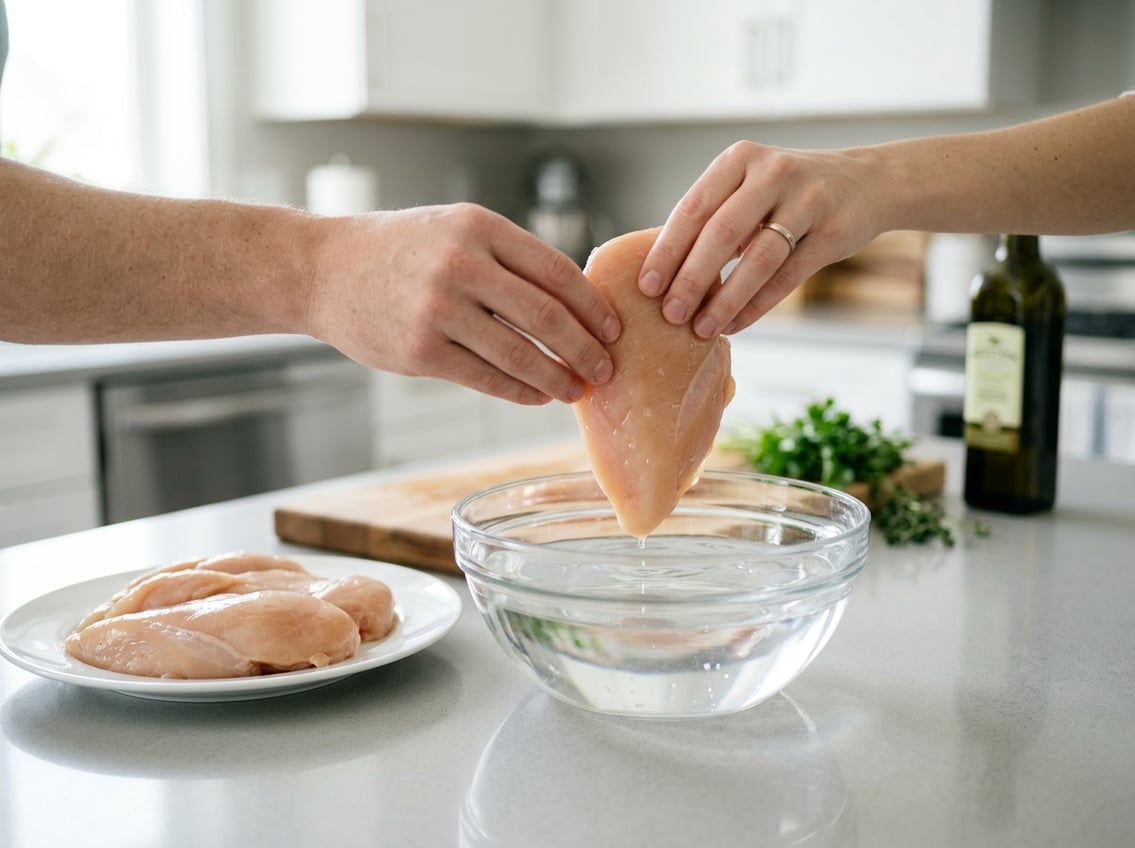
Many people rinse chicken because they learned it from family, dislike the smell, or want to remove a slimy feeling from the package. Those reasons are understandable, yet they do not make rinsing safer.
Tradition, Odor, and Packaging Concerns
Some home cooks were taught that rinsing chicken was part of good kitchen hygiene. Others react to package liquid or a mild odor and want a quick fix.
A rinse feels like a cleaning step, yet it can spread germs instead of removing them. If the chicken smells strongly sour or looks spoiled, discard it.
When Visible Debris Should Be Trimmed or Blotted Away
If you see a feather, a bit of packaging material, or a small piece of connective tissue, trim it away with a clean knife. If the surface just looks wet, blot it with paper towels.
That is usually enough. You do not need to wash raw chicken to make it ready.
Safer Alternatives for Readers Who Still Feel Unsure
If you still feel uneasy, keep your prep simple. Open the package carefully.
Pat the chicken dry. Use separate tools.
Cook it to 165°F.
If you want extra flavor, use a marinade in the refrigerator. This method gives you a safer result than rinsing chicken before cooking and fits well with normal home cooking.


