
How Does Chicken Breast Look When Cooked? Key Signs
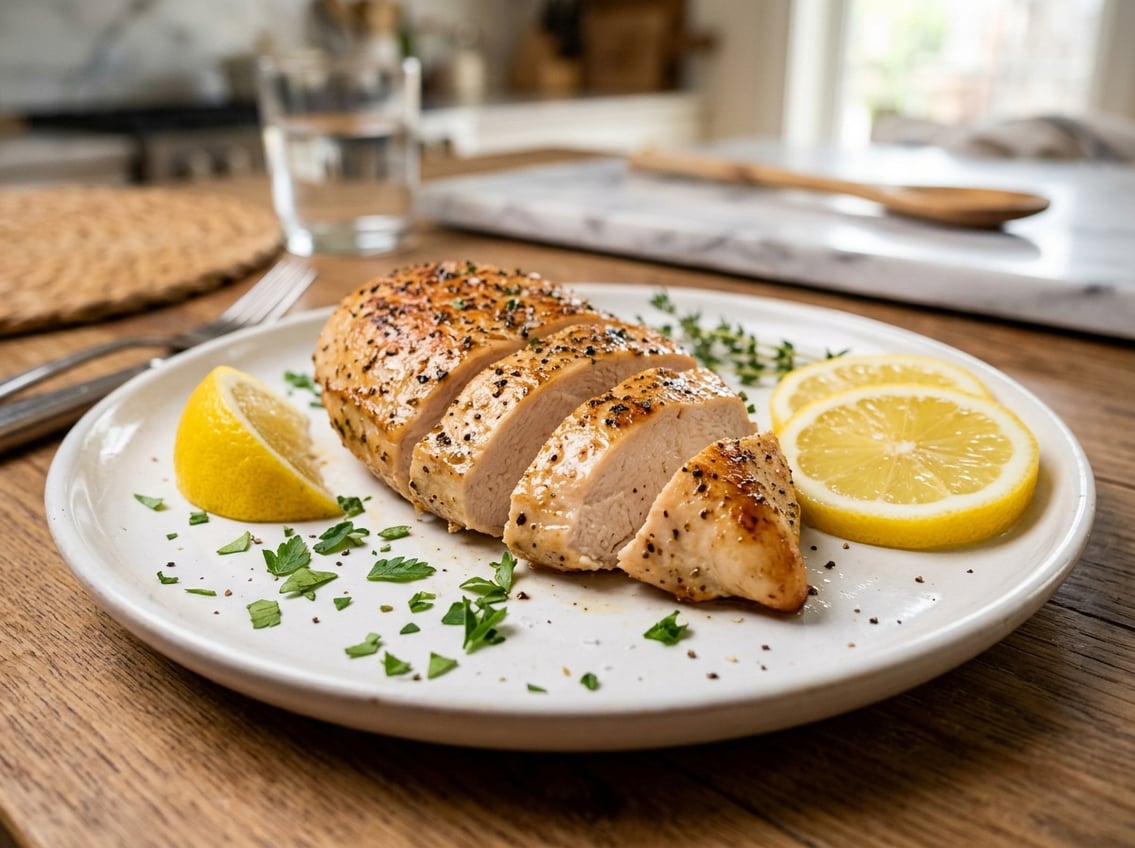
When you ask how does chicken breast look when cooked, the short answer is that it should look opaque, firm, and evenly white or very light tan in the center.
A fully cooked chicken breast does not look glossy or translucent in the thickest part, and the juices run clear or nearly clear when you cut into it.
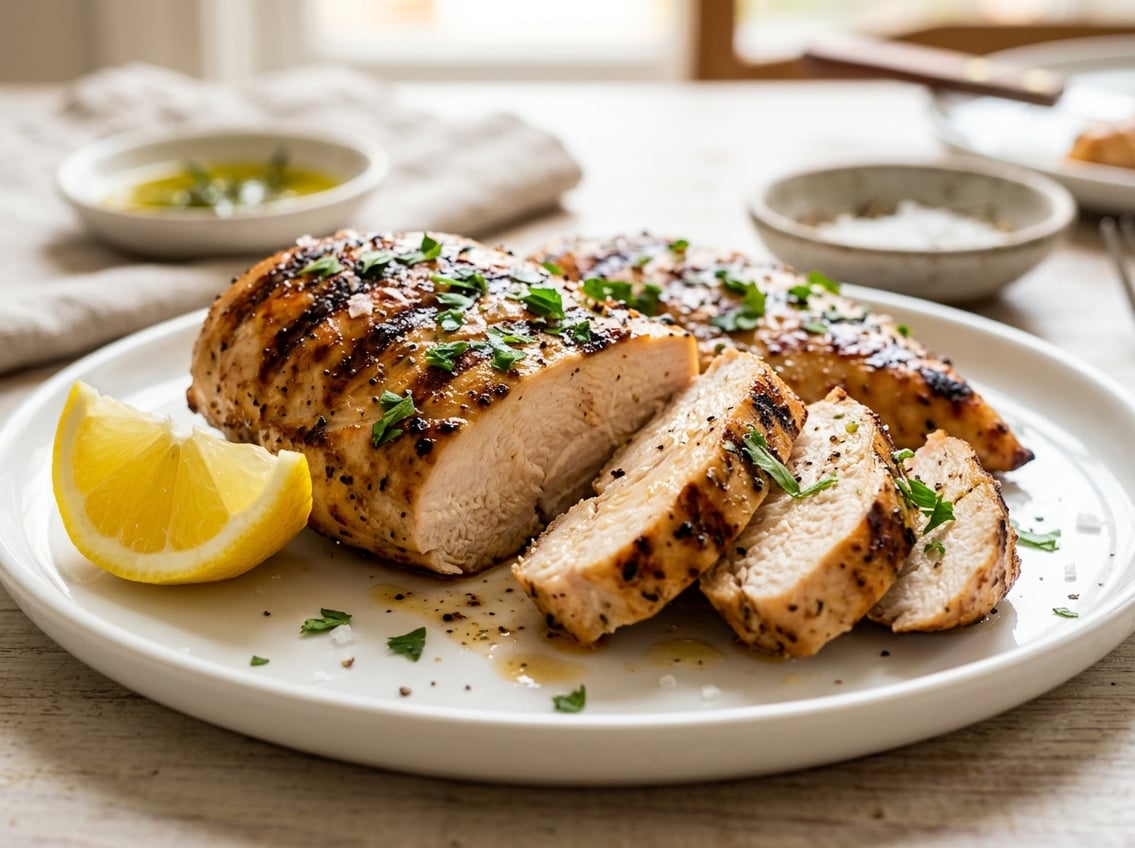
The safest way to know your chicken breast is ready is to check the thickest part with a meat thermometer and look for firm, opaque meat with clear juices.
Color helps, but temperature gives you the clearest answer.
If you cook chicken often, learning the visual signs helps you spot a fully cooked chicken faster.
It also helps you avoid undercooked and overcooked chicken breast.
The Clearest Signs It Is Ready
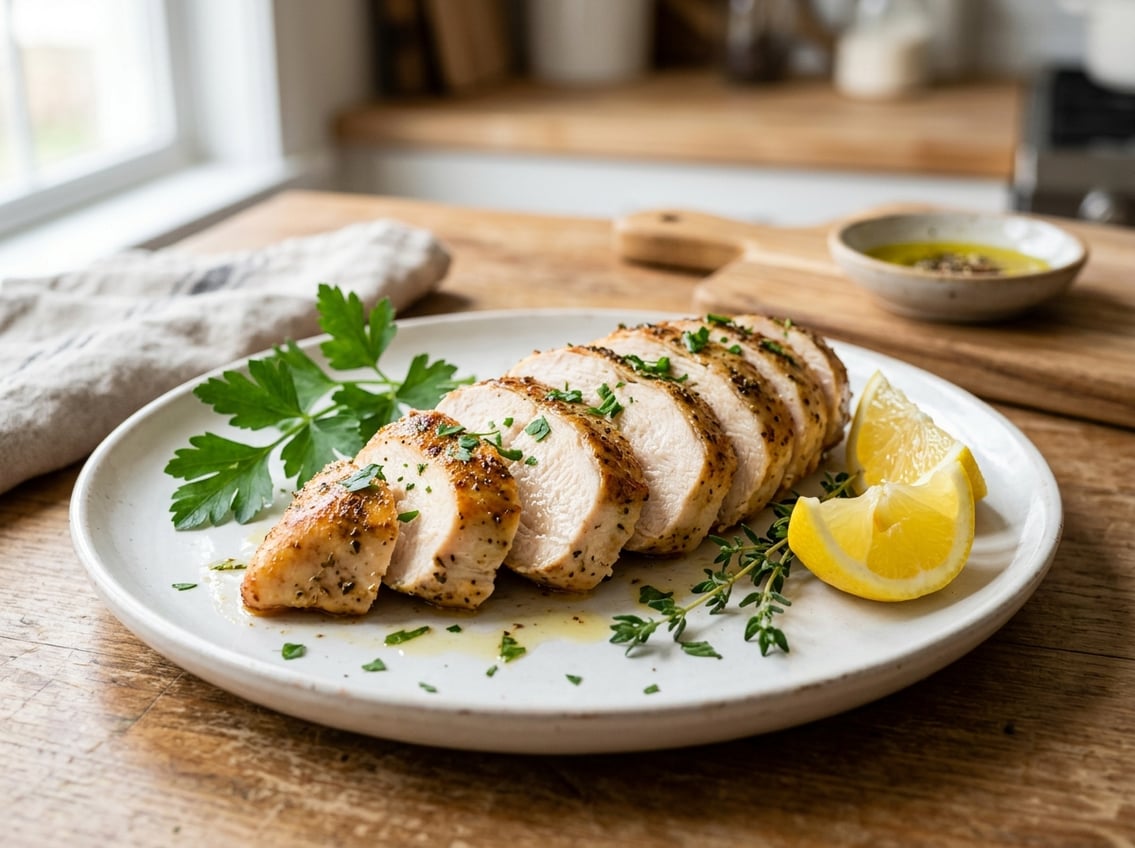
A cooked chicken breast looks opaque all the way through and feels firm when pressed.
The breast releases clear juices when sliced.
These signs work best together, since one clue alone can be misleading.
Color and Opacity in the Center
The center of a cooked chicken breast no longer looks shiny or see-through.
It appears white or very light tan, with no raw-looking gray or glassy areas.
A little light pink near the bone can still happen in some cases, especially with certain cooking methods.
Color alone does not prove safety, so use it alongside temperature and texture.
According to How to Know if Chicken Is Cooked, the thickest part should reach at least 165°F.
How the Juices Should Look
When you cut into cooked chicken, the juices look clear or very lightly tinted.
Red or pink juices usually mean the meat needs more time.
This is one of the fastest checks you can make in the kitchen.
It is useful when you do not want to slice the whole breast open.
Texture, Firmness, and Fibers
Cooked chicken breast feels firm, not squishy.
The fibers separate cleanly when you cut it, and the meat should look moist, not raw or rubbery.
A juicy chicken breast still feels set and bouncy.
If the meat feels soft in the middle, it likely needs more cooking.
The Safe Internal Temperature
A meat thermometer gives you the most reliable answer.
Insert it into the thickest part of the breast and look for 165°F for safe chicken.
Pair the visual signs with the temperature reading for the most dependable answer.
The look can vary a little, but the thermometer gives a clear finish line.
When Appearance Can Be Misleading
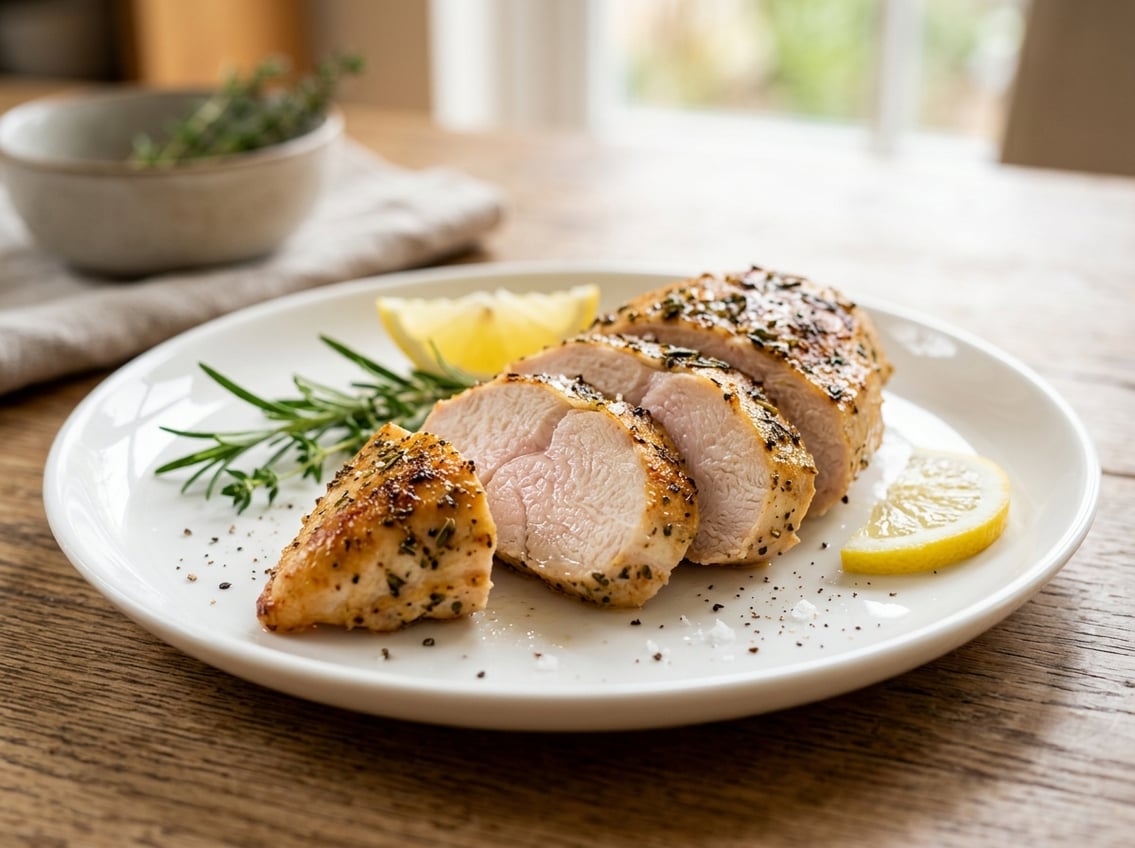
Chicken can look done before it is safe.
It can also look a little pink even when fully cooked.
That is why you should not rely on color alone, especially with thicker pieces or uneven heat.
Why White Meat Can Still Be Underdone
White meat turns pale before the center reaches a safe temperature.
A thick chicken breast may look mostly white on the outside while staying undercooked in the middle.
That happens often with large boneless breasts.
A meat thermometer helps you avoid guessing when the outside looks finished too soon.
Slight Pink Tones and What They Mean
A slight pink tone does not always mean undercooked chicken.
It can come from the cooking method, the age of the bird, or contact with the bone.
The key question is whether the thickest part has reached 165°F.
If it has, the meat is fully cooked even if you still notice a faint blush in one spot.
How to Spot Undercooked Portions Fast
Cut into the thickest part and look at the center first.
If you see translucent meat, red juices, or a very soft texture, the breast needs more time.
Check the ends too if the piece is uneven.
Thin sections may look done while the center stays undercooked.
Signs You Have Gone Too Far
An overcooked chicken breast often looks dry, stringy, and pale.
The surface may split, and the meat can pull apart in hard, chalky fibers.
Once the juices disappear and the meat turns tight, you have gone too far.
How Cooking Method Changes the Look
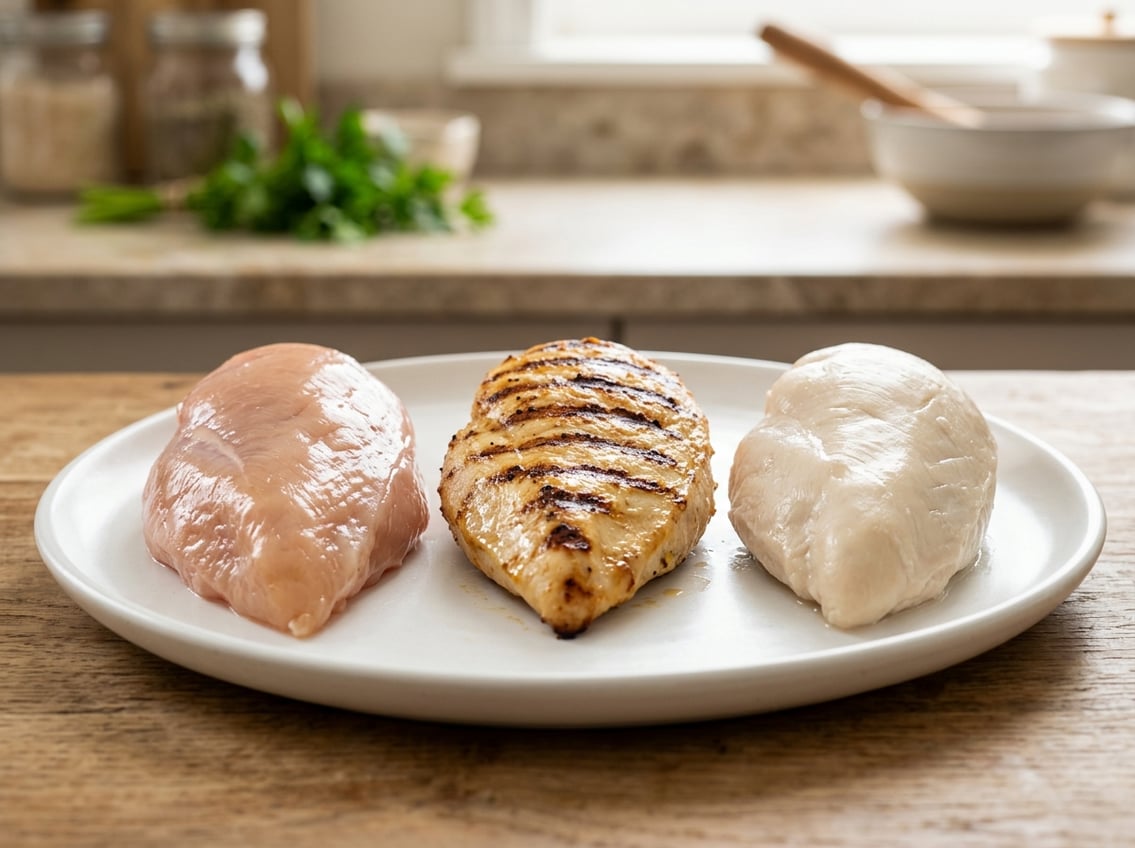
Different cooking methods change the outside color, browning, and moisture level.
A fully cooked chicken breast can look lightly browned, deeply marked, or almost plain, depending on how you cooked it.
Baked Breast
Baked chicken breast often looks evenly pale tan or lightly golden on top.
If you use higher heat or a seasoned coating, the outside may brown more.
Inside, the meat should still look opaque and moist.
Baking can give you a very even cooked chicken breast when the pieces are similar in size.
Grilled Breast
Grilled chicken breast usually shows dark grill marks and a more browned surface.
The inside should still be white and juicy, not dry at the edges.
Grilling can make the outside look done sooner than the middle.
That makes a thermometer especially useful.
Pan-Cooked Breast
Pan-cooked chicken breast often has the most visible browning.
You may see a golden crust on the outside and a firmer edge around the top and bottom.
This method can make it easier to overcook the outside before the center is ready.
Watch the heat closely and check the thickest part.
Poached Breast
Poached chicken breast looks the palest of the group.
It may appear off-white or faintly beige, with little or no browning.
Because poaching uses gentle heat, the meat can stay very tender.
The look is subtle, so temperature matters even more here.
How to Get a Safe and Juicy Result Every Time
A safe, juicy result comes from even thickness, careful timing, and a quick temperature check.
The more even the breast is, the easier it is to avoid undercooked or overcooked chicken breast.
Where to Place a Meat Thermometer
Insert the thermometer into the thickest part of the chicken breast.
Avoid touching the pan, bone, or a pocket of fat, since that can give you the wrong reading.
If the breast is very thick, check from the side so you reach the center.
A quick, accurate reading helps you stop at the right moment.
Resting Before Slicing
Let the chicken rest for a few minutes after cooking.
This helps the juices settle back into the meat instead of running out onto the cutting board.
If you slice too soon, even a juicy chicken breast can look drier than it is.
Resting also makes the texture easier to judge.
Thickness and Cooking Time
Thicker breasts need more cooking time than thin ones.
If one piece is much larger than the others, it may need extra time or a lower heat setting.
Even-sized pieces cook more evenly and are easier to judge by look and feel.
As noted by How to Know if Chicken Is Cooked, extra time is often needed for thicker pieces.
What to Do If It Is Dry or Not Done Yet
If you find it undercooked, return it to the heat and check again soon.
If it is dry, slice it thin and serve it with sauce, broth, or pan juices.
You can still use dry chicken in salads, sandwiches, and wraps.
Always use a thermometer to avoid serving undercooked chicken.


