
Cook Chicken Breast in a Pan Without Drying It Out
Cooking chicken breast in a pan gives you a fast, simple way to make a juicy main dish without turning on the oven. If you heat the pan the right way, use even thickness, and stop at the right internal temperature, you get a tender result instead of dry meat.
The key is to dry the chicken, season it well, sear it in a hot skillet, then rest it before slicing so the juices stay inside. A good stovetop chicken breast does not need a long ingredient list or a complicated process.
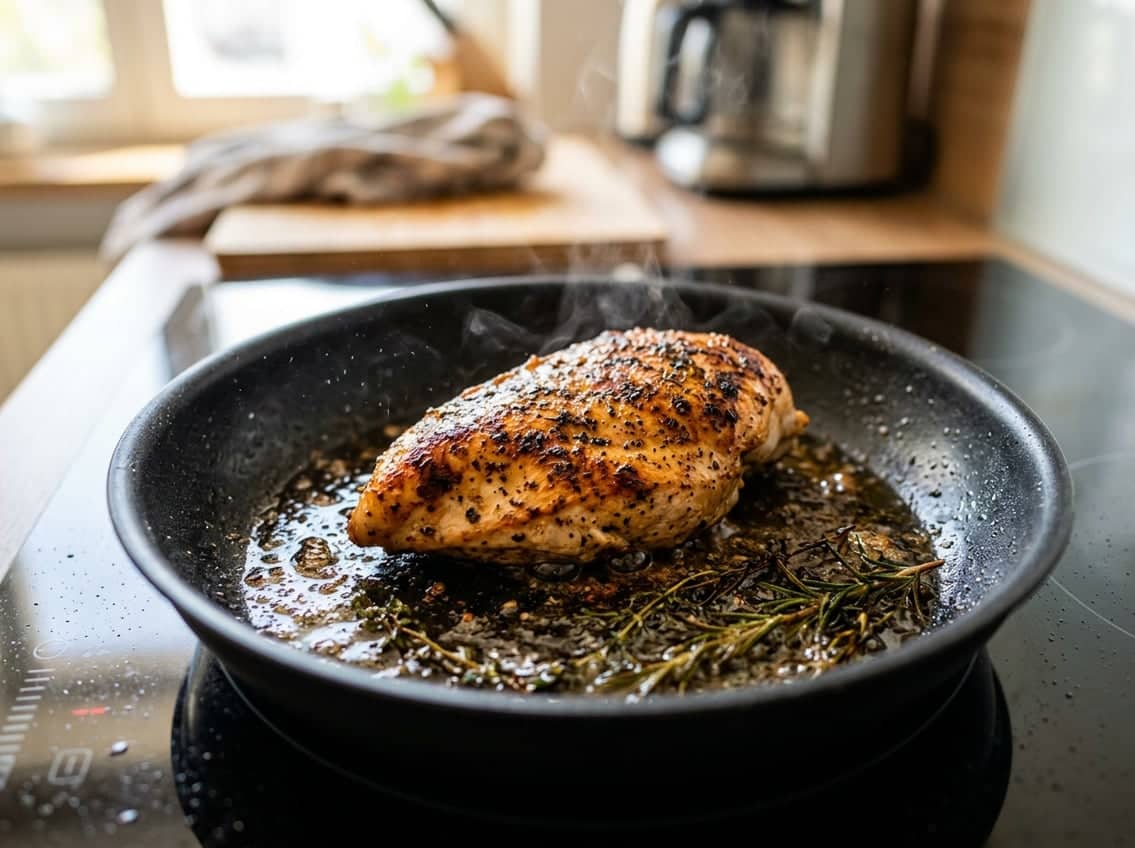
This easy chicken breast recipe works for weeknights, meal prep, and quick lunches. When you use the right method, you get juicy chicken breast with a browned outside and a tender center.
What You Need Before You Start
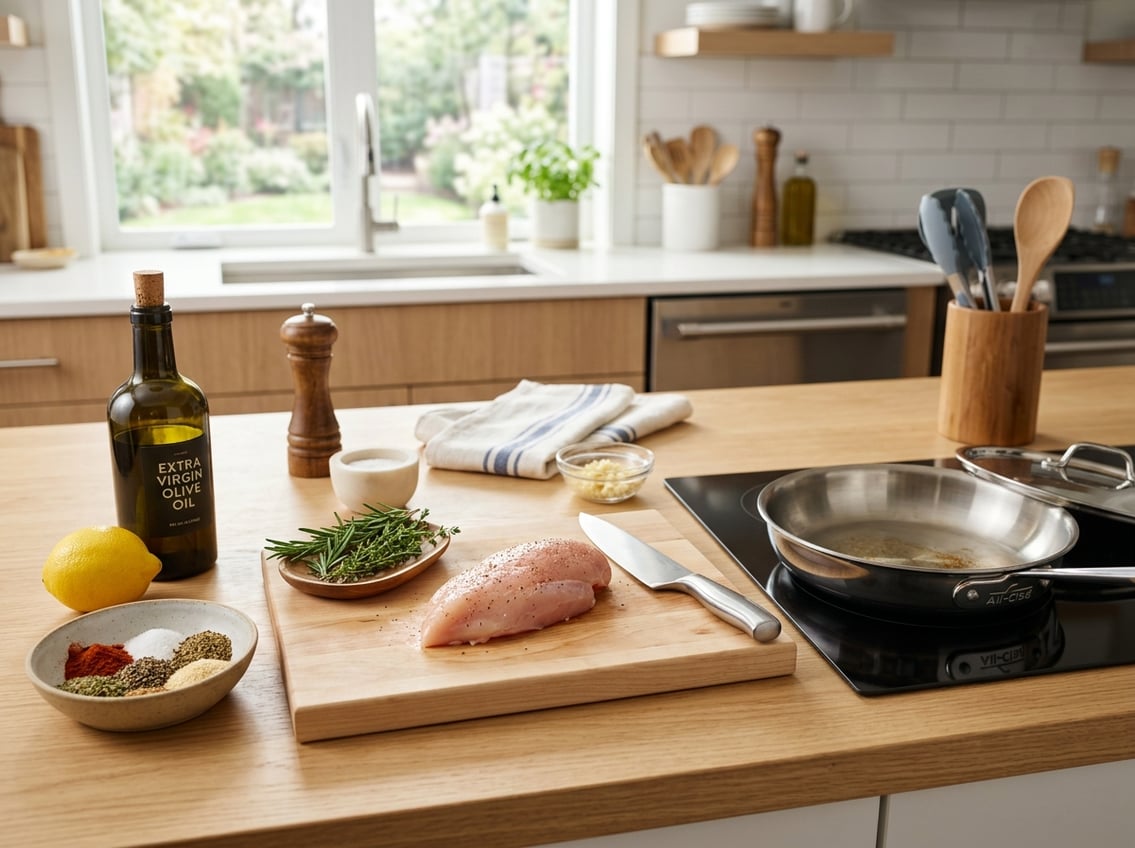
A good skillet chicken recipe starts with the right cut, simple tools, and basic seasoning. You do not need special equipment to get a solid result.
Best Chicken Breast Cuts for This Method
Boneless skinless chicken breasts are the easiest choice for this method. They cook quickly and evenly when you pound them to the same thickness.
Bone-in chicken breasts need more time and a different heat plan, since the outside can brown before the center is done.
Essential Tools for Even Cooking
A meat mallet helps you flatten thick spots so the chicken cooks at the same pace. An instant read thermometer gives you a reliable doneness check, which matters a lot when you want tender chicken breast instead of dry meat.
Use a heavy skillet if you have one. It holds heat well and gives you better browning for skillet chicken.
Simple Seasonings That Work Every Time
Kosher salt and ground black pepper are enough for a clean, classic result. Garlic powder, paprika, and Italian seasoning add more flavor without making the chicken complicated.
Keep the coating light and even. Too much seasoning can burn in the pan, while a balanced mix gives you a better crust and a more flavorful bite.
Step-by-Step Skillet Method
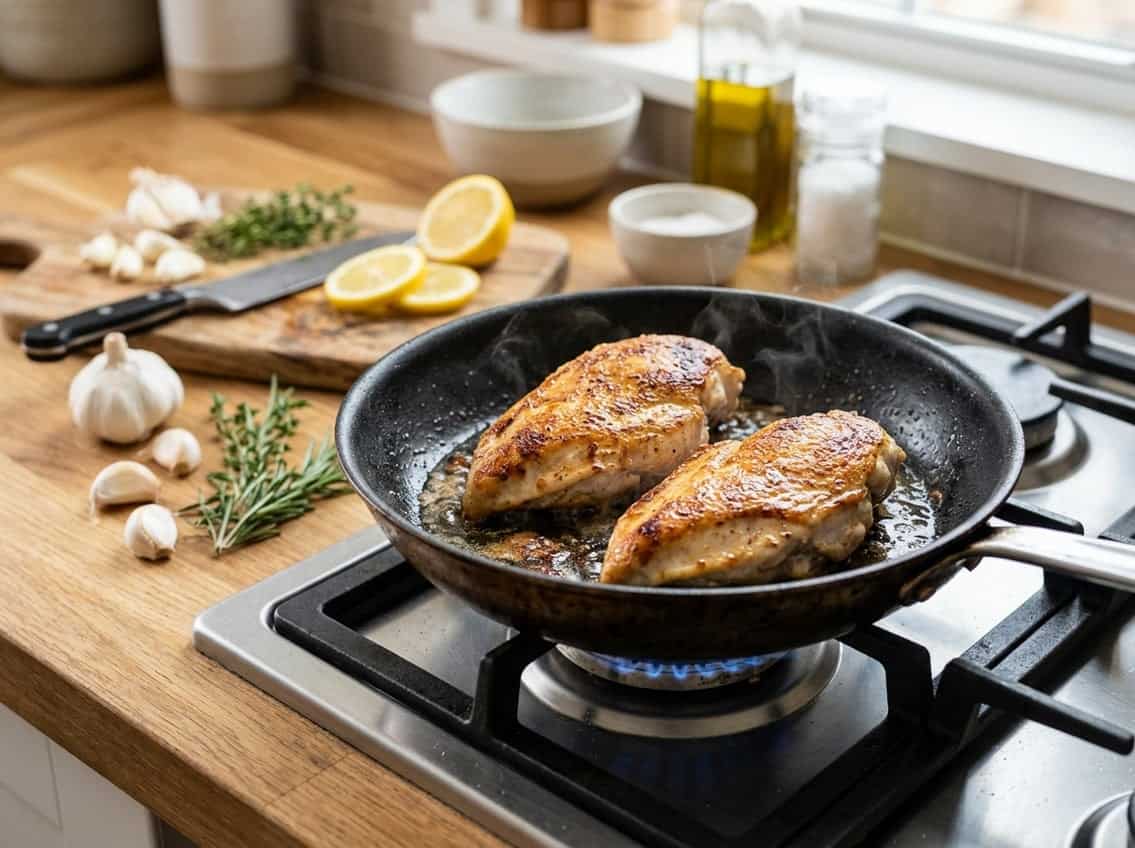
This pan-seared chicken breast method builds even browning and a moist center. The goal is simple, hot contact with the pan, steady heat, and a short rest at the end.
How to Prep Chicken for a Better Sear
Pat the chicken dry with paper towels before seasoning. Moisture on the surface turns to steam, which makes it harder to get a good crust.
If the breasts are uneven, pound them to an even thickness, about 1/2 inch if possible. Season both sides well with salt, pepper, and your chosen spices.
How Long to Cook Each Side
Heat a skillet over medium-high heat with a thin layer of oil. When the oil shimmers, lay in the chicken and leave it alone so it can brown.
Cook the first side for about 5 to 7 minutes, then flip and cook the second side for another 5 to 7 minutes. For many pieces, a covered finish during the last 1 to 2 minutes helps the center cook through without overbrowning the outside.
How to Check Doneness and Rest Properly
Use an instant read thermometer and check the thickest part of the meat. The chicken is done at 165°F, though you can pull it around 160°F and let carryover heat finish the job as it rests, as noted in this pan-cooked chicken guide.
Rest the chicken breast on a plate or cutting board for 5 minutes before slicing. That short wait helps keep the juices in place.
Adjust for Thin or Thick Pieces
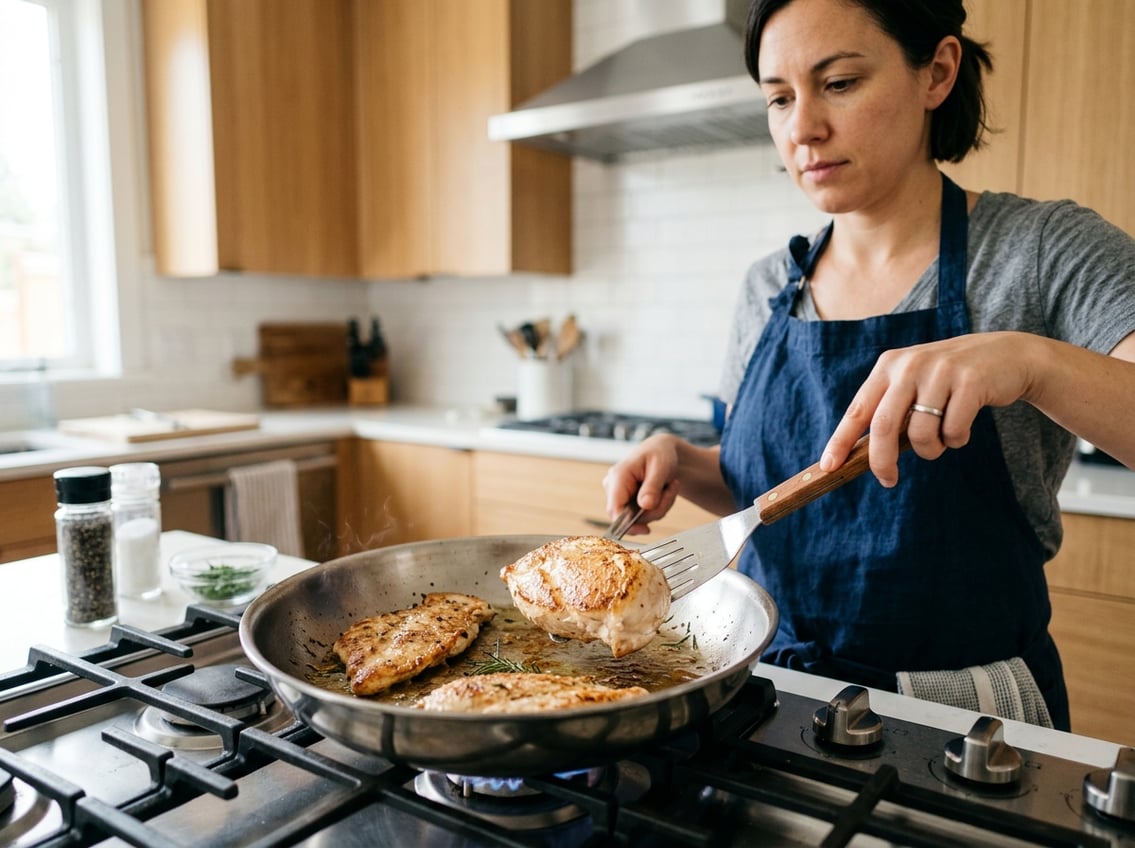
Chicken breast size changes the cook time more than many people expect. Thin pieces need less heat and attention, while thick pieces need a gentler finish so the outside does not dry out.
Thin Chicken Breasts and Cutlets
Thin chicken breasts and cutlets cook fast, so watch them closely. They can go from done to dry in a very short time.
Use medium-high heat, but shorten the sear time. Thin pieces often need only a few minutes per side, depending on their size.
Thick Chicken Breasts Without Burning the Outside
Thick chicken breasts need even thickness before they hit the pan. Pounding them helps prevent one side from drying out while the thicker center catches up.
If the outside browns too fast, lower the heat a little and cover the pan near the end. That keeps the method reliable when you are learning how to cook chicken breasts in a skillet.
When Bone-In Breasts Need a Different Approach
Bone-in chicken breasts take longer and are less forgiving in a hot pan. The outside can darken before the center reaches a safe temperature.
If you want to use bone-in chicken breasts, plan for lower heat and more time. For a quick weeknight meal, boneless skinless chicken breasts are the better match for this pan method.
Serving, Storage, and Leftover Uses
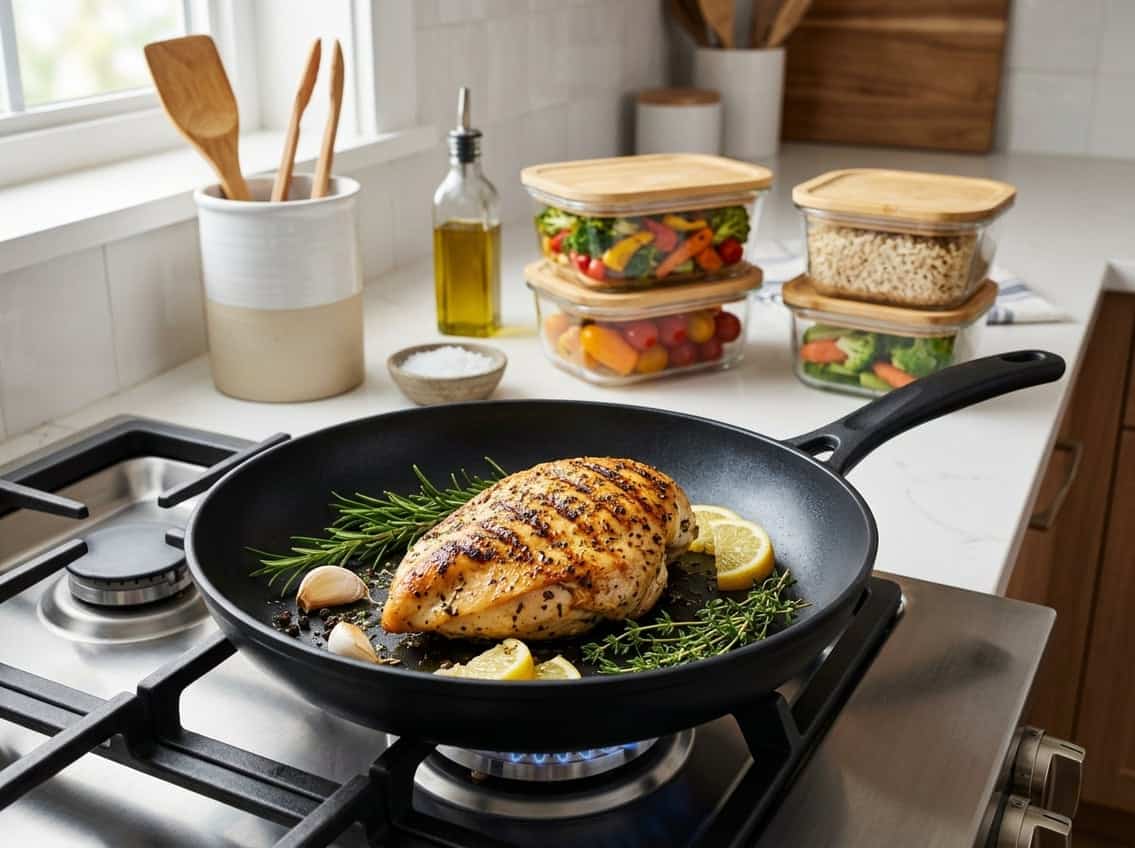
A well-cooked pan-seared chicken breast works for dinner, salads, wraps, and meal prep. Slice it the right way, store it safely, and you can use it in several meals through the week.
Best Ways to Slice and Serve
Slice across the grain for a more tender bite. That simple step matters even more when you serve juicy chicken breast on its own.
Serve it with vegetables, rice, potatoes, or a simple salad. It also works well in sandwiches, grain bowls, and pasta dishes.
Meal Prep and Refrigeration Tips
Let the chicken cool, then store it in an airtight container in the fridge. According to Just a Taste, cooked chicken breast keeps for 3 to 4 days when refrigerated properly.
Reheat it gently over low heat so it does not dry out. You can also slice it cold and add it to lunch meals without reheating.
How to Freeze and Reuse Cooked Chicken
You can freeze cooked chicken breast for later use. Wrap it well or store it in a freezer-safe container.
Thaw it overnight in the fridge before using. Use it in chicken tacos, salads, soups, or pasta.


