
Why Is Chicken Breast Rubbery? Causes and Fixes
If you keep asking why is chicken breast rubbery, the short answer is that cooking can tighten the muscle fibers too much, or the chicken itself can have a poor texture before cooking.
Most often, overcooking, undercooking, or unusually dense chicken breast cause the problem.
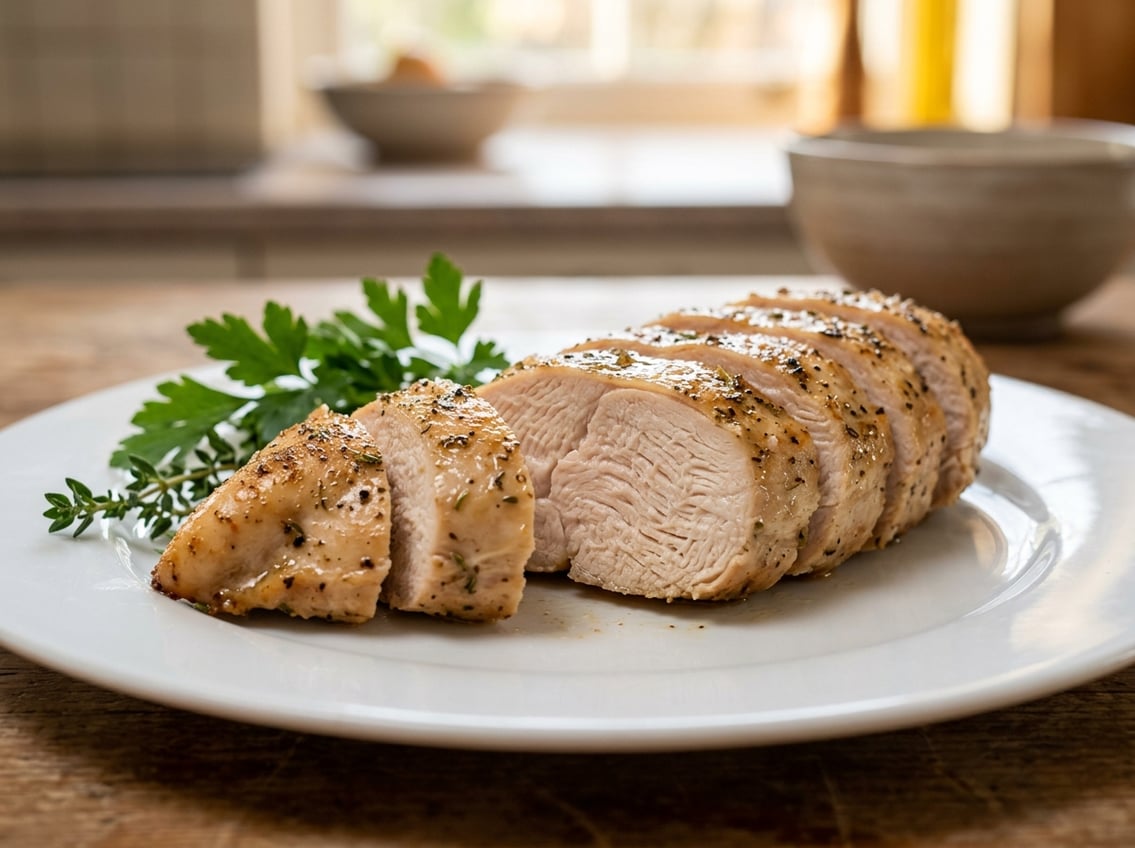
You can usually fix the problem once you know whether the chicken is dry, underdone, or just low quality.
Rubbery chicken, chewy chicken, and bouncy chicken do not always come from the same mistake.
What Rubbery Texture Usually Means
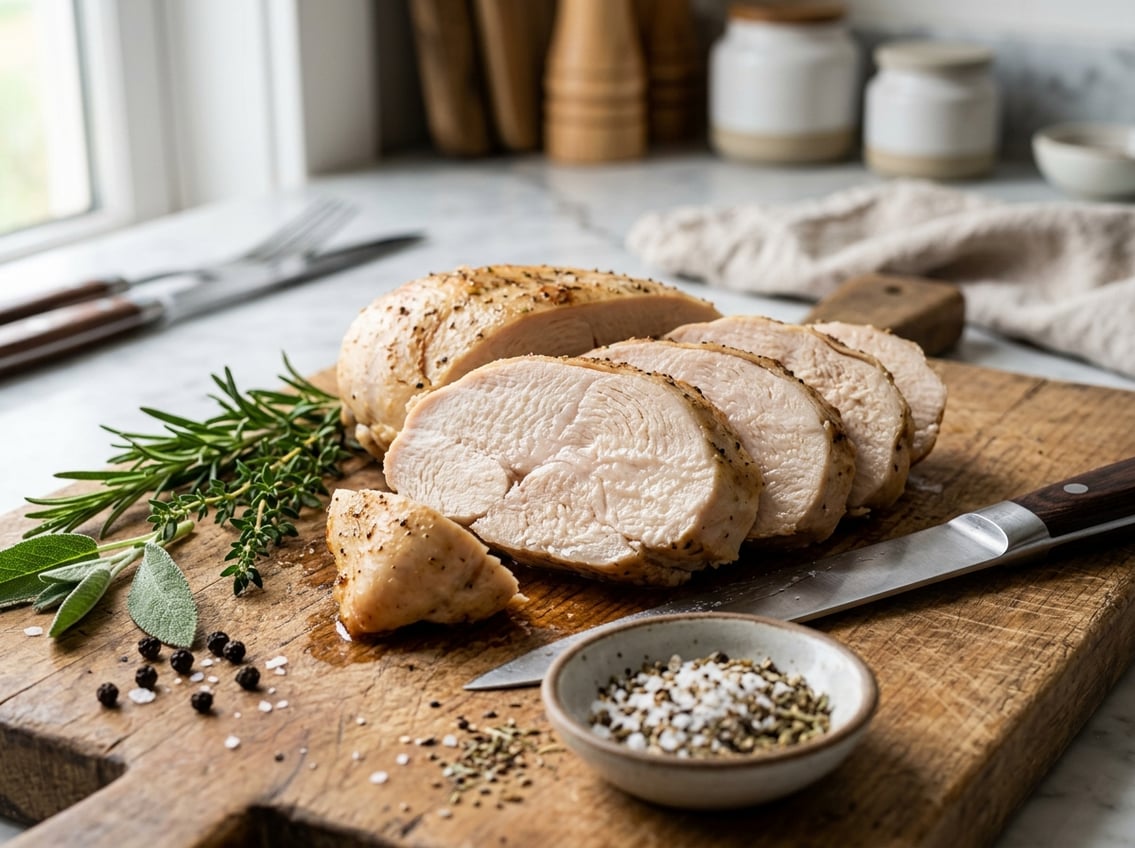
When muscle proteins tighten too much, the bite changes and moisture gets squeezed out.
That can happen with overcooked chicken, undercooked chicken, or meat that already has a tough texture.
The key is to notice whether the chicken feels dry and stringy, slick and soft, or firm in a strange way.
Those details point to different causes and different fixes.
How Overcooked Meat Becomes Chewy and Dry
Overcooking chicken is the most common reason chicken breast turns rubbery.
Cooking it too long or too hot causes the proteins to contract hard and push out moisture, leaving the meat dry, dense, and hard to chew.
That texture often appears after high-heat grilling, pan-searing, or baking past the proper finish point.
According to Own The Grill, overcooking is the top cause of rubbery chicken.
How Undercooked Chicken Feels Different
Undercooked chicken can also seem rubbery.
It often feels slippery, soft, or gelatin-like in the center rather than dry and firm.
That is a food safety issue, not just a texture issue.
If the center is still translucent or cool, the chicken needs more cooking before you eat it.
When the Problem Is the Meat, Not the Method
Sometimes you cook it correctly and still get rubbery chicken.
Lean breast meat can be dry by nature, and some chicken breasts have a tougher structure from the start.
Conditions like woody breast and white striping can make the meat firmer and less pleasant even when you use good technique.
In those cases, the chicken itself is part of the problem, not just your cooking method.
How to Diagnose the Cause Before You Fix It
Start by checking the meat before changing your recipe.
A few clear signs can tell you whether you are dealing with undercooked chicken, overcooked chicken, or a texture problem in the bird itself.
A thermometer helps, but so does looking at color, firmness, and the way the juices run.
Those clues give you a better read than guesswork alone.
Visual and Texture Signs to Check First
Overcooked chicken usually looks pale, dry, and tight.
The surface may seem wrinkled, and the meat may spring back hard when pressed.
Undercooked chicken often looks glossy, soft, and slightly translucent in the center.
If you cut it open and the middle seems slippery or raw-looking, more cooking is needed.
How to Use Internal Temperature the Right Way
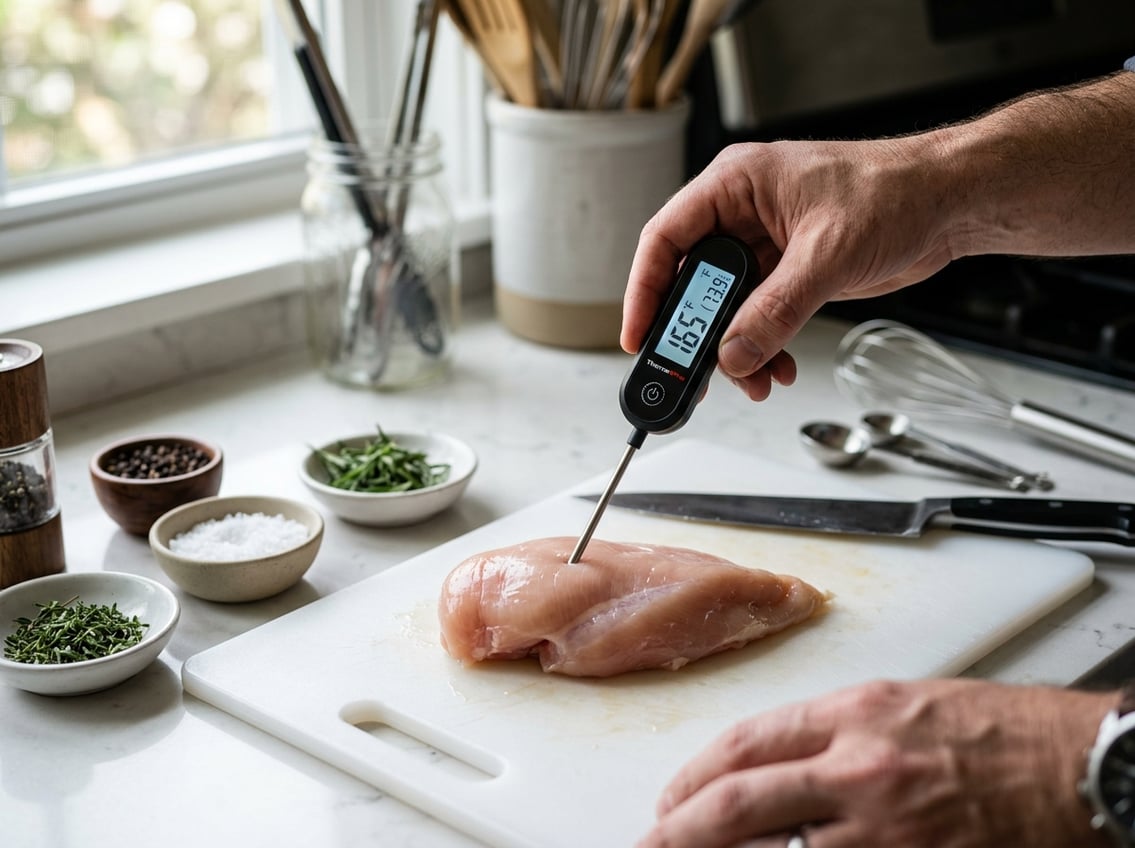
Insert a meat thermometer in the thickest part of the breast.
Chicken should reach 165°F for safety, and cooking much past that point can make it dry and rubbery, according to Own The Grill.
Pulling the chicken at the right point matters more than a set timer.
Thickness, oven heat, pan heat, and rest time all affect the final result.
How Woody Breast and White Striping Affect Texture
Woody breast is a texture defect that makes the meat unusually firm, dense, and hard to bite through.
You may notice a stiff or springy feel before cooking, and the problem often stays after cooking.
White striping shows up as visible white lines of fat on the breast.
It can point to lower-quality texture and flavor, which can add to the feeling that your chicken is tough.
Best Ways to Prevent Tough, Bouncy Chicken
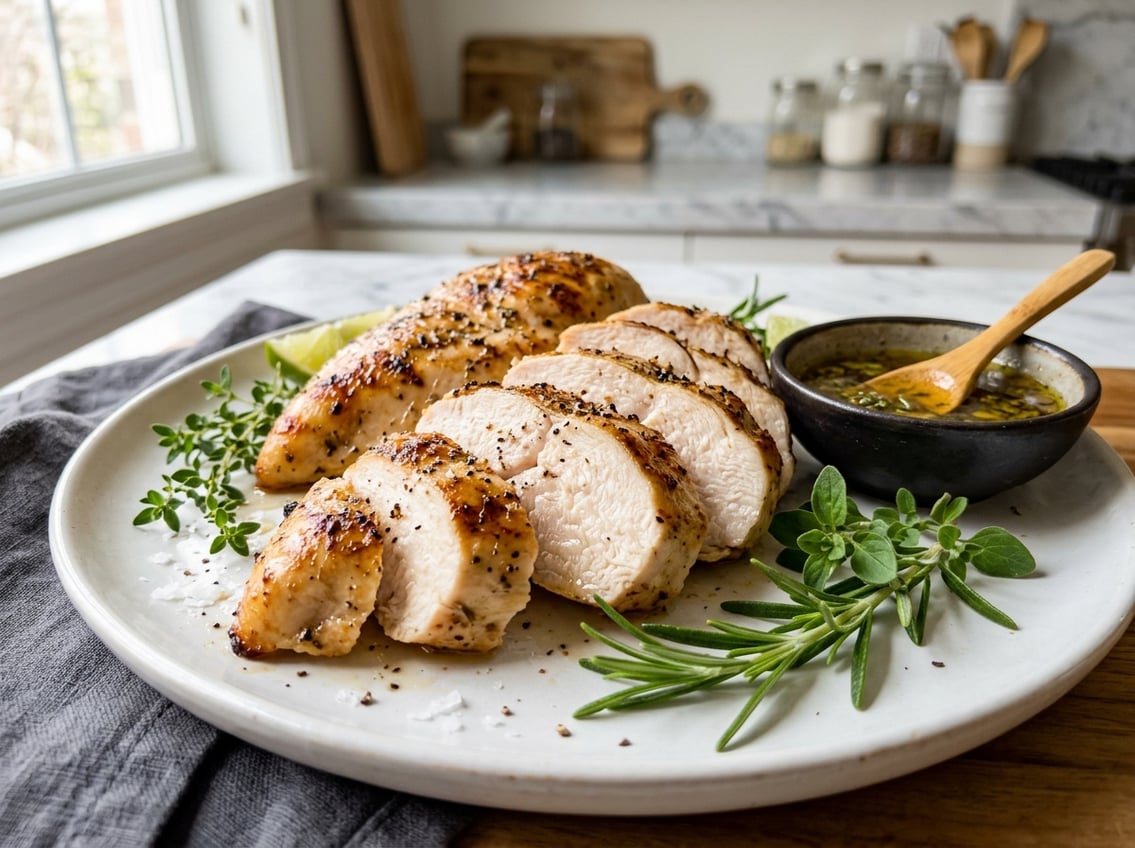
You can prevent rubbery chicken by controlling heat, thickness, moisture, and meat quality.
The goal is even cooking and a final temperature that is safe without being pushed too far.
A thermometer, a simple brine, and better prep can turn chicken breast from dry and bouncy to tender and moist.
Cook to Temperature Without Overshooting
Cook chicken breast until it reaches 165°F, then stop heating it.
If you let it sit too long on high heat, the muscle fibers keep tightening and the meat gets tougher.
This is where a thermometer matters most.
A few extra degrees can change the texture more than you expect.
Prep for Even Cooking With Pounding or Slicing
Uneven thickness causes uneven cooking.
A thick end may still be undercooked while a thin end dries out, which can leave the whole piece with a bad texture.
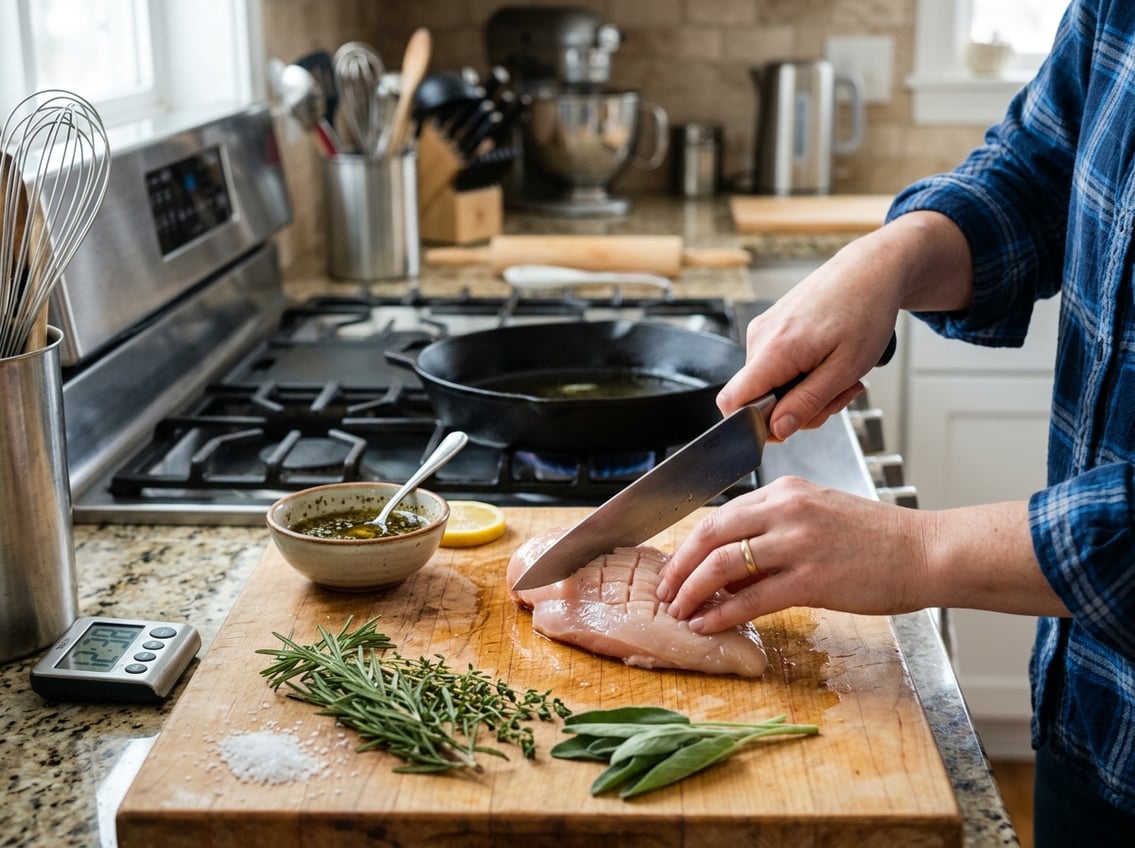
Pound the breast to an even thickness, or slice very thick pieces in half.
Own The Grill recommends pounding chicken evenly so it cooks more consistently.
Use Brining, Marinades, and Resting to Hold Moisture
A short brine can help the meat hold on to moisture and stay more tender.
Marinades add flavor and can support a softer bite, especially when they include oil and a mild acid.
Rest cooked chicken for a few minutes before slicing.
That helps the juices settle so the meat stays juicier on the plate.
Choose Better Poultry at the Store
Buy high-quality chicken when possible.
Look for breast meat that is not overly firm, and avoid packages with obvious white striping or odd texture.
Smaller, better-handled chicken often cooks more evenly.
Own The Grill also notes that air-chilled or organic options may give better results in some cases.
How to Salvage a Bad Batch
If your chicken is already rubbery, you may still be able to improve it.
The right move depends on whether the meat is undercooked, overcooked, or just dry.
You cannot fully reverse a tough texture, but you can often make the meal more usable.
Sauce, broth, slicing, and shredding all help.
When It Is Safe to Keep Cooking
If the center is below 165°F or still looks raw, keep cooking it.
Use moderate heat so you do not turn the outside dry before the inside is done.
If it is already at temperature and feels rubbery, more heat will not always help.
In that case, stop cooking and move on to moisture-based fixes.
How to Add Back Moisture With Sauce or Broth
Slice the chicken and let it sit in warm broth, pan juices, or sauce for a few minutes.
That can soften the bite and make the meat easier to eat.
Cream sauces, gravy, salsa, or stir-fry sauce all work well.
The goal is not to hide the texture, only to add enough moisture to improve it.
When to Shred, Slice, or Repurpose the Meat
Use rubbery chicken breast in dishes where texture matters less. Shred it for tacos, chop it for soup, or slice it thin for sandwiches and salads.
If the breast feels especially tough, cut it into thinner pieces to make it easier to chew. Repurpose the meat to help save the meal and reduce waste.


