
How Should Chicken Breast Look When Cooked? Key Signs
You can tell a lot from the look of chicken breast when it is done, but appearance alone should not be your only check.
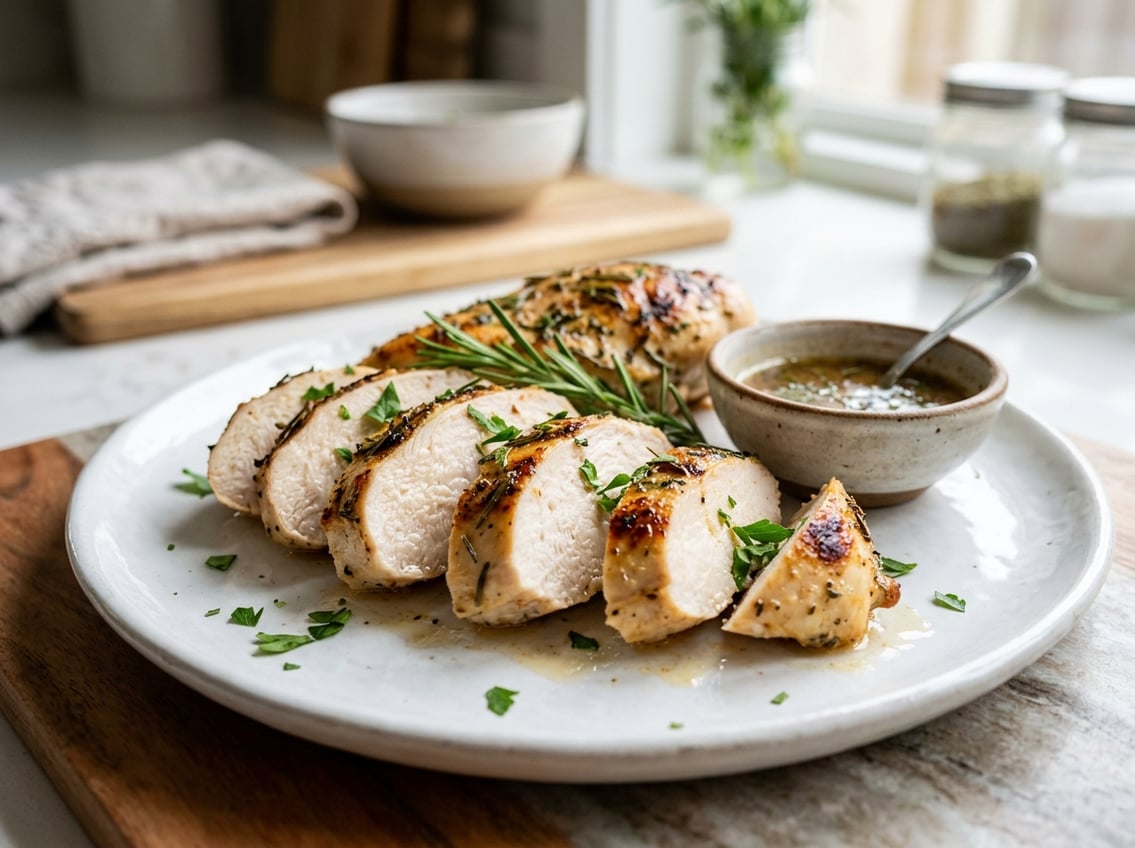
A fully cooked chicken breast looks opaque, white to very light tan in the center, feels firm to the touch, and reaches a safe internal temperature of 165°F.
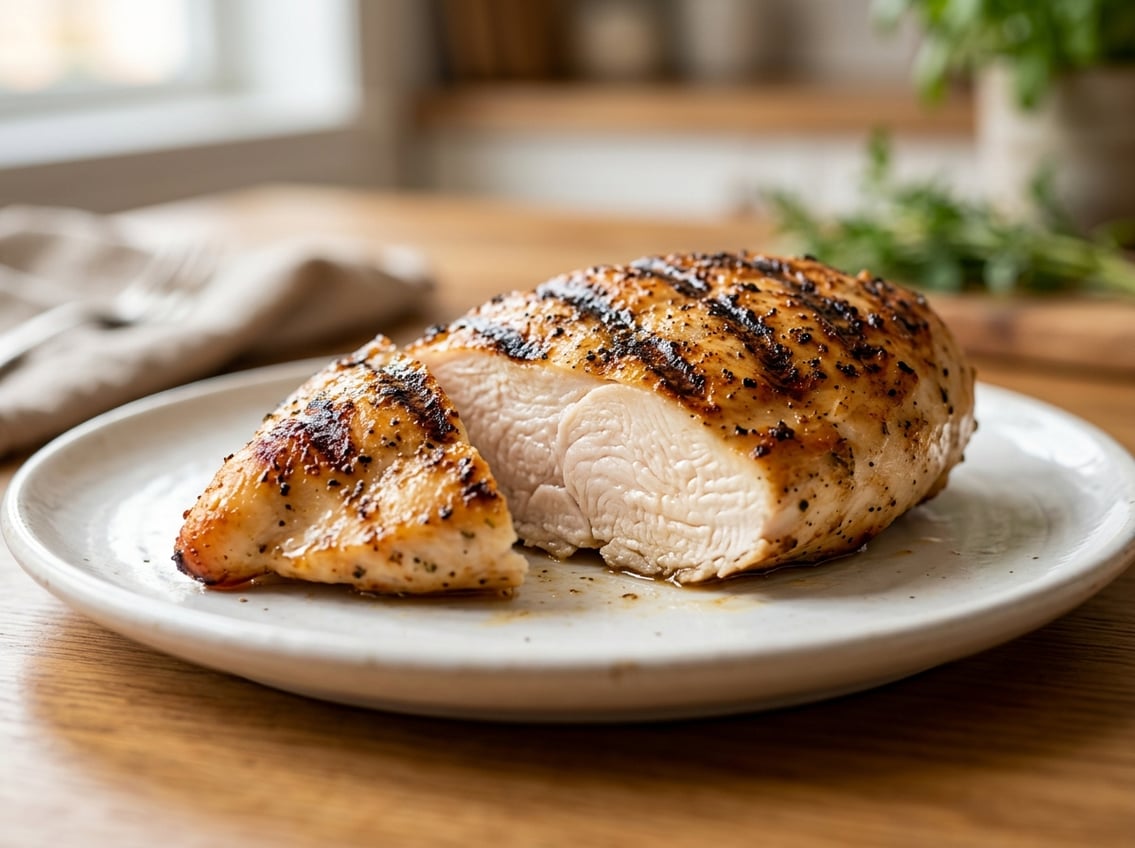
If you want to know how chicken breast should look when cooked, check that it no longer looks raw in the middle.
The center should look opaque instead of translucent, and the juices should not be pink or bloody.
Combine a visual check with a temperature check for a safer, clearer result than guessing from color alone.
Signs Chicken Breast Is Done
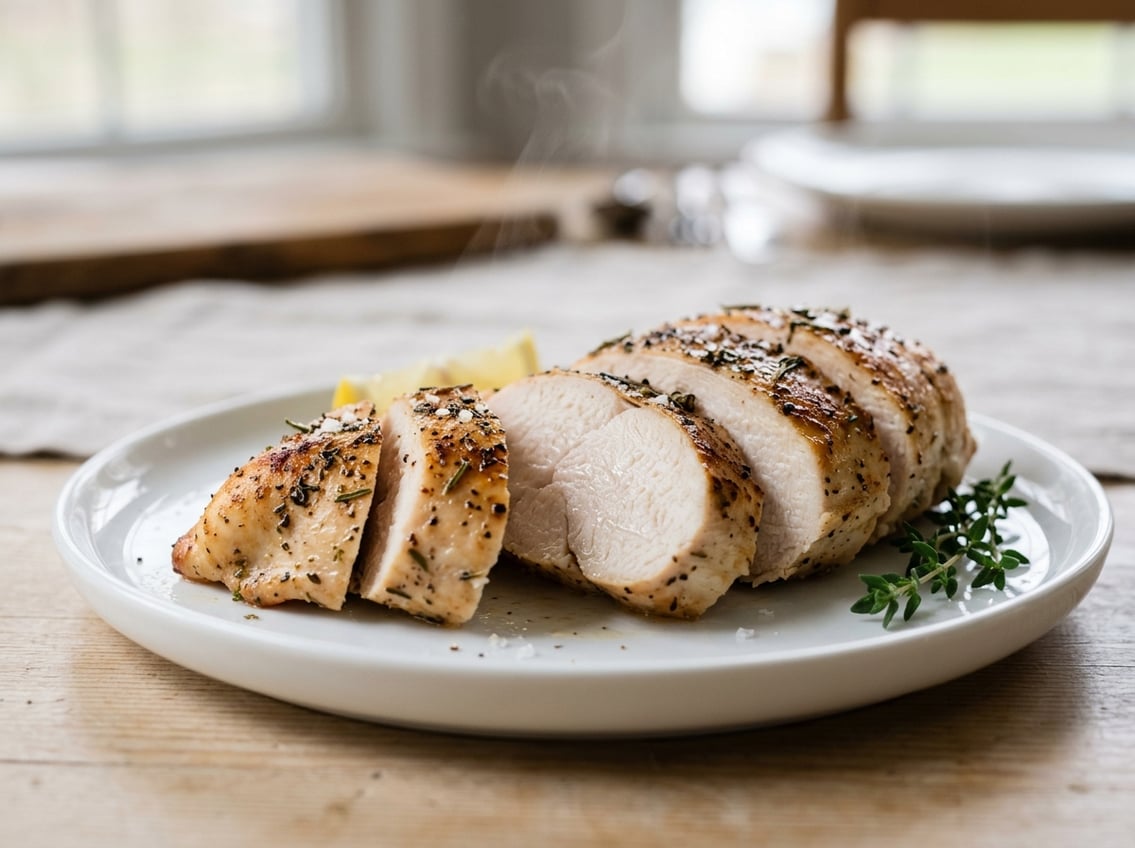
A cooked chicken breast looks white or very light tan in the center, with no shiny raw-looking spots.
The texture feels firm, and the juices run clear or very light in color.
A meat thermometer gives the most reliable answer.
Color and Opacity in the Center
The center should look opaque, not glassy or translucent.
When you cut into the thickest part, you should see solid white meat, not pink or see-through areas.
What cooked chicken looks like can vary by cooking method, especially near the surface.
Even so, the middle should not look raw.
A fully cooked chicken breast usually has a uniform color through the thickest part.
Firm Texture Without Rubberiness
Cooked chicken breast feels firm when you press it lightly.
It should spring back a little, not sink in like raw meat.
It feels set and tender, not soft, slippery, or rubbery.
If the meat still feels loose or jiggly in the center, it likely needs more time.
Whether Juices Should Run Clear
Juices should run clear or nearly clear when the chicken is done.
Pink or red juices mean it needs more cooking.
This is a useful clue when you do not have a thermometer.
Still, color can vary with marinades, pan drippings, and bone contact, so use juices as a supporting sign.
The Safest Internal Temperature to Check
The safest internal temperature for cooked chicken breast is 165°F in the thickest part.
Insert the thermometer into the center of the breast, not near the pan or bone.
165°F is the target for cooked chicken.
How to Tell if It Is Undercooked or Overdone
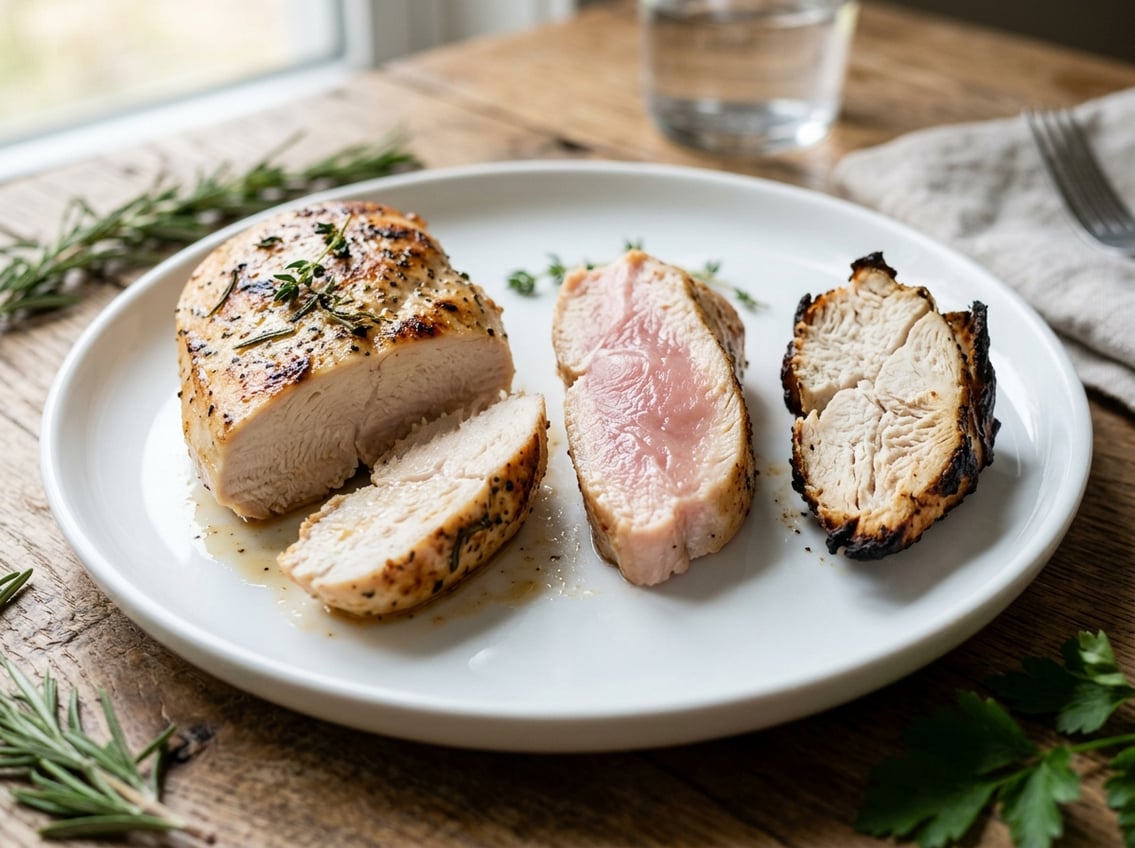
Undercooked chicken breast often looks glossy, pink in the center, or soft in a way that seems raw.
Overcooked chicken breast looks pale, dry, and stringy.
Warning Signs of Undercooked Meat
An undercooked chicken breast may have a translucent center, pink streaks, or juices that look red or cloudy.
The texture often feels soft or slippery instead of firm.
Eating undercooked chicken raises the risk of foodborne illness, including infections such as campylobacter.
If the center still looks raw, keep cooking it until the thickest part reaches a safe temperature.
What Overcooked Breast Looks and Feels Like
An overcooked chicken breast usually looks very dry and pale.
The surface may split, and the meat can pull apart into stringy pieces.
It often feels tough or chewy rather than juicy.
You can still eat it safely if it reached 165°F, but the texture will not be ideal.
Why Pink Spots and Juices Can Be Confusing
Pink spots do not always mean the chicken is unsafe, and clear juices do not always guarantee doneness.
Some chicken stays slightly pink from bone contact, freezing, smoke, or marinades.
Check doneness with a thermometer when possible.
Visual signs help, but temperature gives the final answer.
Cooking Methods That Affect Appearance
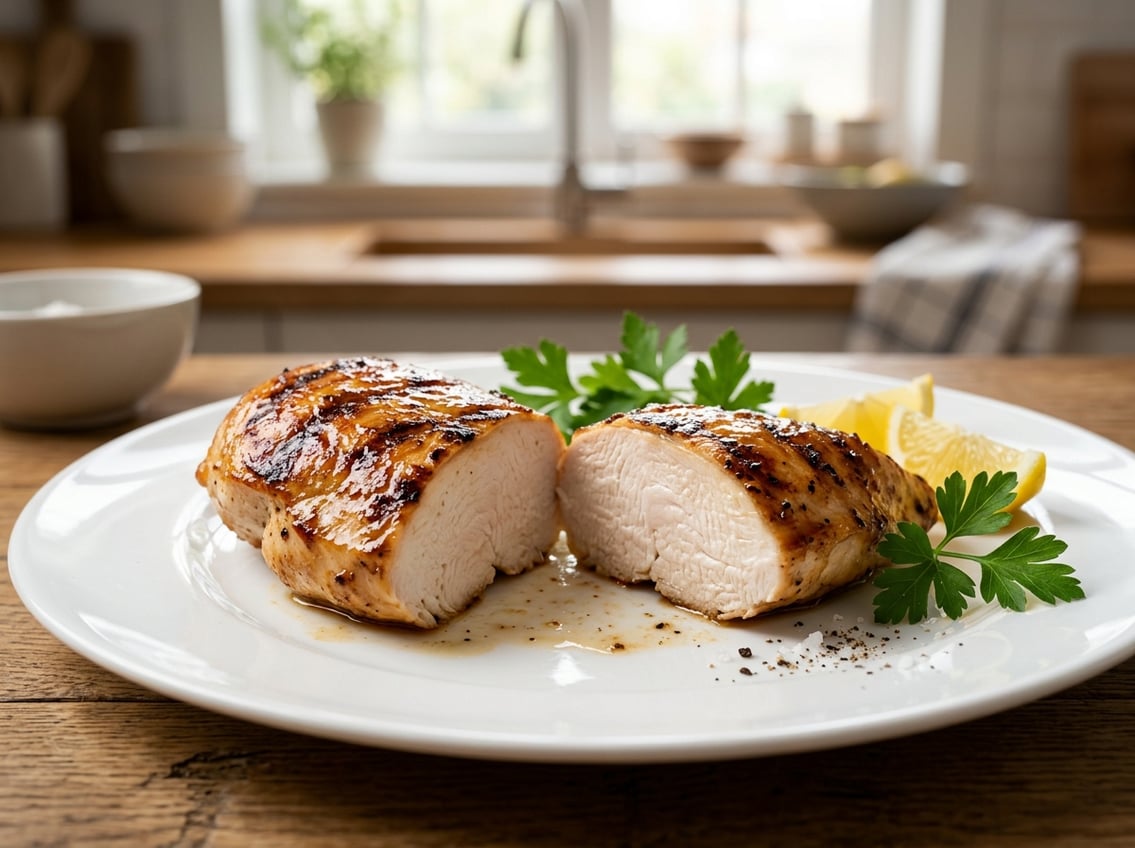
Different cooking methods change the color of the outside and the way the center looks when sliced.
The goal stays the same: cooked chicken breast should be opaque inside and safe to eat.
Some methods brown the outside more, while gentler methods keep the surface lighter.
Baked and Roasted Results
Baked and roasted chicken breast often has a golden-brown surface with a white or pale center.
The outside usually looks drier and more even than pan-cooked chicken.
If you roast at a higher heat, the edges may brown faster than the middle cooks.
That is normal, as long as the thickest part reaches 165°F and the center looks opaque.
Pan-Seared and Grilled Results
Pan-seared and grilled chicken breast often has more browning, char, or dark grill marks.
The inside should still look white and fully set when sliced.
These methods can make the outside look done before the middle is ready.
If you cook chicken breast this way, rely on the thermometer more than the surface color.
Poached and Other Gentle Cooking Styles
Poached chicken breast and other gentle methods usually look paler than roasted or grilled chicken.
The meat can stay very light in color, with little or no browning.
That lighter look can still be fully cooked if the center is opaque and reaches 165°F.
Gentle cooking often gives a softer texture and a more even finish.
Resting, Storing, and Reheating Safely
Once chicken breast is done, how you handle it affects both texture and safety.
Resting helps the juices settle, while proper storage keeps cooked chicken safe for later meals.
Good reheating keeps the meat from drying out.
Why Resting Improves Moisture and Texture
Let cooked chicken breast rest for a few minutes before slicing.
This gives the juices time to move back through the meat instead of running out onto the cutting board.
Resting also helps the texture stay more tender.
A chicken breast that rests usually slices more cleanly and looks more even inside.
How to Store Leftovers Correctly
Cool cooked chicken quickly, then store it in a covered container in the refrigerator.
Keep it separate from raw foods so it does not pick up bacteria.
Use leftovers within a few days, and reheat them until hot throughout.
For storage basics and shelf-life guidance, see this guide to cooked chicken breast storage.
When to Freeze Cooked Chicken
Freeze cooked chicken breast if you want to keep it longer.
Wrap it well or use a sealed freezer-safe container to limit freezer burn.
Freeze cooked chicken while it is still fresh, not after it has sat in the fridge too long.
Thaw it in the refrigerator before reheating so it stays safer and tastes better.


