
Is It Good to Pound Chicken Breast? When and Why
You may wonder, is it good to pound chicken breast before cooking it. The short answer is yes, when you want faster, more even cooking and a more uniform shape.
Pounding is not required for every recipe. It can make a big difference when your chicken breast is thick on one end and thin on the other.
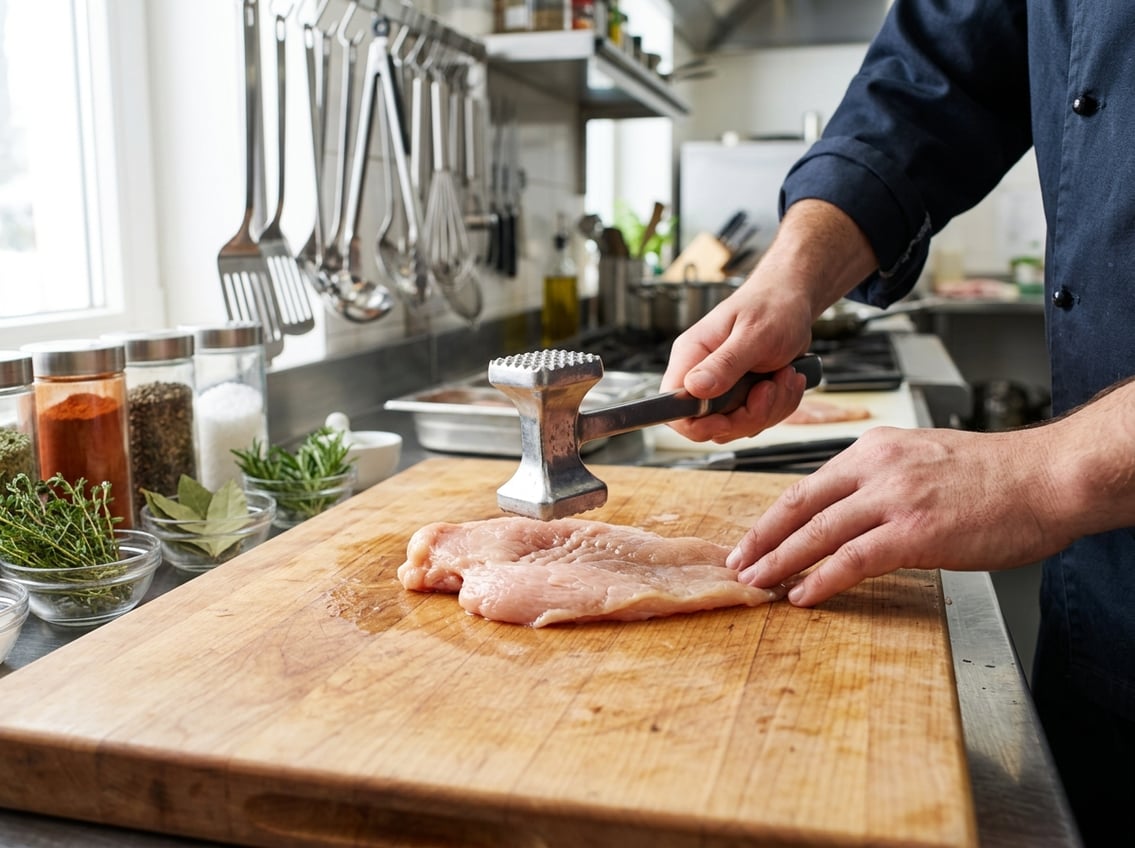
Pounding chicken breast flattens the meat into an even thickness. This helps the chicken cook evenly and reduces the chance of dry edges with a raw center.
The Kitchn’s guide explains that pounding also helps chicken cook faster when you use even, direct heat. If you have ever asked yourself should I pound chicken breast, the answer depends on the recipe.
In some dishes, pounding improves texture, helps with portion control, and makes chicken easier to cook well.
When Pounding Helps Most
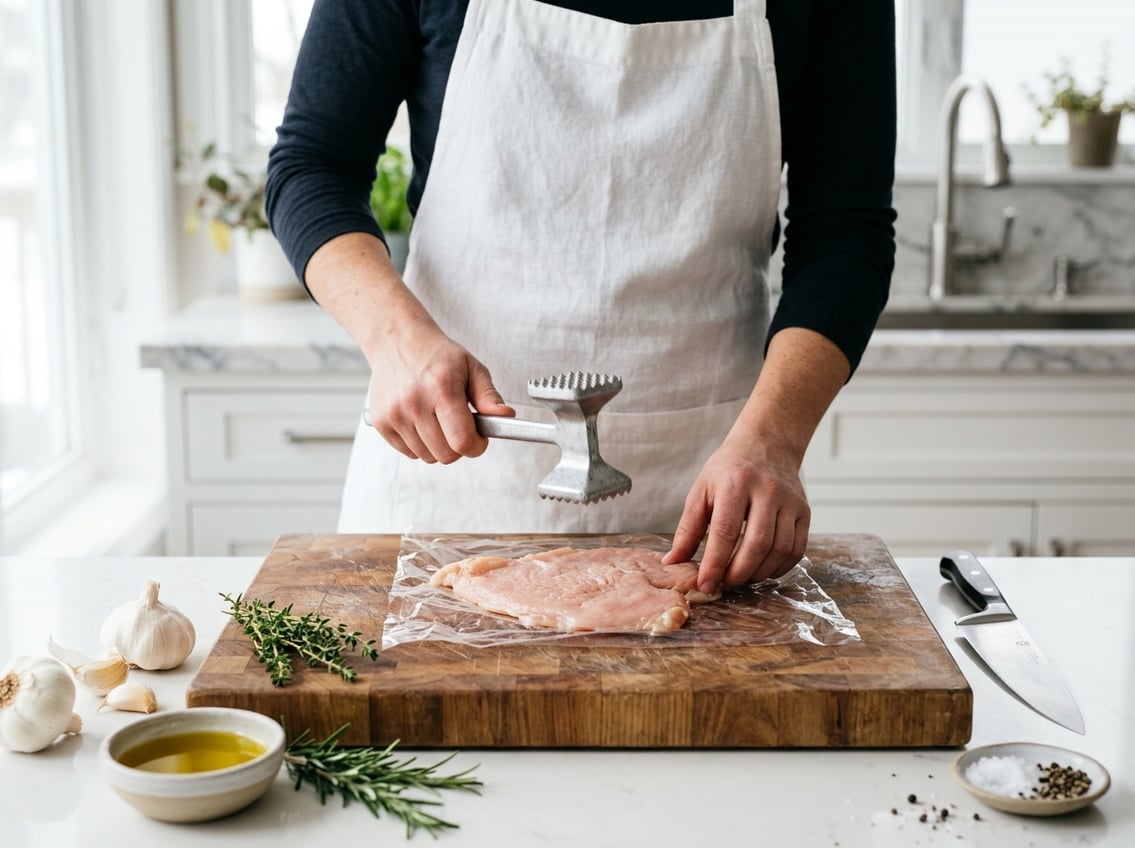
Pounding helps most when you want thin, even pieces that cook quickly and predictably. It is especially useful for pan-cooked dishes, cutlets, and recipes where the chicken needs to be the same thickness from end to end.
For Faster, More Even Cooking
Flattening the thickest part makes a noticeable difference in how evenly chicken cooks. A breast with a tapered shape can overcook at the thin edge before the center is done.
Many cooks pound chicken breasts before pan-searing, baking, or shallow frying. Pounding works well any time you apply even, direct heat.
For Thin, Quick-Cooking Cutlets
Pounding is one of the simplest ways to create chicken cutlets. Thin cutlets cook fast, brown well, and fit neatly into sandwiches, salads, and simple dinner plates.
Pounding also helps you keep the pieces consistent in size. This makes it easier to cook several cutlets at once without guessing which one needs more time.
Before Grilling or Pan-Searing
A flatter breast can help you avoid a dry outside and underdone center before grilling or pan-searing. This matters most when your chicken is uneven or especially thick.
A thinner shape gives you more control when cooking over high heat. You can sear the surface without waiting too long for the middle to cook through.
For Dishes Like Chicken Piccata
For dishes like chicken piccata, pounding is part of the style. The cutlets should be thin enough to cook fast and stay tender while they soak up sauce.
The same idea works for schnitzel, chicken marsala, and similar recipes. In these cases, pounding is not just about speed, it is about getting the right texture and shape for the dish.
When to Skip This Step
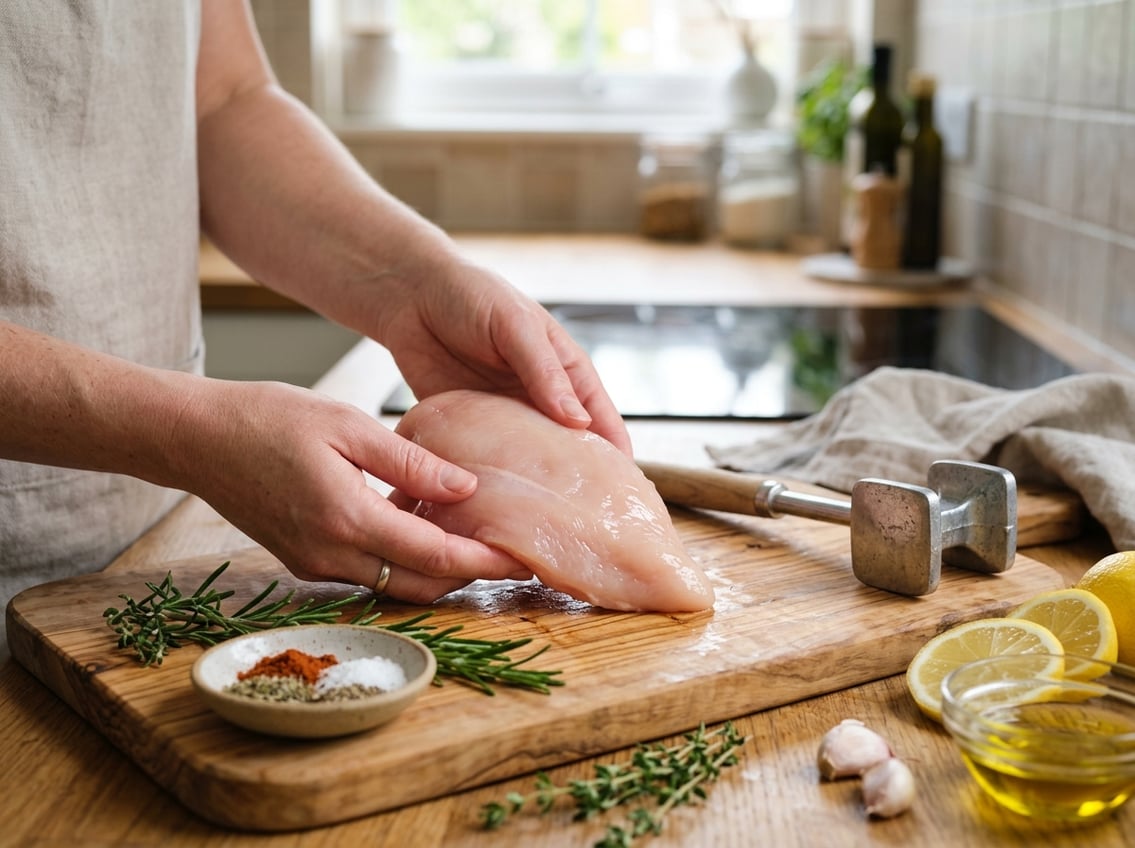
You do not need to pound every chicken breast. Skip it when the recipe depends on thickness, a structured shape, or a filled center that needs to stay intact.
Recipes That Need a Thicker Center
If you are making stuffed chicken breasts, you usually want to keep the breast thick enough to hold the filling. Flattening can make the meat tear or spill filling during cooking.
You also may not want to pound when the recipe is designed for roasting a whole, thicker breast. In those cases, the shape helps the meat stay juicy while it cooks.
When Not to Pound Chicken
Use caution when the breast is already thin, small, or very delicate. A gentle hand matters more than force.
If flattening would damage the structure you need, skip pounding. This can include stuffed chicken breasts, some oven-roasted recipes, and any preparation where the center thickness matters more than evenness.
Texture Risks From Over-Pounding
Too much force can make chicken stringy or uneven. It can also create holes or torn edges, which can dry out faster in the pan.
Aim for enough thickness control to help cooking, not so much that the meat loses its natural texture.
How to Pound Chicken Correctly
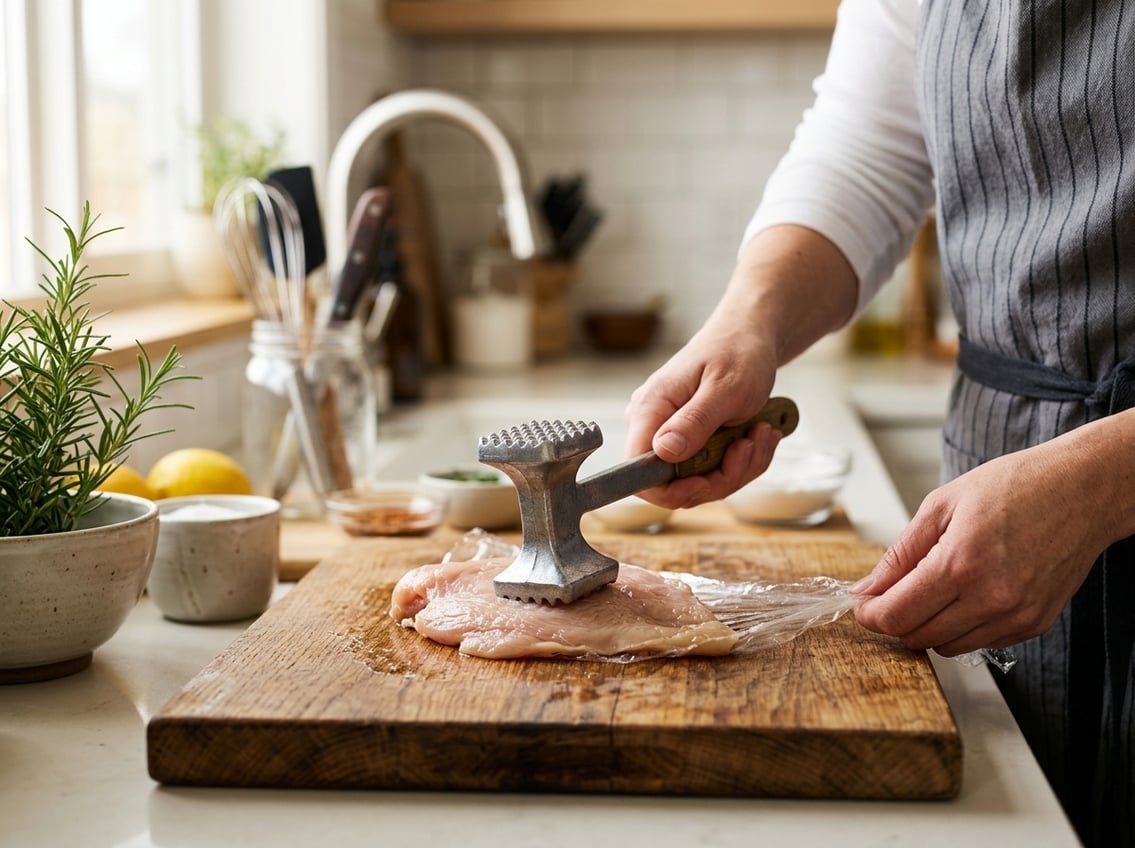
The goal is not to crush the chicken. Use a steady technique that spreads the meat into an even layer without tearing it.
Best Tools for Pounding Chicken
A meat mallet works well because it gives you control. A rolling pin also works, and a heavy skillet or empty wine bottle can do the job in a pinch.
For cleaner prep, place the chicken in a zip-top bag or between sheets of plastic wrap. That keeps the work area tidier and reduces splatter.
Step-by-Step Pounding Technique
- Trim off any visible fat or tough membranes.
- Place one chicken breast in a bag or between plastic layers.
- Press out excess air so the chicken stays flat.
- Start in the thickest area and use firm, even taps.
- Work outward until the breast is the same thickness across the piece.
- Stop when it reaches the thickness your recipe needs.
Slower and lighter taps give you better control than hard strikes.
How Thin to Go for Different Recipes
For cutlets, thin is the goal. For pan-searing or quick sautéing, you usually want a moderate flattening so the meat cooks evenly without becoming fragile.
Think in terms of recipe fit. Thin enough to cook at the same pace, thick enough to stay juicy and hold together.
Marinating and Cooking After Pounding
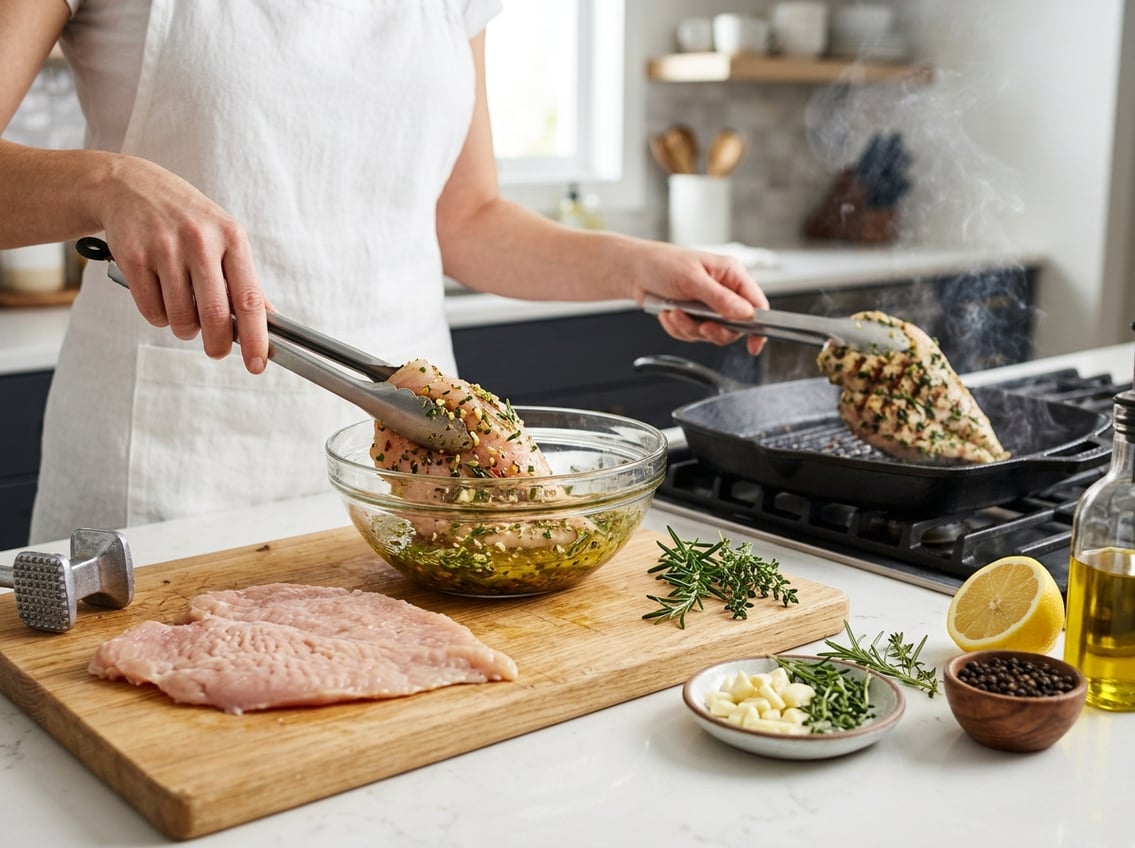
Pounding can change how your chicken absorbs flavor and how fast it cooks. It also affects how long you should keep it in a marinade.
Pounding Chicken Before Marinating
Pounding chicken before marinating can help the marinade coat the surface more evenly. A flatter piece gives the seasoning more contact with the meat, which can improve flavor coverage.
Marinating is still mostly about surface flavor, not deep penetration. Flatter pieces often season more consistently than uneven ones.
How Long to Marinate Chicken
If you plan to marinate chicken, keep the time reasonable. A quick soak can add flavor without changing the texture too much.
For lean chicken breast, long marinating times are not always better. Acidic marinades can start to affect the surface if left on too long, so short to moderate times usually work best.
Using a Quick Marinade Without Ruining Texture
A quick marinade works well after pounding, especially when the chicken is already thin.
Oil, salt, herbs, garlic, and a little acid add flavor without making the meat mushy.
If you want marinating chicken to support evenly cooked chicken, keep the pieces similar in thickness.
Avoid over-marinating very thin cutlets for good flavor and a clean texture.


