
What Should Chicken Breast Be Cooked To? Safe Temp Guide
You should cook chicken breast to 165°F, measured in the thickest part with a meat thermometer. This gives you the safest result and the best chance at a juicy chicken breast.
That standard helps you cook chicken breast with confidence, whether you bake, pan-sear, or grill.
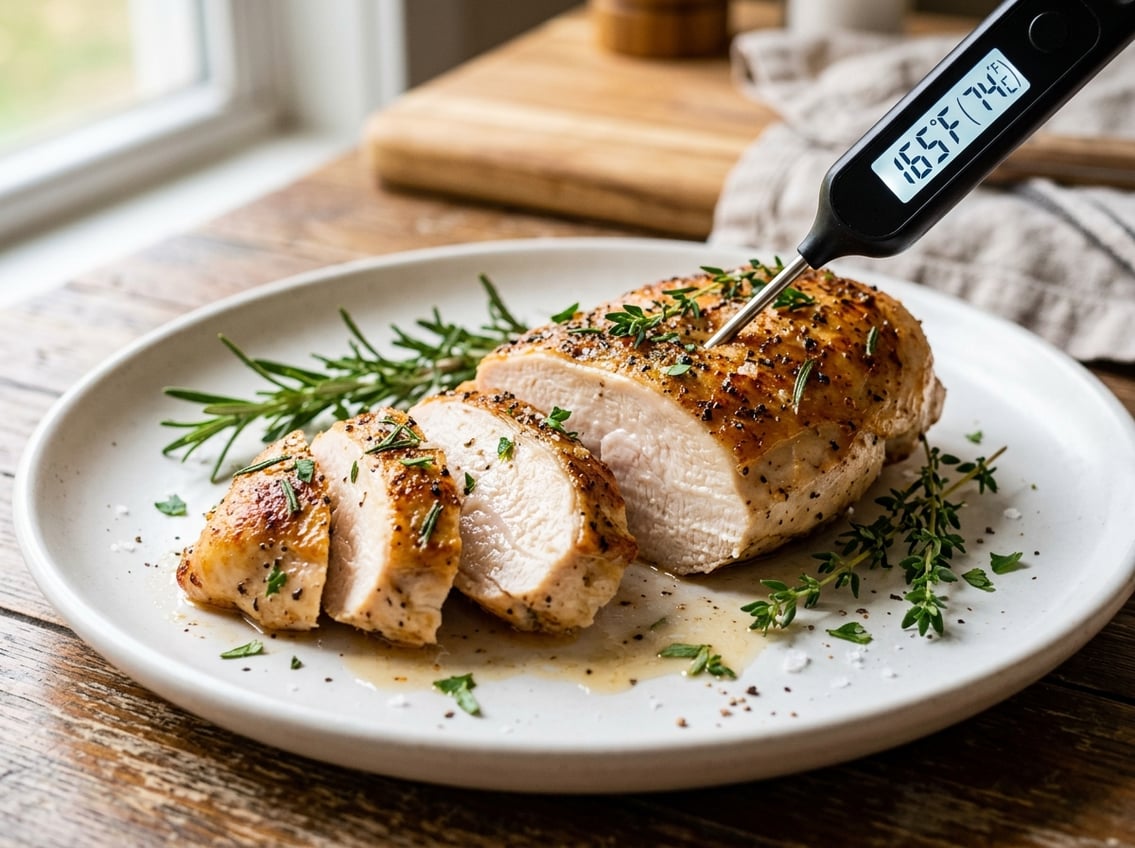
If you want a perfect chicken breast, check the internal temperature and pull it at the right moment. That small step makes a big difference in texture, safety, and flavor.
Chicken breast is lean, so it dries out fast if you cook it too long. A meat thermometer or instant-read thermometer takes the uncertainty out of the process and helps you stop cooking at the right time.
The Safe Internal Temperature to Aim For
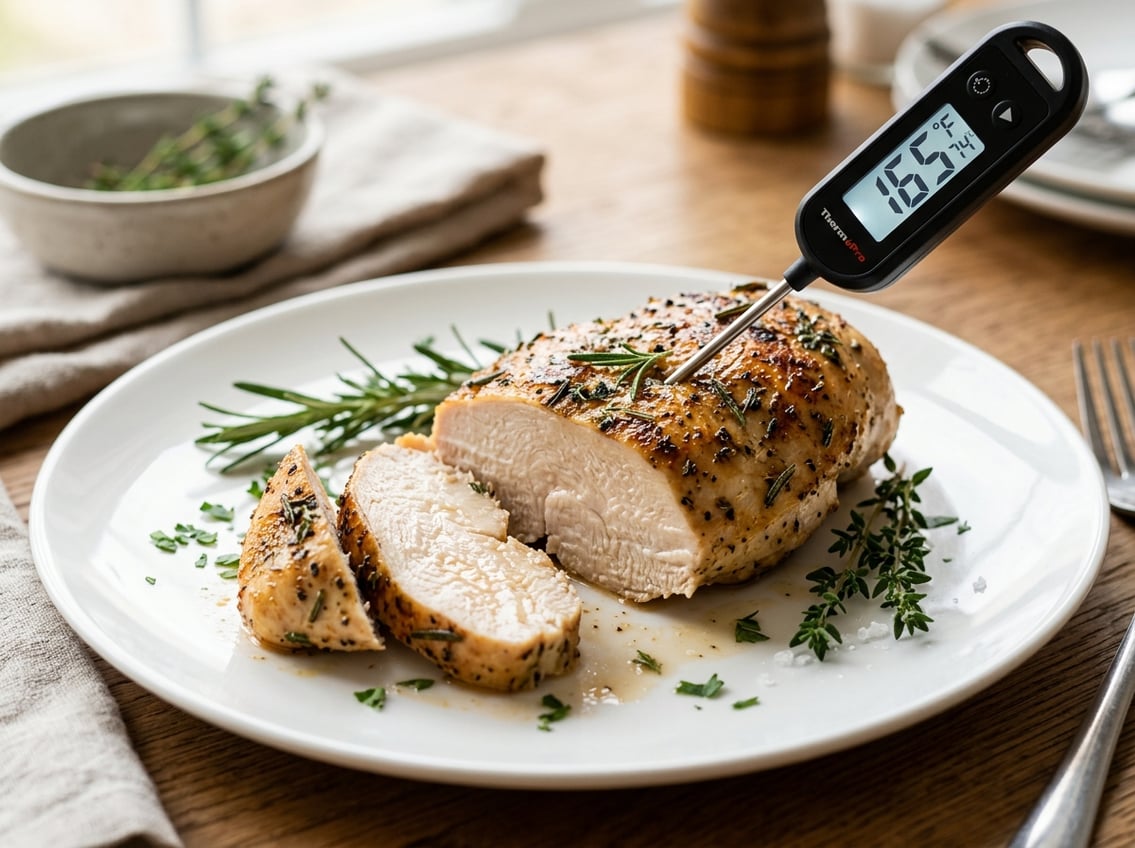
Aim for 165°F in the thickest part of the chicken breast, or just under before rest time if you account for carryover cooking. The USDA recommends this minimum to reduce the risk from bacteria such as campylobacter.
Why 165°F Is the Food Safety Standard
165°F makes chicken breast safe to eat. This rule works in home kitchens and removes guesswork.
That number applies to the center of the meat, not just the surface. A browned outside does not mean the inside is done.
When to Pull Chicken Breast Off the Heat
Many cooks pull chicken breast off the heat a little early, then let it rest so the temperature can finish rising. A good pull point is often around 150°F to 155°F, depending on thickness and cooking method.
This works well when you use an instant-read thermometer and know the meat will keep cooking after it leaves the pan or oven.
How Carryover Cooking Affects Final Doneness
Carryover cooking is the heat that keeps moving through the meat after you remove it from the burner, oven, or grill. Chicken breast can climb several degrees during rest, especially when it is thick.
If you leave it on the heat until it is far above 165°F, you lose moisture fast and end up with a drier result.
How to Check Doneness Accurately
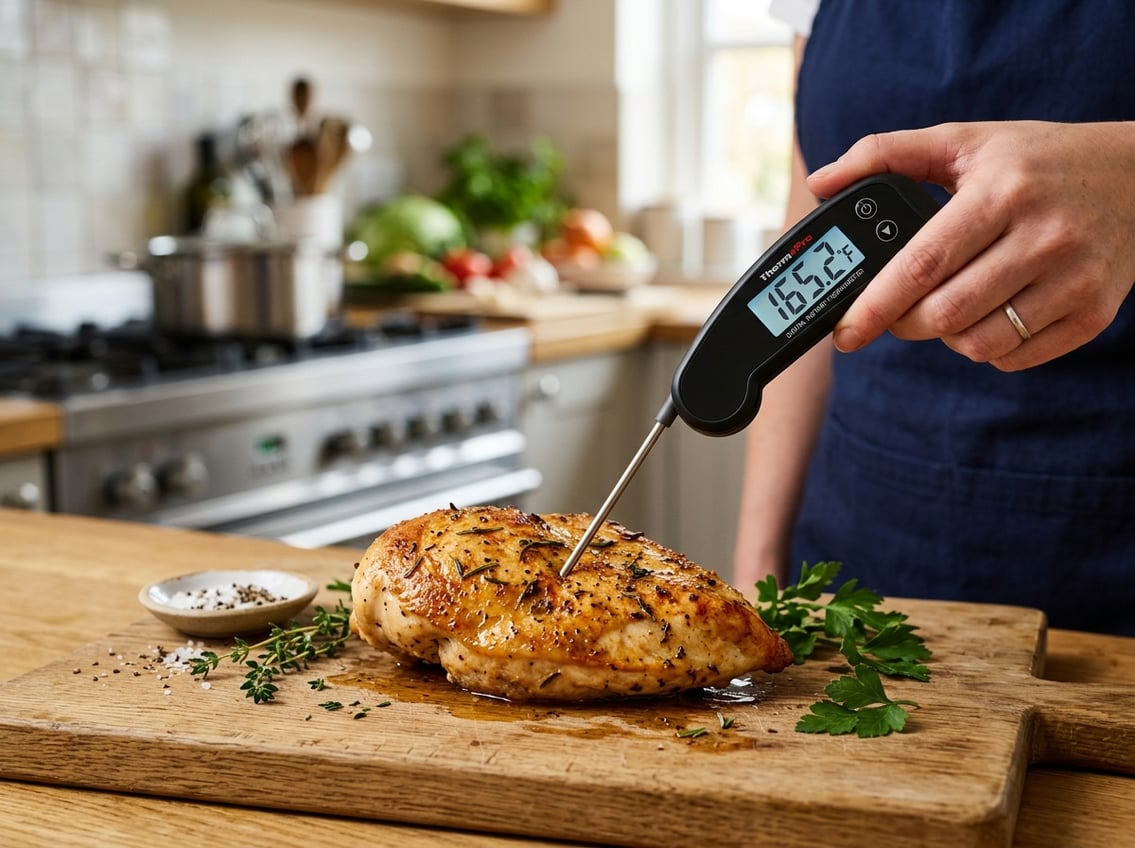
A meat thermometer is the most reliable way to tell when you cook chicken breasts safely. Color, juices, and texture can help, but they are not accurate enough on their own.
Use an instant-read thermometer or probe thermometer to check the thickest part. Make sure the reading reflects the center of the meat, not the pan or a pocket of fat.
Where to Insert the Thermometer
Insert the thermometer into the thickest part of the chicken breast. Aim for the center, and keep the tip away from the baking sheet, skillet, or bone.
If the breast is uneven, check more than one spot. The thickest area is the spot that usually finishes last.
Instant-Read vs. Probe Thermometer
An instant-read thermometer gives you a fast reading after you open the oven or lift the pan. That makes it useful when you cook chicken breast quickly.
A probe thermometer stays in the meat while it cooks, so you can track the temperature without opening the oven. Both tools work well if you place them correctly and read them at the right time.
Mistakes That Cause Inaccurate Temperature Readings
Touching the pan with the thermometer, checking the thin end of the breast, or reading the temp before the sensor settles can throw off your result. Avoid checking right after cutting into the meat, since escaping juices can change both the reading and the texture.
Best Cooking Methods for Juicy Results
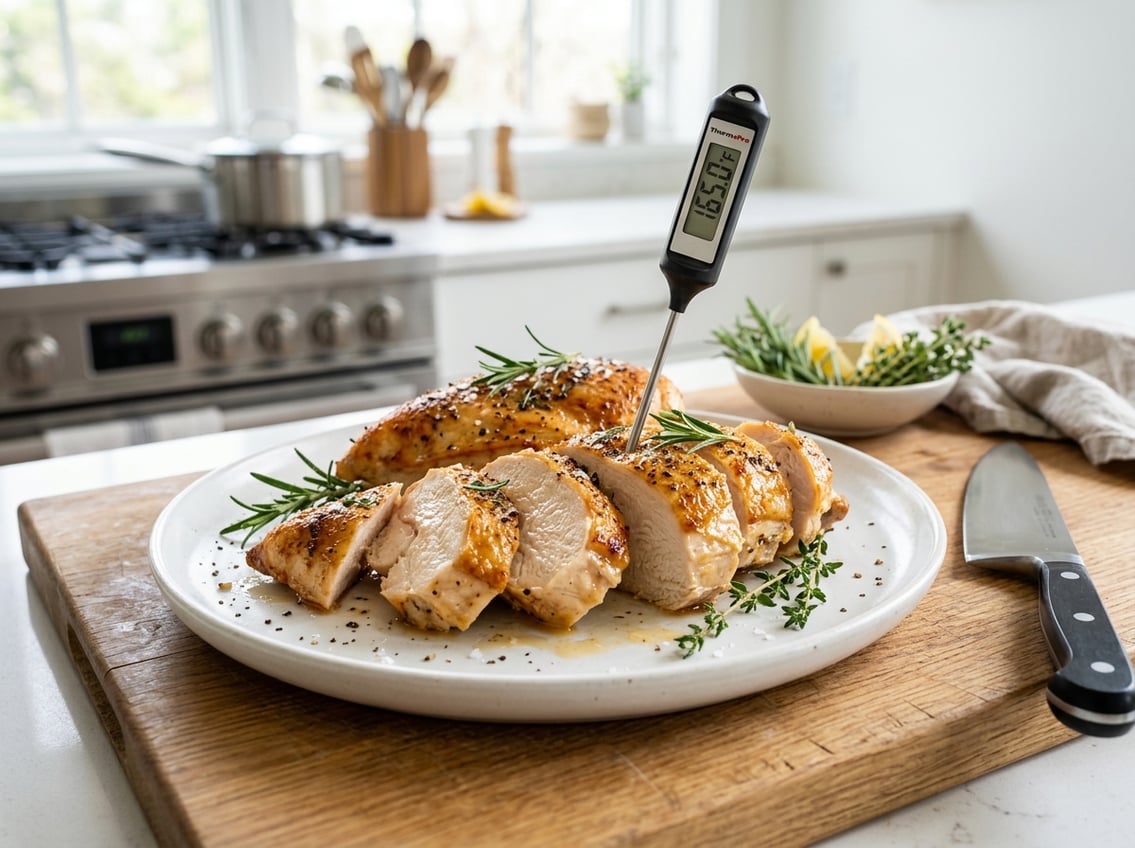
The best cooking methods for chicken breast control heat and protect moisture. Baking, pan-searing, and grilling can all work well if you manage timing and temperature carefully.
Brining or marinating ahead of time can help boneless, skinless breasts stay moist. That extra prep gives you more room for error when you cook chicken breast.
Baking Chicken Breast in the Oven
Baking chicken breasts works well when you want even cooking and low hands-on time. A moderate oven gives the meat time to cook through without a harsh blast of heat.
For better results, use evenly sized pieces and check the temperature near the end of the cook time. If the breasts are very thick, a quick pound to even them out can help them finish at the same time.
Skillet and Stovetop Timing Basics
A skillet gives you fast browning and strong flavor. Heat the pan well, add a little oil, and cook chicken breast until the outside is golden and the center reaches temperature.
Let the chicken cook undisturbed long enough to form color, then check with an instant-read thermometer near the end.
Grilling and Other Cooking Methods for Chicken Breast
Grilling adds smoke and char, which works well if you watch the heat closely. Medium heat is usually safer than very high heat, since chicken breast can dry out fast.
Other cooking methods, such as poaching or air frying, can also work if you control the final temperature. The method matters less than how well you manage doneness.
How to Keep the Meat Tender and Moist
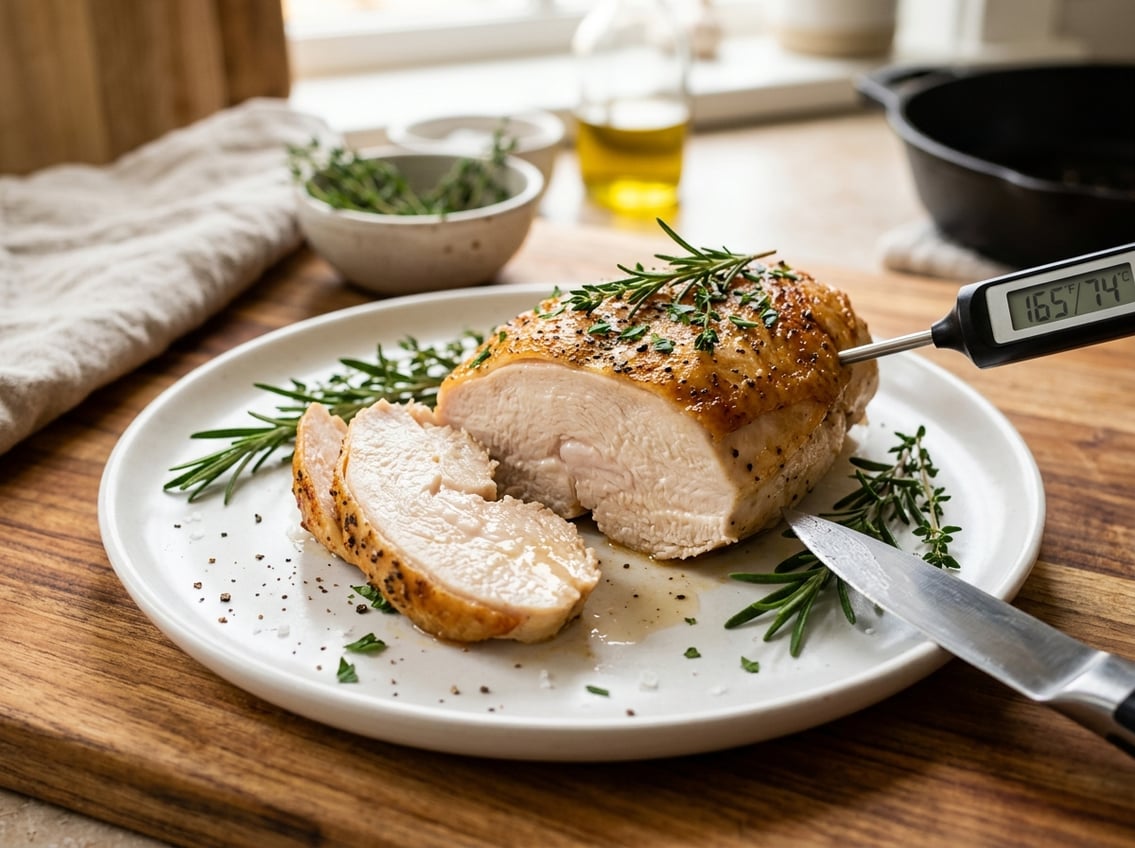
Tender chicken starts before the heat goes on. When you marinate chicken breast, size it evenly, and rest it after cooking, you give the meat a better chance to stay juicy.
Simple habits make a big difference. Small changes in prep and timing can improve the final result more than any single seasoning blend.
Why Thickness and Even Sizing Matter
Chicken breasts often come in different sizes, which makes one piece finish before another. If you cook them together without adjusting, the smaller one can dry out while the larger one finishes.
Try to choose pieces with similar thickness, or lightly pound them to even them out. That helps you cook chicken breasts more evenly and makes the timing easier to manage.
When to Brine or Marinate Chicken Breast
A brine or marinade can improve both flavor and texture. Salt helps the meat hold onto moisture, while acidic or dairy-based marinades can add tenderness and taste.
Even a short brine or an overnight marinade can help. If you want juicy chicken, this is one of the most effective steps you can take before you cook chicken breast.
Why Resting Prevents Dry Chicken
Resting lets the juices settle back into the meat instead of spilling onto the cutting board.
It also allows carryover cooking to finish the center without overcooking the meat.
Let chicken breast rest for a few minutes before slicing.
This short pause keeps the texture tender and makes each bite more moist.


