
What Does Split Chicken Breast Mean? Cut and Cooking Guide
When you ask what split chicken breast means, you are asking about a specific bone-in chicken cut. Butchers take it from a whole breast and separate it into two halves.
It is usually sold with the skin on and the rib bones still attached. The bone and skin change the cooking time and flavor.
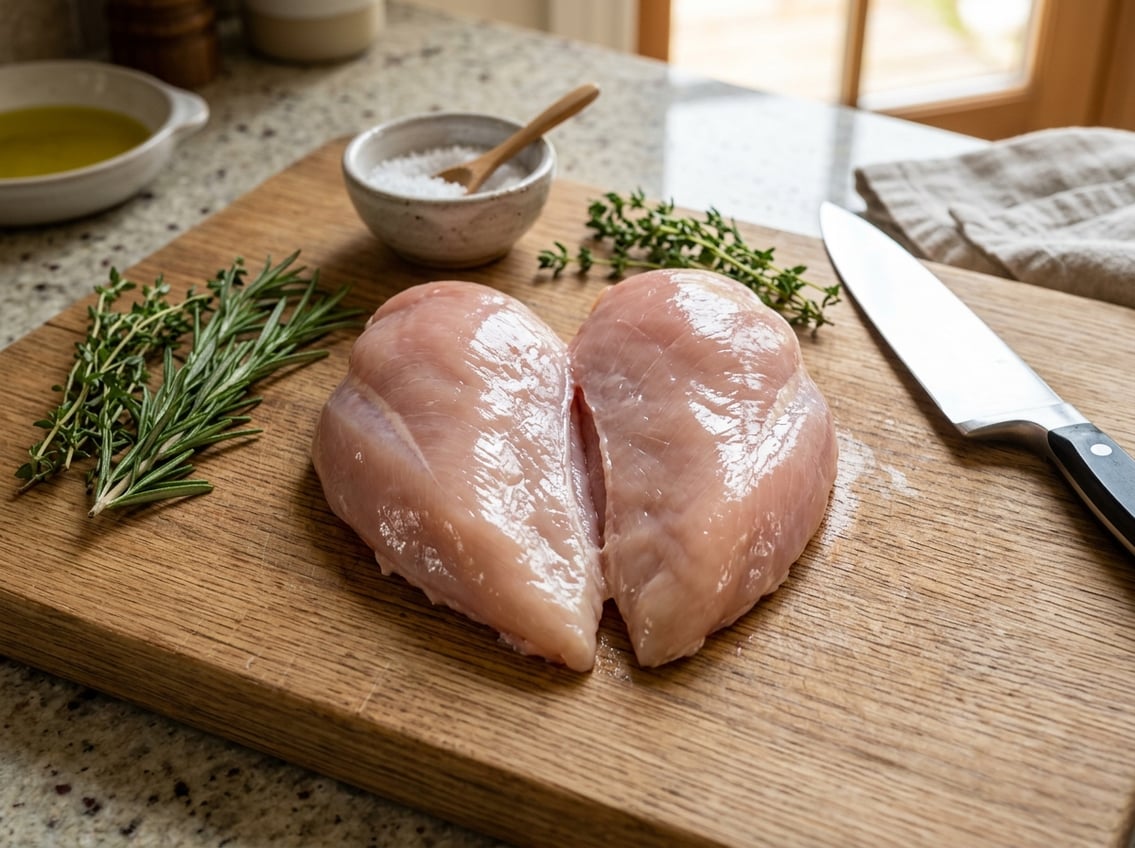
If you know how to spot a split chicken breast, you can choose the right cut for better browning and juicier meat.
In US grocery stores, the term usually means a breast split down the center line of the bird. This is different from a boneless skinless chicken breast and is closer to a bone-in chicken breast with more structure and flavor.
What the Cut Actually Refers To
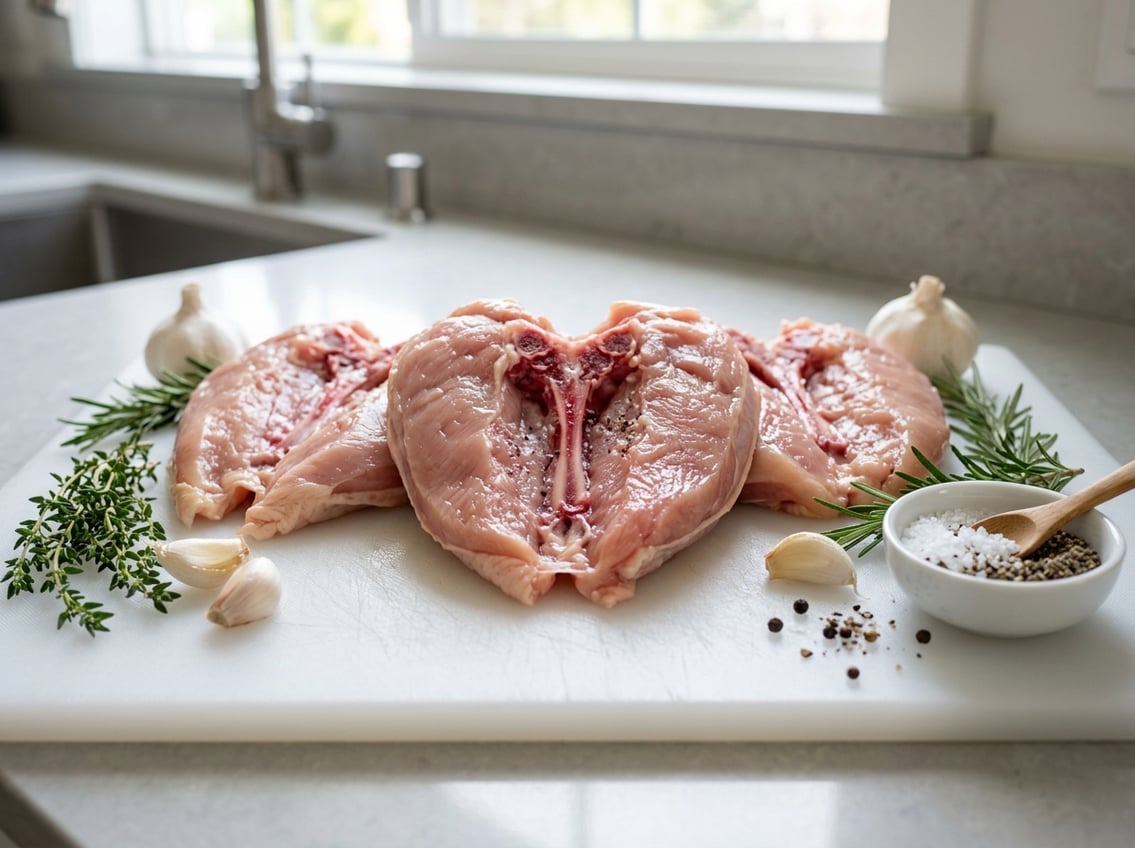
A split chicken breast is a chicken breast cut into two halves, usually along the breastbone and through the rib area. In many stores, you find it as a skin-on, bone-in piece, which means it cooks differently from a boneless breast.
A whole chicken breast is the full breast portion from the bird. When butchers split it, you get two smaller pieces, often called split chicken breasts or split breast halves.
Some butchers leave the breast attached to part of the ribs, so you may also see it described as a breast with ribs. This is not the same as a boneless breast.
A boneless skinless chicken breast has had the bone, skin, and most attached structure removed. This makes it thinner, lighter, and faster to cook.
Bone-In Split Breast vs Boneless Split Breast
In normal retail use, split chicken breast usually means bone-in chicken breast with skin. A boneless split breast is less common and may describe a breast half that has been trimmed away from the bone.
If you see labels like chicken breast cuts, check the package closely. The words bone-in, skin-on, and boneless skinless chicken breast tell you much more than the name alone.
Key Anatomy: Keel Bone, Ribs, and Tenderloin
The keel bone is the center breastbone that divides the breast. The pectoralis major is the large main breast muscle, and the pectoralis minor is the smaller deeper muscle.
The tenderloin sits along the underside of the breast and is sometimes still attached. You may also see rib bones and small pieces of back attached, depending on how the butcher trimmed the bird.
Those bones add flavor during cooking and help the meat stay moist.
How It Compares to Other Chicken Cuts
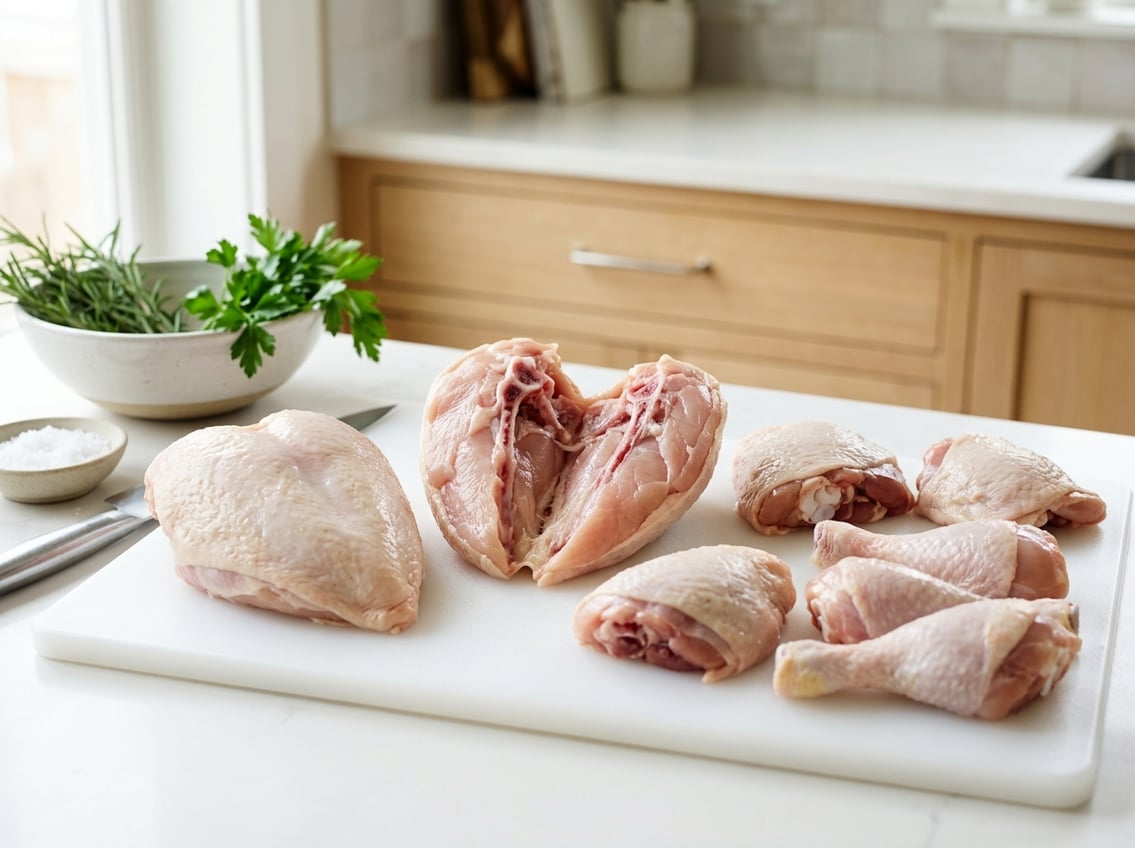
A split chicken breast sits between a whole chicken breast and a boneless breast in size, cook time, and flavor. It gives you more structure and richer taste than boneless meat.
It is easier to portion than a whole breast.
Compared With Whole and Boneless Breasts
A whole chicken breast usually means both halves still connected. A split breast is already separated.
A bone-in chicken breast may be sold whole or split, depending on the butcher. Compared with a boneless chicken breast, a split breast cooks more slowly and holds moisture better.
It also tends to brown better because of the skin.
Compared With Thigh Cuts and Dark Meat
A chicken thigh has darker meat, more fat, and a richer taste than breast meat. It is usually more forgiving if you cook it a little longer.
Split breast is still a lean protein, so its protein content is high, but it has less fat than thigh meat unless the skin stays on.
Thigh cuts usually give you more natural moisture, while split breast gives you a milder flavor and a firmer bite.
Flavor, Protein, and Moisture Differences
Split chicken breasts can fit a high-protein, lower-fat meal plan, especially if you remove the skin.
They are often less expensive than boneless chicken breast on a per-pound basis, though prices vary by store and market. The bone and skin help with moisture retention, which is useful for roasting and grilling.
For recipe comparisons, the bone-in format is also common in split chicken breast recipe guides, especially for meals that need more flavor and juiciness.
Buying, Portioning, and Storing
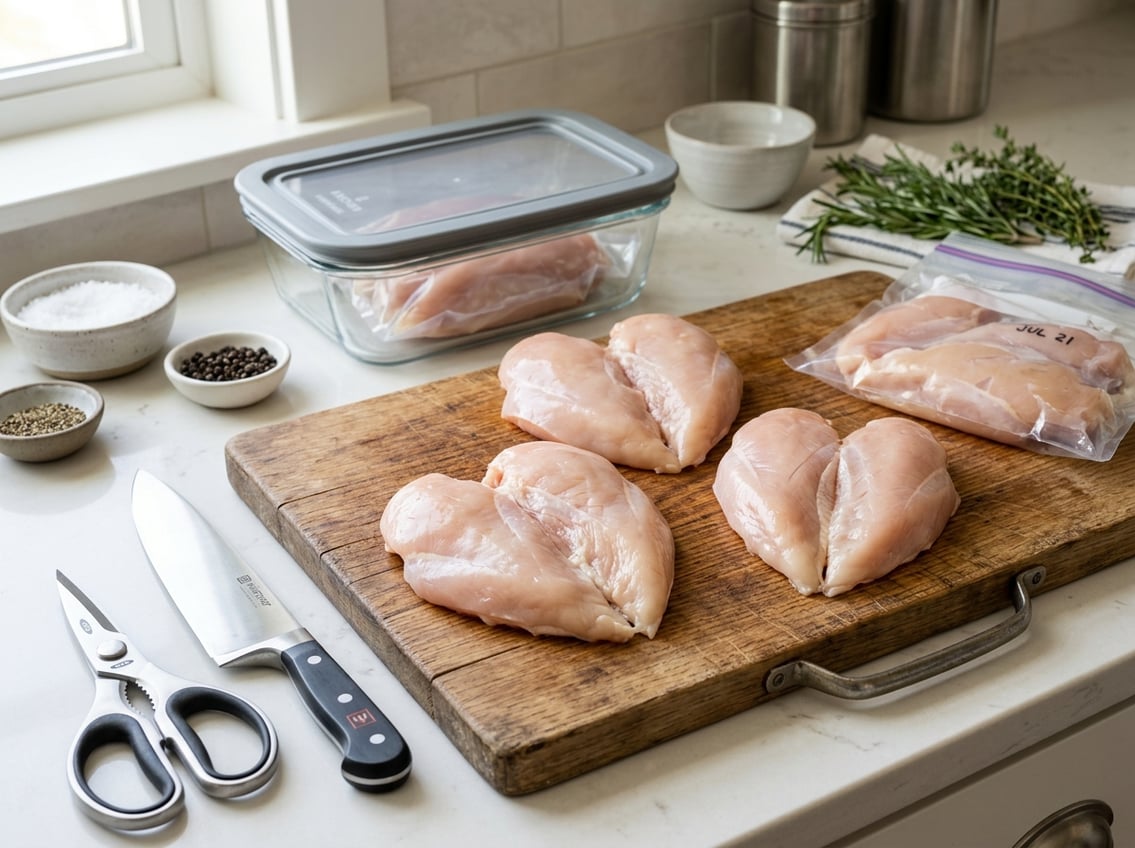
When you buy split chicken breast, check the trim, the skin, and the amount of bone attached. The right package can save you money and give you better results in the kitchen.
What to Look for at the Meat Counter
Look for pieces that are firm, evenly sized, and well chilled. The skin should look intact, and the meat should not have a strong odor.
If you buy split chicken breasts from poultry suppliers or a grocery meat case, compare labels closely. Some packages are sold as bone-in chicken breast, while others are boneless breast cuts that look similar at first glance.
If the package says skinless or boneless, it will cook faster and may need more attention to prevent drying out.
Cost, Portion Control, and Supplier Labels
Split chicken breast can be a practical choice when you want portion control without buying a whole bird. One piece may feed one person, or you can slice it after cooking for salads, sandwiches, or grain bowls.
Supplier labels may use different terms, so read them carefully. A label that says breast with ribs means you are getting more bone attached, while boneless chicken breast means a cleaner, quicker-prep cut.
How to Freeze and Thaw Safely
You can freeze split chicken breasts in their original packaging if it is sealed well, or rewrap them tightly before freezing. For better quality, use them within a few months.
To thaw, place the package in the refrigerator and let it defrost slowly. If you need it sooner, use cold water in a sealed bag and change the water often.
Never thaw raw poultry on the counter.
Best Ways to Cook It
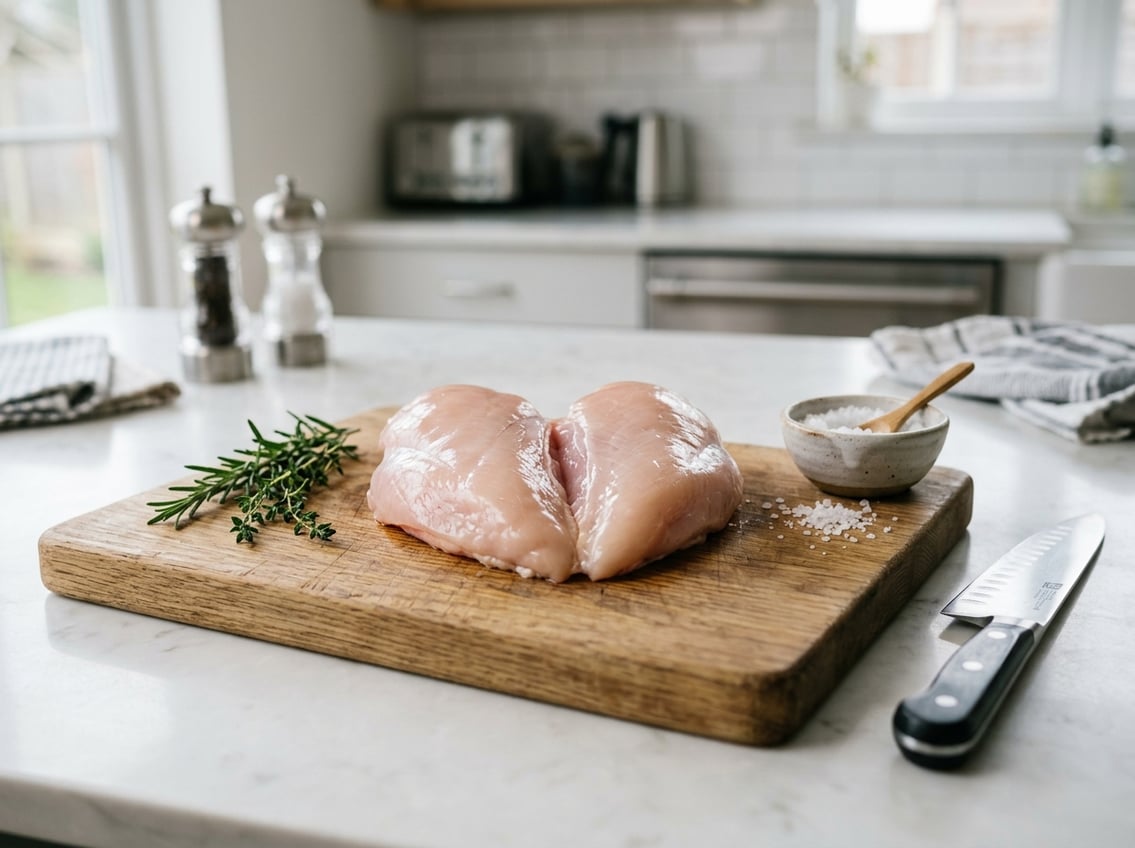
Cooking split chicken breast works best when you use methods that protect moisture and let the skin brown. Bone-in pieces handle dry heat well, so baking, roasting, and grilling work well.
Baking and Roasting for Juicy Results
For a baked split chicken breast, season the skin well and roast until the thickest part reaches 165°F. The bone slows the heat, which supports moisture retention.
Roasting also gives you better browning than many quick stovetop methods. If you want crisp skin, pat the pieces dry before seasoning and leave space between them on the pan.
Grilling, Pan-Searing, and Faster Weeknight Methods
Grilling works well when you use medium heat and watch for flare-ups from the skin. Pan-searing can build color first, then finish in the oven for even cooking.
You can get faster cooking times by splitting larger pieces evenly or removing the skin if your recipe calls for it. Bone-in chicken breast takes longer than boneless chicken breast, so a thermometer helps more than timing alone.
Recipe Types That Work Best for This Cut
Split chicken breast pairs well with recipes that need flavor and a little protection from drying out. Try herb-roasted chicken, pan-grilled chicken, braised dishes, or sheet-pan meals.
You can use many chicken breast recipes with this cut if you adjust the time and use enough seasoning. If a recipe calls for boneless skinless chicken breast, add more cooking time and check for doneness carefully when using split chicken breast.


