
Should Chicken Breast Be Washed Before Cooking? Safety Facts
Should you wash chicken breast before cooking? No, you should not wash chicken breast before cooking. Washing raw chicken spreads bacteria around your kitchen, while proper cooking makes the meat safe to eat.
This advice may feel different from what you learned in the past. If you grew up seeing raw poultry rinsed at the sink, you may find it surprising.
In U.S. food safety guidance, experts now recommend not washing chicken. Splashing water can move germs onto sinks, counters, utensils, and nearby food.
The better habit is simple. Handle chicken carefully, keep raw poultry away from ready-to-eat foods, and cook it to the right internal temperature.
Why Washing Chicken Creates More Risk
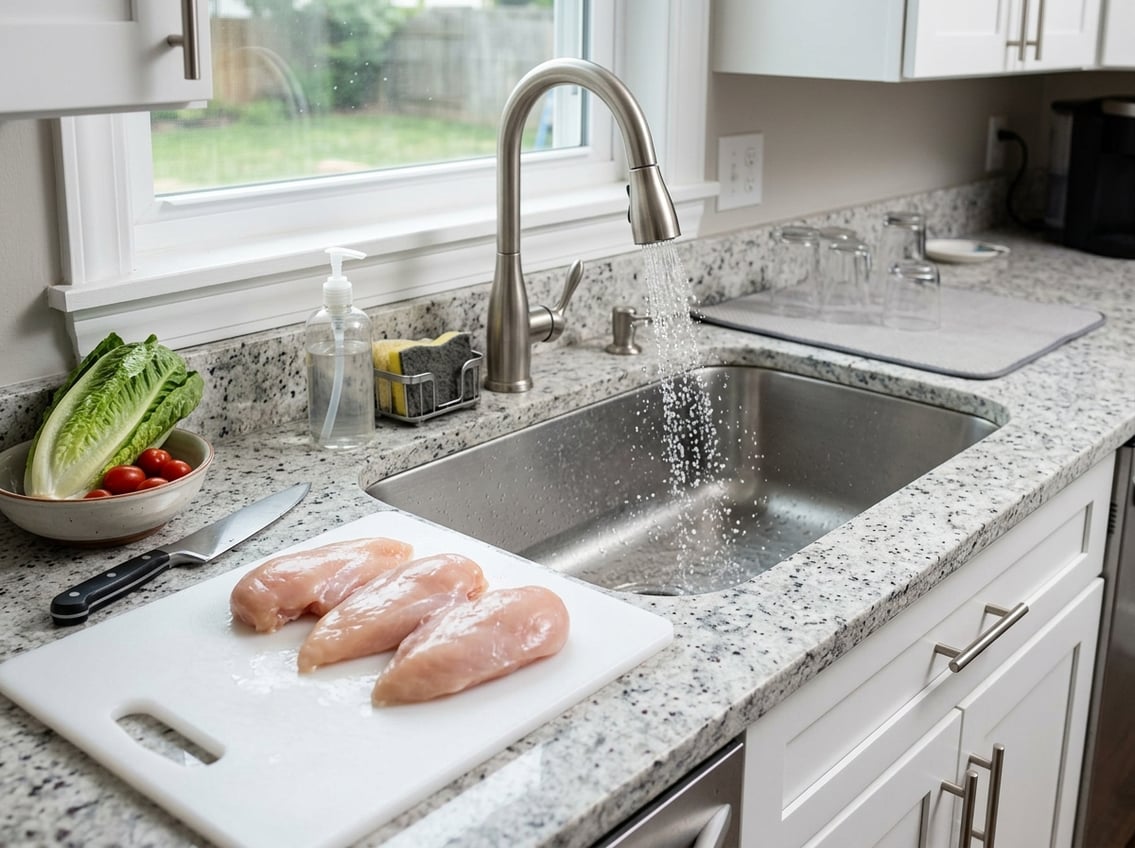
You do not need to wash chicken to make it safe. Washing chicken can increase the chance that bacteria move around your kitchen instead of staying on the meat.
The main concern is cross-contamination. Once bacteria get on your hands, sink, faucet, sponge, or cutting board, they can spread to other foods and surfaces.
How Rinsing Chicken Spreads Bacteria Around the Kitchen
When you wash raw chicken, water splashes tiny droplets from the meat into the sink and onto nearby counters, dishes, and tools. Germs can spread farther than you think.
Food safety experts warn that this makes it harder to prevent cross-contamination. The USDA Food Safety and Inspection Service says washing is not needed because cooking to the right temperature kills the bacteria.
Why Salmonella and Campylobacter Are the Main Concern
Raw poultry can carry salmonella and campylobacter, two common causes of foodborne illness. These bacteria are the main reason experts tell you not to wash chicken.
Washing does not solve that problem. It can move the germs onto surfaces you touch later, which can increase the risk of illness.
Why Water Does Not Remove Bacteria Effectively
Water cannot reliably remove bacteria from raw chicken, and it does not kill bacteria. Some bacteria cling to the surface, and others may already be present in juices that splash around.
Cooking the chicken makes it safe. Food safety experts say rinsing chicken is not necessary and can create more problems than it solves.
What to Do Instead Before Cooking
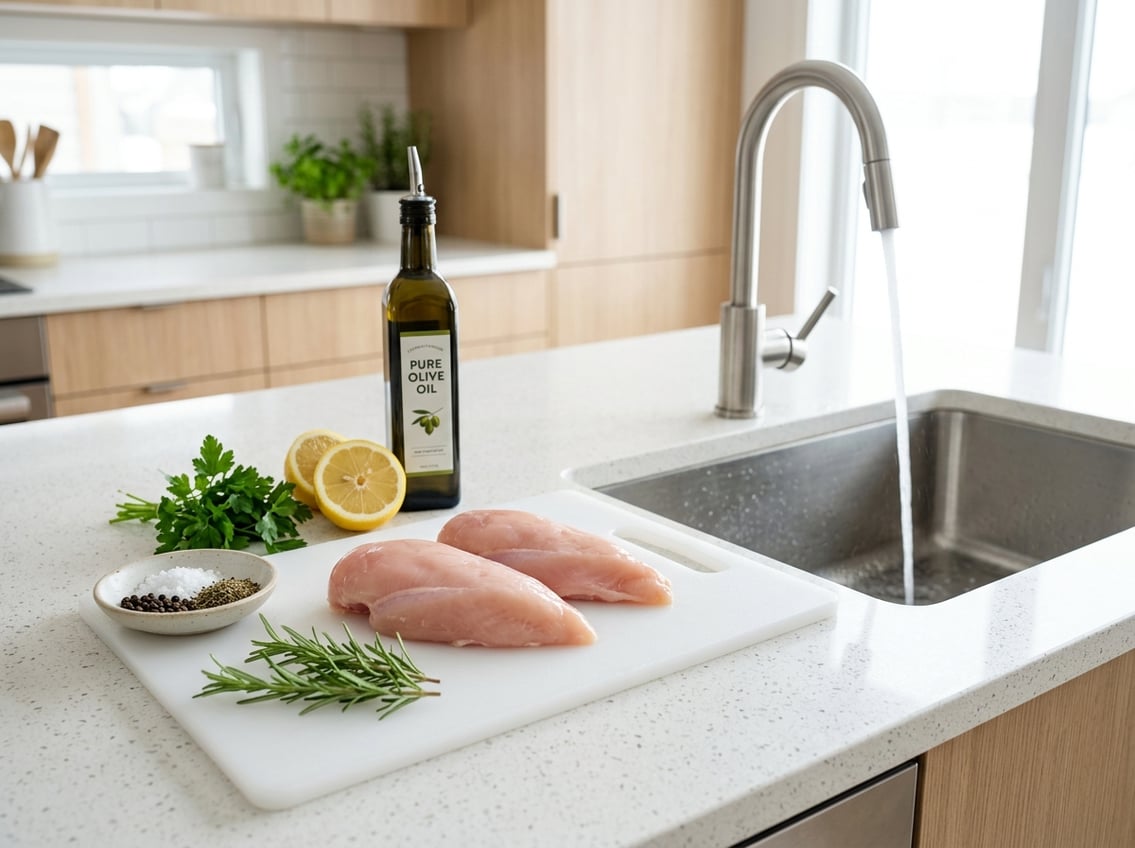
You can prepare chicken breast safely without rinsing it. Focus on clean work habits, dry the surface if needed, and keep raw poultry separate from other foods.
Pat Chicken Breast Dry Instead of Rinsing
If the chicken breast feels wet from package liquid, pat it dry with paper towels. This can improve browning and texture without spraying bacteria around the kitchen.
This is the best choice when you want a cleaner surface before seasoning or cooking. It gives you better control and supports proper handling.
Handle Package Juices and Marinade Safely
Open the package carefully, and keep raw juices away from other foods. If you use a marinade, use it only for raw chicken unless you boil it first before using it as a sauce.
After handling the package, wash your hands with soap and warm water. Clean and sanitize the sink, counter, and any surface that touched raw poultry.
Use Separate Cutting Boards and Clean Tools
Use separate cutting boards for raw chicken and for produce, bread, or cooked food. A dedicated knife and plate for raw poultry also helps reduce risk.
After prep, clean tools right away with hot, soapy water, then sanitize contact surfaces.
How to Cook Chicken Breast Safely
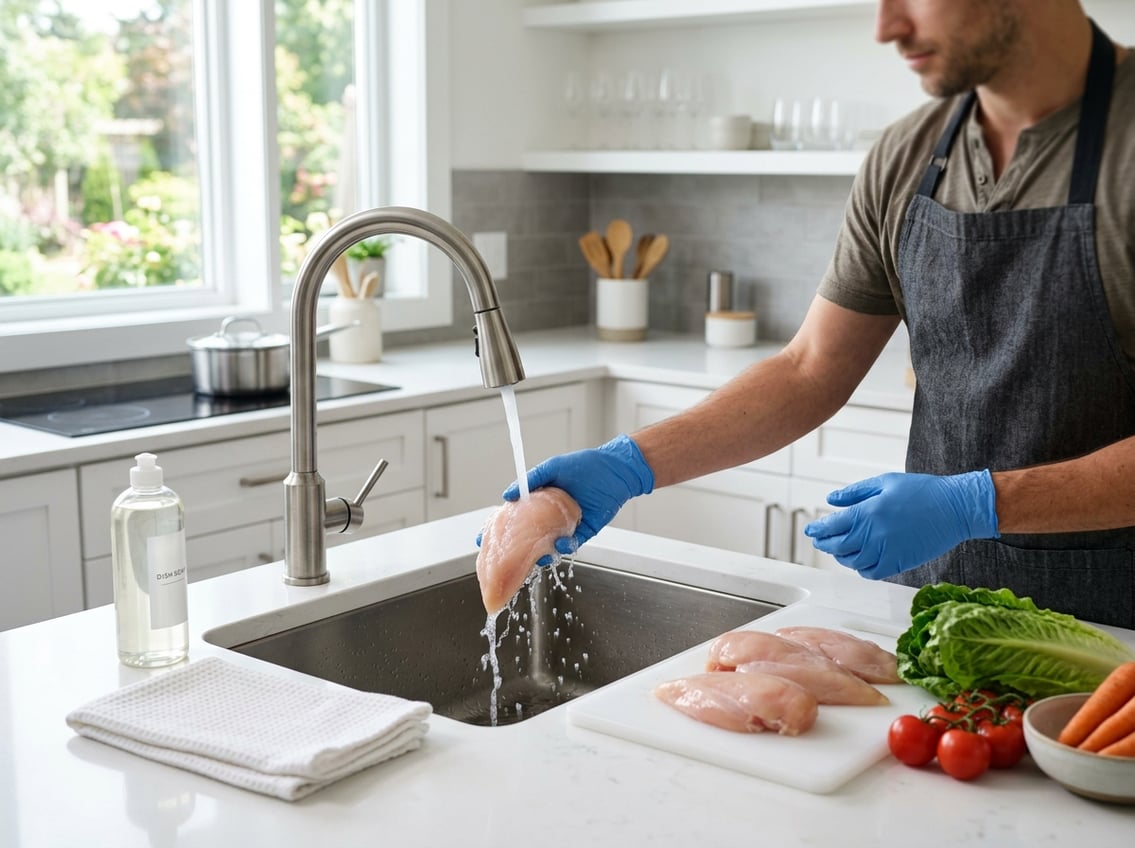
Safe cooking matters more than rinsing. If you cook chicken breast to the right temperature, you destroy harmful bacteria and make the meat safe to eat.
A food thermometer is the most reliable tool you can use. Visual signs alone are not enough.
Use a Food Thermometer for an Accurate Reading
Insert the thermometer into the thickest part of the breast, avoiding bone or the pan. Check the temperature in more than one spot if the piece is uneven.
This gives you a true reading and helps you avoid undercooked chicken. The USDA explains a thermometer is the only sure way to know when the meat has reached a safe temperature.
Why 165°F (74°C) Is the Safety Standard
Chicken breast should reach 165°F (74°C) before you serve it. That temperature is the standard for poultry safety in the U.S.
At that point, the meat is hot enough to reduce the danger from common foodborne bacteria.
How Proper Cooking Kills Bacteria
Heat destroys bacteria that washing cannot remove or kill. Food safety guidance focuses on temperature, not rinsing.
If you keep raw chicken separate, wash your hands, and cook it fully, you cover the parts that matter most.
Why People Still Rinse Poultry
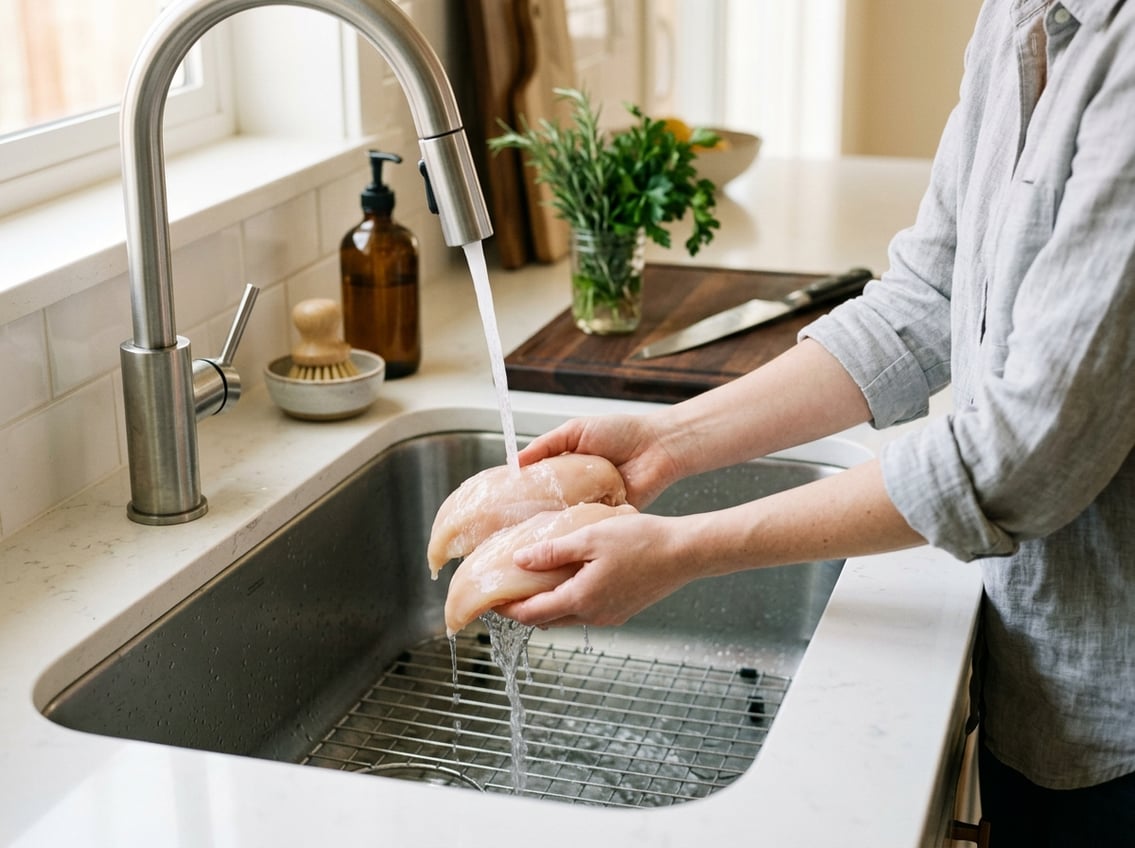
Many people still rinse chicken because the habit feels clean and familiar. Older kitchen advice and family routines can be hard to change, even when the science points another way.
Older Kitchen Advice and Cultural Habits
You may have learned to wash chicken before cooking from family members, older cookbooks, or cultural traditions. In the past, people often believed rinsing helped clean the meat.
Modern food safety guidance says to avoid washing chicken because the risk comes from what the water spreads, not from what it removes. If you have always followed the old habit, the safer update is to stop rinsing and focus on clean prep.
What to Do if the Chicken Looks Slimy or Messy
If the chicken looks slimy, sticky, or messy, do not wash it. Check the sell-by date, look for signs of spoilage, and use a clean paper towel to blot the surface if needed.
If the smell is bad or the package is leaking heavily, discard it. Raw chicken should not have an off odor or unusual texture.
How to Change the Habit Without Sacrificing Food Safety
Set up your prep space before you open the package. Keep paper towels, a clean plate, a cutting board, and a trash bowl within reach.
Open the chicken and pat it dry if needed. Wash your hands right away.
This routine gives you a sense of order without the extra risk of washing chicken before cooking.


