
Is Chicken Breast Processed Meat? What Counts
Is chicken breast processed meat? In most cases, no.
Plain chicken breast, whether fresh or frozen, usually counts as unprocessed or minimally processed meat when it has no added curing agents, preservatives, or heavy formulation.

The simple rule is this: plain chicken breast is usually a whole-food meat, while chicken breast with curing, smoking, preservatives, breading, or strong reformulation usually belongs in the processed meat category.
Processed meat is not defined by whether someone touched, trimmed, or froze the food. The definition depends on what happens to the meat after slaughter and how much the product changes for flavor, preservation, or convenience.
What Makes Meat Processed

Processing changes meat beyond basic handling. Common changes include adding salt, preservatives, nitrates, smoking, curing, or other steps to improve shelf life or create a different product.
Plain trimming, cutting, chilling, and packaging do not usually move meat into the processed category.
The difference usually comes from added ingredients and preservation methods, not simple preparation.
How Salting, Curing, Smoking, and Preservatives Change Meat
Salt, sodium compounds, nitrates, and preservatives can extend shelf life and change flavor and texture. That is why salted meat, smoked meat, cured meat, bacon, hot dogs, and many deli items are considered processed meats.
These steps preserve or reformulate the meat beyond a plain cut.
Why Cutting, Cleaning, Chilling, and Freezing Do Not Usually Count
Cutting chicken into breasts, cleaning it, chilling it, or freezing it does not usually make it processed.
A frozen chicken breast with no added ingredients remains plain chicken.
These steps are common handling methods used to move food safely through the supply chain.
They do not usually change the meat into a new food.
Where Unprocessed Meats and Unprocessed Chicken Fit
Unprocessed meats stay close to their original form. Unprocessed chicken includes raw chicken breast sold plain, whether fresh or frozen, as long as it has no curing, smoking, or additive-heavy treatment.
A package of plain chicken breast fits near the center of the unprocessed category.
When Chicken Breast Stays a Whole-Food Choice

Chicken breast stays close to a whole-food choice when the ingredient list remains simple. Fresh or frozen plain chicken breast is usually the cleanest option, with low sodium and no added sugar, fat, or preservatives.
The label matters more than the form alone.
A plain breast and a flavored, injected, or breaded breast are not the same food.
Fresh vs Frozen Chicken Breast
Fresh chicken breast is usually unprocessed if it is sold plain.
A frozen chicken breast is also usually unprocessed if the only ingredient is chicken.
Freezing helps preserve quality without turning the food into processed meat.
If the package lists only chicken, you are usually looking at a basic meat product.
When Brine, Marinade, and Seasonings Start to Matter
Brine, marinade, and seasonings can still leave chicken breast close to a plain food, depending on what is added.
Small amounts of salt and simple spices do not always turn it into processed meat.
The product starts to move away from a whole-food choice when sodium climbs, sugar is added, or preservatives appear.
A salty marinade or a heavily seasoned ready-to-cook breast can become more like a processed chicken breast product.
How Chicken Breast Processed Products Differ From Plain Cuts
Processed chicken breast products often include more than just chicken.
They may contain extra sodium, sugar, oils, stabilizers, flavorings, or preservatives.
A plain cut is a raw ingredient.
A ready-to-eat or heavily modified chicken breast item is a finished product with a longer ingredient list.
Chicken Products That Clearly Fall Into the Processed Category

Chicken can become processed in several clear ways.
Once someone grinds, reshapes, smokes, cures, or turns chicken into a ready-to-eat product, it usually fits into processed meats or processed chicken products.
Chicken Nuggets, Chicken Hot Dogs, and Chicken Sausage
Chicken nuggets are processed chicken products because manufacturers usually make them from chopped or ground chicken, then shape, bread, and flavor them.
Chicken hot dogs and chicken sausage are also processed because they are reformulated products, not plain cuts.
These foods often contain sodium, preservatives, and other additives.
They may still use chicken meat, including meat from the carcass or mechanically separated parts, but the final food is no longer a plain breast.
Deli Meat, Cold Cuts, and Other Ready-to-Eat Slices
Chicken deli meat and cold cuts are usually processed meat.
They are made for convenience, longer shelf life, and easy sandwich use, which often means added sodium and preservatives.
Many sliced chicken products are cooked, chilled, sliced, and packaged as ready-to-eat items.
That makes them very different from raw chicken breast you cook yourself.
Processed Chicken Products Made From Ground or Recovered Meat
Some processed chicken products are made from ground meat, recovered meat, or a mix of parts from the chicken carcass.
The more someone reforms the meat, the more clearly it falls into the processed category.
If the product looks like a nugget, sausage, patty, or deli slice, it is usually not a simple chicken breast anymore.
Health and Shopping Considerations
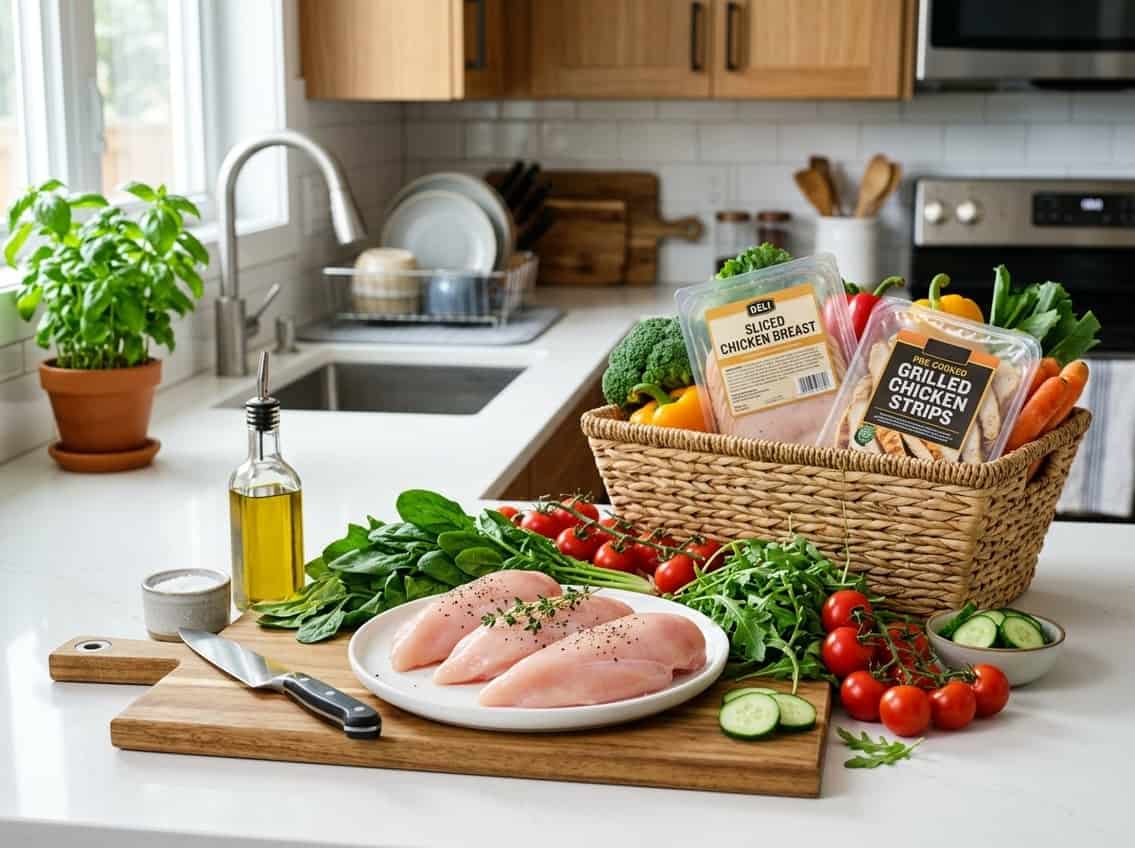
Processed meat often contains more sodium, saturated fat, sugar, and preservatives than plain meat.
That tradeoff can improve convenience and shelf life, while making the food less like unprocessed meat.
If you want the simplest choice, read the label closely and compare ingredients, sodium, and preparation style.
How Sodium, Saturated Fat, Sugar, and Preservatives Add Up
Processed chicken products can pack in sodium fast.
Some also include saturated fat, sugar, and preservatives to improve texture, taste, and storage life.
That can matter if you are trying to keep your meals simple.
Plain chicken breast usually gives you more control over what you add later.
Why Processed Meats Are Linked With Heart Disease
Processed meats, including many forms of bacon, hot dogs, and cold cuts, are often linked with a higher risk of heart disease in nutrition guidance and research summaries.
The concern usually centers on sodium, fat, and frequent intake of preserved meats.
You can read more about the broader category in the processed meat overview, which explains how curing, smoking, and preservatives move meat into that group. Plain chicken breast does not fit that same pattern.
What to Check on Labels Before You Buy
Check for a short ingredient list. Plain chicken breast should list only chicken.
Processed items often list sodium, nitrates, sugar, flavorings, and preservatives.
A few quick checks help:
- Ingredient list: Shorter lists are usually simpler.
- Sodium: Lower amounts are usually closer to plain meat.
- Product name: Words like “nuggets,” “sausage,” “deli slices,” or “smoked” often signal processing.
- Package claims: Phrases like “ready to eat” or “fully cooked” usually mean more processing.
Choose plain fresh or frozen chicken breast if you want the least processed option. Season it yourself at home to control salt, fat, and additives.


