
What Is the Best Way to Cut Chicken Breast for Tender Results
Slice chicken breast against the grain with a sharp knife, using even pieces sized for your recipe. If you cut chicken breast in the right direction and keep the pieces uniform, the meat stays juicy and cooks evenly.
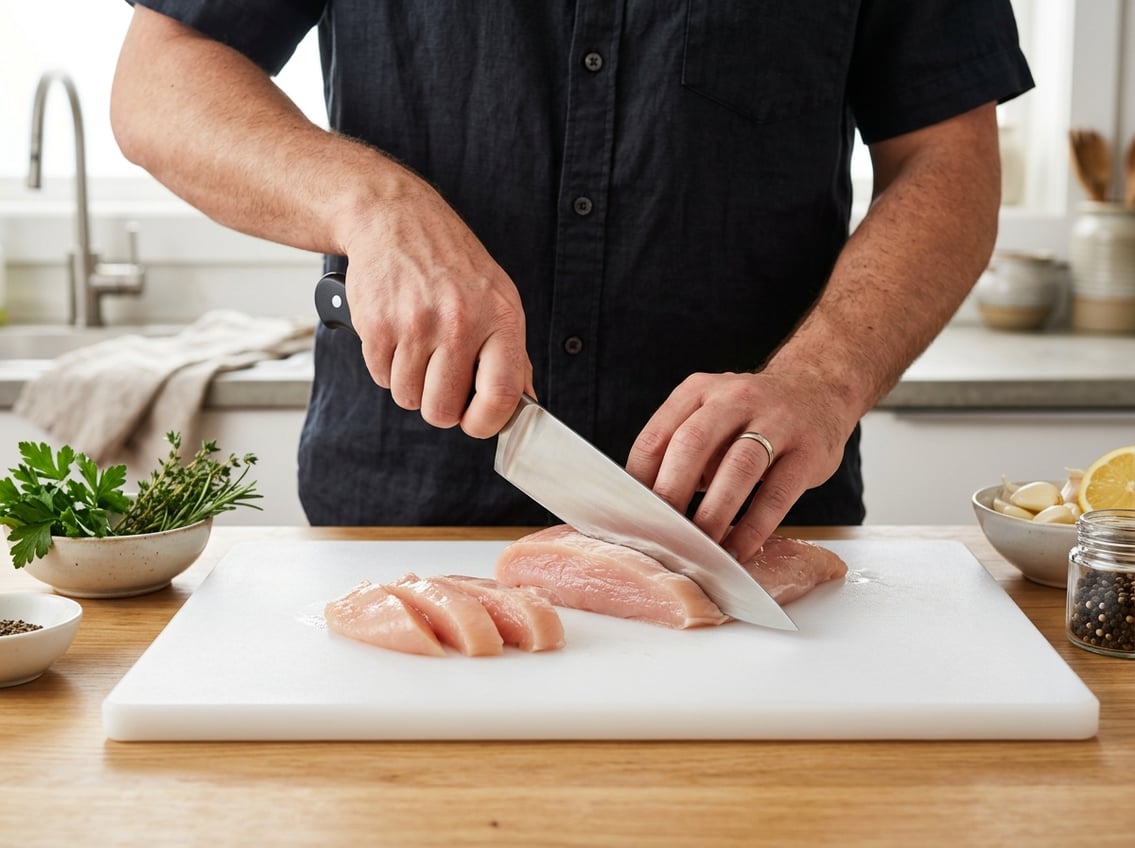
That simple approach matters more than most people think. Uneven cutting can leave thin parts dry while thicker parts stay underdone, so knowing how to cut chicken breast correctly makes a real difference in texture and safety.
Cutting chicken breast is easy once you know what to look for. With a stable board, a sharp knife, and the right cut for the dish, you can save time and get better results.
Start With the Cutting Method That Keeps Chicken Tender
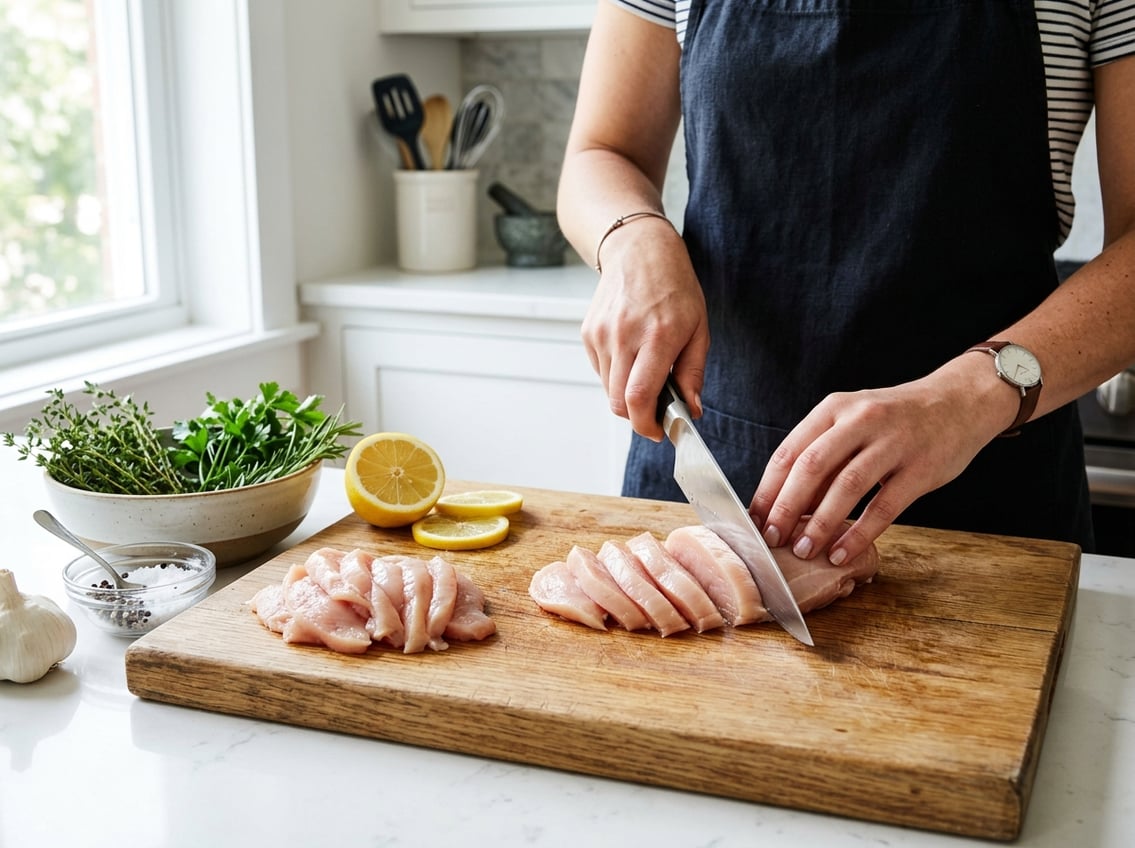
Keep the pieces tender and even by slicing against the grain, which shortens the muscle fibers and makes the meat less chewy. Use a sharp knife and a stable plastic cutting board for cleaner, safer work.
Dull blades require more pressure, which makes slipping more likely and can crush the meat instead of slicing it.
Why Cutting Against the Grain Works
Chicken breast has visible muscle fibers running in one direction. When you cut across those fibers, you shorten them and get a more tender bite.
If you cut with the grain, the fibers stay long and can feel stringy.
How to Spot the Grain on a Chicken Breast
Look closely at the surface of the raw breast. You will see faint lines that run through the meat, and those lines show the grain.
Turn the breast so your knife crosses those lines at a right angle. If the grain is hard to see, tilt the chicken under the light or gently press it flat to make the fibers easier to spot.
When to Chill or Pat Dry Before Slicing
If the chicken feels soft or slippery, chill it for a short time so it firms up. A firmer breast is easier to slice cleanly, and partially chilling the meat helps when you want neat cubes or thin strips.
Pat the surface dry to help your knife grip less and give you a steadier cut. Dry chicken is easier to handle, especially when you are cutting several breasts at once.
Match the Cut to the Dish
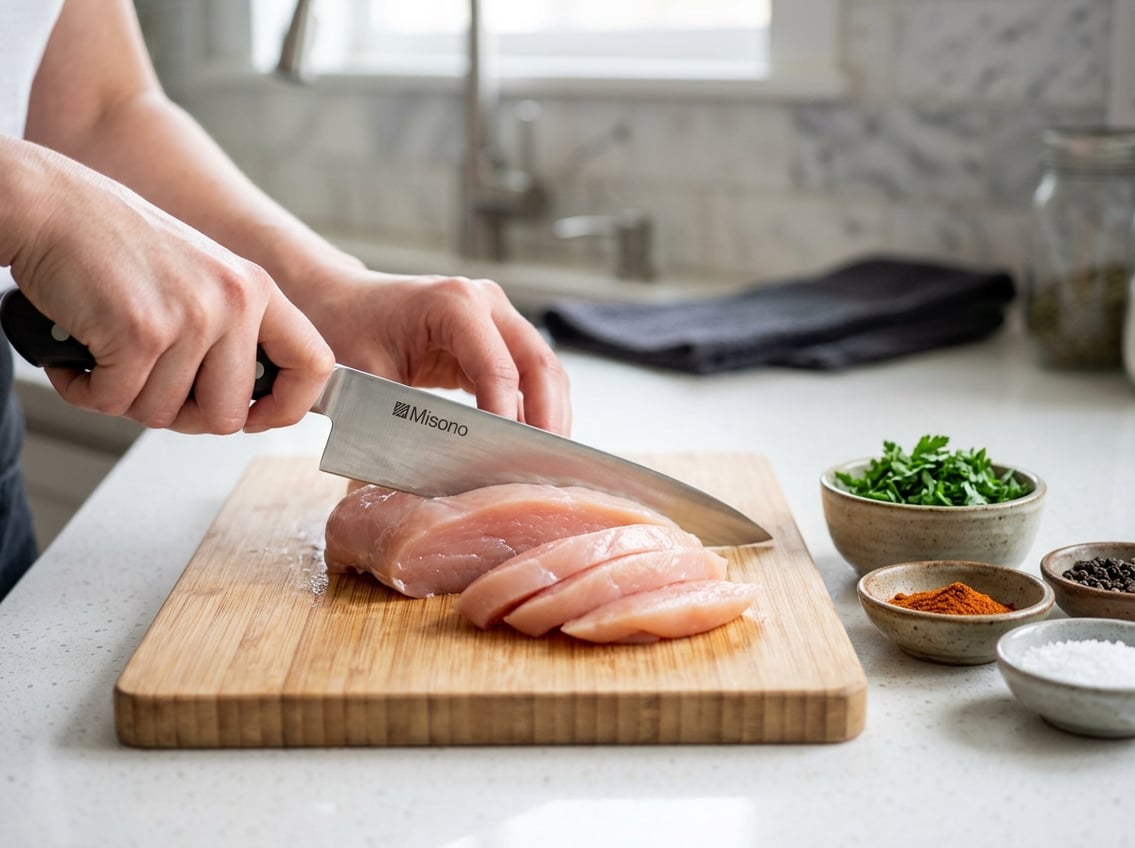
The right cut depends on how you plan to cook the chicken. Thin pieces work well for fast cooking, while larger, flatter pieces are better when you want even browning or a breaded finish.
Uniform size matters here too. Even pieces help chicken cook more evenly, which is useful in recipes like stir-fries, pasta dishes, and pan-seared meals.
Thin Strips for Stir-Fries, Skillets, and Chicken Tenders
Slice the breast into strips when you want quick, even cooking. Thin strips work well for stir-fries, fajitas, and skillet meals, and they are great as chicken tenders.
Keep the strips similar in width so they finish cooking at the same time.
Cubes for Kabobs, Soups, and Fast Meal Prep
Cube chicken when you need bite-size pieces for kabobs, soups, or meal prep. Start with strips, then cut across them into even cubes for cleaner cooking.
This shape is useful when you want pieces that hold sauce well or fit neatly into a dish. It also makes portioning easier if you prep chicken for several meals ahead of time.
Butterflied Pieces and a Chicken Cutlet for Even Cooking
If you want a thinner, wider piece, slice the breast horizontally to make a chicken cutlet. Cutlets are useful for chicken parmesan and chicken piccata because they cook quickly and hold breading well.
Butterflied pieces work the same way when you stop cutting before the knife goes all the way through. That gives you a thin, even piece that cooks fast and stays tender in grilled chicken recipes.
Use Safe Tools and Smart Prep Habits
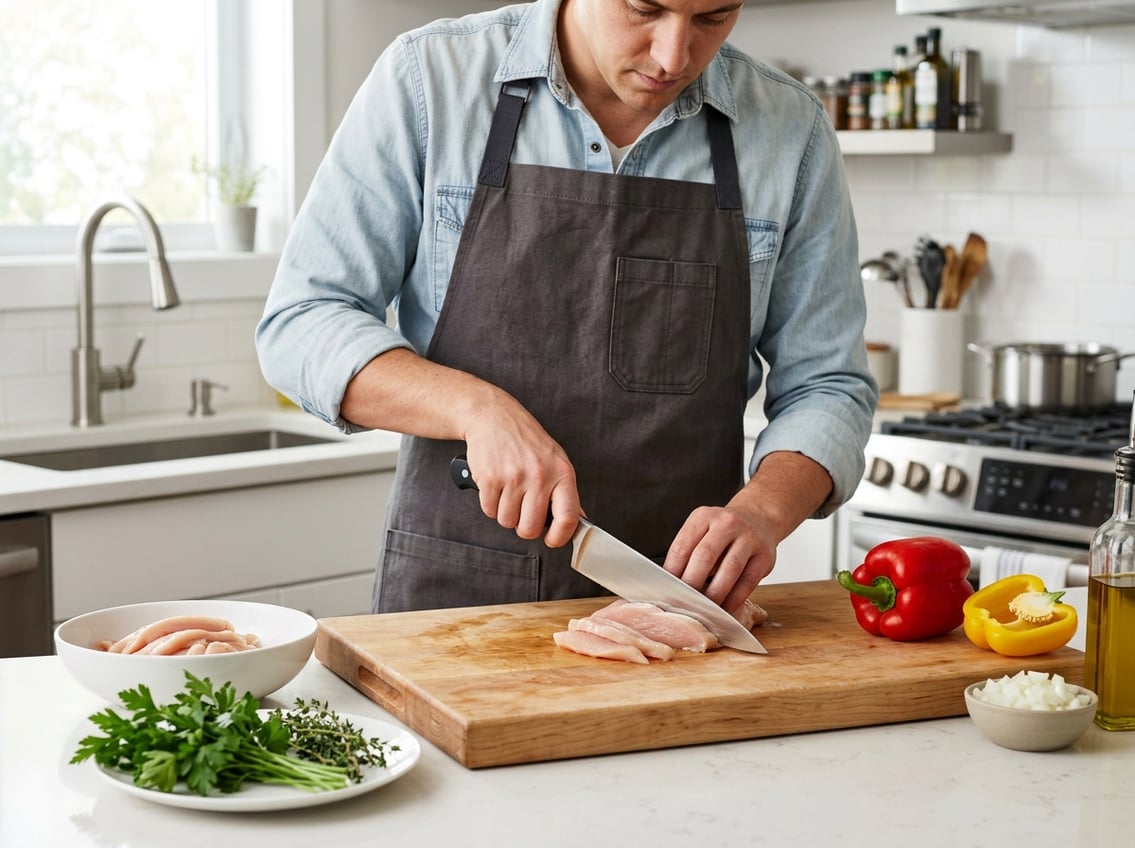
Good tools and clean habits matter as much as knife skill. When you cut chicken breasts, a calm setup helps you stay accurate and reduces the chance of slipping.
Keep your workspace simple, and use tools that support steady cuts.
Best Knife and Board Setup for Raw Chicken
Use a sharp chef’s knife or utility knife, plus a sturdy plastic cutting board. Plastic is easy to wash well after raw chicken, which makes it a practical choice for food safety.
Place a damp towel or non-slip mat under the board so it stays in place. A sliding board makes clean cuts harder and increases the risk of accidents.
How to Prevent Slipping and Cross-Contamination
Keep one hand on top of the chicken to steady it, and curl your fingers away from the blade. Slice slowly, especially when making cutlets or thin strips.
Use a separate board for raw chicken if possible, and wash your knife, board, and hands right away after cutting. Set aside a bowl for trimmings so raw juices do not spread across the counter.
How to Store Cut Pieces for Later Cooking
If you are not cooking right away, place cut chicken in a sealed container or freezer bag.
Keep it cold and label it with the date you prepped it.
You can freeze pre-cut portions for later use.
This method makes meal prep faster and provides ready-to-cook pieces for stir-fries, grilled chicken, and quick skillet meals.


