
What Should Chicken Breast Smell Like? Freshness Signs
If you wonder what chicken breast should smell like, the answer is that fresh raw chicken has a very mild, clean, and nearly neutral scent. A strong sour, sulfur-like, eggy, or ammonia odor warns that the meat may be spoiled.
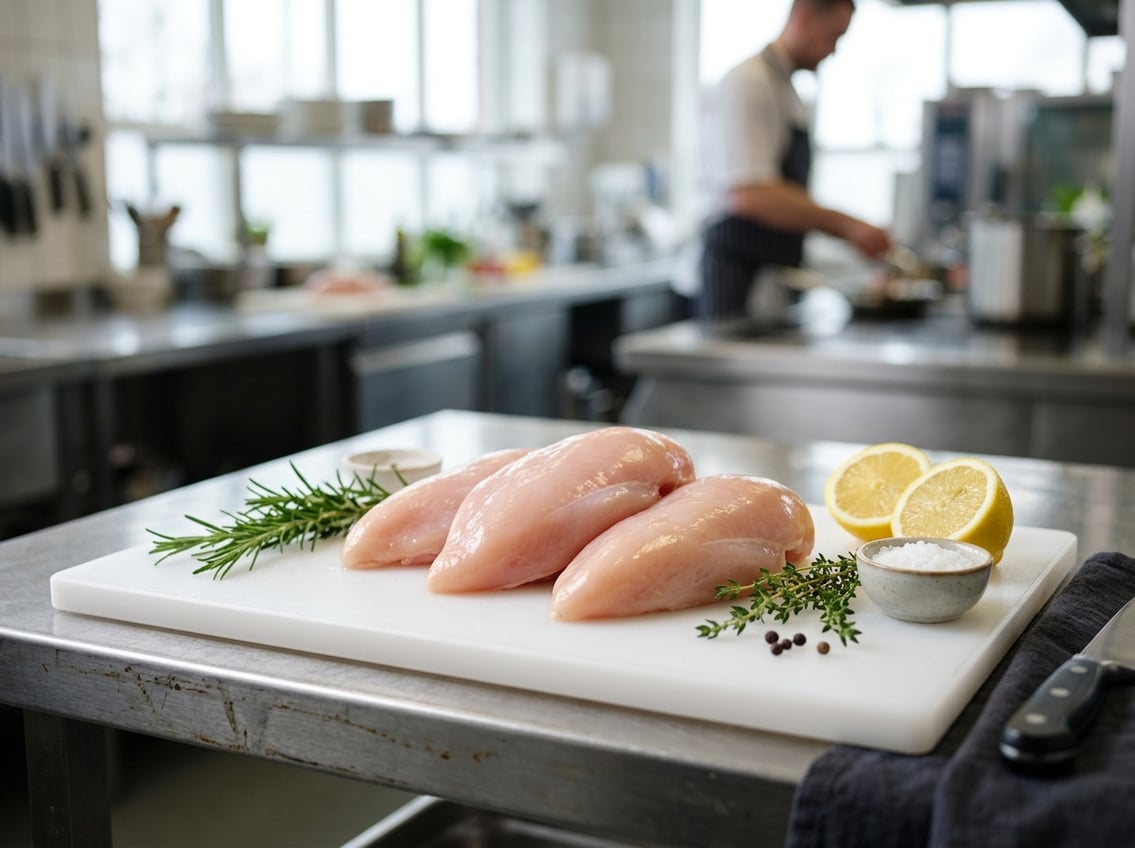
Check the texture and color along with the smell. If a chicken breast feels slimy, looks gray or yellow, or smells off, consider it unsafe.
Not every unusual smell means the chicken is bad. Packaging, storage, and time in the fridge can change the odor slightly, especially after opening vacuum-sealed meat.
The Normal Scent of Fresh Chicken Breast
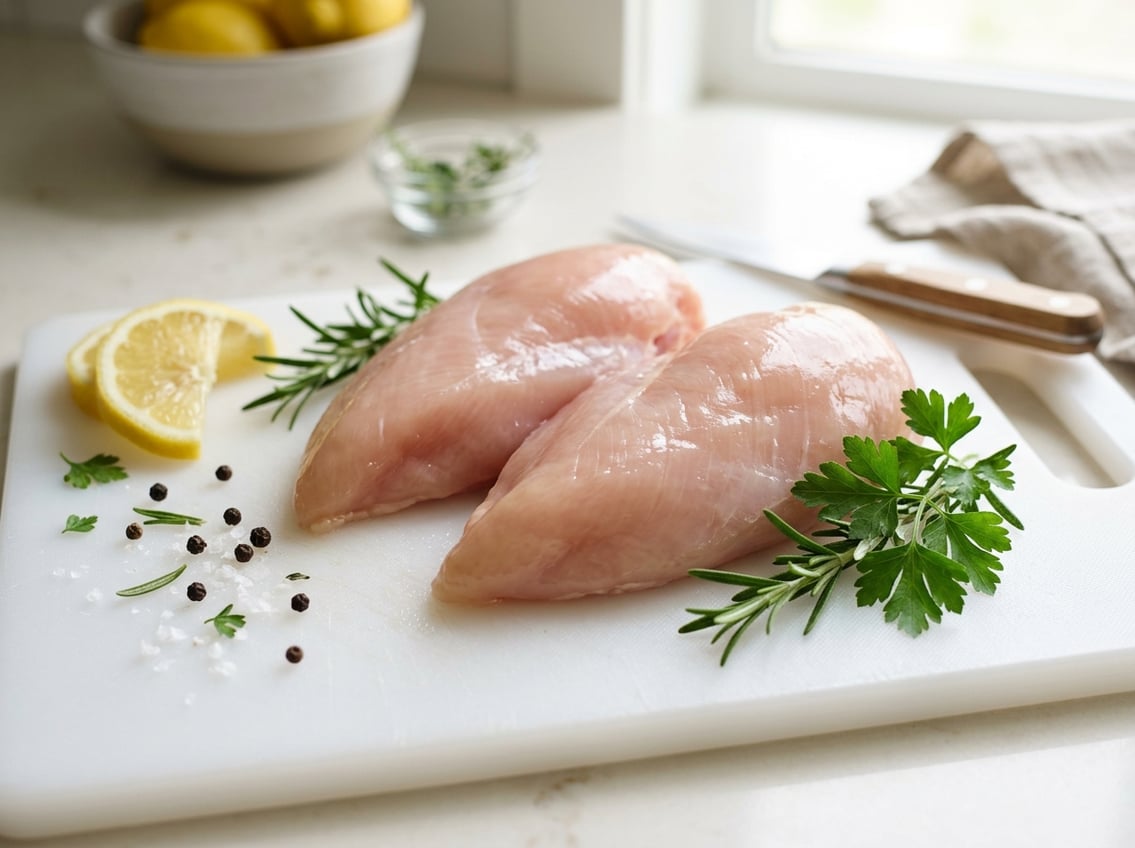
Fresh chicken usually has only a light scent. Cooked chicken has a much fuller smell once heat brings out its flavor.
The smell of chicken can vary a little from package to package. Focus on whether the scent is mild or unpleasant, not on a perfect “no smell” rule.
What Fresh Raw Chicken Should Smell Like
Fresh raw chicken breast smells faintly clean, mildly meaty, or almost like nothing at all. Some people notice a slightly sweet or earthy note, which can still be normal according to guidance on slight chicken odors.
A fresh package should not smell sharp, rotten, or pungent. If the smell makes you pull back from the package, inspect it more closely.
How Cooked Chicken Aroma Differs
Cooked chicken has a richer, warmer, and more noticeable aroma than raw chicken. Browning, fat, seasoning, and heat produce an appetizing smell.
If cooked chicken smells sour, bitter, or stale, that signals a problem. A normal cooked chicken smell should remind you of roasted or pan-cooked poultry.
Why Some Chicken Smells Slightly Stronger Than Others
Some chicken smells a little stronger because of packaging, storage time, feed, age of the bird, and handling before you bought it. Raw chicken stored a little longer may still be within date but have a more noticeable odor.
That stronger smell is not always a sign of spoilage by itself. The important question is whether the smell is mild and meaty or clearly unpleasant.
When the Smell Signals a Problem
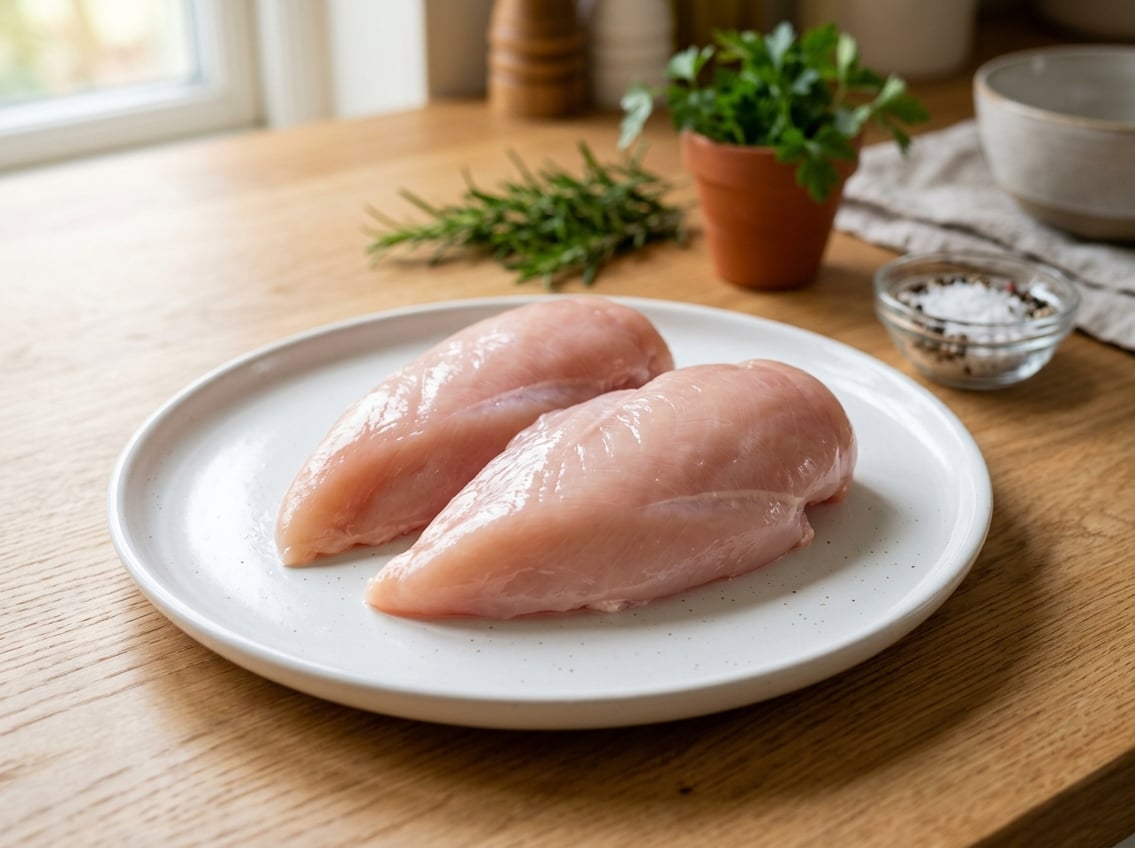
A bad odor warns you that chicken may be spoiled. Spoiled chicken breast often shows changes in smell, texture, and color, and bacteria linked with food illness, including Campylobacter, can be present.
Sour, Sulfur, Eggy, and Ammonia-Like Odors
Sour, sulfur-like, eggy, or ammonia-like odors are not normal for raw chicken breast. These smells often point to bacterial growth or breakdown of the meat, as described in a review of chicken smell and spoilage signs.
If the chicken smells like rotten eggs, cleaning chemicals, or sharp ammonia, treat it as spoiled. Do not try to cook away the smell.
How to Spot Spoiled Chicken Breast Beyond Odor
Spoiled chicken breast often feels slimy or tacky, not moist in a normal way. Color changes such as gray, yellow, or dull patches are also a warning sign, especially when paired with odor, as noted in common bad-chicken breast signs.
Use all three checks together:
- Smell: sour, eggy, or ammonia-like
- Texture: slimy, sticky, or mushy
- Color: gray, yellow, or dull
If any one of these signs is strong, discard it.
When Spoiled Chicken Should Be Thrown Out Immediately
Throw out spoiled chicken immediately if the odor is strong, the package is swollen, or the meat looks or feels wrong. Do not rinse it, season it, or hope that cooking will make it safe.
If you think the chicken may have been left too warm for too long, discard it at once.
Packaging, Storage, and Timing Factors
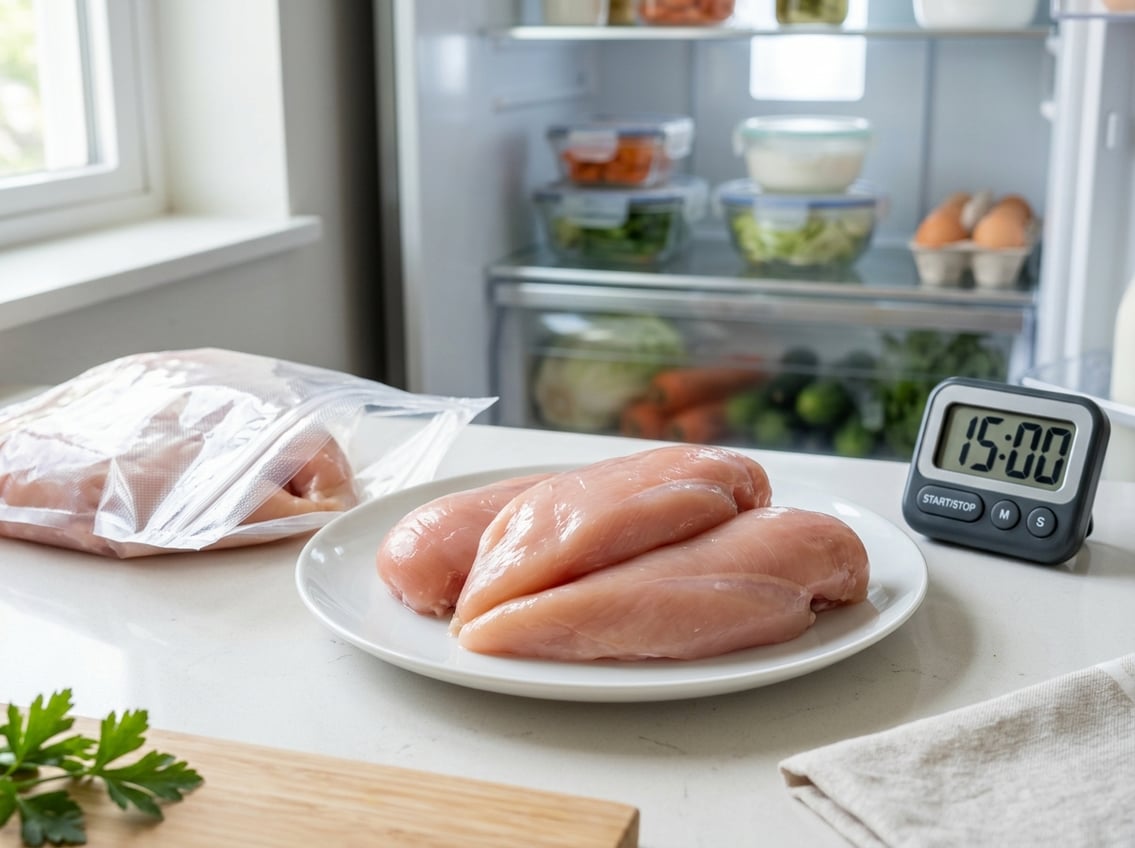
Packaging and storage can change the smell of chicken even when the meat is still safe. Raw chicken, cooked chicken, and frozen chicken all behave a little differently, so timing matters.
Why Vacuum-Sealed Chicken Can Smell Off at First
Vacuum-sealed raw chicken can smell stronger when you first open it because the package traps gases inside. That odor often fades after a few minutes in open air if the meat is fresh.
If the smell stays strong, sour, or rotten after airing out, that is a red flag. A brief package smell is not the same as true spoilage.
How Fridge Time Changes Odor in Raw and Cooked Meat
Raw chicken kept in the fridge for several days will usually smell more noticeable than chicken bought the same day. Cooked chicken also changes in smell as it sits, because fats and juices break down over time.
Cold storage slows spoilage, but it does not stop it. If the smell gets worse each day, do not keep testing it.
When to Refrigerate or Freeze Chicken
Refrigerate raw chicken as soon as possible after shopping, and keep it at 40°F or below. If you will not use it soon, freeze chicken before the odor changes or the date passes.
Freeze chicken in sealed packaging or freezer-safe wrap to slow quality loss. Once thawed, use it promptly and do not refreeze it unless it was thawed safely and stayed cold.
How to Judge Safety Before You Cook
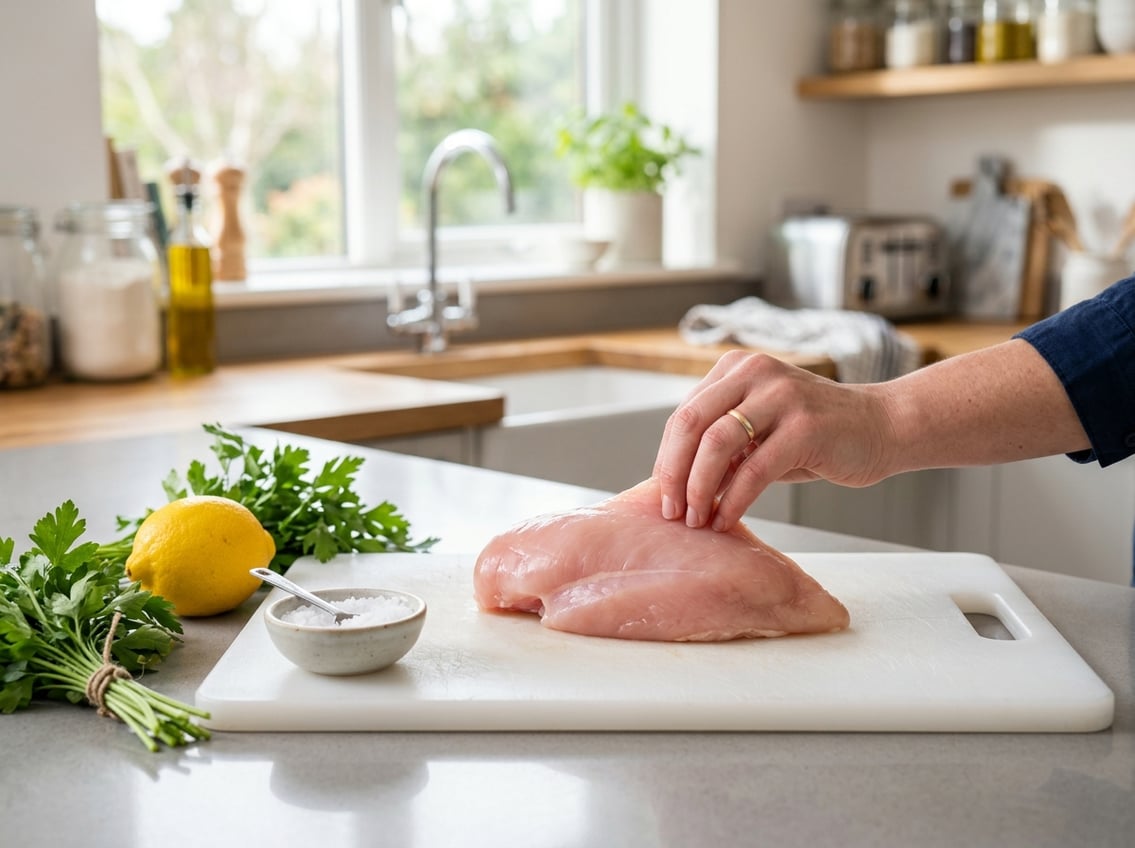
Smell is useful, yet it should not be your only test. Look at the chicken, touch it briefly, and check how it was stored.
Using Smell, Texture, and Color Together
Fresh raw chicken should smell mild, feel moist but not slimy, and look pink to pale pink. If one of these changes is obvious, treat it as a warning.
If the chicken smells slightly strong but looks, feels, and dates out normally, it may still be usable. Any truly unpleasant odor means you should not take the risk.
When a Slight Odor May Still Be Acceptable
A slight odor may be acceptable right after opening a sealed package, especially vacuum-sealed meat. The smell should clear quickly and should not become sour, sulfur-like, or sharp.
If the odor stays mild and the chicken passes the color and texture check, it may still be fine to cook. If your nose keeps signaling doubt, trust that warning.
Safe Cooking Temperatures and Cross-Contamination Basics
Cook chicken breast to 165°F at the thickest part to reduce the risk of harmful bacteria. Safe cooking matters, but it does not make spoiled meat safe.
Keep raw chicken away from cutting boards and utensils. Separate it from foods that will not be cooked.
Wash your hands and surfaces after you handle raw chicken. Do not let juices touch other foods, especially when campylobacter is a concern.


