
What If Chicken Breast Is Slimy? Safety and Next Steps
If you wonder what to do when chicken breast is slimy, closely inspect it and look for multiple signs, not just texture. A slimy chicken breast can mean spoilage, bacterial growth, or storage problems, all of which are food safety concerns.
If the surface feels sticky, slippery, or leaves a film on your fingers, take it as a warning sign and check for color, smell, and storage time before cooking. While a slimy texture does not always mean the chicken is unsafe, it often occurs with spoiled poultry and should not be ignored.
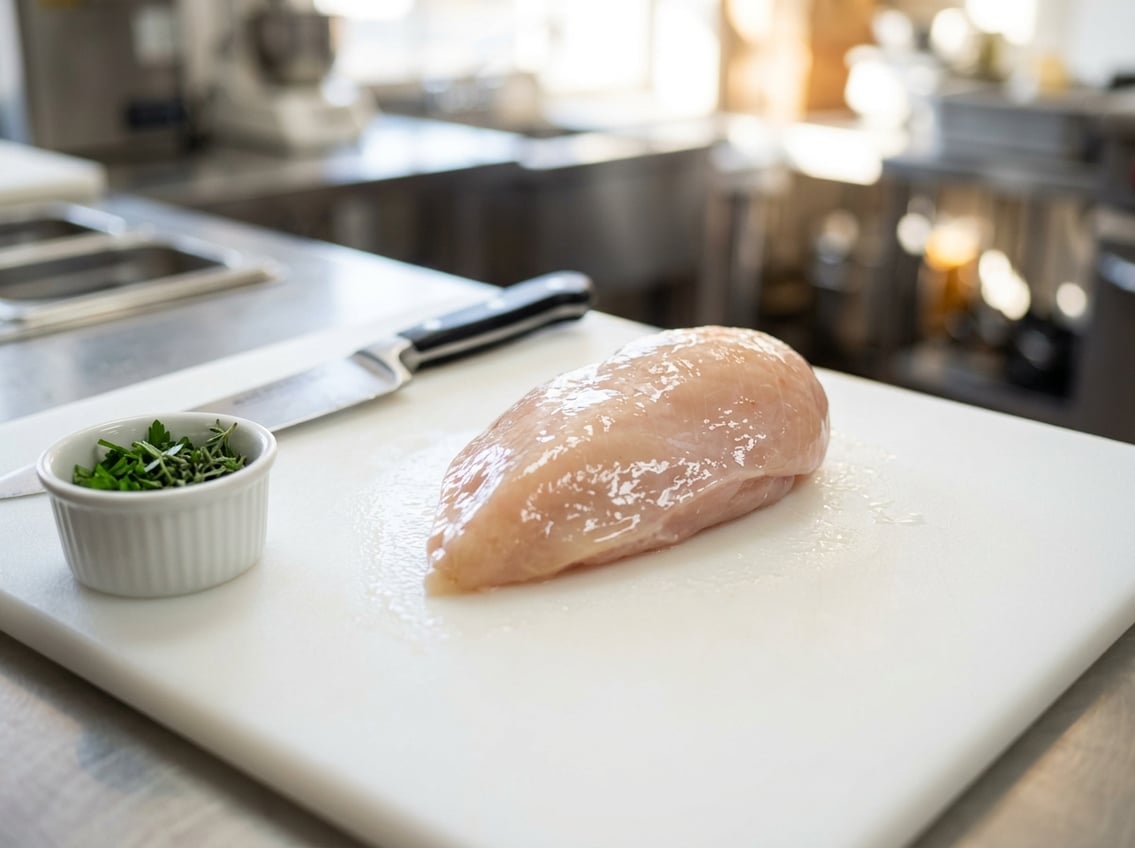
Fresh chicken should feel moist, not tacky. If you notice an off smell, odd color, or if the chicken has been stored too long, it is safest to discard it.
When to Toss It Right Away
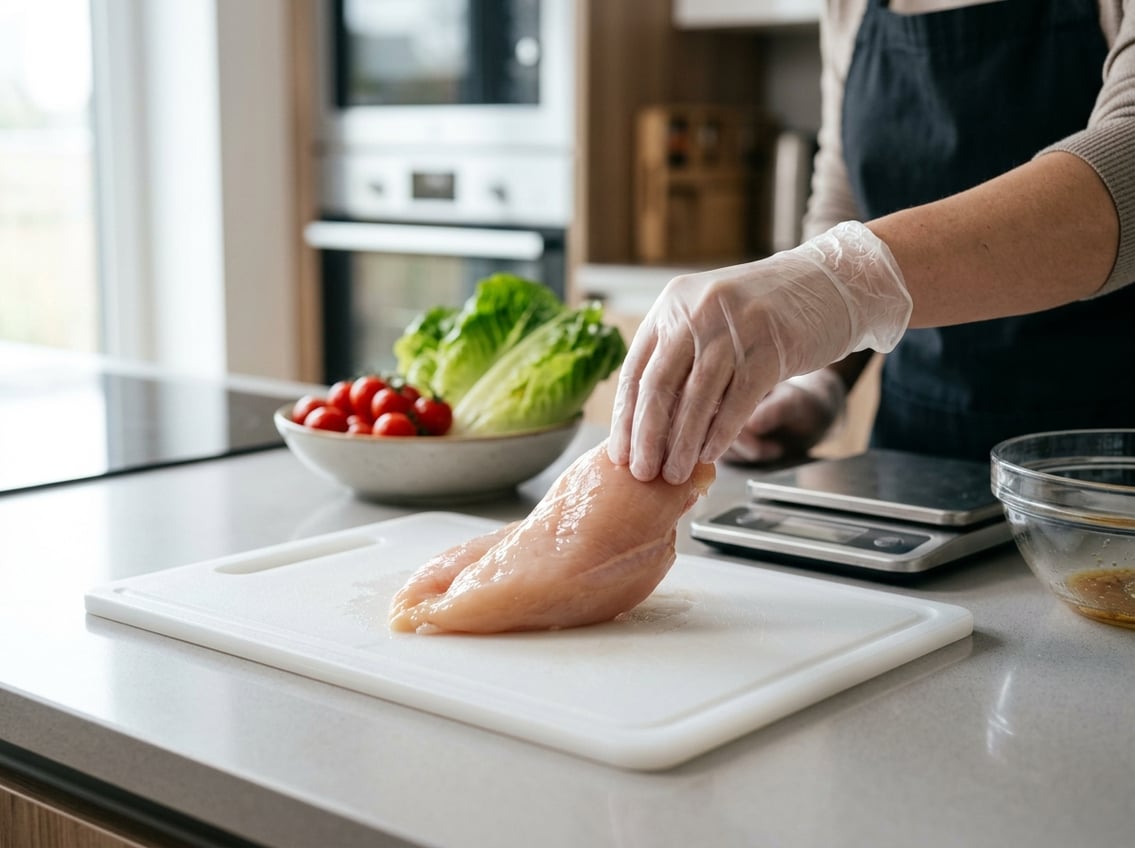
Certain signs mean you should not try to save the chicken. A sticky film, foul odor, or gray-green color can indicate spoilage and harmful bacteria that cause foodborne illness, including salmonella.
How to Tell Normal Moisture From a Slick or Sticky Film
Fresh raw chicken may feel slightly moist, especially right out of the package. This is different from a slick, sticky, or gummy layer that remains after you pat it dry.
A normal surface feels smooth and wet, not tacky. If your fingers catch on the chicken or come away coated, this often signals spoilage.
Color and Smell Changes That Signal Spoilage
Fresh chicken breast appears pinkish-white with a mild smell. Spoiled chicken may look grayish or greenish and can smell sour, ammonia-like, or unpleasant.
If the smell changes, do not rely on texture alone. A slimy texture combined with a bad odor is a strong reason to throw it out.
Why Slimy Cooked Chicken Should Never Be Eaten
Cooked chicken should feel firm, not slick or mucus-like. If cooked chicken feels slimy, it may have been undercooked or contaminated after cooking.
Do not try to rinse off or reheat chicken that already seems spoiled. Discard cooked chicken with a slimy texture to avoid foodborne illness.
Why Chicken Breast Gets Slimy
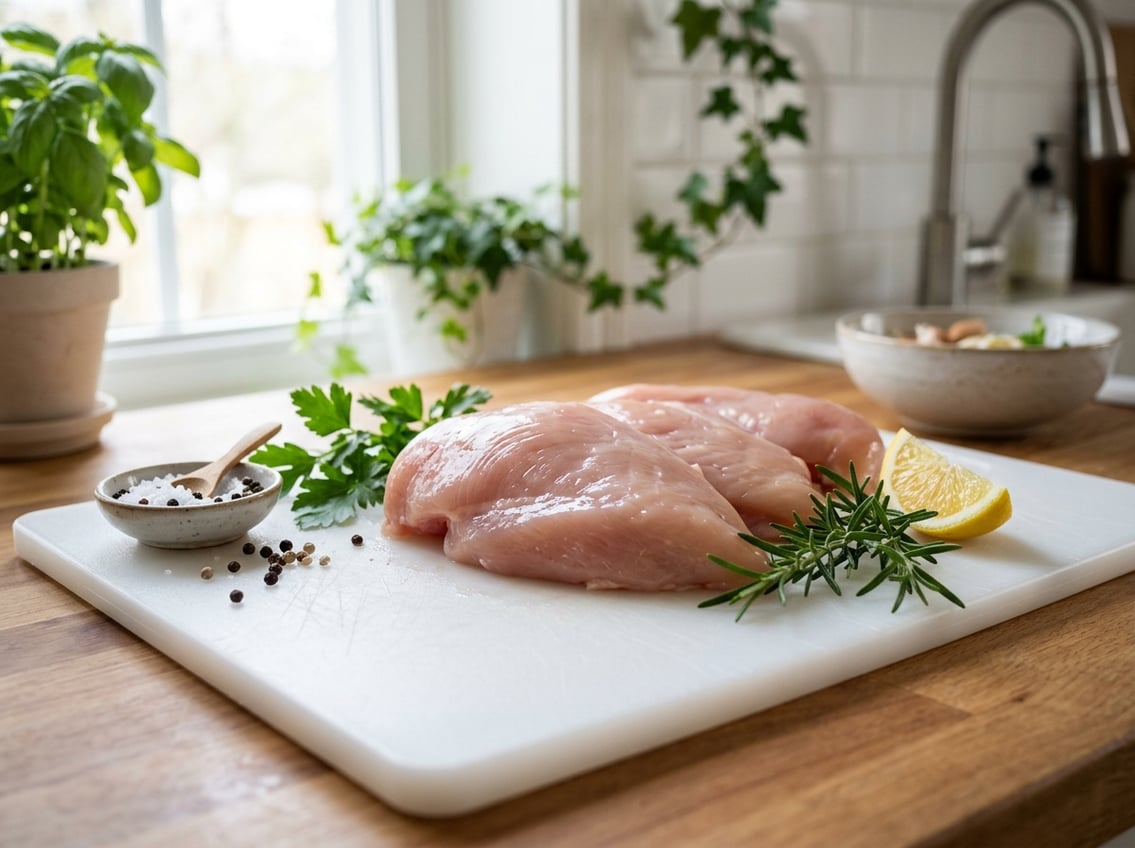
Chicken breast can turn slimy for several reasons. Natural juices, storage mistakes, and bacterial growth can all change the surface feel, and some of these changes are linked to harmful bacteria like salmonella.
Natural Juices vs. Bacterial Biofilm
Raw chicken naturally releases moisture, especially in sealed packaging. This liquid can make the surface feel wet or slippery without meaning the meat is spoiled.
Bacteria can grow on the meat and form a slimy layer called a biofilm, which is a stronger food safety warning than normal moisture.
How Improper Storage Speeds Up Bacterial Growth
Improper storage often causes chicken breast to get slimy. When chicken stays above 40°F, sits out too long, or stays in the fridge too long, bacteria multiply quickly.
Keeping chicken cold and sealed slows this process. Storage above safe refrigerator temperature speeds up sliminess and spoilage.
What Defrosting and Refreezing Can Change
Thawing chicken and refreezing it can change the texture. Ice crystals damage the meat’s structure, which can cause more surface moisture after thawing.
That extra moisture may make the chicken breast seem slimy even if it is not spoiled. If the smell or color is off, focus on food safety, not just texture changes.
What to Do if You Find a Slimy Surface
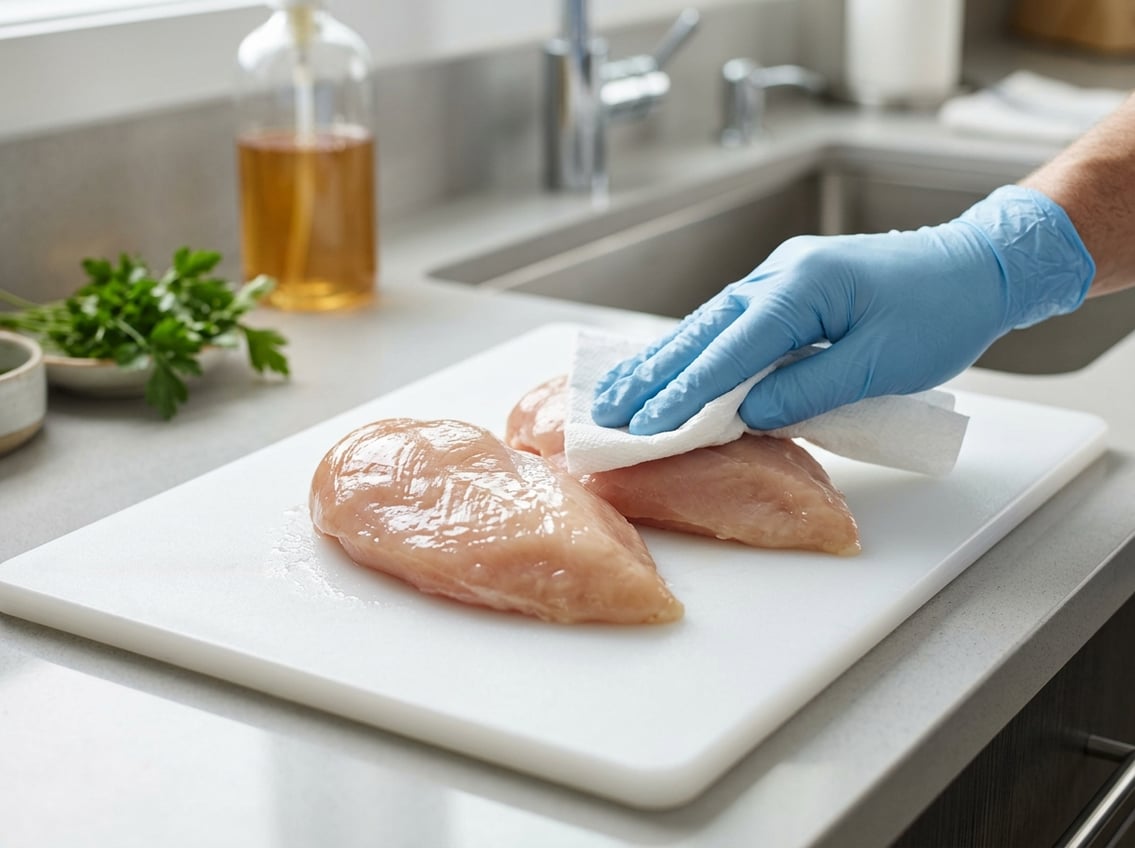
Check the smell, color, packaging date, and how the chicken was stored before deciding what to do. Assess whether the risk is low or high enough to discard it.
A Simple Safety Checklist Before You Decide
Use this quick check before cooking:
- Does the chicken smell sour, rotten, or ammonia-like?
- Is the color gray, green, or dull instead of pinkish-white?
- Does the slimy layer stay after you pat it dry?
- Has it been in the fridge longer than 1 to 2 days?
- Was it left out too long or stored above 40°F?
If more than one answer is yes, do not eat the chicken.
When Discarding Is the Safest Option
If the chicken smells bad, looks discolored, or feels tacky after drying, throw it out. Replacing one package costs less than risking foodborne illness.
If you are unsure how long it has been stored, discard it. When the condition is unclear, safety comes first.
How to Handle Raw Chicken Without Cross-Contamination
Raw chicken can spread germs to counters, knives, sink areas, and other food. Wash hands with soap, clean surfaces with hot soapy water, and keep chicken separate from ready-to-eat foods.
Do not rinse raw chicken in the sink. This can spread bacteria in droplets around your kitchen.
How to Prevent the Problem Next Time
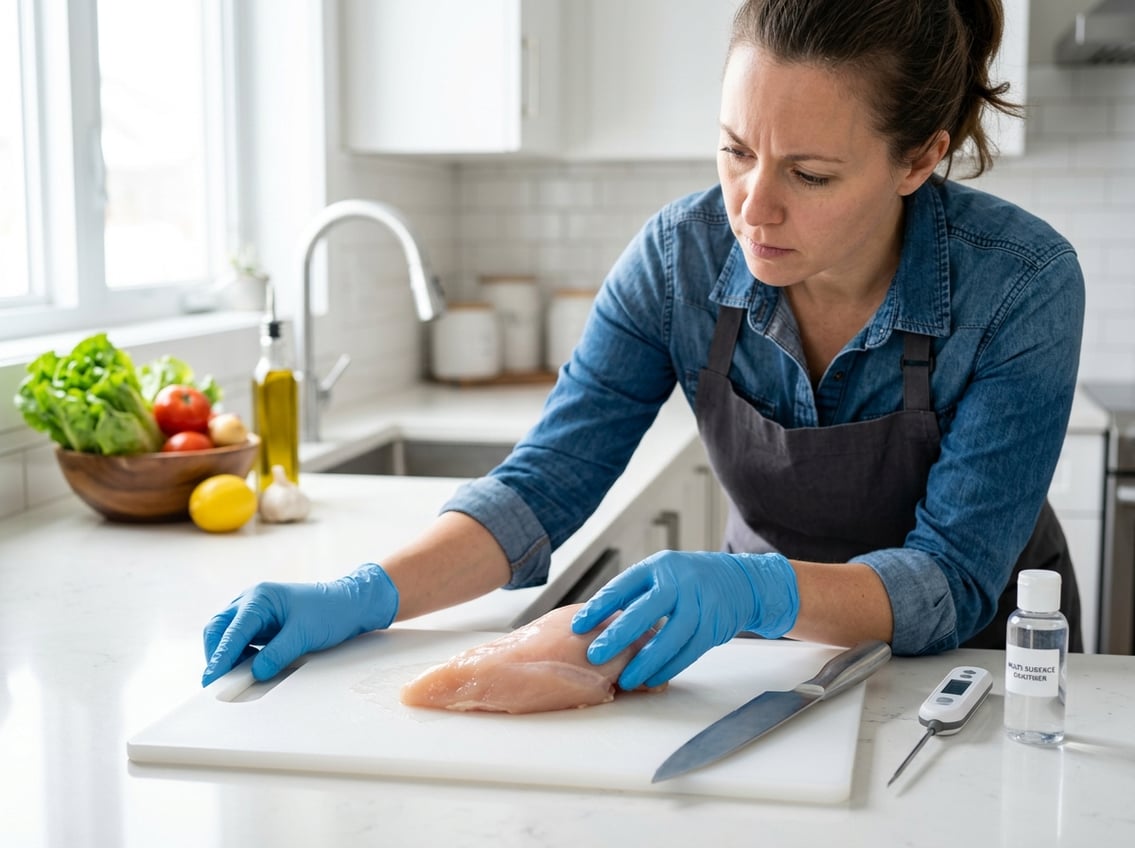
Good storage habits keep chicken breast safer and less likely to develop a slimy texture. Buy carefully, chill quickly, and avoid cross-contamination to reduce spoilage.
Best Refrigerator and Freezer Storage Habits
Store raw chicken on the bottom shelf of the fridge in a sealed container or leak-proof bag. This keeps juices from dripping onto other foods and helps avoid cross-contamination.
Keep your refrigerator at 40°F or below. Freeze chicken if you will not use it soon.
Proper wrapping protects the meat from excess moisture and freezer burn.
How Long Raw Chicken Breast Keeps Safely
Raw chicken breast usually keeps in the refrigerator for 1 to 2 days. For longer storage, freezing is safer.
For cooked leftovers, refrigerate within 2 hours and use within 3 to 4 days. If chicken sits out longer, spoilage becomes more likely.
Buying Tips to Avoid Spoiled Packages
Choose packages that are cold, sealed, and free of leaks.
Avoid chicken that has torn packaging, excess liquid, or a sour smell in the store.
Check the sell-by or use-by date before you buy.
Plan to cook or freeze the chicken soon after bringing it home.


