
Why Is My Chicken Breast Tough? Causes and Fixes
You might ask why is my chicken breast tough because chicken breast is lean, cooks fast, and can go from tender to dry very quickly.
You can usually fix this problem with better timing, more even thickness, and more control over heat.
A tough chicken breast usually comes from overcooking, uneven cooking, or a problem that started before you cooked it.
If you learn how to spot the cause, you can make chicken that stays juicy, slices cleanly, and feels tender instead of rubbery.
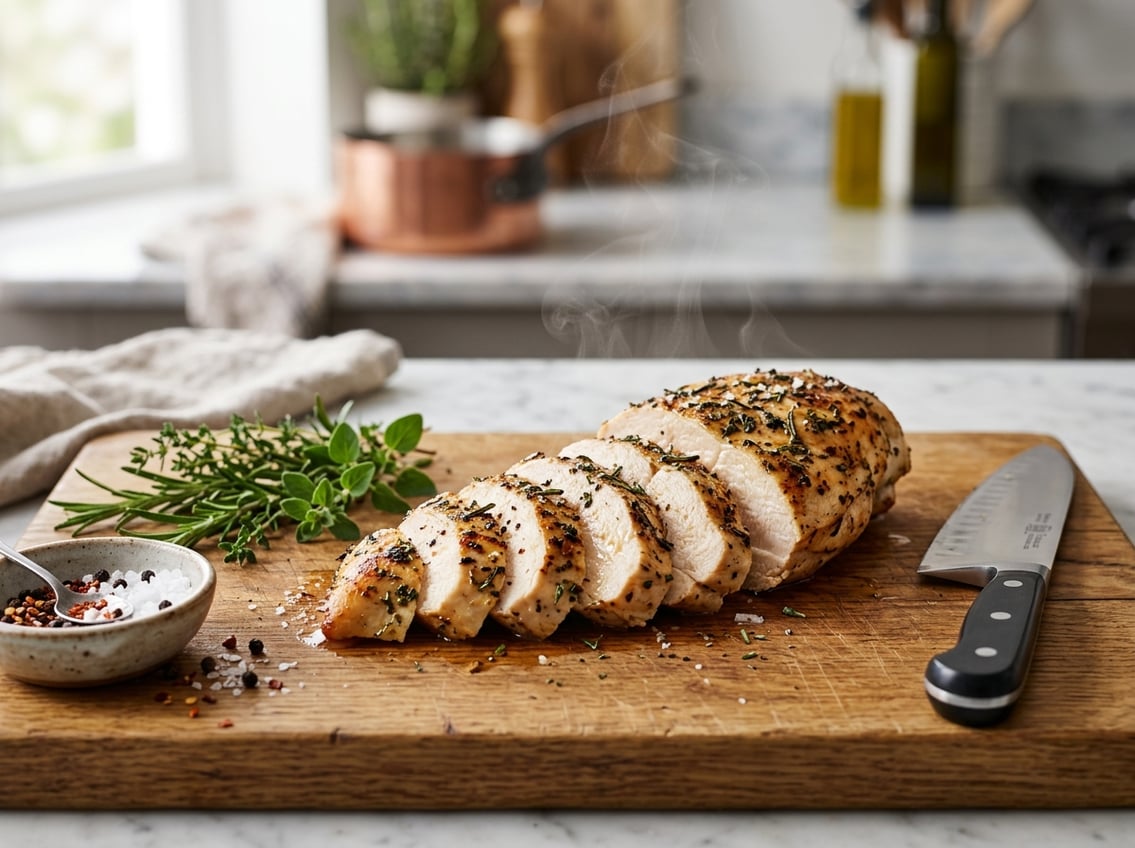
What Usually Makes Chicken Breast Turn Tough
High heat, long cooking time, or uneven pieces usually make chicken breast tough.
Chicken breast does not have much fat, so it loses moisture fast when the fibers tighten.
The same piece can feel different depending on whether it was slightly underdone, fully cooked, or overcooked during resting.
Overcooking and Moisture Loss
Overcooking is the most common reason for tough chicken breast.
When you leave the meat on the heat too long, the proteins tighten and push out moisture, leaving you with dry, tough chicken.
Carryover cooking also matters. The chicken keeps cooking for a few minutes after you remove it from the heat, so it can become overdone if you wait too long.
Undercooking and Rubbery Texture
Undercooked chicken can feel rubbery instead of tender.
That texture often happens when the outside looks done, but the inside is still too soft and uneven.
A meat thermometer helps you avoid both problems.
Cooking chicken breast to 165°F gives you a safe, more reliable result.
High Heat and Uneven Thickness
High heat can make the outside finish before the inside is ready.
That forces you to keep cooking, which dries out the thinner parts and makes the whole piece less tender.
Uneven thickness causes the same issue.
A thick end and a thin end do not cook at the same rate, so one part turns tough while the other part is still catching up.
How to Keep the Meat Tender and Juicy
You can improve texture before cooking starts, not just during the cook.
Small steps like salting early, checking temperature, and evening out the shape help you get juicy chicken breast more often.
Use a Meat Thermometer for Better Doneness
A meat thermometer is the easiest way to protect juicy chicken.
Pull the chicken when the thickest part reaches 165°F, and check it early so you do not go past the target.
This gives you more control than guessing by color or cook time alone.
Dry Brining for Better Moisture Retention
Dry brining means salting the chicken breast ahead of time and letting it rest in the refrigerator.
The salt helps the meat hold onto moisture better and improves flavor.
This is one of the simplest ways to tenderize chicken breast without changing the recipe.
A few hours or overnight gives good results.
Marinating Chicken Breast Without Making It Mushy
Marinating chicken breast can help add flavor and soften the texture, especially when you use ingredients like yogurt, buttermilk, lemon juice, or vinegar.
Keep the time reasonable, since long marinades with a lot of acid can make the outside too soft.
Use marinating as a flavor tool, not a cure for overcooking.
It helps, but it does not replace careful heat control.
Pounding Chicken Breast for Even Cooking
Pounding chicken breast flattens thicker parts so the whole piece cooks at the same speed.
That means less chance of a dry edge and a raw center.
Place the chicken between sheets of plastic wrap or parchment and pound it gently to an even thickness.
This is one of the most effective ways to make chicken breast cook more evenly.
Resting and Slicing to Preserve Juices
Rest the chicken for a few minutes after cooking so the juices settle back into the meat.
If you cut too soon, those juices run out onto the board instead of staying in the chicken.
Slice across the grain for a more tender bite.
That simple step makes chicken much easier to chew.
When the Problem Starts With the Chicken Itself
Sometimes the issue is not your method.
The chicken may already be less tender because of the way it was raised, processed, or chilled.
Even careful cooking can still give you a tough chicken breast if the raw meat started with poor texture.
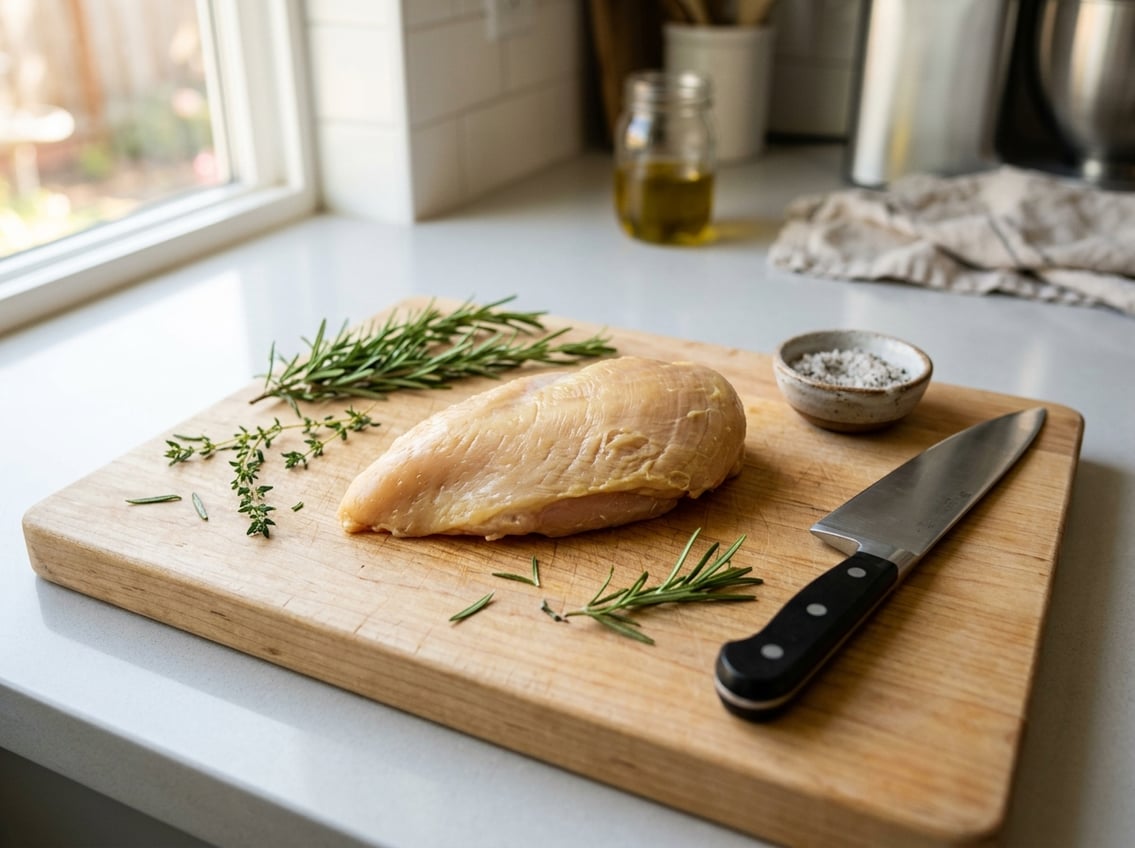
How to Spot Woody Breast Syndrome
Woody breast syndrome is a texture issue that can make chicken breast feel firm, tight, or oddly dense before cooking.
It can also stay tough after cooking, even when you do everything else right.
Look for chicken that feels unusually hard or bumpy in the package.
If the meat seems dense in a way that does not feel normal, that is a warning sign.
Why Poor Quality Chicken Cooks Worse
Poor quality chicken often gives you a less predictable result.
The muscle may hold less moisture or have a tougher texture, so it dries out faster and tastes less tender.
Buying from a trusted store can help.
Checking the look and feel of the package is also useful.
Lean chicken breast is especially prone to drying out when the heat is too aggressive.
Whether Air-Chilled Chicken Is Worth Buying
Air-chilled chicken is worth trying if you want a firmer texture and cleaner flavor.
It is chilled without water baths, so it can avoid some extra water absorption during processing.
Good cooking technique still matters more than the label.
Best Ways to Recover and Prevent Dry Results
You can still improve a dry piece after cooking.
You can also choose methods that give you a bigger margin for error next time.
Sauces, gentler cooking, and steady habits all help you fix tough chicken breast and prevent it from happening again.
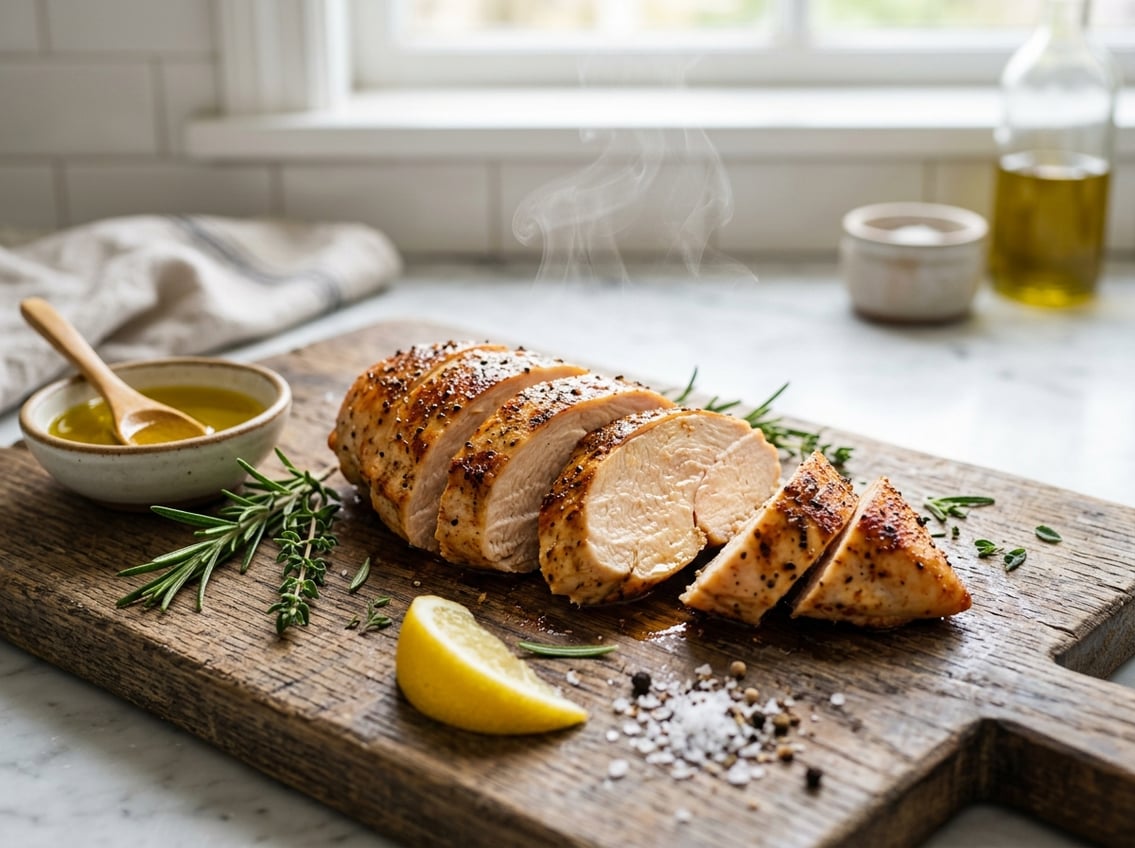
How to Fix Tough Chicken Breast After Cooking
To fix tough chicken breast after cooking, slice it thin and serve it with a sauce, broth, or pan juices.
This will not undo overcooking, but it can make the chicken easier to eat.
You can also chop it for soup, salads, tacos, or casseroles, where added moisture helps.
That is often the best way to use tough chicken without wasting it.
Cooking Methods That Are More Forgiving
Gentler methods are more forgiving when you want tender chicken breasts.
Poaching, steaming, and sous vide all reduce the chance of overcooking because they heat the meat more evenly.
Gentle cooking methods help retain moisture better than harsh, high-heat cooking.
If you grill or roast, keep a close eye on temperature.
Simple Habits for Perfect Results Every Time
A few habits make a big difference. Buy similar-sized pieces and pound them to even thickness.
Salt the pieces ahead of time. Use a meat thermometer.
Keep the heat moderate. Stop cooking at the right temperature.
These small steps help you get tender chicken that stays juicy on the plate.


