
How Do You Know Chicken Breast Is Bad? Key Signs
How do you know chicken breast is bad? The clearest signs are a sour smell, odd color, and a slimy or sticky feel.
If raw chicken breast shows any of those changes, do not cook it.
Fresh chicken should look pale pink, smell mild, and feel moist, not tacky. Once those traits shift, chicken safety becomes a real concern.
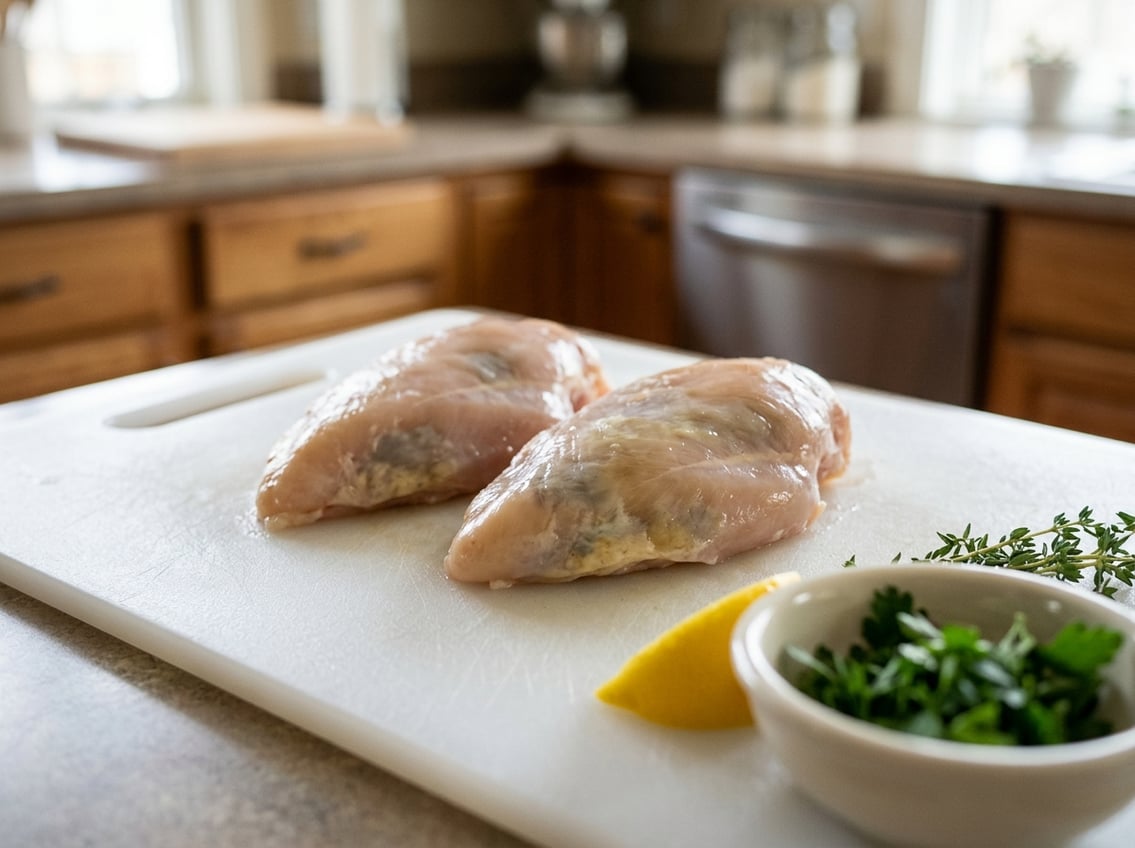
If you are checking how to tell if chicken has gone bad, trust your senses and the storage time. Even small changes matter.
When in doubt, throw it out.
The Fastest Ways to Spot Spoilage
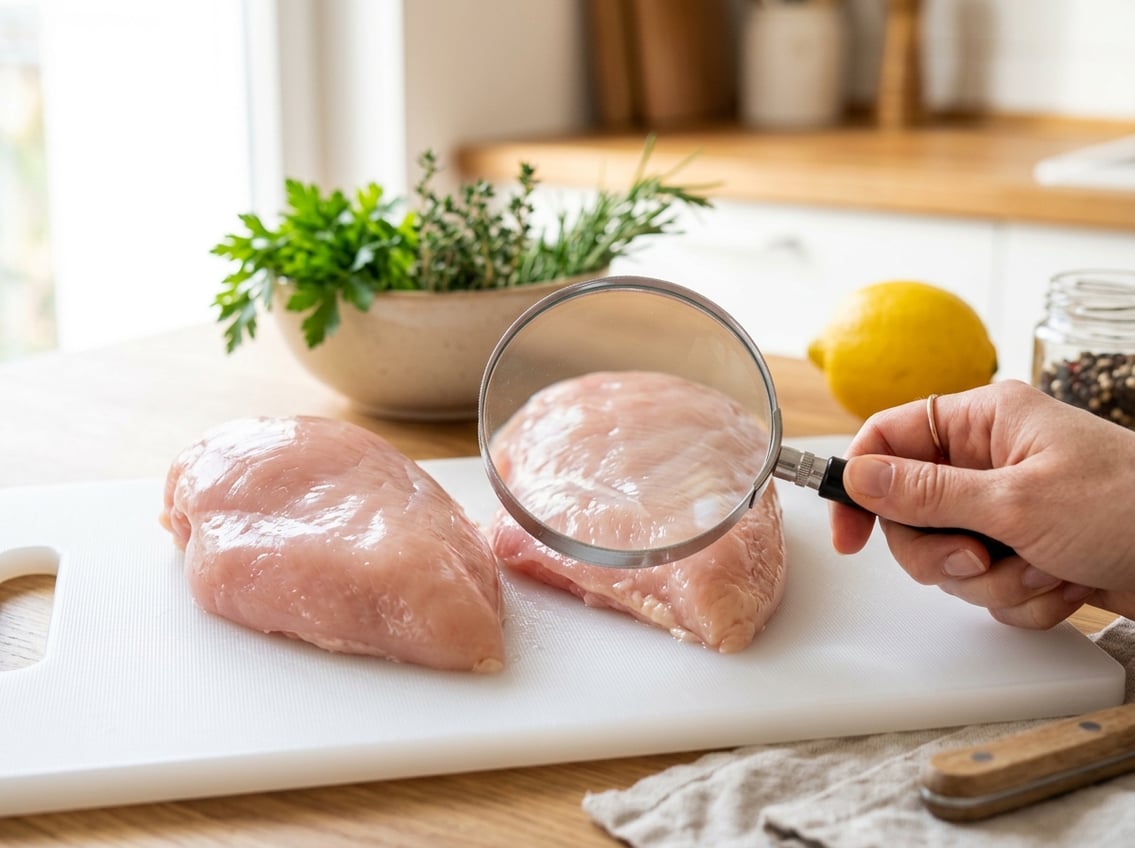
Check smell, color, and texture together to judge raw chicken breast. One warning sign can point to trouble, and two or more signs usually mean the meat is unsafe.
Check for Sour or Sulfur-Like Smell
Fresh raw chicken should smell mild or nearly neutral. If your raw chicken has a sour, ammonia-like, or sulfur smell, it has spoiled.
That odor can show up before the chicken looks very different. If the smell is sharp when you open the package, do not cook it.
Look for Gray, Green, or Yellow Discoloration
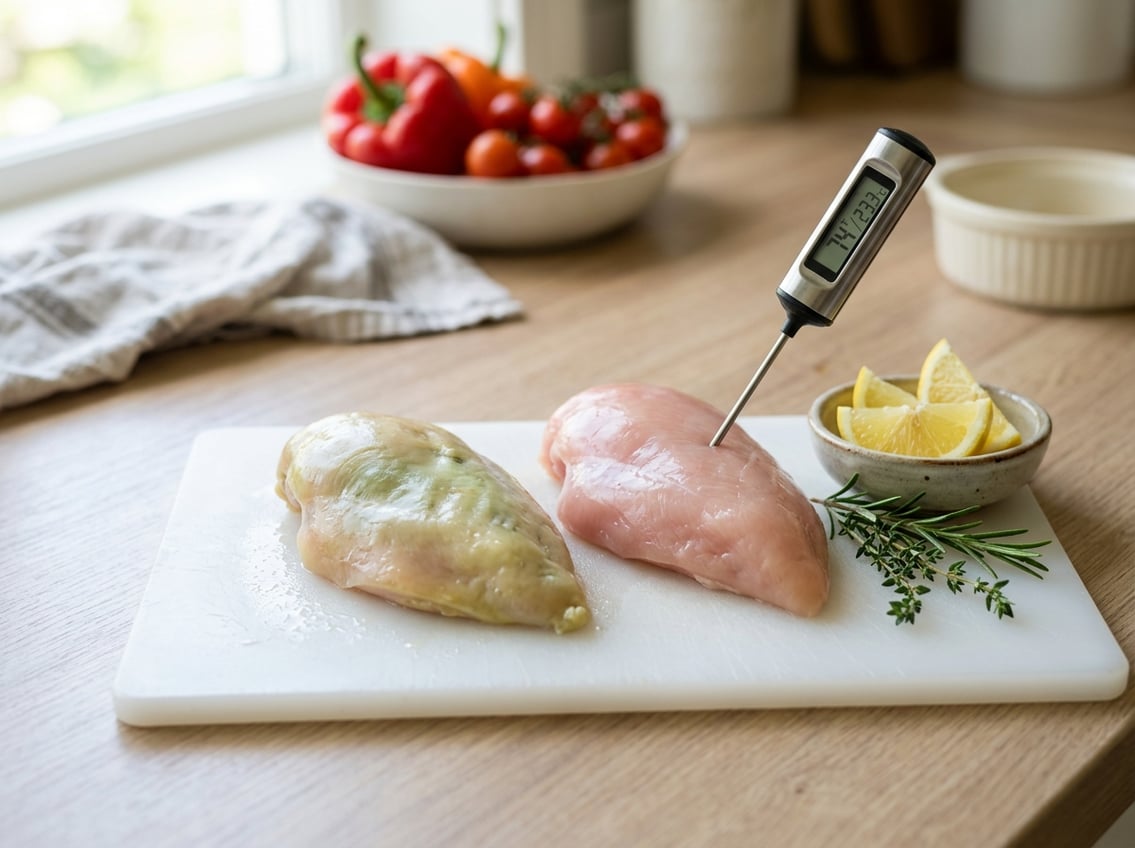
Good raw chicken breast looks pale pink with a light white fat layer. If you see gray, green, or yellow areas, the meat is likely bad.
Some surface darkening can happen from exposure to air. Green patches, yellow fat, or a dull gray cast are not normal.
A shiny rainbow film can also appear when bacteria are growing on the surface.
Feel for Slimy, Sticky, or Tacky Texture
Fresh raw chicken should feel moist and firm, not slippery. If the surface feels slimy, sticky, or tacky, that is a strong spoilage sign.
Use a clean hand or utensil, and wash it right after. A bad raw chicken breast can leave a film that does not rinse away easily.
Know When Bad Raw Chicken Breast Is Beyond Saving
If the chicken smells off and has color changes or a bad texture, it is beyond saving.
Cooking does not fix spoiled meat, and trimming it is not a safe solution.
If you have already cut into it and the inside also looks or smells wrong, discard the whole piece.
The safest choice is to throw it away rather than risk your health.
When Chicken Breast Is Unsafe Even If It Looks Fine
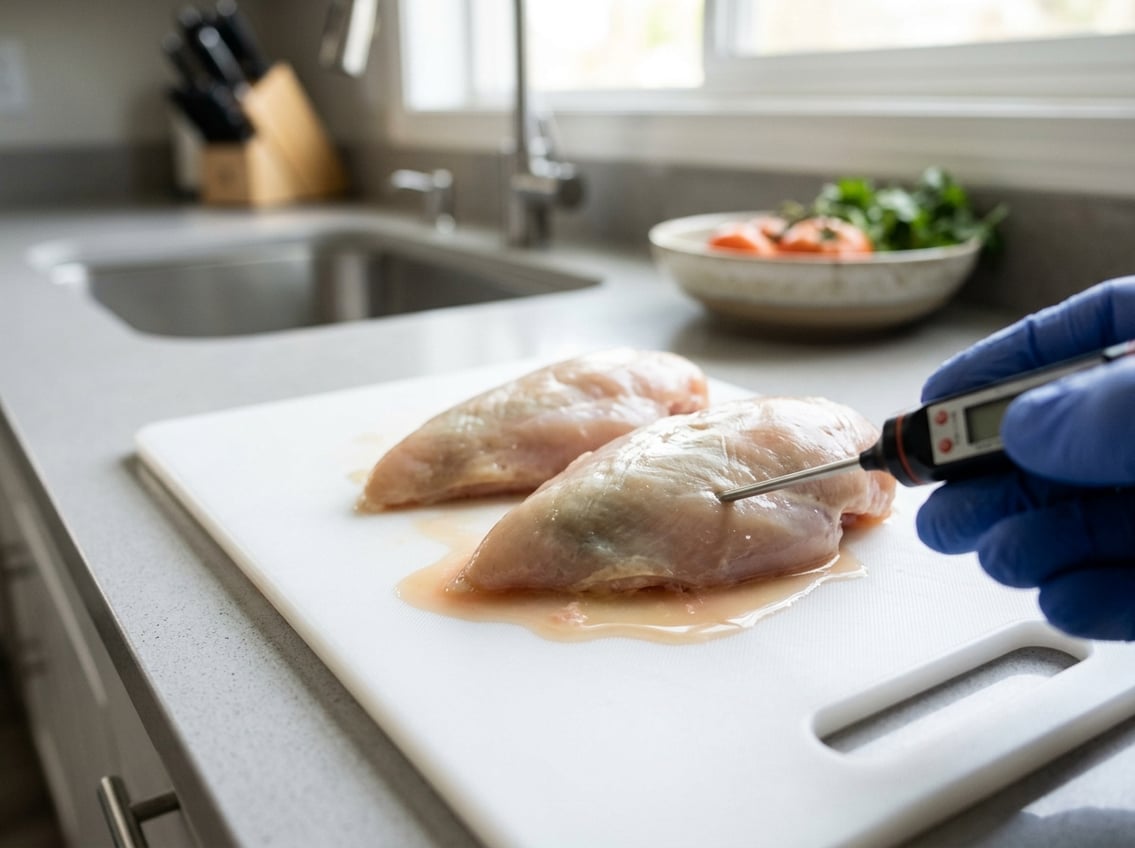
Chicken can carry harmful bacteria even when it looks normal. Chicken safety depends on more than appearance, especially with raw chicken.
Why Salmonella, Campylobacter, and E. coli Matter
Raw chicken can contain pathogens like salmonella and campylobacter, and sometimes e. coli. These bacteria can make you sick even if the meat smells fine and looks pink.
According to AllRecipesBeginner’s guide to spotting bad chicken breast, spoiled chicken can be linked to food poisoning risks from salmonella and campylobacter.
Visible freshness does not guarantee safety.
Spoilage vs. Foodborne Bacteria
Spoilage and contamination are not the same thing. Spoilage changes the smell, color, and texture, while foodborne bacteria can be present before any clear spoilage signs appear.
Chicken may still look acceptable and still be unsafe to eat. Safe cooking to 165°F helps kill bacteria, but that does not make old or mishandled chicken a smart choice.
Why Tasting Is Never a Safe Test
Never taste raw chicken to check if it is bad. A small bite can expose you to bacteria before you know there is a problem.
Taste is also a poor test because spoilage is not always obvious in flavor until after contact has already happened.
If you are unsure, use smell, look, touch, and storage time, not your mouth.
Storage and Handling Mistakes That Raise Risk
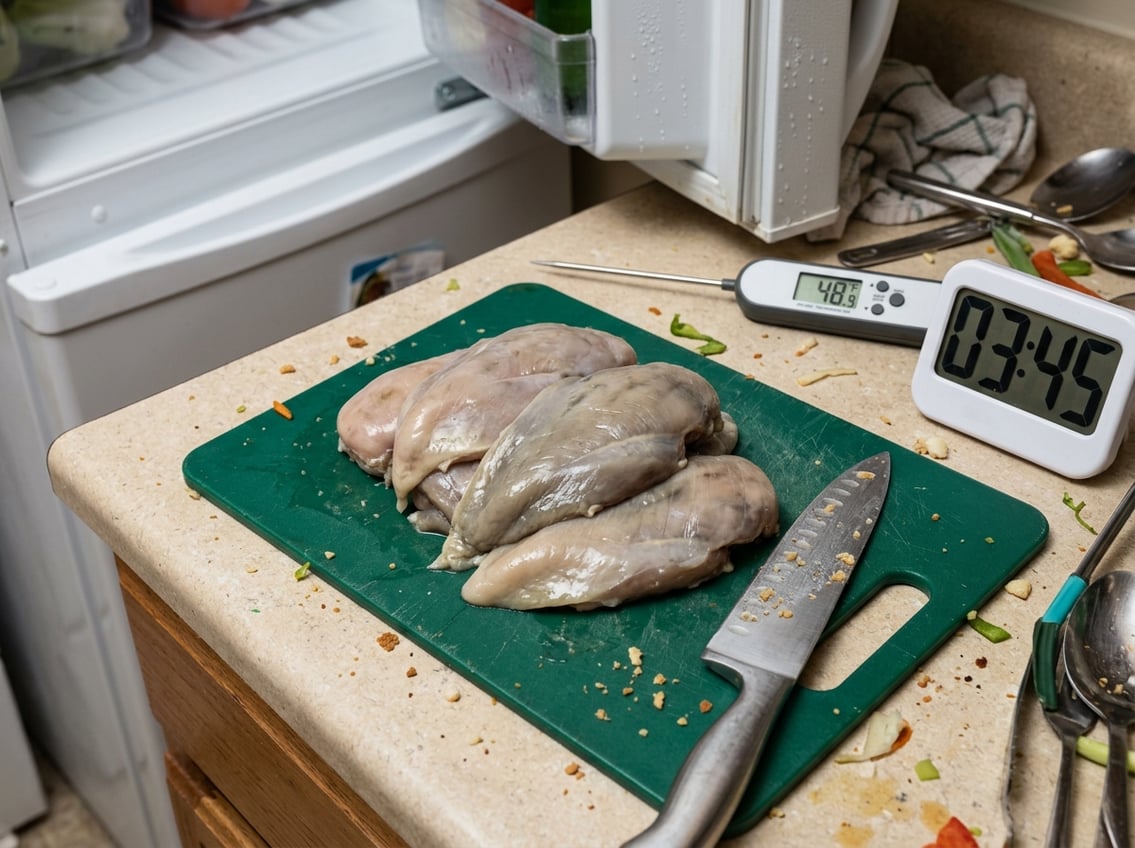
Bad storage can shorten the life of raw chicken breast fast. Even fresh-looking chicken becomes risky when it sits too long, warms up, or touches other foods.
How Long Chicken Breast Lasts in the Fridge
Raw chicken breast usually lasts only 1 to 2 days in the refrigerator at 40°F or below, which matches guidance in AllRecipesBeginner’s raw chicken breast safety guide.
If it has been longer than that, treat it with caution even if it still looks fine.
The date on the package helps, but it is not the only factor. If the package has been open, the fridge runs warm, or the chicken sat out too long, the safe window can shrink.
Time and Temperature Danger Zones
Chicken left in the temperature danger zone can spoil faster. Food should not stay in the 40°F to 140°F range for long, since bacteria grow well there.
If raw chicken sat on the counter while you unpacked groceries, prepped sides, or thawed it slowly, the risk rises.
When you are not sure how long it was warm, the safest move is to toss it.
Handling Raw Chicken Without Cross-Contamination
Handling raw chicken can spread bacteria to sinks, counters, cutting boards, and your hands. Cross-contamination can make other foods unsafe.
Keep raw chicken separate from produce, bread, and cooked food. Wash hands, knives, cutting boards, and plates with hot soapy water right after contact.
Packaging Leaks, Excess Liquid, and Other Warning Signs
A leaking package is a warning sign, especially if the seal looks broken or the tray has extra liquid.
Extra liquid does not always mean the chicken is spoiled, but it can point to rough handling or poor storage.
Watch for a swollen package, an odd odor when you open the fridge, or meat that feels unusually soft.
Those clues make it more likely that the chicken is no longer good.
What to Know About Frozen Chicken Breast
Frozen chicken breast can stay safe for a long time, but quality still changes.
If you are checking how to tell if chicken has gone bad after freezing, look for freezer burn, texture changes, and packaging problems.
How Freezer Burn Changes Quality
Freezer burn happens when air dries out the surface of the chicken. It usually does not make the meat unsafe by itself, but it does hurt taste and texture.
You may see white or grayish-brown dry spots. The chicken can still be cooked if it has been frozen properly and stored well, but quality may be lower.
Ice Crystals, Dry Patches, and Off Texture
Small ice crystals are normal on frozen chicken. Large crystals, dry patches, and a rough or leathery surface can mean the meat has been exposed to air or temperature changes.
If the chicken feels tough in spots after thawing, that is usually a quality issue, not a safety issue.
A foul smell, strange color, or slimy texture after thawing still means you should throw it out.
When Frozen Chicken Should Still Be Thrown Out
Throw out frozen raw chicken breast if you see a damaged package. Discard it if the meat has an off smell after thawing or if you suspect it thawed and refroze outside the fridge.
A broken seal lets air in and dries out the meat. Temperature swings raise risk.
If you froze the chicken only after it sat in the fridge too long, freezing does not make it safe again.
In that case, discard it instead of guessing.


