
What’s a Good Way to Make Chicken Breast? Best Methods
You’re probably asking what’s a good way to make chicken breast because you want a result that is cooked through, tastes good, and stays moist. The best answer is simple: start with even-sized chicken, season or brine it, cook it with the method that fits your meal, and pull it from the heat before it dries out.
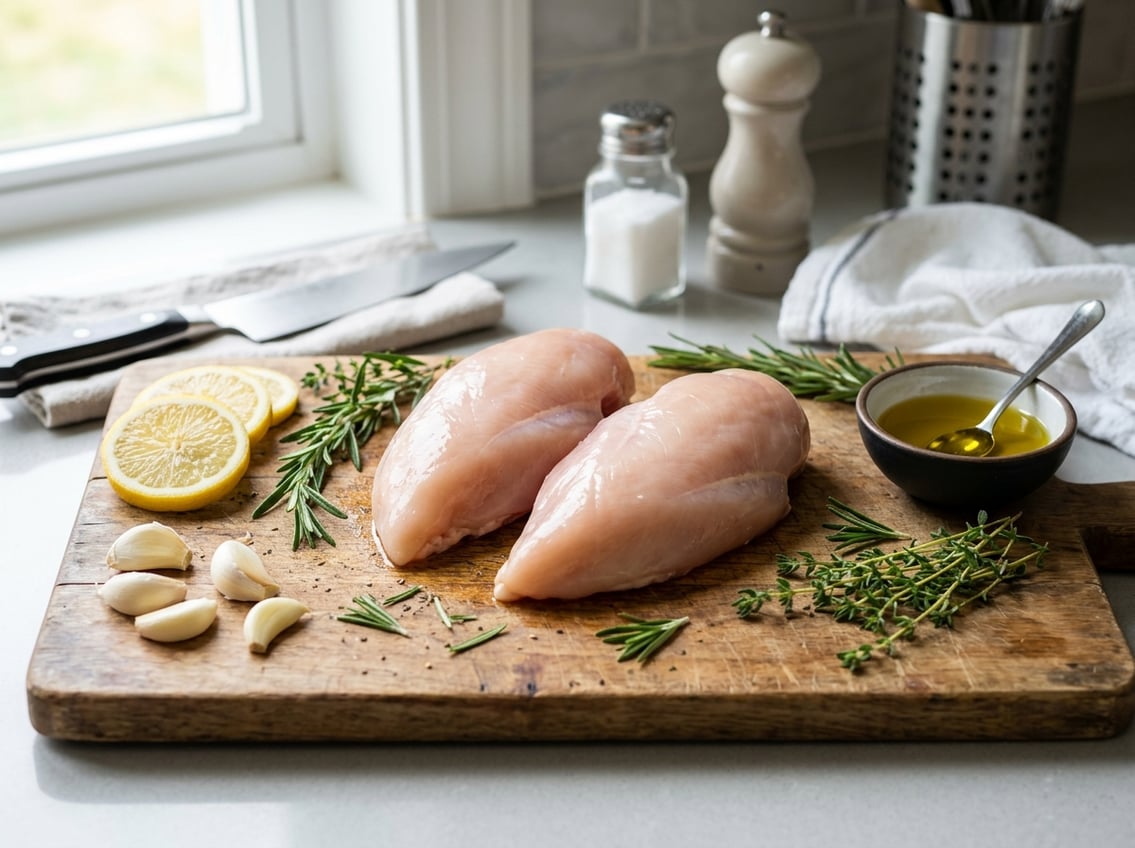
A good way to make chicken breast is to focus on prep first, then use a method that lets you control heat and finish with a meat thermometer. That approach gives you a juicy chicken breast far more often than guessing with time alone.
Chicken breasts are lean, so they can go from tender to dry fast. If you want a reliable chicken breast recipe, the details matter more than any single trick.
Start With the Most Reliable Path to Juicy Results
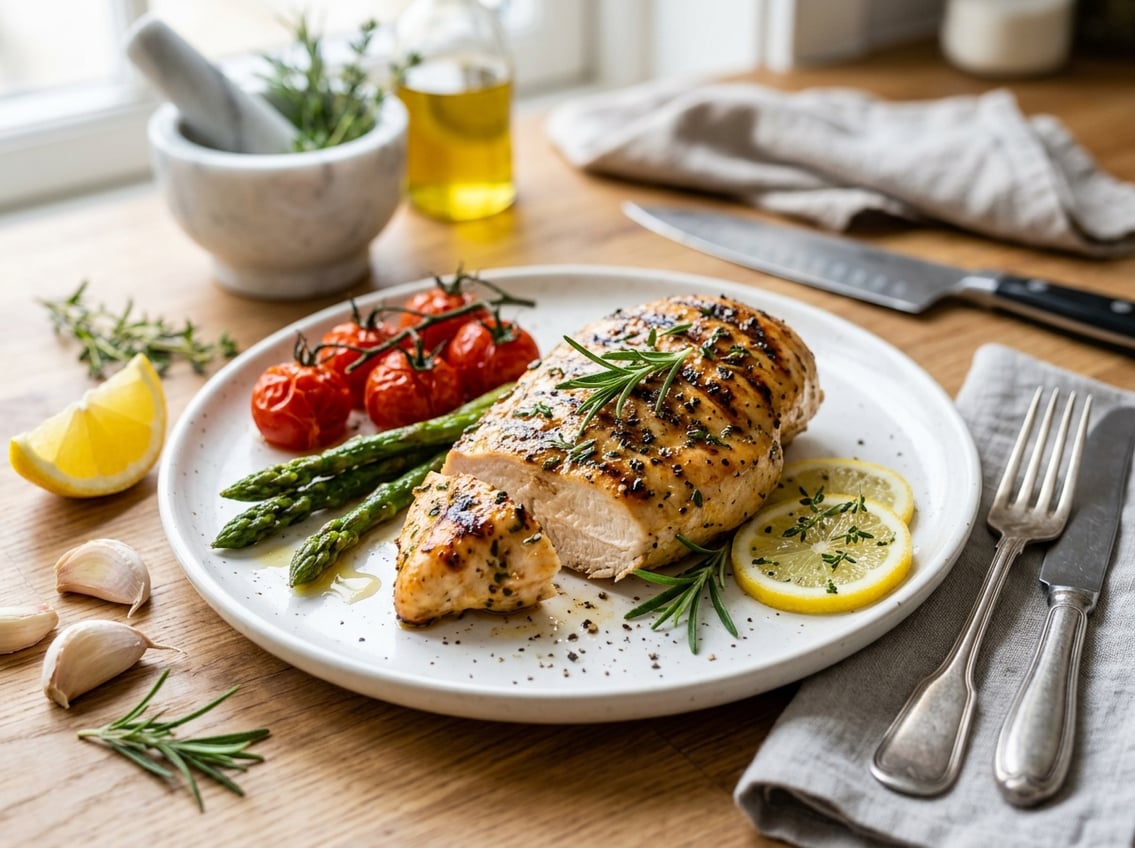
The most reliable way to cook chicken breast starts before you heat the pan, oven, or grill. You get better texture when you use even pieces, salt them lightly, and check doneness with a thermometer instead of guessing.
Choose the Right Cut and Size
Use boneless skinless chicken breast when you want fast, flexible cooking. Choose pieces that are close in size and thickness so they finish at the same time.
If one breast is much thicker, it will need more time and the thinner one may dry out. Slice large pieces in half to make two thinner cutlets if needed.
Flatten or Portion for Even Cooking
Pound thick ends lightly so the whole piece is more even. You can also cut a large boneless chicken breast into cutlets for quicker, more even cooking.
Even thickness matters because chicken cooks from the outside in. Thinner, even pieces are easier to cook through without overcooking the center.
Use a Quick Brine or Marinade
A short brine or marinade helps the meat stay moist and adds flavor. In a recent chef roundup from Simply Recipes, cooks recommended brining or marinating boneless chicken breast ahead of time, even if you only have 20 to 30 minutes.
A dry brine is simple: salt the chicken and rest it in the fridge briefly. Marinades with lemon, herbs, yogurt, or spices work well for extra flavor.
Check Doneness With a Meat Thermometer
A meat thermometer is the most dependable tool for cooking chicken breast. Aim for an internal temperature of 165°F, and take the chicken off the heat a little early so carryover heat can finish the job.
Chicken breast keeps cooking after it leaves the heat. If you wait until it looks fully done in the pan, it may already be overcooked by the time you serve it.
Let the Chicken Rest Before Slicing
Resting gives the juices time to settle back into the meat. Give the chicken about 5 minutes before cutting.
If you slice right away, more juice ends up on the cutting board instead of in the meat. That simple pause helps you keep a juicy chicken breast.
Pick the Cooking Method That Fits the Meal
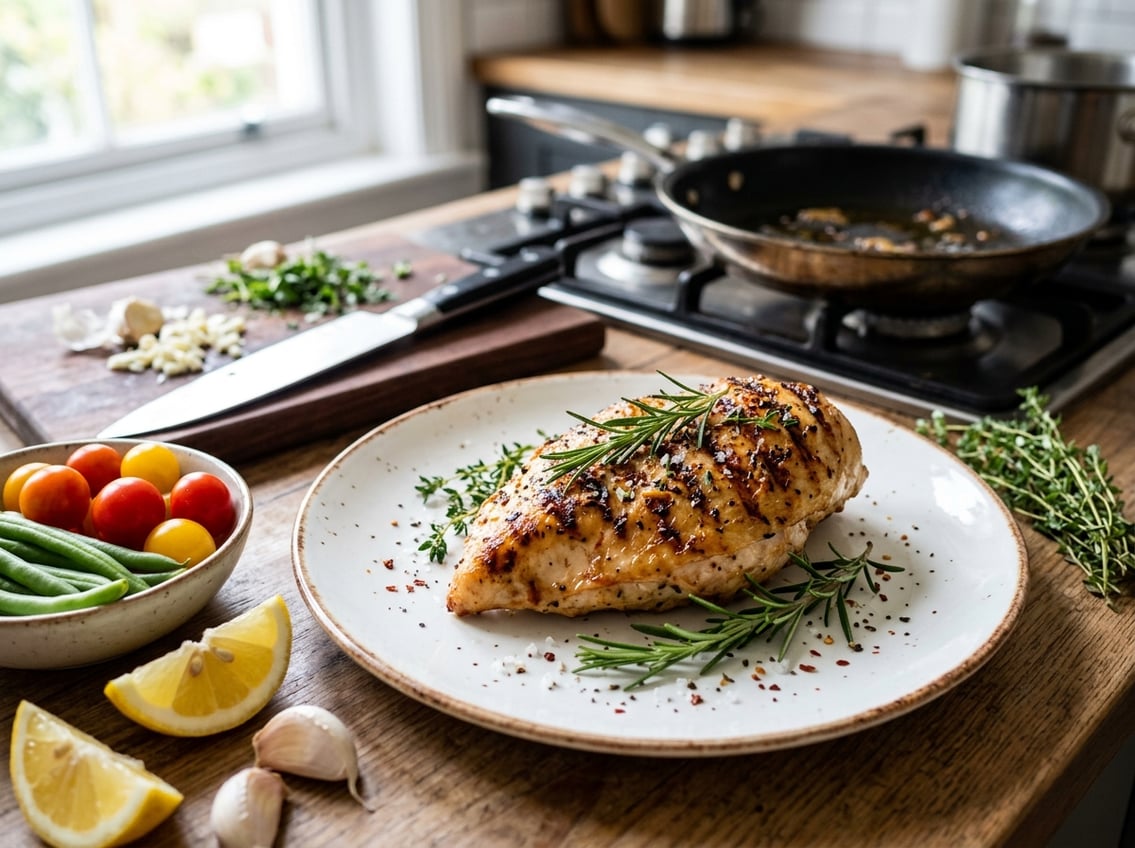
The best way to cook chicken breast depends on your meal. Baking is easy, skillet cooking gives you browning, grilling adds smoke, and poaching works well when you want mild chicken for cold dishes or meal prep.
Bake for Easy Weeknight Chicken
To bake chicken breast, season it, place it in a hot oven, and cook until it reaches 165°F. A simple pan setup with a little oil or marinade helps the surface stay moist.
Baked chicken is a good choice when you want hands-off cooking. It works well for family dinners and meal prep.
Skillet-Cook for Fast Browning
A skillet gives you the fastest browning and the most control. Pat the chicken dry, heat a little oil, and cook it over medium-high heat until golden on the outside and cooked through.
This method works well for a simple weeknight dinner. A pan-seared chicken breast can move straight into salads, rice bowls, or pasta.
Grill for Smoky Flavor
Grill chicken breast when you want char and a smoky taste. Keep the heat steady, oil the grates, and flip only once or twice so the meat cooks evenly.
Grilled chicken works for summer meals, sandwiches, and sliced toppings. Pound thick pieces first so they finish before the outside dries out.
Poach for Salads, Wraps, and Meal Prep
If you want mild chicken for cold dishes, how to poach chicken is worth using. Poached chicken breast stays tender when you keep the water below a hard boil.
This method is useful for salads, wraps, soups, and batch cooking. You can season plain poached chicken later in different ways.
Avoid the Mistakes That Make Chicken Dry or Bland
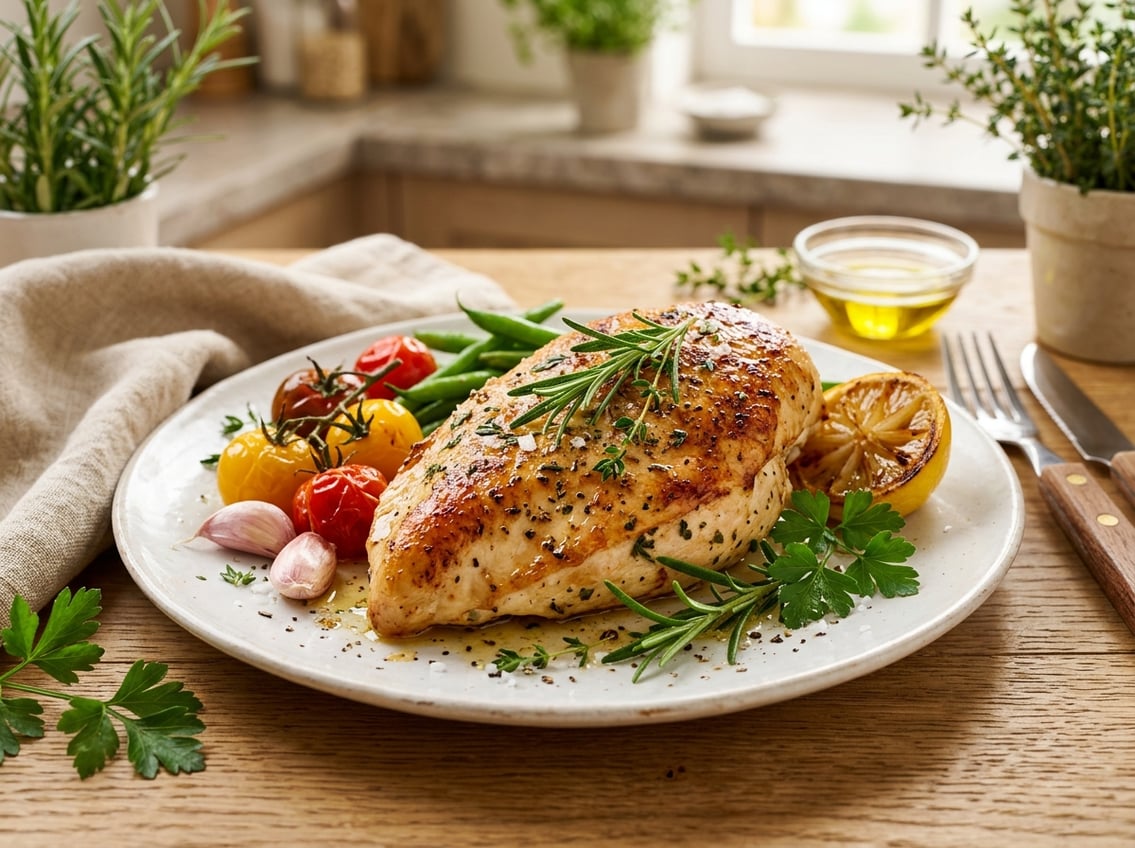
Dry chicken usually comes from a few common errors, not from the cut itself. If you watch heat, seasoning, and the final use, you can avoid most disappointing results.
Overcooking and Carryover Heat
Leaving chicken on the heat too long is the biggest mistake. Boneless skinless chicken breast is lean, so it dries out quickly once it passes the right temperature.
Use the thermometer as your stop point, not the clock alone. Carryover heat can add the last few degrees after the chicken comes off the burner or out of the oven.
Skipping Prep and Seasoning
Plain chicken often tastes bland even when it is cooked well. Salt, pepper, oil, herbs, or marinade all help the surface taste better and encourage better browning.
A simple brine or seasoning mix can do a lot of work for you. That small step is one of the easiest upgrades in cooking chicken breast.
Using the Wrong Heat Level
Very low heat can leave chicken pale and rubbery. Very high heat can burn the outside before the center is done.
You want enough heat to cook and brown the meat without rushing it into dryness. Match the heat to the method.
Use higher heat for a quick sear. Use steady oven heat for baking and moderate heat for the grill or poach.
Not Matching the Method to the End Use
A chicken breast for salad does not need the same treatment as one for dinner plates. If you plan to slice it thin, poach or bake it gently.
If you want a browned crust, skillet-cook or grill it. Think about how you will serve it before you start.
Simple Flavor Directions and Serving Ideas
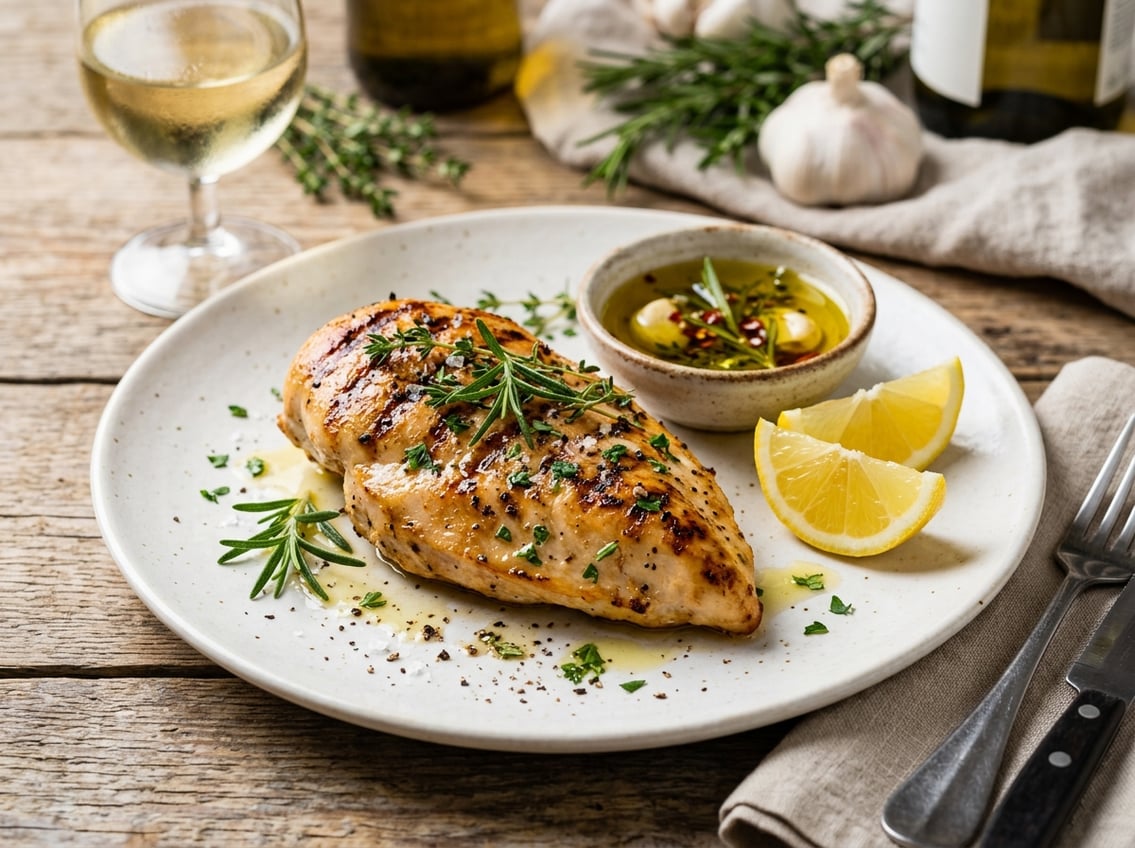
A solid chicken breast recipe does not need many ingredients. You can build good flavor with a few smart seasonings, a quick marinade, and a plan for leftovers.
Basic Seasonings That Always Work
Start with salt, pepper, garlic powder, and paprika. Add dried oregano, thyme, or onion powder if you want a more layered taste.
These seasonings work well on baked and grilled chicken. They also make plain chicken breasts easier to use in other meals.
Easy Marinade Profiles
Try lemon, garlic, and olive oil for a bright, simple flavor. For a richer result, use yogurt with spices, since yogurt can help tenderize the meat while adding flavor, as noted by chefs in Simply Recipes.
You can also go with soy sauce, honey, and ginger for a sweeter, savory profile. Keep the marinade focused so the chicken still tastes like chicken.
Best Uses for Leftovers
You can use leftover baked or grilled chicken for grain bowls, soups, tacos, pasta, and sandwiches.
Slice it thin and store it cold for easy lunches.
Chop the chicken for salad or wrap it with greens and rice.
If you keep the seasoning simple, the leftovers fit into more meals.


