
Can You Use Chicken Breast for Chicken Tenders? Easy Guide
You can use chicken breast for chicken tenders. It is one of the easiest ways to make homemade chicken tenders at home.
If you cut the chicken breast into even strips and cook it with the right method, you can get chicken strips that are crisp outside and tender inside.
The key is to treat boneless chicken breast like a stand-in for chicken tenderloin. Adjust the cut size and cook time so the pieces stay juicy.
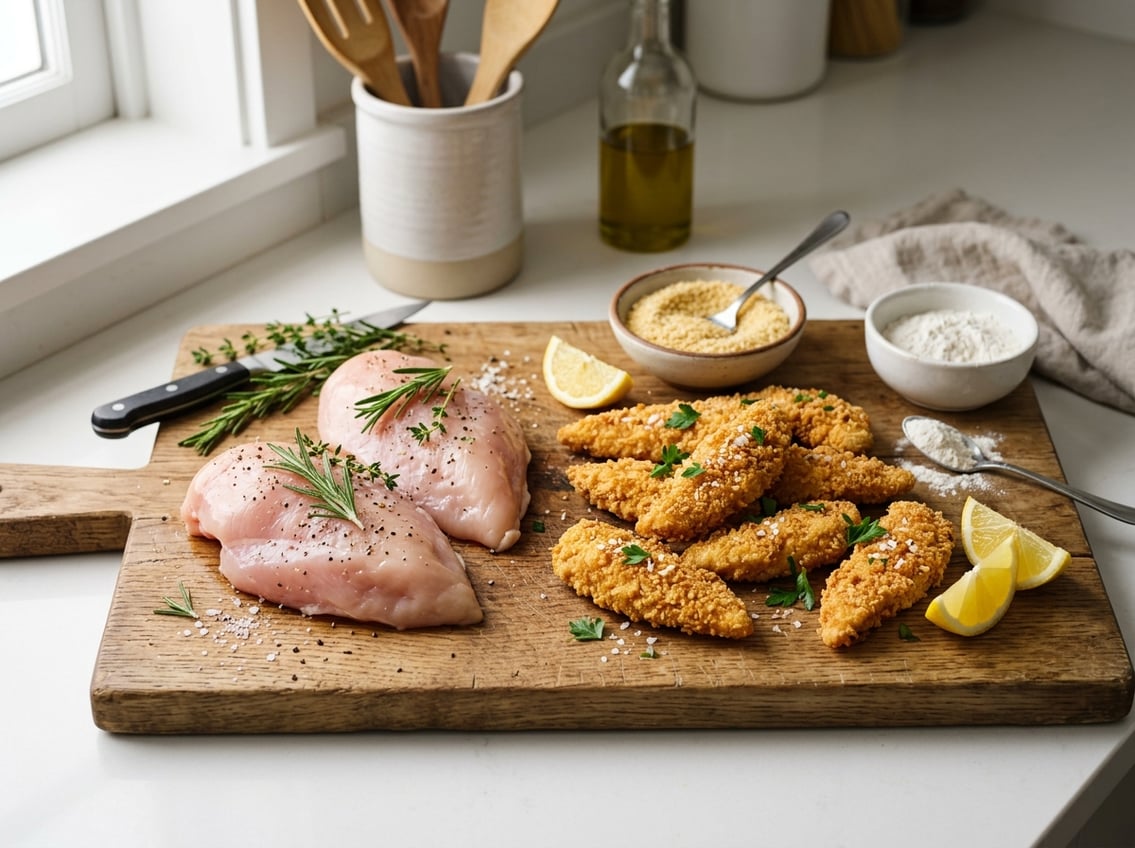
Chicken breast works as a practical choice for a chicken tender recipe, especially when you already have chicken breasts on hand.
With a few prep steps, you can turn a larger cut into tender-size pieces that work well for baking, frying, or pan-cooking.
Chicken Breast vs. Chicken Tenderloin
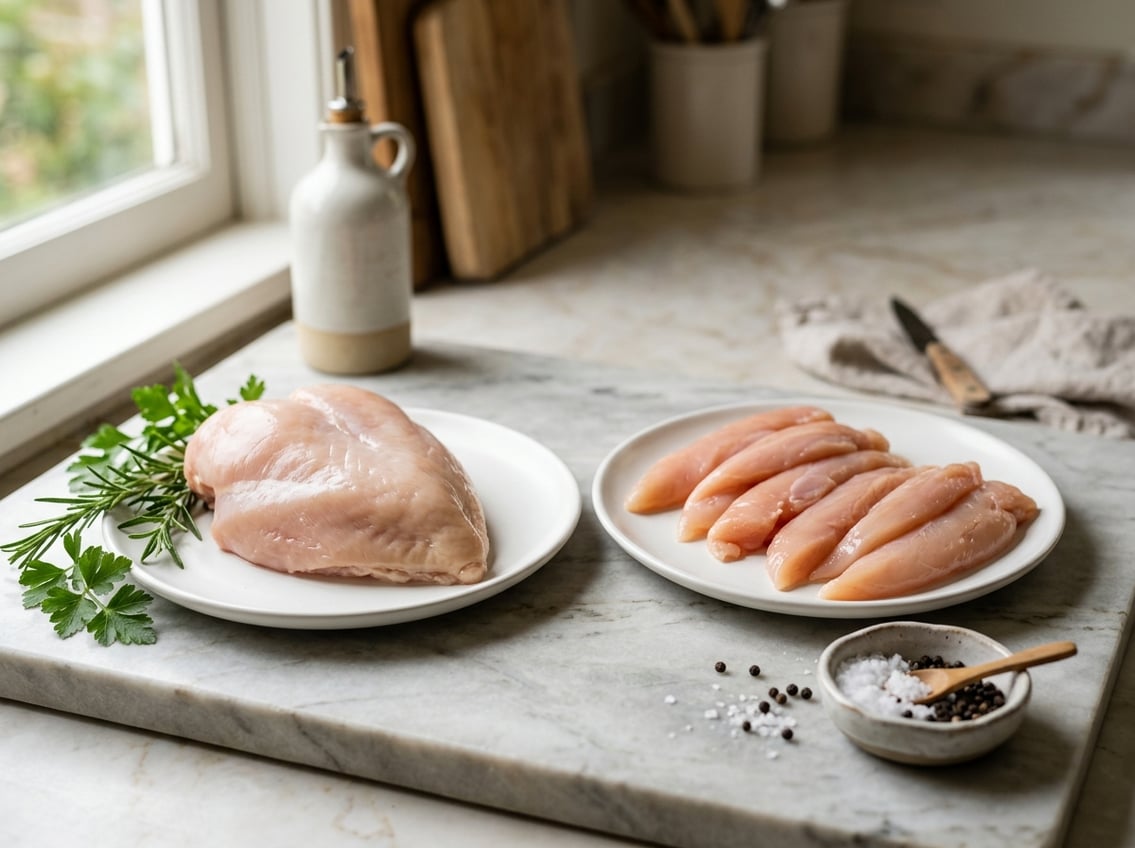
Chicken breast and chicken tenderloin are related cuts, but they are not the same.
Chicken breast is the larger main muscle, while chicken tenderloin is the smaller, naturally tender strip attached underneath the breast.
The difference matters most when you cook them. Chicken breasts are thicker and need more trimming and slicing than chicken breast tenders made from tenderloin.
What the Real Difference Is
Chicken breast gives you a large, lean piece that you can slice into strips.
Chicken tenderloin is already shaped like a strip, so it needs less prep. According to Cook Answers, the tenderloin is the small strip beneath the breast, which is why it is often sold as a separate cut.
When Chicken Breasts Work Just as Well
Chicken breasts work well when you want homemade chicken tenders without buying a special cut.
As noted in Molly’s Home Guide, boneless skinless chicken breast can be cut into uniform strips and cooked into tender, family-friendly chicken tenders.
Texture, Size, and Cook Time Differences
Chicken tenderloin is naturally softer, while chicken breast can feel a little firmer unless you slice it correctly.
Breasts are also larger, so they need more even cutting to cook at the same rate. Thicker pieces take longer and can dry out if you do not watch the time closely.
How to Prep Chicken Breast Into Tender-Size Pieces
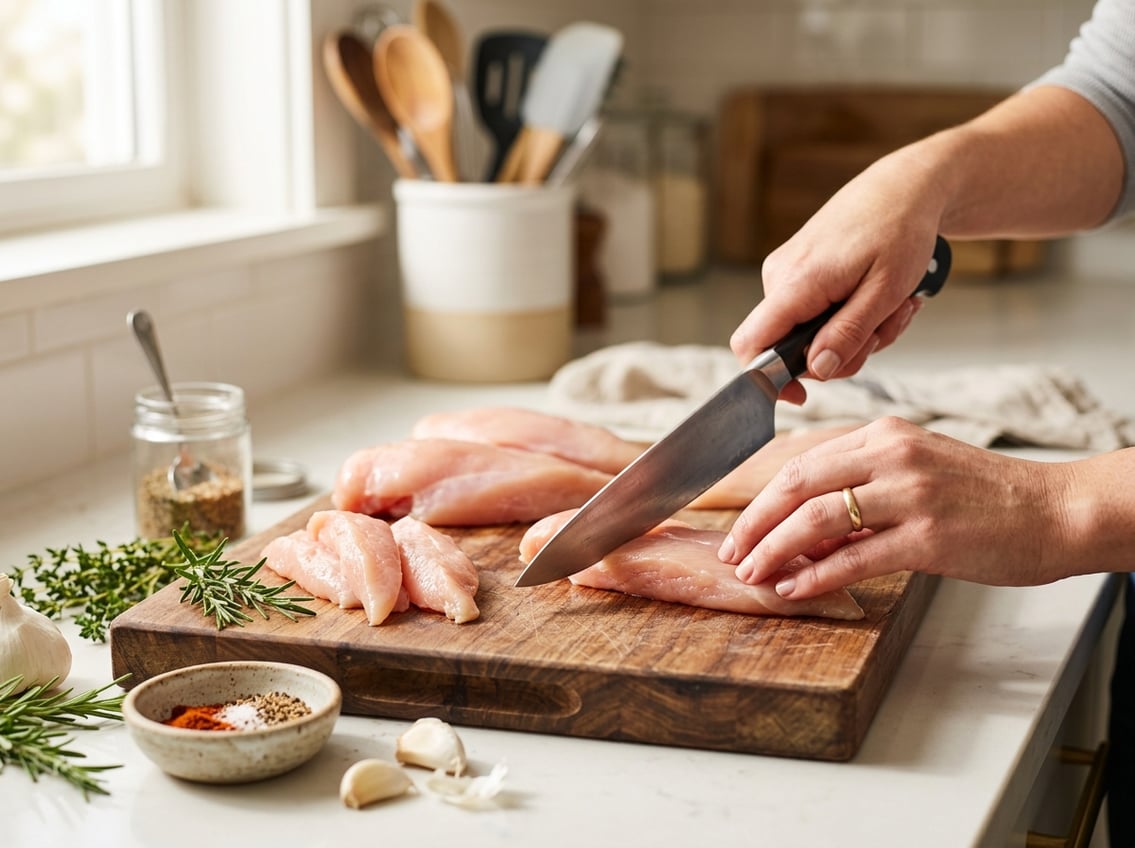
Good prep makes the biggest difference when you cut chicken tenders from chicken breast.
Start with boneless skinless chicken breast, trim away extra fat, and slice with a sharp knife so each piece cooks evenly.
How to Cut Chicken Tenders Evenly
Place the chicken breast on a cutting board and cut it into strips about 1 inch wide.
If the breast is very thick, slice it in half lengthwise first, then cut the halves into smaller chicken strips.
Even thickness matters because it helps the pieces finish at the same time.
How to Cut Against the Grain for Better Texture
Look for the direction of the muscle fibers before you slice.
When you cut against the grain, you shorten those fibers, which gives the finished tenders a softer bite.
How to Trim the Tendon and Uneven Ends
Some chicken breasts have a small white tendon or thin, uneven ends.
Trim those parts off so the strips look cleaner and cook more evenly.
This also helps when you bread the chicken, since flatter pieces hold coating better than ragged edges.
Best Ways to Cook Them for Crispy or Juicy Results
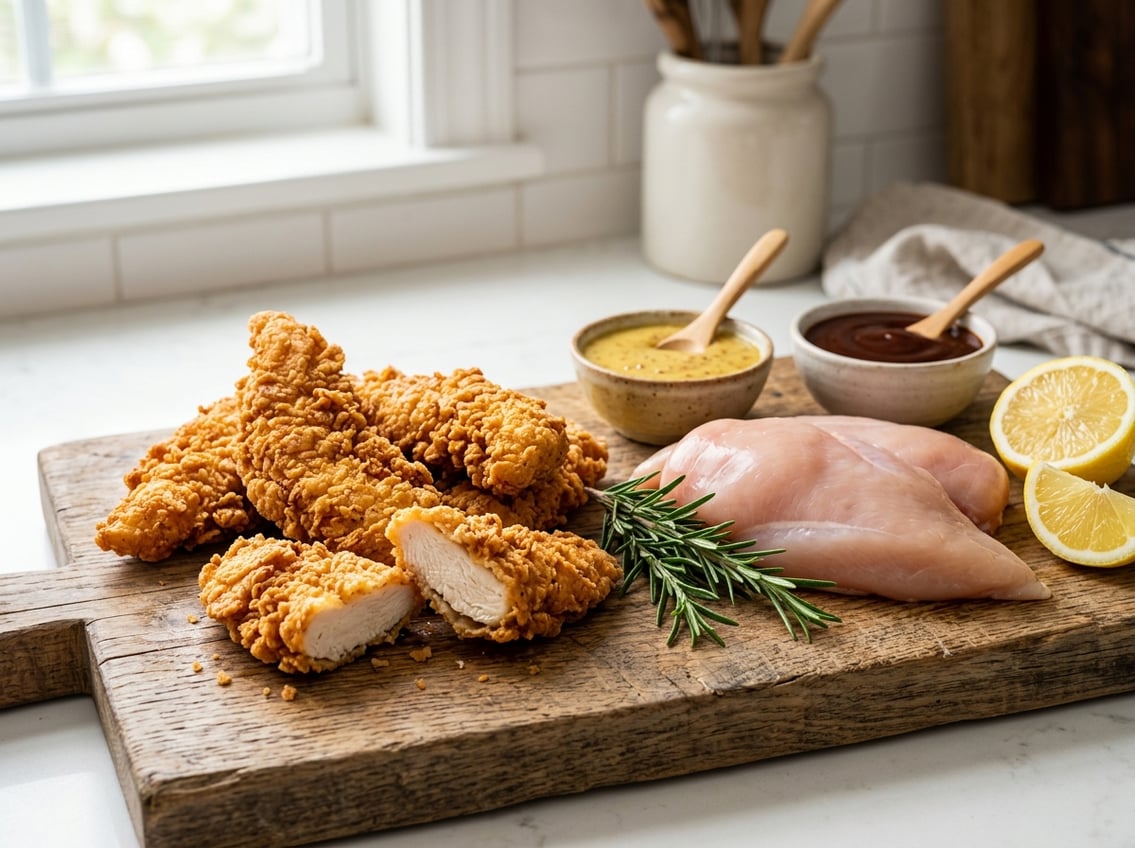
Choose a cooking method based on whether you want crisp coating or a lighter finish.
Panko, standard bread crumbs, and parmesan-based coatings all work well on chicken breast when the strips are cut evenly and not overcooked.
Breading Options With Panko Breadcrumbs or Bread Crumbs
Panko breadcrumbs give you a lighter, crunchier crust, while bread crumbs make a more even coating.
Many breaded chicken tenders use both for texture, and that mix works well in homemade recipes.
For a parmesan-style finish, you can make baked parmesan chicken tenders or parmesan chicken tenders with a seasoned breadcrumb mix and grated cheese.
Baking vs. Frying for Crispy Chicken Tenders
Frying gives you the most classic fried chicken tenders texture, with a fast, crisp outside.
Baking is easier for a lighter meal and still gives good results if you use enough oil or cooking spray.
A crispy baked chicken tenders recipe is a good model if you want less mess and still want crunch.
How to Keep Breaded Chicken Tenders Juicy
Do not overcook them. Chicken is done at 165°F, and pulling it off the heat at that point helps keep juicy chicken tenders from turning dry.
A short rest after cooking also helps the juices settle back into the meat.
Recipe Ideas and Smart Ways to Use Extras
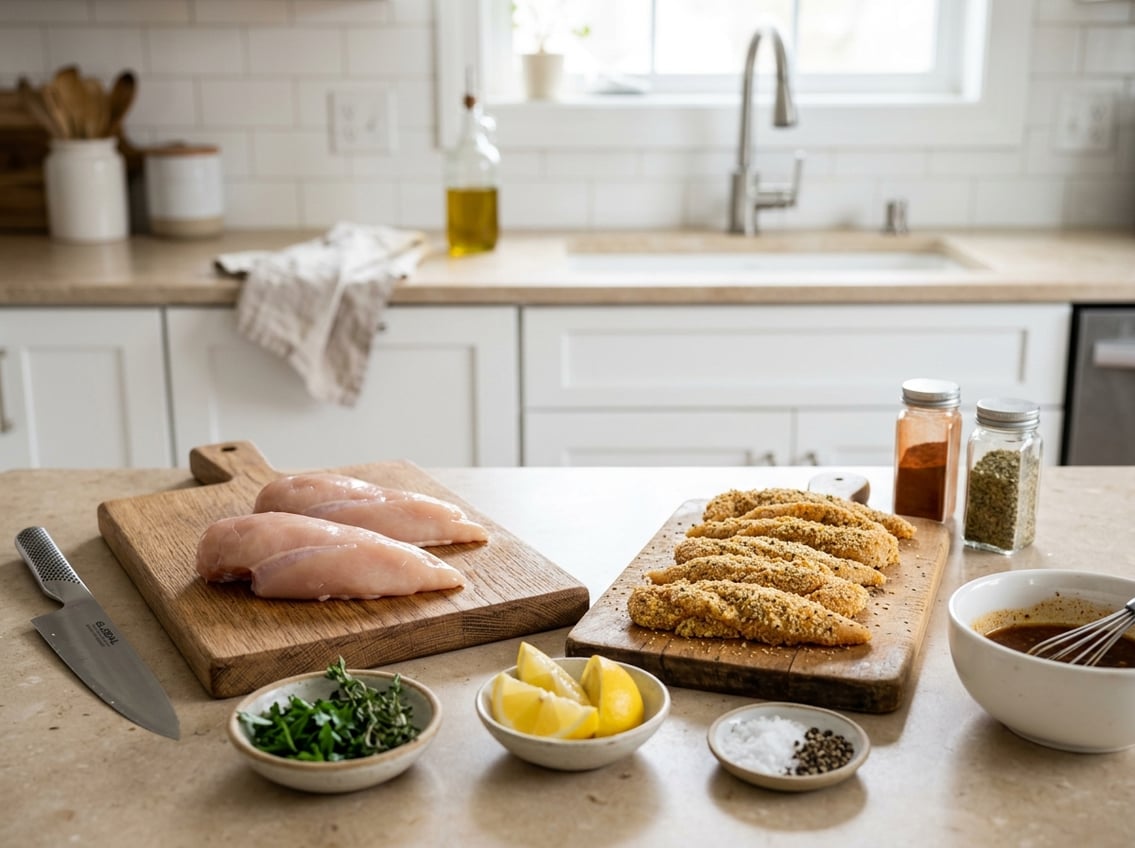
Once you know how to make chicken tenders from breast meat, you can use the same method in many meals.
The shape works for dipping, tossing in sauce, or adding to sandwiches and salads.
Best Chicken Tender Recipes to Try First
Start with a basic chicken tender recipe that uses simple seasoning, flour, and breadcrumbs.
From there, you can move into more specific chicken tender recipes like garlic parmesan, honey mustard, or spicy versions.
Food Network’s chicken tender recipes show how flexible this cut can be in family meals.
Buffalo Chicken Tenders and Other Flavor Variations
Buffalo chicken tenders are a strong choice if you want more heat and tang.
You can also make baked parmesan chicken tenders, lemon pepper strips, or bacon-wrapped chicken for a richer flavor.
Once you cut the chicken breast into strips, you have many seasoning choices.
How to Reheat and Use Leftover Chicken Strips
Store leftover chicken strips in the fridge. Reheat them in the oven or air fryer to restore crispness.
Slice the strips for wraps, salads, or rice bowls. For new meal ideas, check out leftover chicken recipes to turn extra chicken into lunch or dinner.


